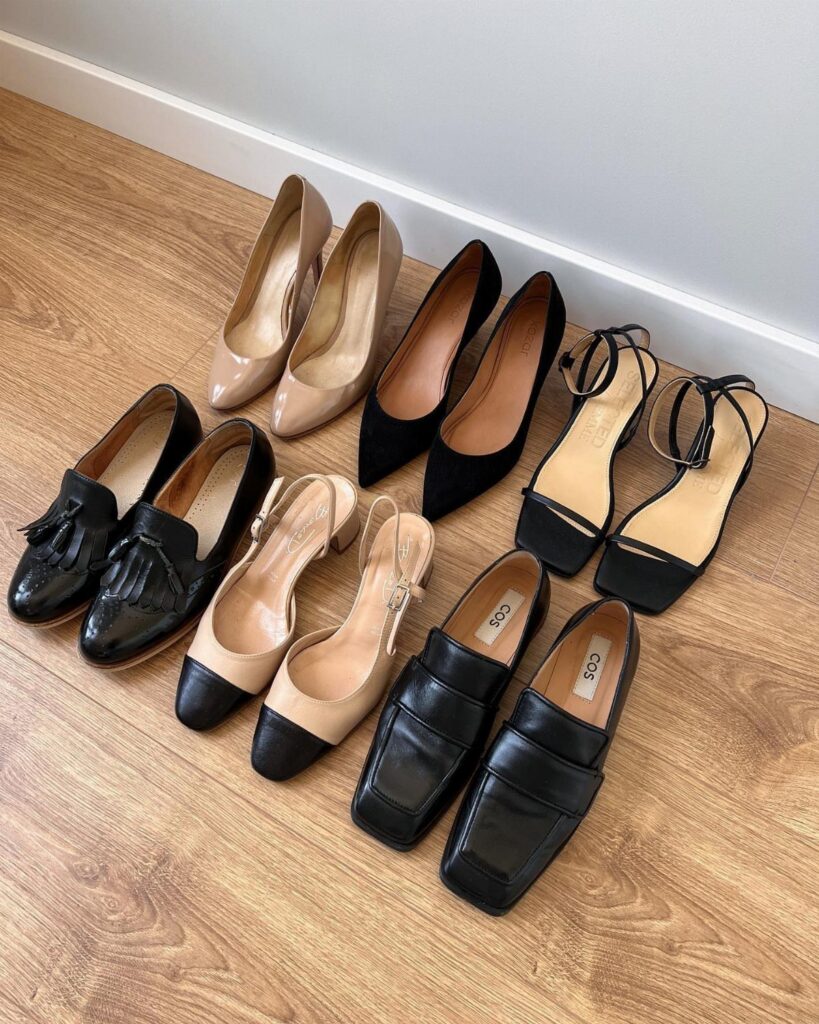
These outfits mix accessible price points with pieces that outlast fast fashion by years. The right one for you depends on whether your day stays desk-bound or shifts to drinks, dinner, or a client site without warning.
Most of my rotation is built around pieces that keep working after 5 PM, with one pair of heels reserved for the occasional last-minute meeting.
1. Stylish Footwear
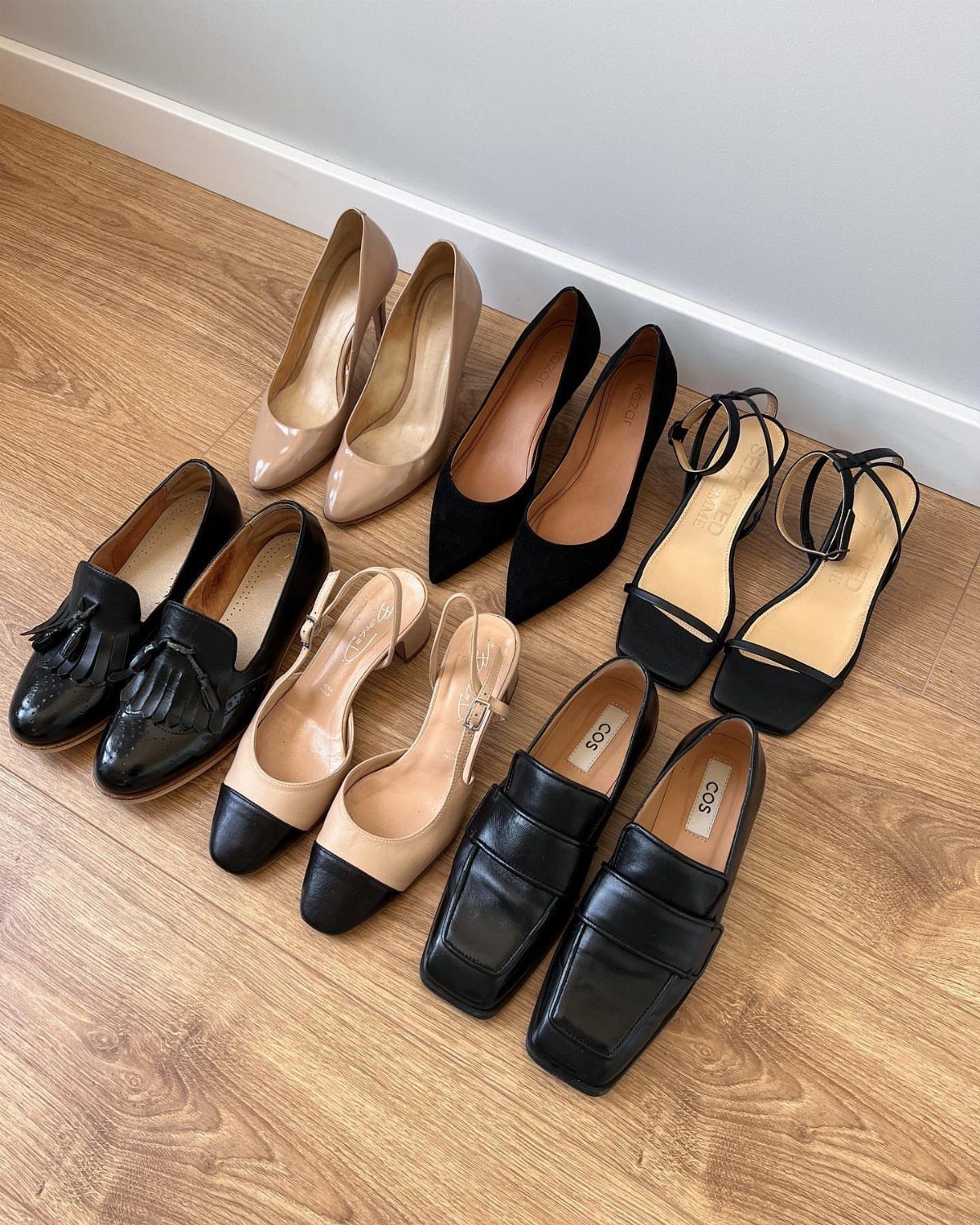
Loafers and ballet flats have carried me through long office days without the pinch that sends me limping to the subway. The Day Glove from Everlane runs $150 and sizes small, so I order up by half a step.
For ankle boots, I look for a low block heel; anything too tall shifts weight forward and aches by mid-afternoon. The Mary Jane flat works for offices that read ballet as too casual.
I keep one pair of heels in my drawer for last-minute client meetings. They rarely leave the bag.
2. Midi Dresses
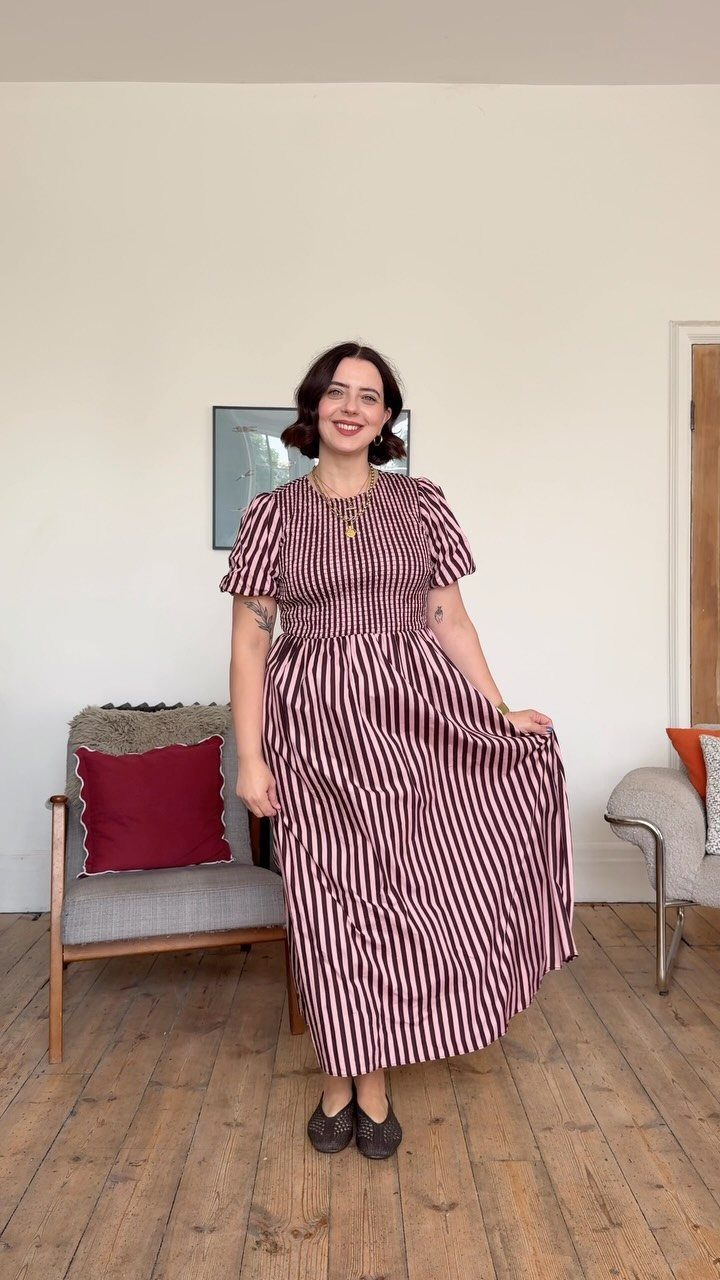
A midi dress handles the morning when I cannot face separates.
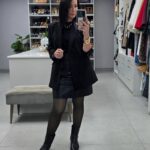
The length hits mid-calf, so booties sit right at the hem without chopping the leg. I throw on a leather jacket for drinks after; the dress stays, the context changes.
Stripes or solid, the smocked bodice matters more than the print. It gives shape without a belt to fuss with.
3. Tailored Trousers and Blazers
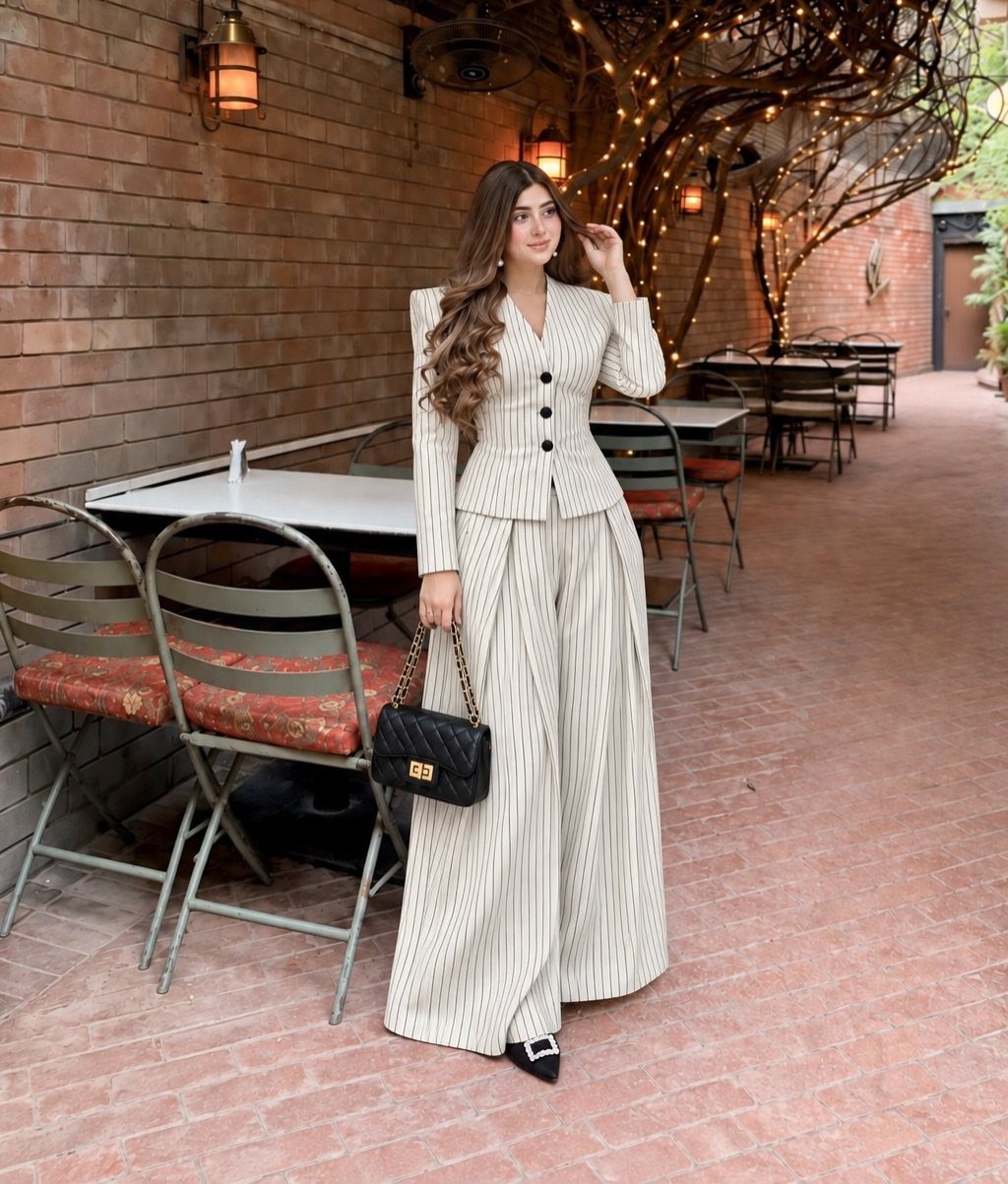
Cream pinstripe reads corner office without the matching-suit stiffness.
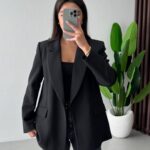
I wear the blazer with the trousers for presentations, then break them apart: the jacket over a white tee with kick-flare jeans on Friday, the pants with a fine-gauge sweater when I want quiet authority.
The wide leg needs a heel or the hem drags. I learned that after one rainy commute.
4. Wrap Skirt and Button-Down
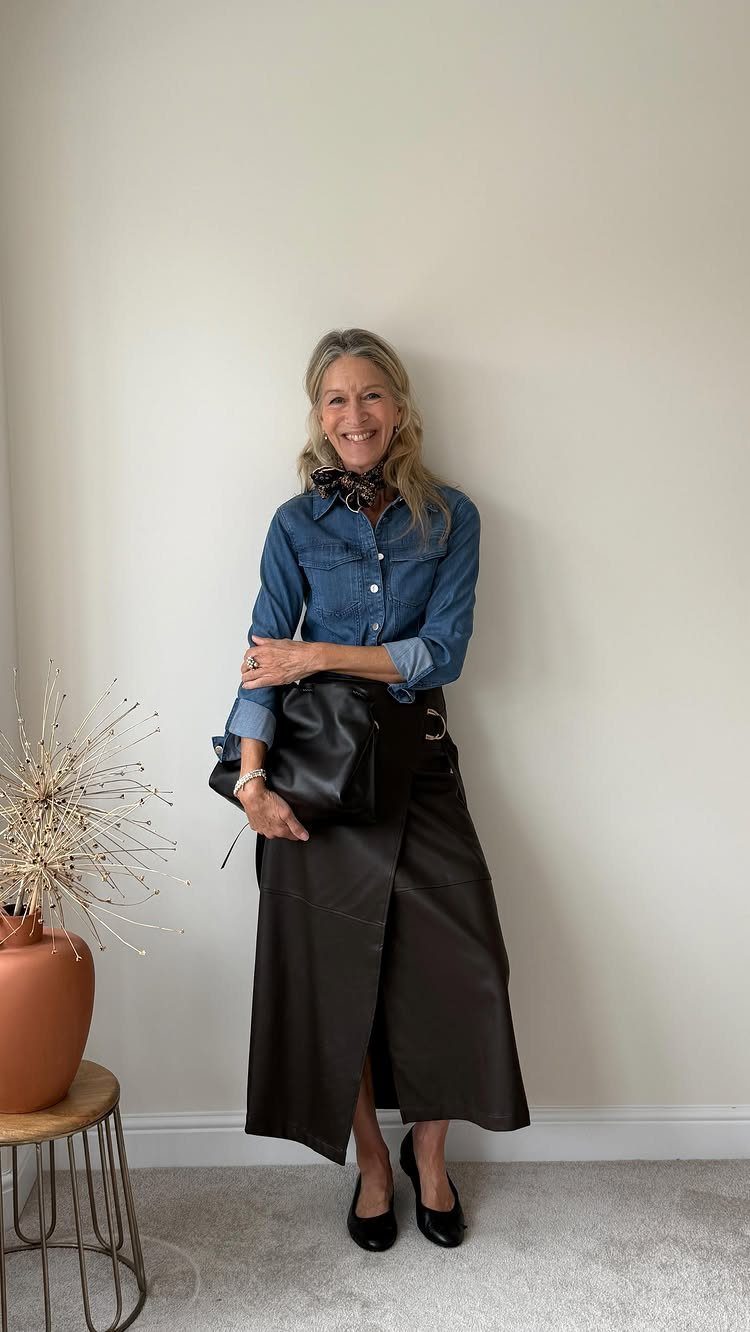
A leather wrap skirt and denim button-down trade the expected silk blouse for texture that still reads put-together. The neck scarf fills the open collar; without it, the look leans weekend.
Check the wrap depth before you buy. This one sits at true midi, but some gap or ride when you sit.
5. Tailored Wrap Coat Outfit
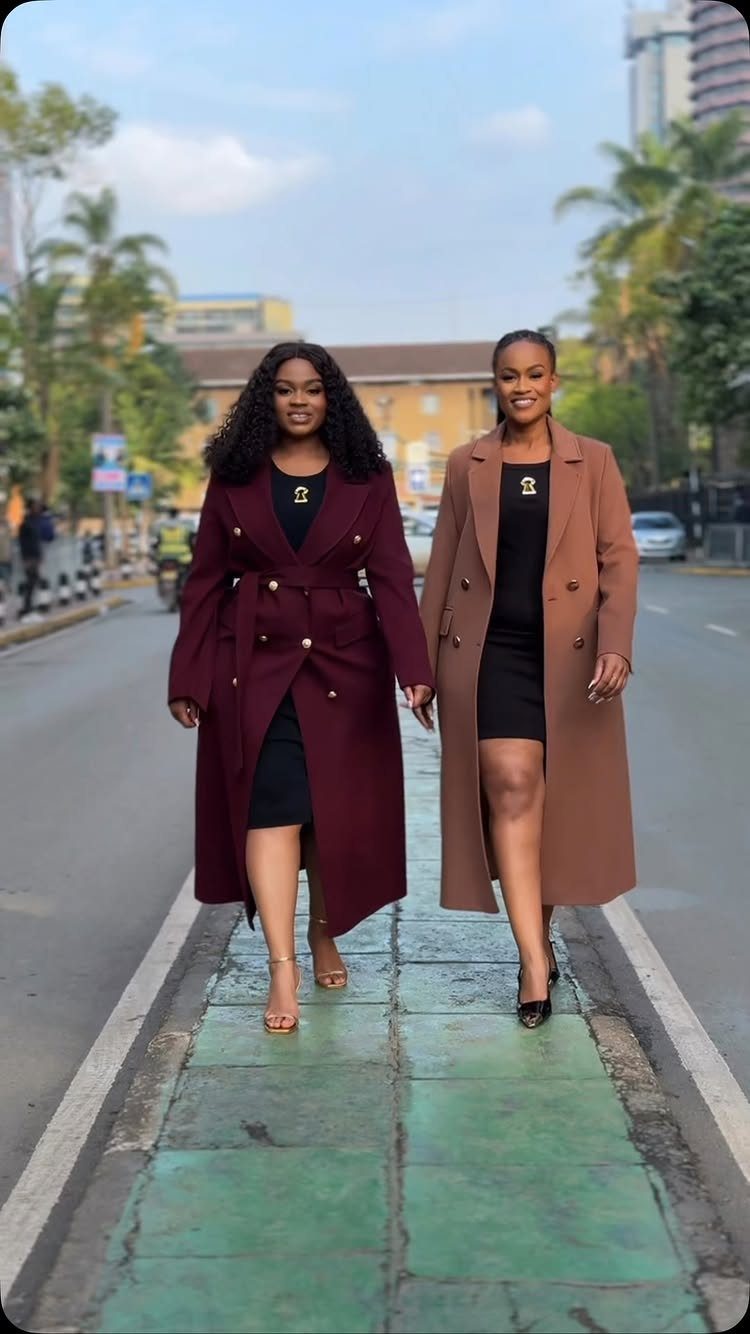
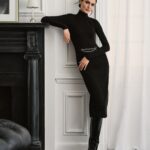
A belted wrap coat over a black dress solves the coat-check problem: you keep it on through the meeting and still look dressed. Burgundy or camel, the tie waist gives shape where a straight coat would swamp.
The hem should clear the dress by a noticeable gap or the layers tangle when you walk. I measure from my kneecap before ordering.
6. Button-Down Shirt and Wide-Leg Trousers
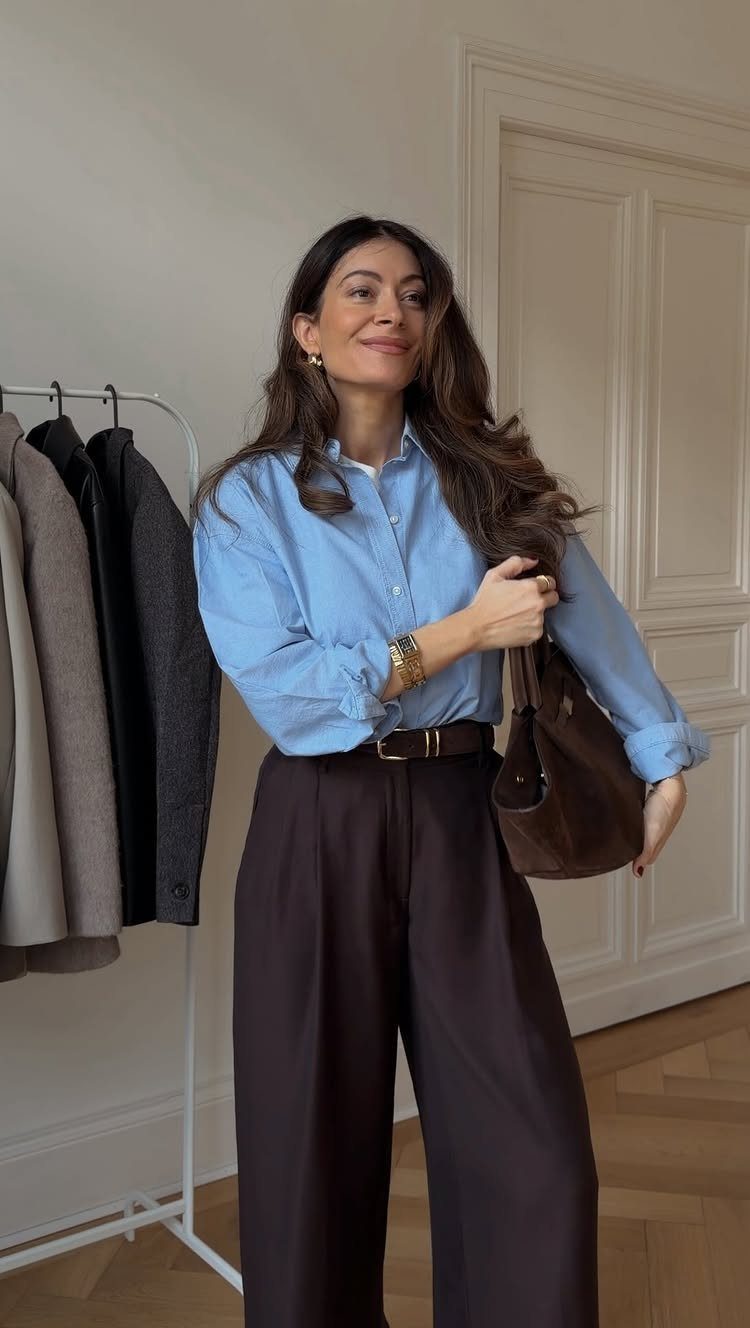
Tucking a light blue button-down into high-waisted brown trousers takes the guesswork out of proportions. The waistband sits at the natural waist, the leg widens from the hip, and the shirt stays put without constant re-tucking.
I choose leather accessories in the same warm tone as the pants. Black would fight the softness here.
7. Striped Cardigan with Navy Trousers
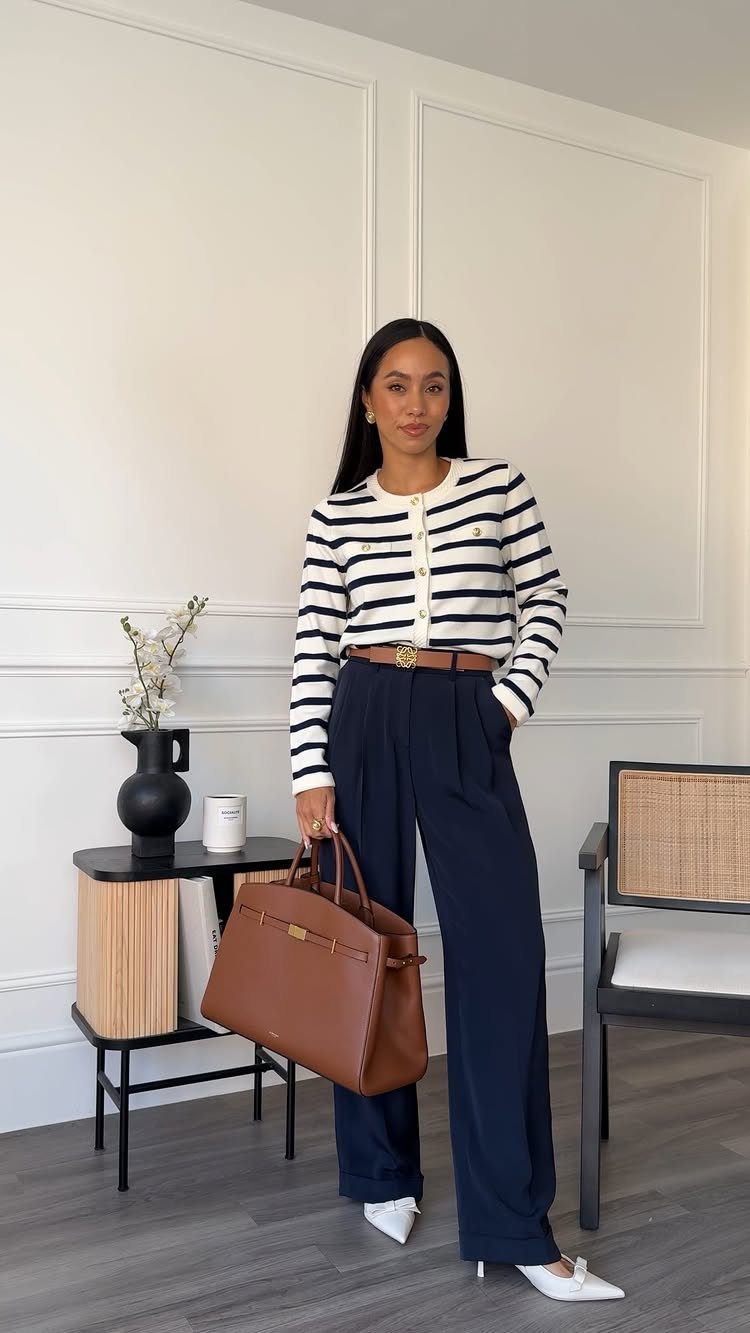
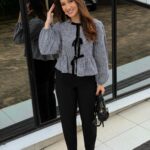
Horizontal stripes on a cardigan add visual interest across the torso, which balances nicely when the trousers underneath are wide and dark.
Navy grounds the pattern without looking like a uniform, and the white heels repeat the lightest stripe so the outfit holds together.
The cardigan should hit at the high hip or the proportion collapses.
I check that the trousers rise to the natural waist, since the cardigan will not give shape on its own. A structured leather bag finishes it; canvas reads too casual against the stripe.
8. Layered Sweater and Collared Shirt
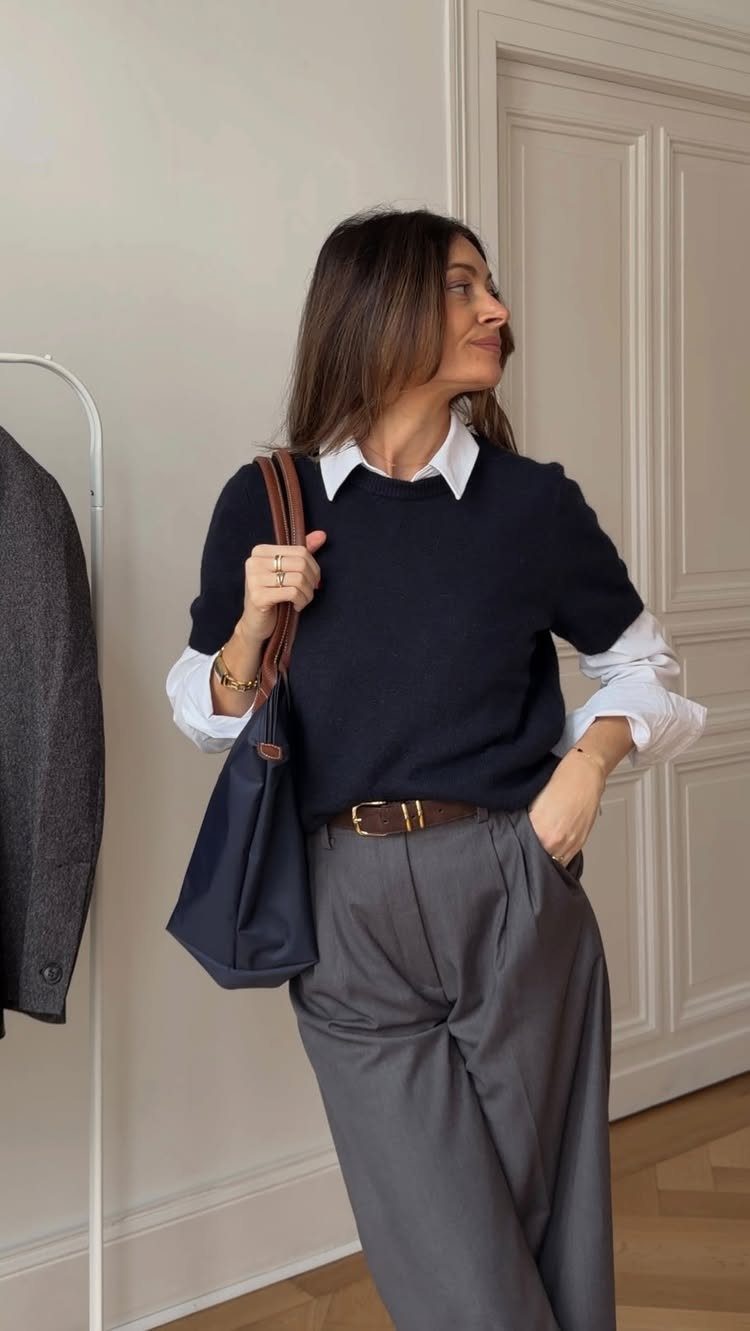
A short-sleeved knit over a collared shirt gives you the sweater look without the bulk that overheats an office. The navy over white reads crisp; the grey pleated trouser keeps it from feeling like a school uniform.
The shirt collar must stand clear of the neckline or it buckles.
I look for a fine-gauge knit with some weight, not a tissue-thin layer that shows every seam. The sleeves end mid-arm, so the shirt cuff stays hidden: no rolling required, no bunching under a jacket later.
Workwear Trends
Relaxed fits have replaced the stiff tailoring I wore when I first started office work. A blazer now sits soft at the shoulder, and trousers carry a little ease through the thigh.
That room makes the piece useful across more of your week: the same pants that read professional at a 9 AM presentation still feel reasonable at a dinner where you came straight from your desk.
Versatile layering is the other shift worth noting.
A cardigan over a collared shirt, a knit under a blazer, a coat you do not remove: each combination lets you adjust to a conference room that runs hot or a client site that does not.
The pieces must be able to stand alone, because the layer you shed still needs to look intentional.
Comfort without sacrificing style is not a trend I expected to last, but it has hardened into expectation.
Offices that once required heels now accept a polished flat; the woman who commutes in sneakers and changes is no longer the exception.
Fabrics that read deliberate make the difference: a cashmere blend, a wool with weight, a cotton that holds its press. Cheap knit relaxes into slouch; quality relaxes into ease.
Importance of Comfort
Uncomfortable clothing costs more than the price tag. A waistband that digs, a heel that rubs, a sleeve that rides: each distraction pulls attention from the work you are trying to do.
I notice my own posture sag when my shoes pinch, and I suspect my concentration does too.
The physical relief of a flat or a wide leg translates directly into how long you can sit through a meeting without shifting in your chair, how confidently you walk into a room.
Confidence in what you wear is not abstract; it is the absence of a small, constant discomfort you stopped naming.
After-hours transition matters here too. An outfit that quits the minute you clock out will keep you from drinks or the late train home.
A midi dress that works with booties at 6 PM and heels at 8 PM, a blazer that steps up for dinner: these pieces earn their place because they do not force a decision between comfort and showing up.
Wrinkle-resistant fabrics extend this logic to business travel. A garment that recovers from a suitcase saves the mental load of planning an iron or a change at the hotel.
The comfort is not just physical; it is the removal of one more variable from a day that already has too many.
Capsule Wardrobe Tips
A capsule wardrobe lives or dies on whether every piece talks to every other piece. Eileen Fisher built a brand on this principle: simple shapes, complementary hues, fabrics that last decades rather than seasons.
The wide-legged pant and the breezy blouse are not separate outfits; they are components of a system where three bottoms and four tops yield more combinations than you would guess.
Start with the neutrals that repeat. Navy, black, cream, camel: these bridge pieces that share no other connection.
A striped cardigan and navy trousers hold together because the navy echoes; the same cardigan over cream trousers reads equally intentional. The palette does the matching so you do not have to think before coffee.
Fabric quality matters more than silhouette.
A cheap knit pills and sags, forcing replacement and breaking the system. A fine wool or a substantial cotton holds its shape through years of rotation, which is the only way a small wardrobe stays viable.
Eileen Fisher prices reflect this, but the cost-per-wear drops below fast fashion within a season or two.
Count what you actually need. Two trousers, two skirts, four tops, two layers, one dress, one coat: this is enough for a month of distinct outfits if the colors align and the fits allow layering.
Minimalism is not the point; removing the morning decision is, so you can direct that energy elsewhere.
Frequently Asked Questions
What is the 3-3-3 rule for clothes?
The 3-3-3 rule means three tops, three bottoms, and three pairs of shoes.
What are some trendy clothes for work?
Relaxed tailoring is the main shift: soft-shouldered blazers, wide-leg trousers with ease through the thigh, and midi dresses with smocked bodices that need no belt.
Versatile layering pieces like cardigans over collared shirts or knits under blazers let you adjust to temperature swings without looking like you shed an afterthought.
Boden builds work outfits around bright prints and countryside textures that still read professional, if you want your personality to show through the dress code.
What is Gen Z wearing to work?
Younger coworkers are wearing pieces that feel good to sit in all day and still say something about who they are, which is not so different from what the rest of us are reaching for now.
Polished flats have replaced required heels; commuters in sneakers who change at the desk are now normal rather than exceptional. Fabrics that read deliberate, like a cashmere blend or substantial cotton, make the difference between looking relaxed and looking sloppy.
What are the workwear trends for 2026?
Relaxed fits and versatile layering are the 2 shifts worth noting. Comfort without sacrificing style has hardened from trend into expectation, with offices accepting polished flats and deliberate fabrics like fine wool or quality cotton that hold their shape.