The test I keep is whether I could wear it tomorrow to a different place without changing anything else; that rule is what keeps the beige belted coat in rotation over black leggings and boots, and what keeps the stiletto boots out of any commute longer than a short walk.
1. Classic Denim Jacket
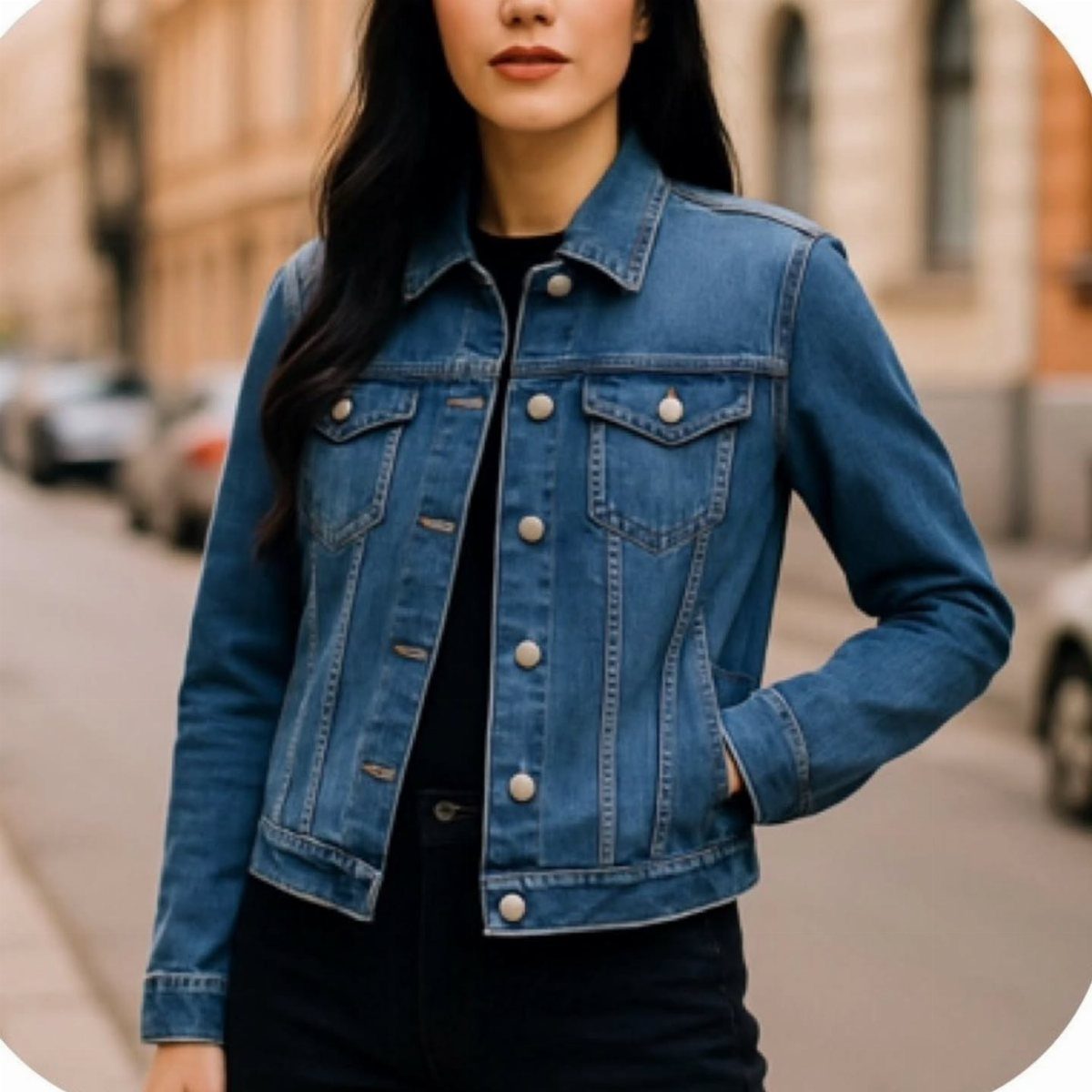
American workwear built this jacket, and decades later it still earns its place. The cotton twill breaks in slowly, softening at stress points until the fade map is yours alone.
I layer mine over anything structured enough to balance the weight: a black button-front shirt and slim dark pants, or a lightweight blouse with espadrilles when the weekend starts. The cropped cut keeps it from swallowing your shape.
Denim on denim is back, though I still prefer contrast. Let the jacket be the single rugged note in an otherwise polished outfit, and it will outlast every trend that tries to replace it.
2. Little Black Dress

A black dress that actually works across seasons is rarer than the cliché suggests.
The ones I reach for are cut from linen or a breathable weave that does not trap heat, with a square neck or a cross-back detail that reads intentional rather than default.
The length matters more than the neckline. Too short and it becomes a single-use item; at midi or just above the knee, it moves from dinner to daytime with a shoe change.
I own one sleeveless linen wrap style that I wore to a July wedding and then to a September farmers market with flat sandals.
That is the test: if you would not wear it to morning coffee, it is not the one.
3. Pencil Skirt

The narrow cut reads as formal only if you style it that way.
A navy version that hits at or just below the knee, paired with a white blouse and matching blazer, handles an office without trying. The same skirt with a fine-gauge knit and ankle boots becomes dinner.
Fit is the entire story here. Too tight and you cannot sit; too loose and the line collapses.
Look for a fabric with slight stretch that holds its shape through the day, and a waistband that sits at your natural waist rather than dipping to hip level.
Hem length has an odd effect: shorter than the knee tends to age the wearer rather than the reverse. Audrey Hepburn wore hers at the knee, and that proportion still holds.
4. Maxi Skirt
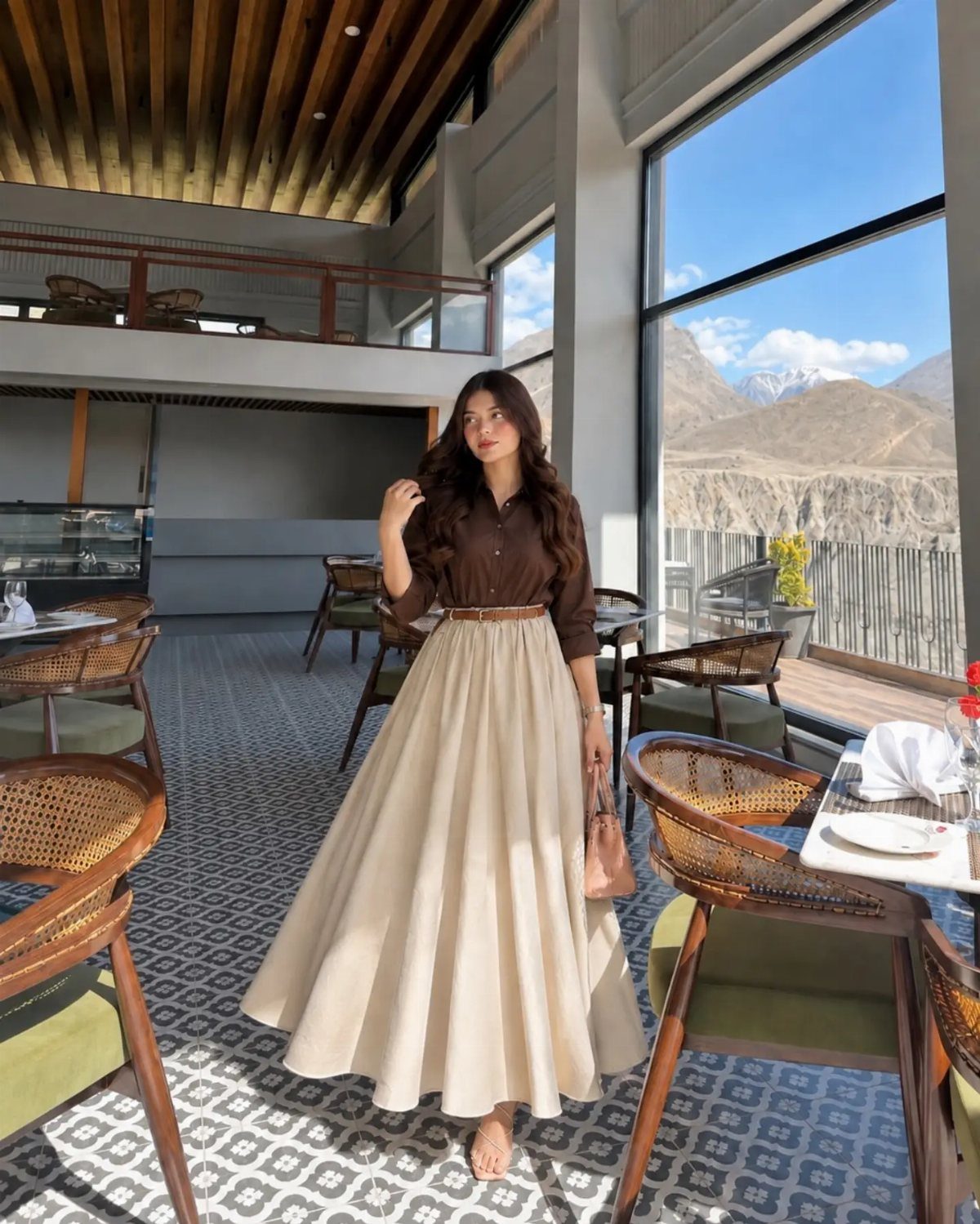
I am not a mini person either, so the full-length skirt has become my default across seasons.
For summer, I look for linen or a light cotton that moves without clinging, usually in a solid or a subtle check.
The waistband matters: a fixed band with belt loops lets you adjust the rise, while an elastic waist can skew too casual for city wear.
Proportion is what matters.
Tuck or half-tuck the top, add a belt that matches your shoes, and the line runs clean from shoulder to hem. Without that anchor at the waist, the shape swallows you.
5. The Layered Knit
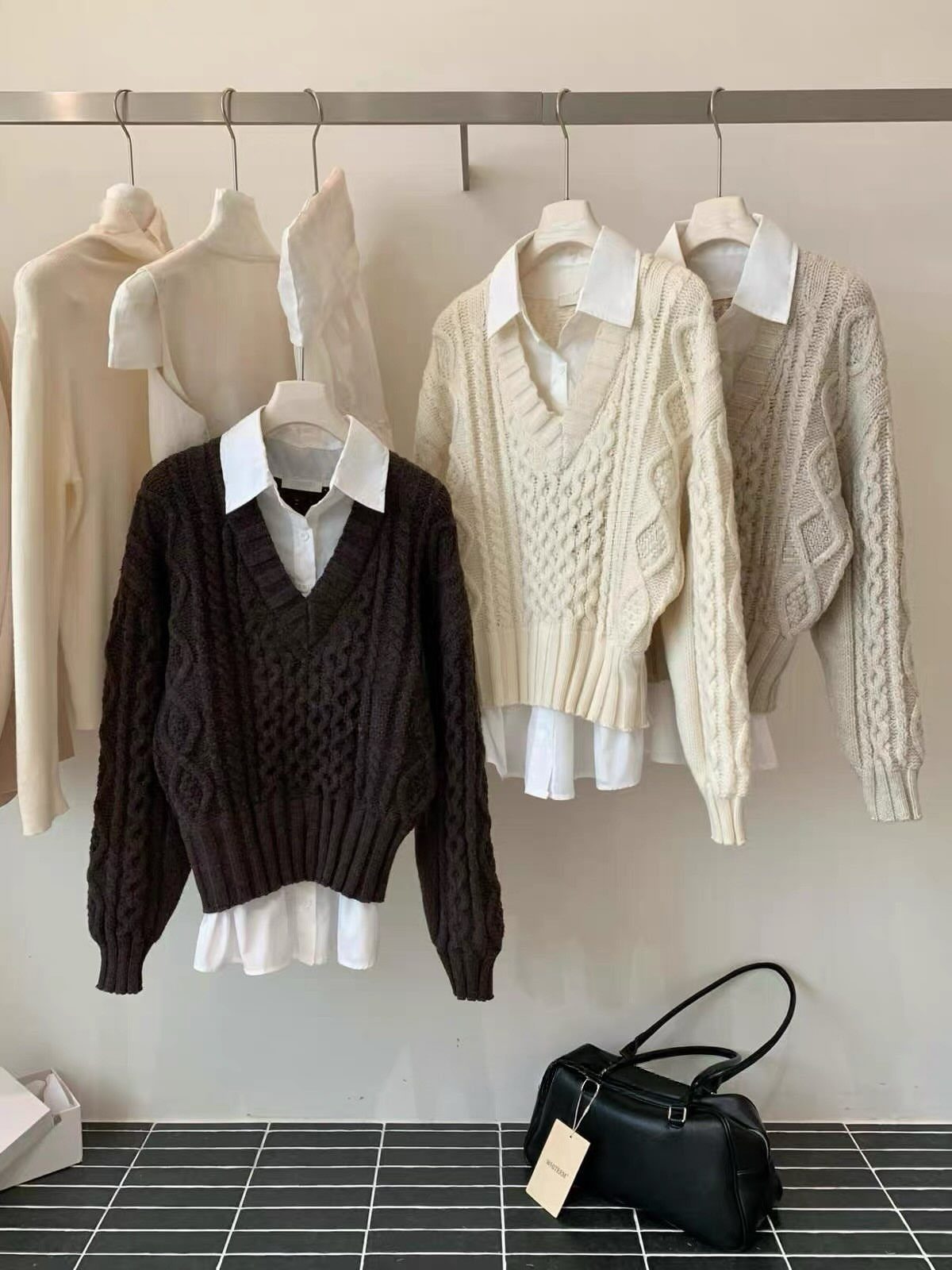
Cable-knit over a collared shirt is the combination I return to most often in transitional weather.
A V-neck merino knit with visible cable and contrasting stripe at the hem gives the shirt collar a frame without the bulk of a crewneck.
I layer mine over a plain white poplin, though a light blue or a narrow stripe works if the knit is neutral.
The shirt cuffs should extend just past the sweater sleeve by half an inch, no more. Shoes stay simple: white leather sneakers or a flat loafer, and a bag with some structure to match the knit.
The warmth is moderate, enough for a cool spring morning. For colder days, this layer goes under a coat rather than replacing one.
6. Beige Belted Coat
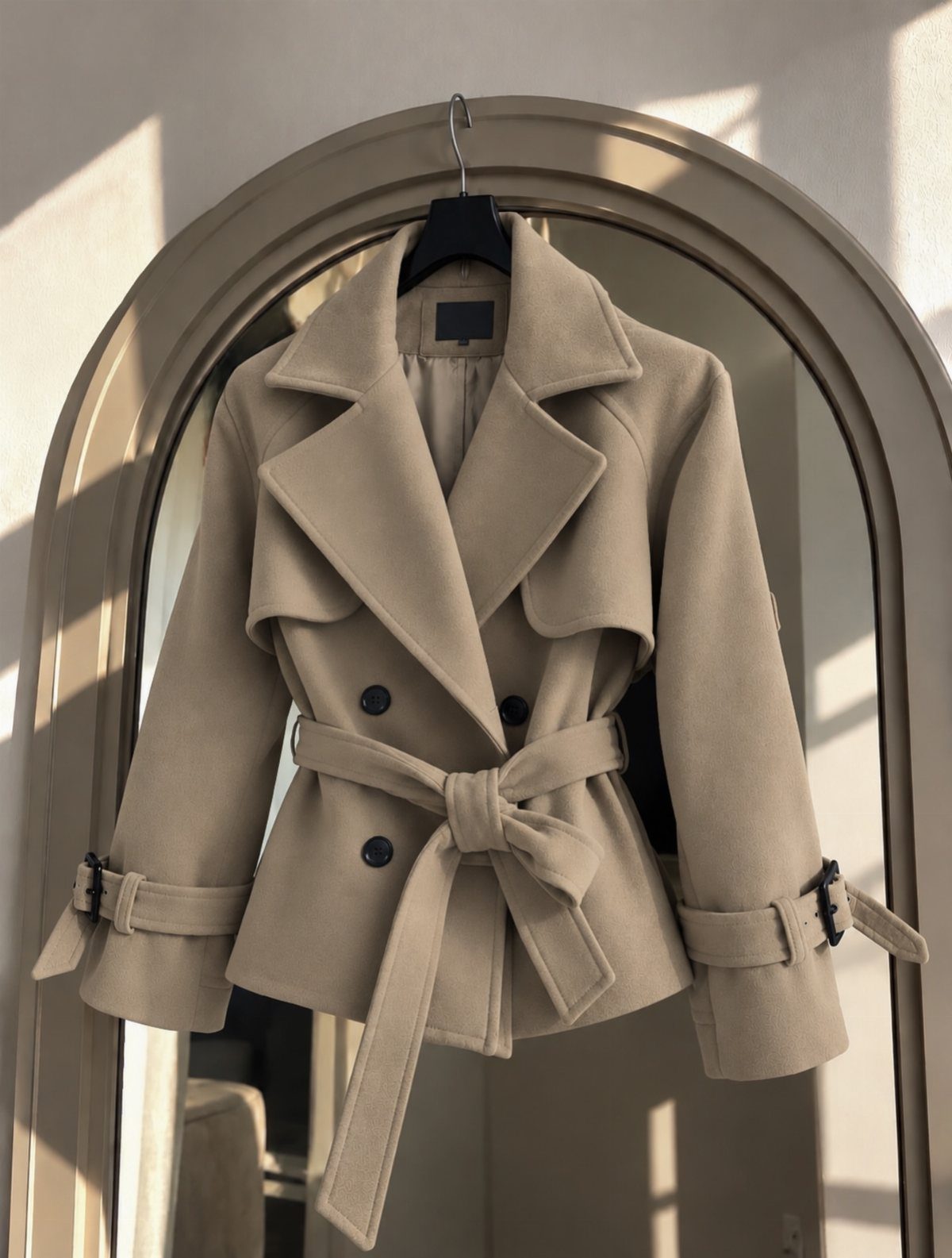
A belted coat in this color range is not a statement piece, which is exactly why it lasts.
A wool or recycled wool blend, double-breasted with concealed buttons, ties at the waist to give shape where an unbelted style would hang straight.
I wear mine over black: black sweater, black leggings or slim pants, black boots.
The contrast keeps the beige from reading as too soft. The belt is functional, not decorative; cinched, it traps heat against your core on days when the wind cuts.
The 6 concealed buttons and side pockets are details I notice only when using them, which is the right kind of design. A coat you have to think about is a coat you stop reaching for.
7. The Autumn Suit
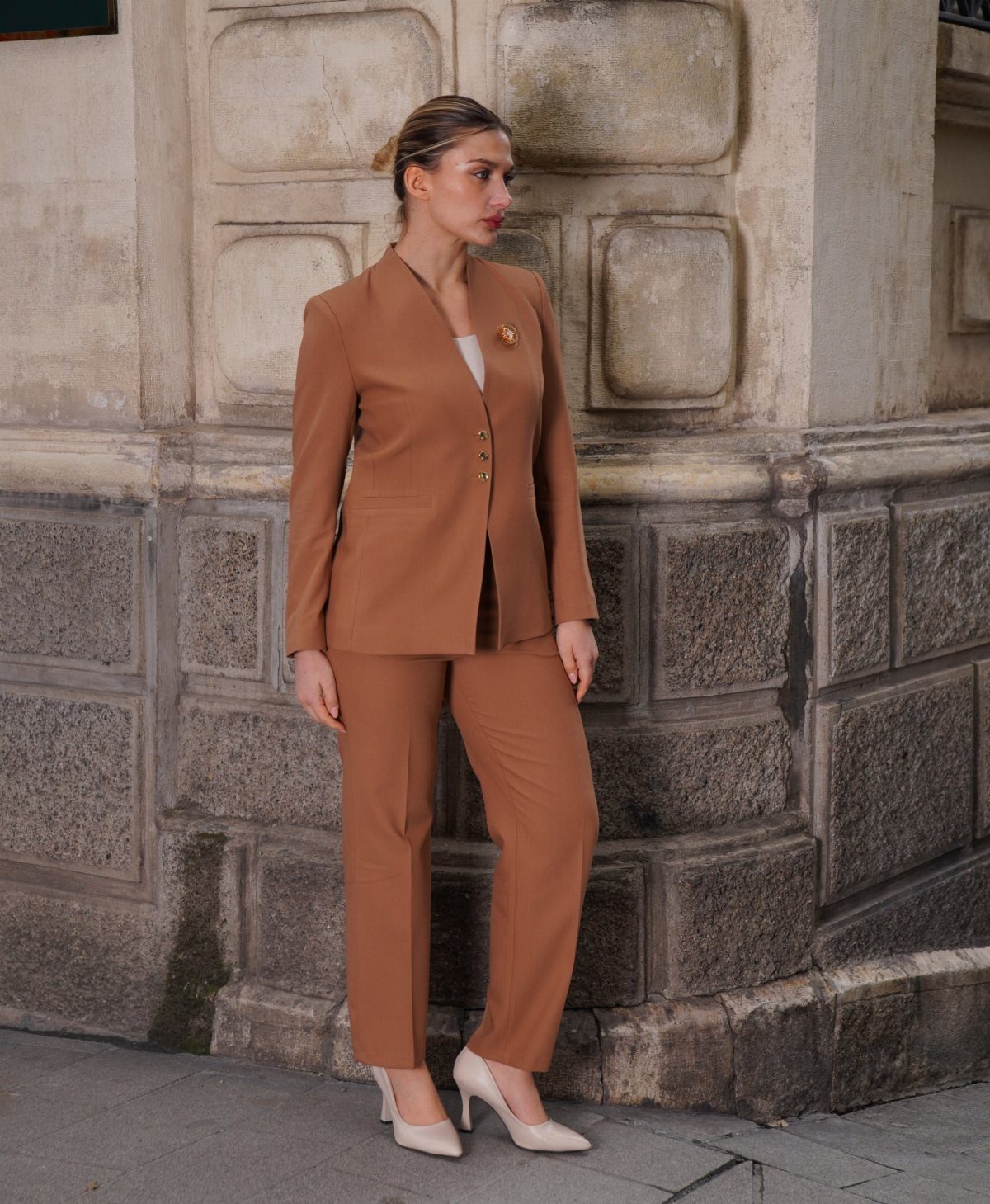
A tailored suit in camel, terracotta, or sand is the piece that carries you from September meetings to October dinners without a change.
The cut matters more than the color: shoulders that sit clean, trousers with a single pressed crease, and a waist you can actually belt.
French styling keeps it from feeling borrowed from a boardroom. Add loafers and gold jewelry, leave hair slightly undone, and the same suit reads as after-hours intention rather than office requirement.
Fit is the filter here.
Too oversized and you disappear; too fitted and it becomes costume. Try the jacket closed at the waist before deciding.
8. Stiletto Boots
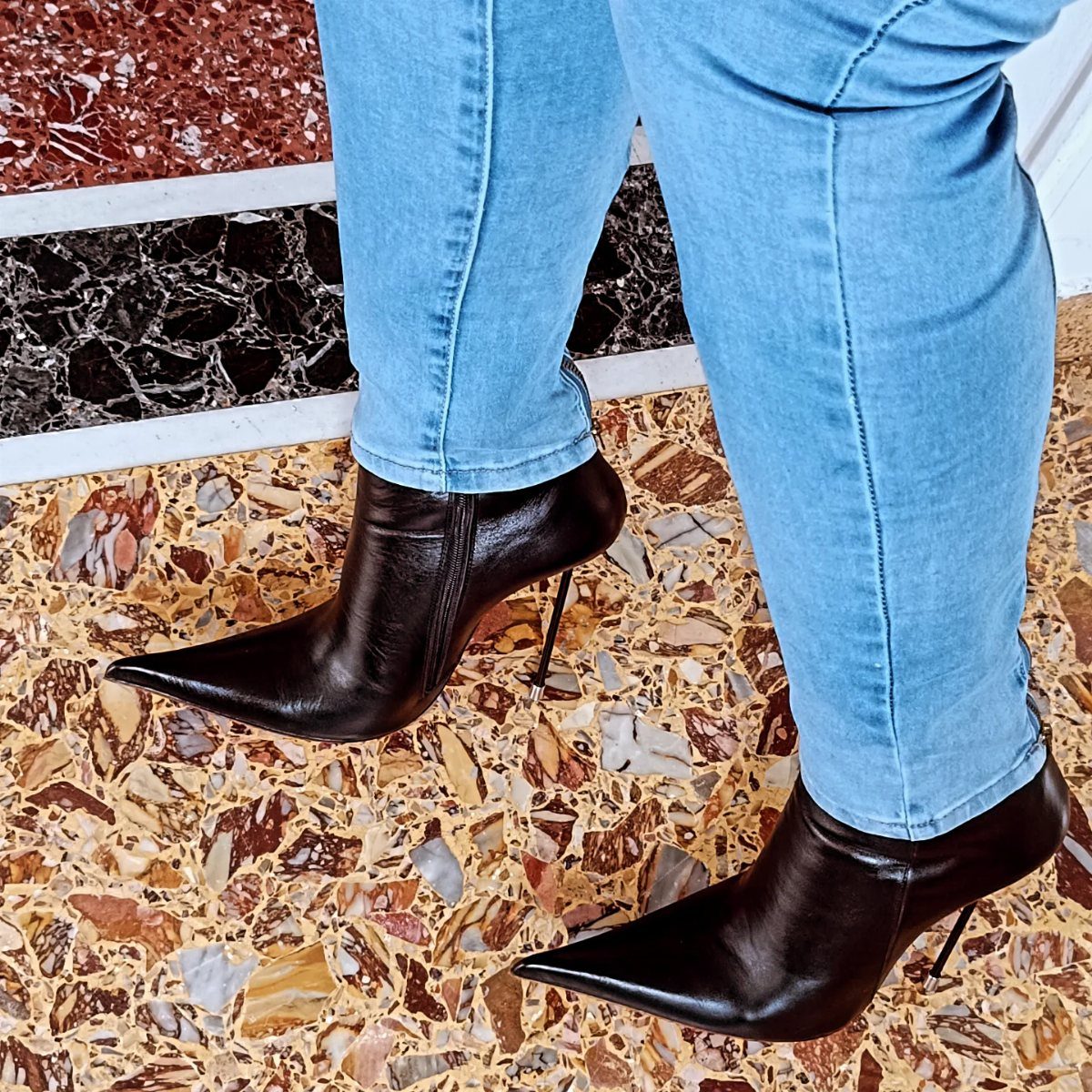
A pointed toe and slim heel do what no flat can: they extend the leg line even under jeans.
Leather smooths with wear, so the first walk may feel stiff. Budget for a cobbler’s heel tip from the start; replacing it later costs more than maintaining it.
These are not commuter shoes unless your commute is short. They are the boots you change into, or the ones you wear when the day holds only what you chose.
9. Linen Separates
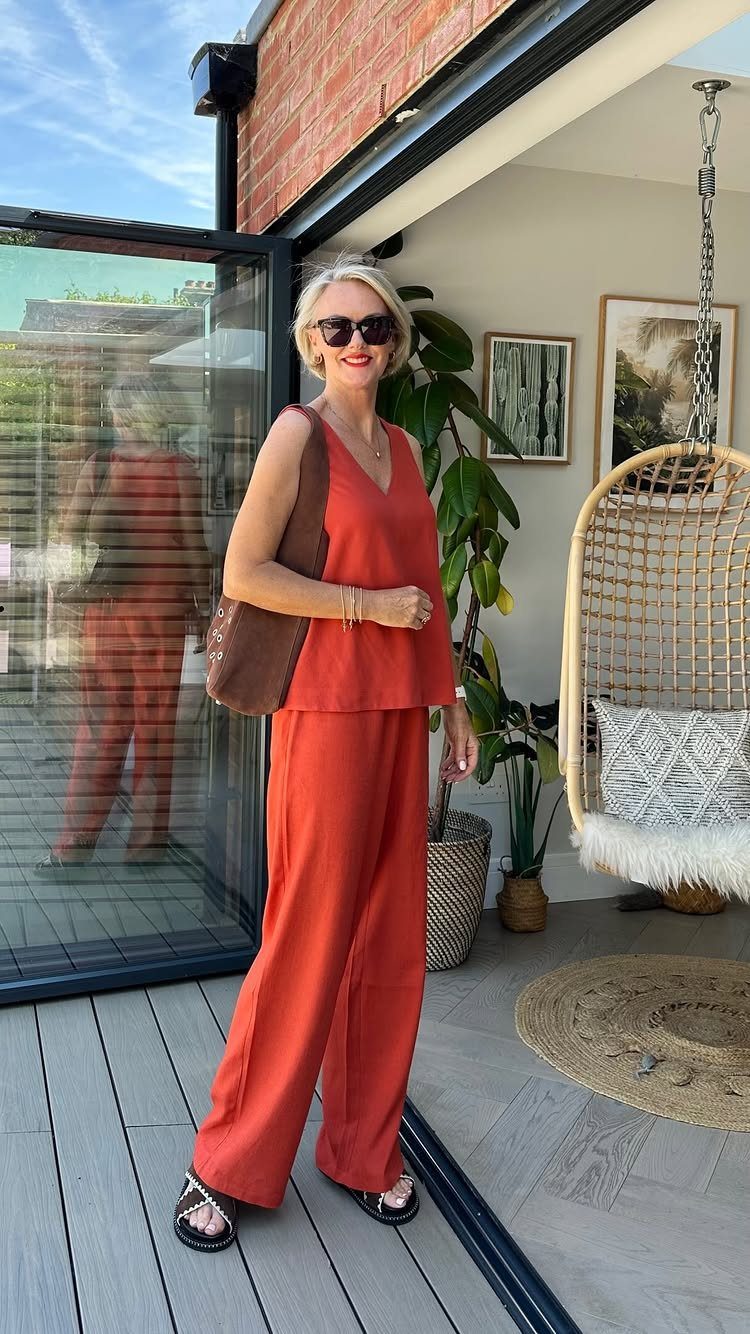
Linen trousers and a matching top in a solid color, burnt orange or otherwise, handle July heat in a way cotton cannot.
The fabric wrinkles; that is its nature, not a flaw to solve. Steam rather than iron, or lean into the rumple as part of the look.
A capsule approach works here: one pair of wide-leg pants, one sleeveless button-up, and you have three outfits depending on whether you wear them together or split them with white denim or a tank.
The maker of the photographed set built her summer around exactly this kind of interchange.
Wash in cold, hang dry, and accept that linen shrinks slightly in the first cycle. Buy to fit a little loose.
10. Turtlenecks

A fine-gauge black turtleneck over a white collared shirt is the layering move I use most often when the office heating is unpredictable.
A ribbed knit turtleneck sits close enough to stay neat but not so tight that a shirt beneath it bunches.
This combination works because the contrast is visible at collar and cuffs; without a shirt underneath, the look shifts to evening. For day, the white layer keeps it grounded.
Wool or merino hold shape longer than cotton blends and resist the pilling that makes a turtleneck look tired. Hand-wash or use the delicate cycle, dry flat, and a good one lasts several seasons before the neck relaxes.
Importance of Versatility
Versatility is the whole reason a small wardrobe beats a stuffed one. A pencil skirt shifts from office to dinner, linen separates split into 3 outfits, and a turtleneck flips from day to evening depending on what sits beneath it.
The math is what sold me.
Twelve pieces that each pair with eight others give you more combinations than you will wear in a month. The beige coat layers over black in every form; the maxi skirt anchors to a belt and any top you own.
I stopped buying single-use items when I started counting this way. One garment, one job is a luxury most closets cannot afford.
The test I use now: can I wear this tomorrow to a different place without changing anything else? If the answer is no, the piece does not come home.
A button-down is truly one of the most versatile pieces you can own.
Quality Over Quantity
Quality shows up in wear counts, not price tags.
Construction details matter more than labels. Concealed buttons on a coat, belt loops that actually hold weight, a cobbler’s heel tip budgeted from day one: these are the costs that spread across years of use.
Checking the interior finish before buying tells you more about quality than the price tag does.
A waistband that sits at the natural waist, a hem that hits at or just below the knee, a shoulder that sits clean: these proportions do not change with trends, so the garment does not either.
Layering Techniques
Layering fails when each piece fights for attention.
Proportion is what separates layering from bulk. The autumn suit carries from September to October because the jacket closes at the waist and the trousers hold a single pressed crease beneath it.
One combination, two settings, no extra purchase required.
Frequently Asked Questions
What is the 3-3-3 rule for wardrobe?
The 3-3-3 rule means three tops, three bottoms, and three pairs of shoes chosen to work across combinations. I have not used this exact framework myself; the math that changed how I buy is simpler.
What is the 5 4 3 2 1 rule for packing?
This packing rule is not covered in my approach to wardrobe building.
Where can I buy wardrobe staples?
I point to specific pieces I own or have sourced rather than sending you to browse general retailers.
Elevated sweatpants from Alex Mill and a budget-friendly pair at Gap Factory are in my rotation; the linen separates reference a photographed set from a maker who built her summer around that capsule approach.