These looks move from a cardigan pairing to silk pieces that need hand-washing, so your morning schedule and your fabric care tolerance pick which one lands in your rotation.
The wide-leg trousers and the burgundy-over-charcoal combination both sit in the same list, which tells you how far the style range stretches.
1. Wide-leg Trousers
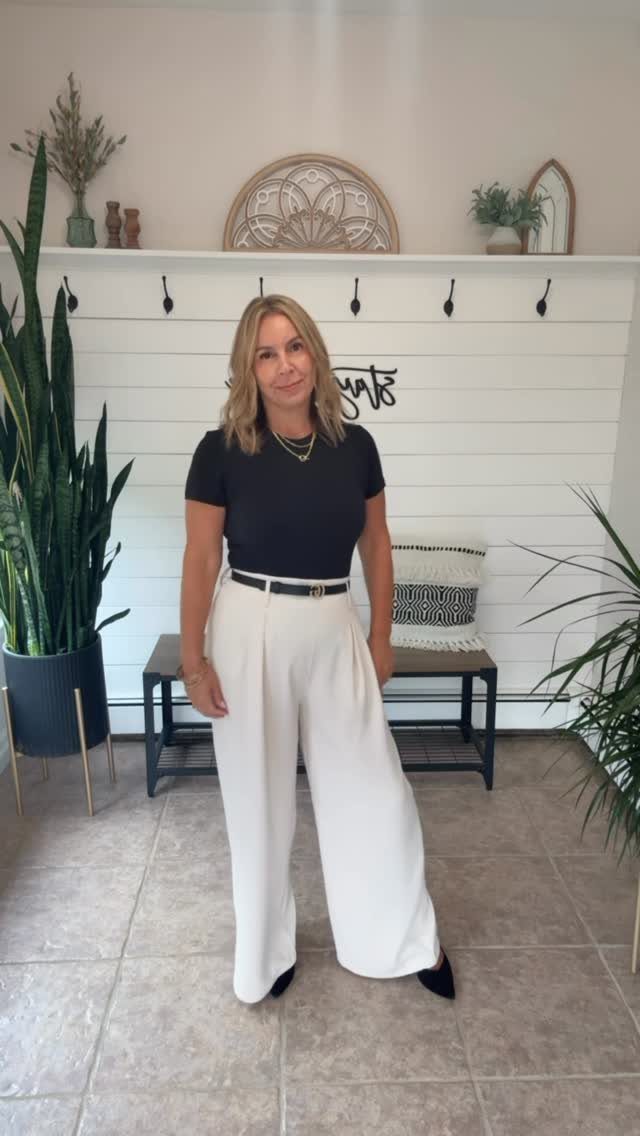
Wide-leg trousers trade the squeeze of skinny pants for a line that moves when you do. I reach for them on days back-to-back meetings leave no time to change if lunch runs late.
Aim for a high waist to define your shape, fabric with enough weight to hang clean, and a cream tone that works with every neutral top already in your closet.
Breathable material keeps them from turning into a sauna on warm afternoons.
I style mine with a slim top or half-tuck to keep the silhouette intentional rather than swallowed.
A pointed flat or low heel adds polish without the ache of full pumps. Navy or white both read office-appropriate; add a brown leather belt and gold chain to finish.
2. Silk Blouses
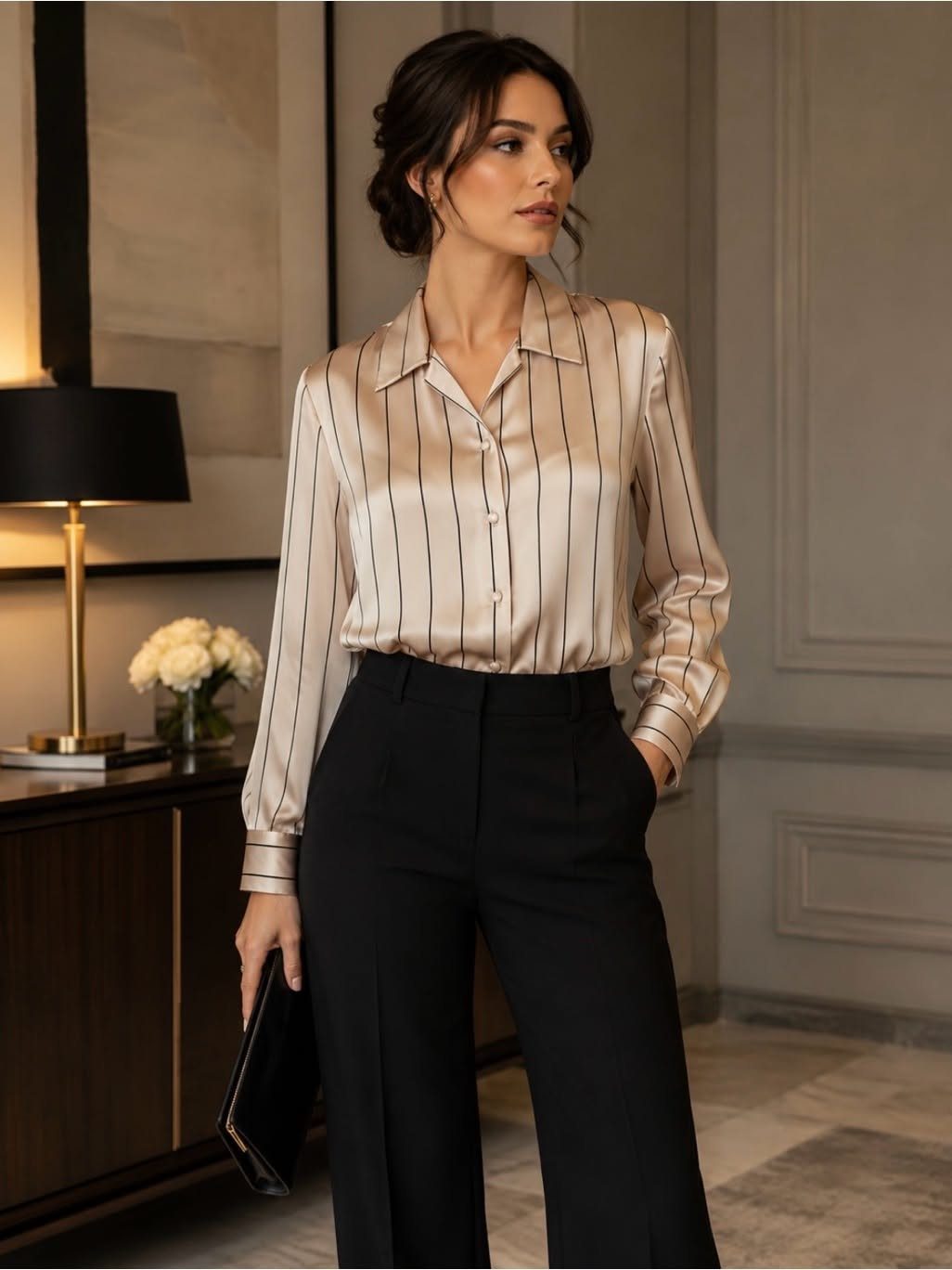
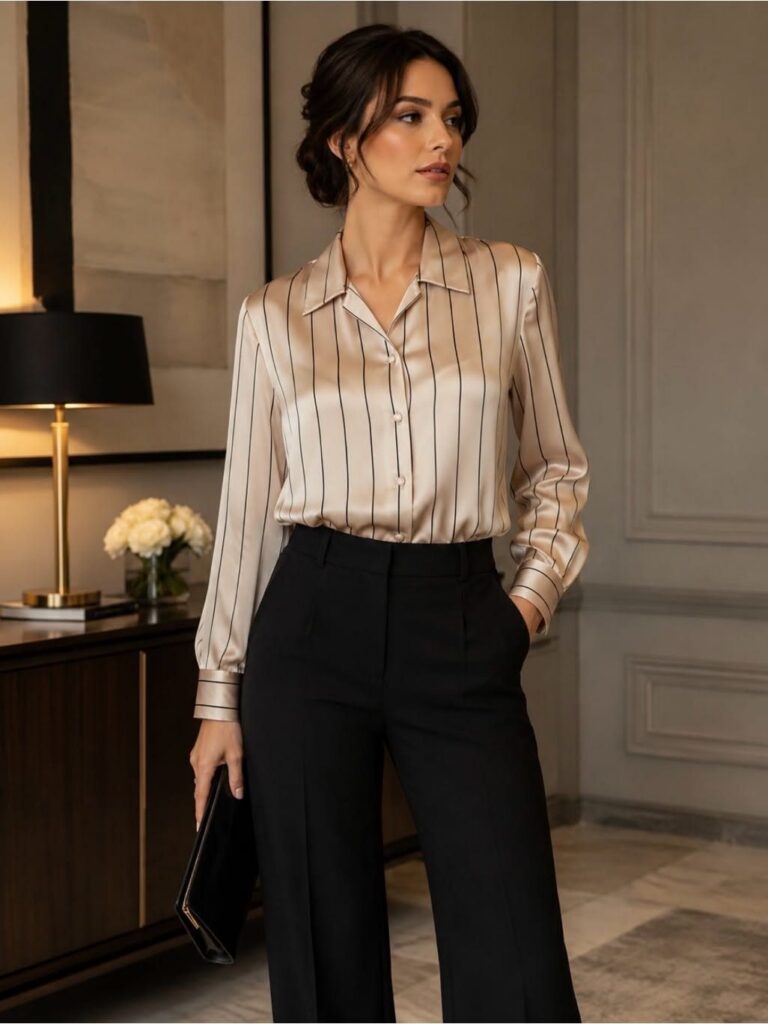
A silk blouse does the work of jewelry: it catches light at a collar, ripples when you move, and reads as considered even with the simplest trousers.
I own two, a champagne stripe and a solid cream, and they have outlasted three trend cycles of statement tops.
What I look for is matte rather than high-shine silk, which can read evening, and a cut that skims rather than clings.
The striped version here tucks cleanly into high-waisted black trousers with a slim belt; sleeveless works under blazers in summer, while a long sleeve transitions to fall.
For a more grounded look, I have worn burgundy over charcoal wide-legs with brown loafers. Silk asks for hand-washing or a delicate cycle, so I factor that time in before I buy.
3. Blazers
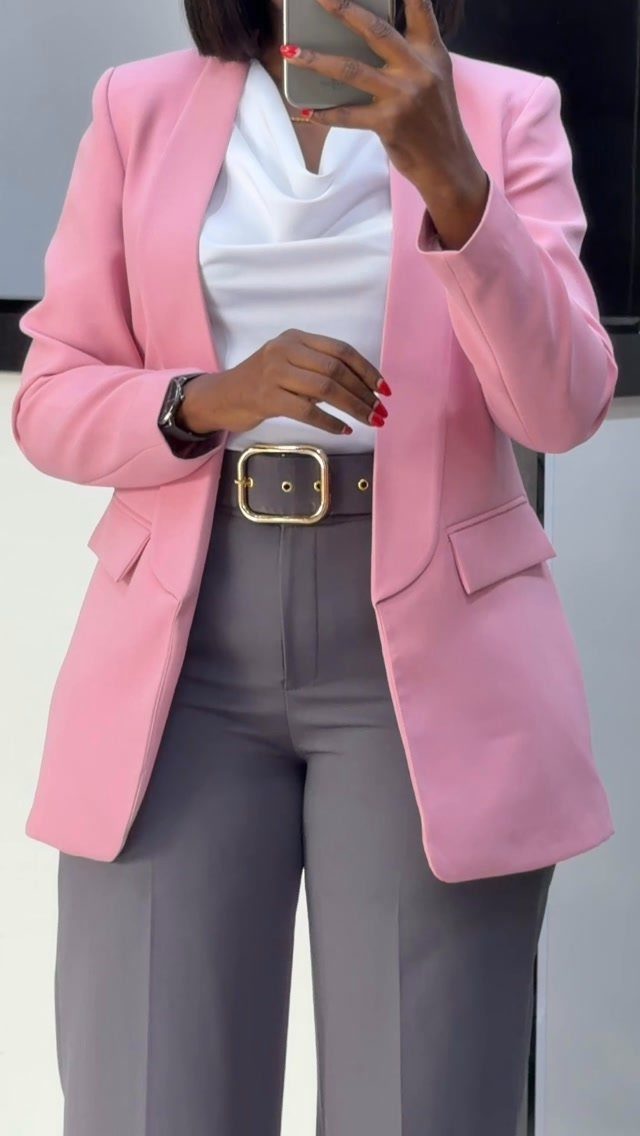
If I could keep one piece for every work environment I have known, it would be a blazer.
A pink blazer turns a white top and grey trousers into an outfit that holds up for a client lunch, but the same shape works over jeans on a Friday.
I have learned to check 3 points before I buy: shoulder seam placement, button stance, and whether the fabric recovers after sitting. This one reads tailored rather than boxy, with a statement belt to draw the waist in.
A tan or black version multiplies what you already own.
I pair mine with matching trousers, a pleated skirt, or dark jeans and white sneakers for travel days. The investment is in structure; everything else you layer beneath can stay simple.
4. Co-ord Sets
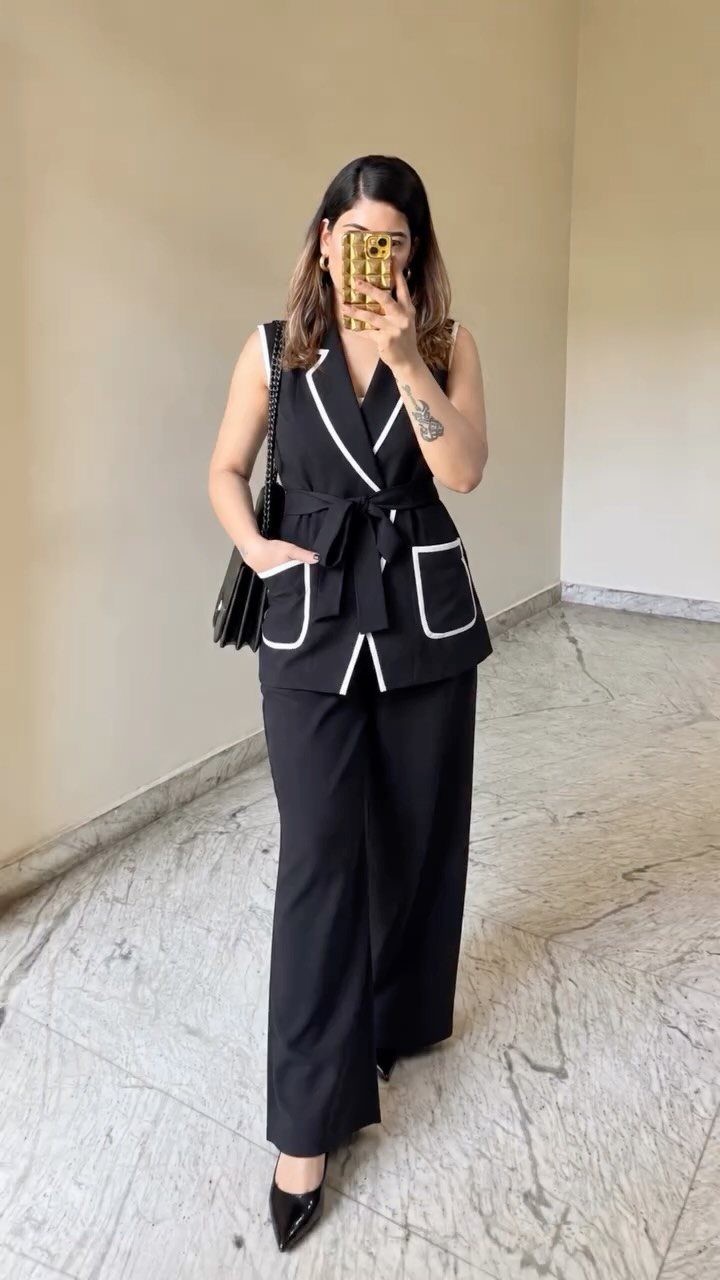
Matching a top and bottom to each other used to feel too formal, too matched.
I like co-ords for mornings when I am too rushed to balance proportions.
The pieces are already in conversation; I just add shoes and a bag. What makes this work for business casual is the tailoring: a clean belted waist, wide legs that do not cling, and fabric that holds a press.
You can split the set too.
The vest works with a pencil skirt; the trousers carry a silk tee. Buying them together guarantees the match, but wearing them apart gets more cost per wear.
5. Statement Pieces
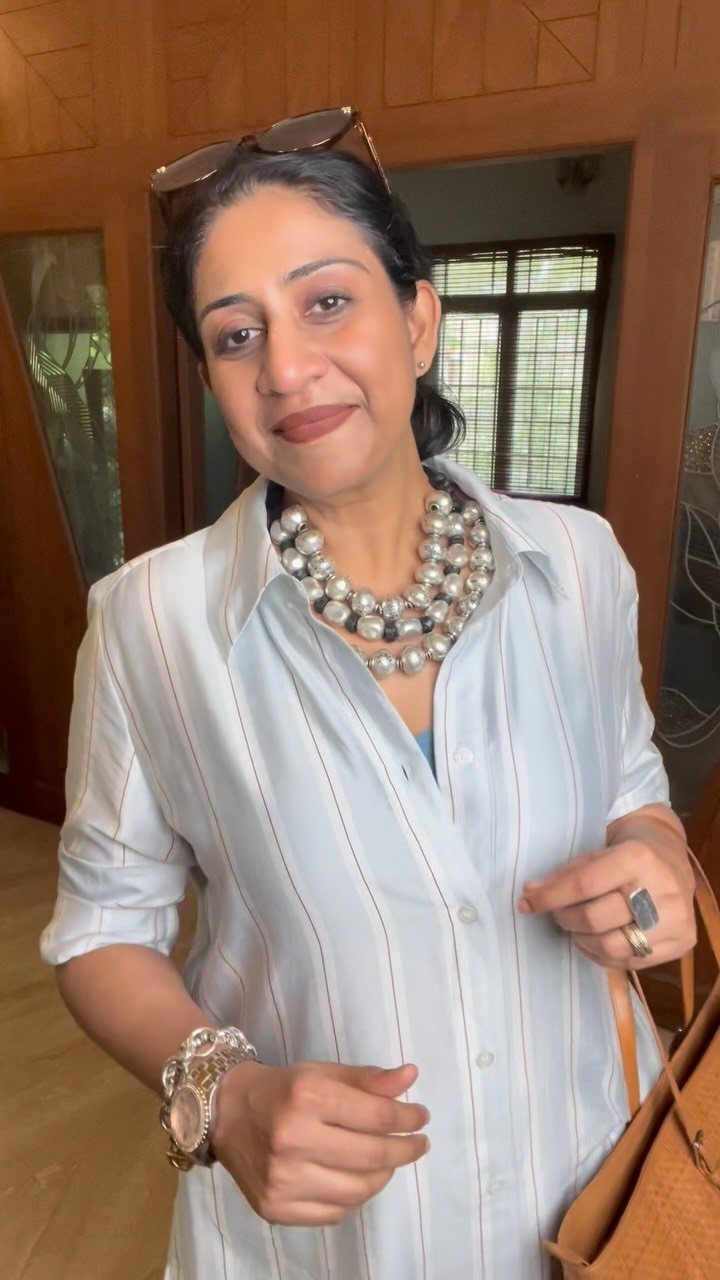
Most of my work wardrobe is quiet: navy, grey, cream, black. One loud piece keeps me from disappearing into the pile of identical conference room chairs.
Scale matters; this one sits at collarbone length and reads deliberate, not accidental. Start with your neutral base, then add one element that draws the eye: a beaded necklace, a textured bag, or a shoe in an unexpected finish.
I have made the mistake of wearing 2 statements and watching them fight.
One is enough. The rest of the outfit should recede so the piece you chose gets the attention you planned for it.
6. Layering Techniques
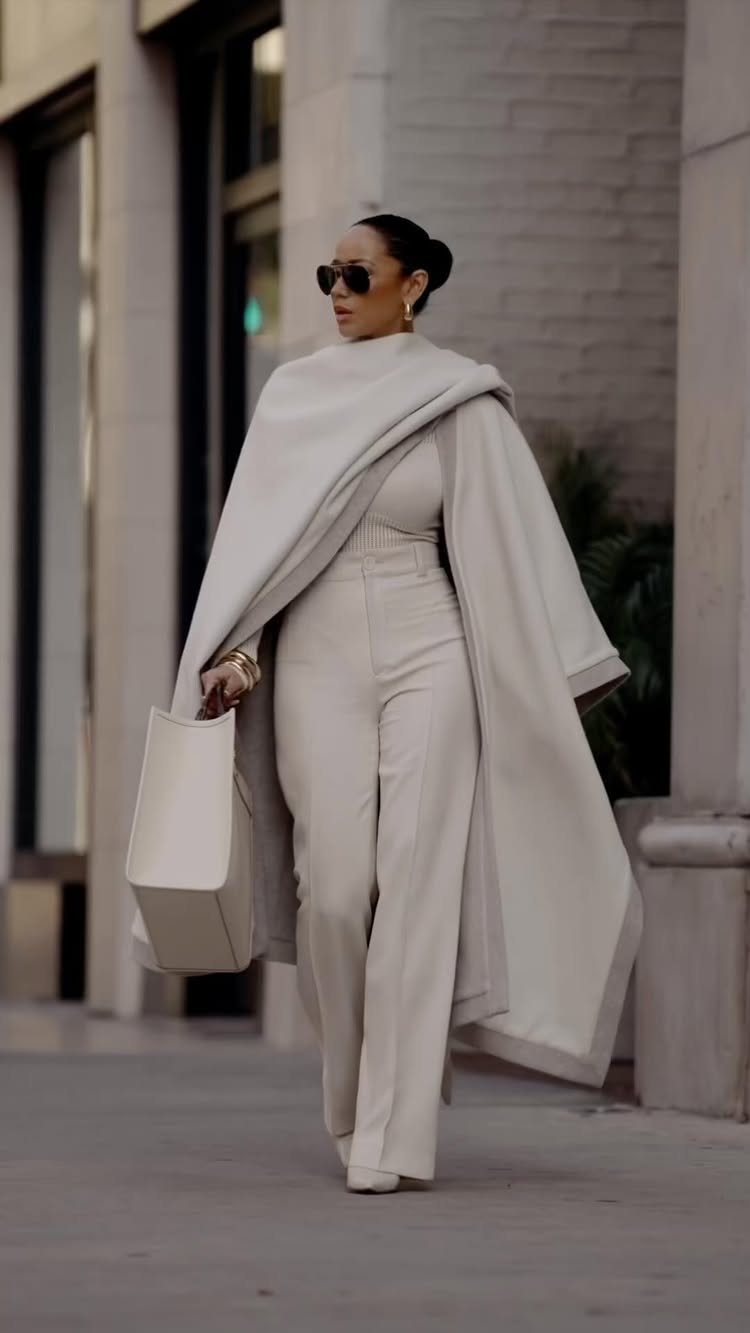
A single-layer outfit leaves you at the mercy of whatever the thermostat decides. Layering is insurance: each piece adds or subtracts warmth without requiring a full change.
The cream look here shows how to build it so the eye reads one column.
A draped cape coat over matching trousers and top extends the gesture of the outfit rather than breaking it. I aim for tone-on-tone when I want to look taller; contrasting layers work when I want to define my waist.
Fabric weight has to climb from inside out: the lightest against skin, the heaviest or most structured on top.
A structured tote finishes the line and carries the cardigan you peeled off at your desk. Build it once, adjust all day.
7. Cardigan with Pencil Skirt
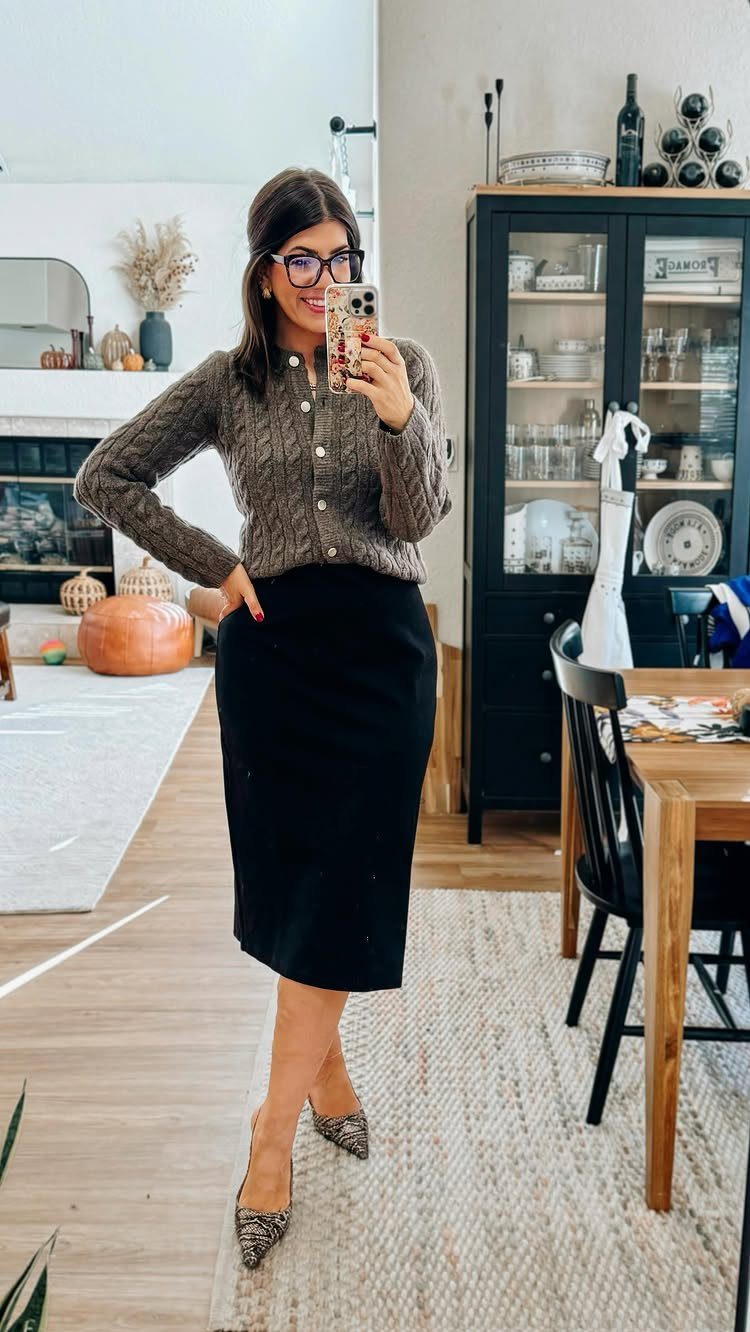
Textured knit over a slim skirt gives you warmth without the boxiness of a suit jacket. I like this pairing for days when I need to look pulled together but want the comfort of something soft against my shoulders.
Choose a cardigan with substance: cable or ribbed knit, thick enough to hold its shape when buttoned, in a shade that carries across seasons.
The leopard heel here adds interest without demanding attention; a textured sole would do the same if flats are your preference.
Check that the skirt hits at or below the knee and has enough give to sit comfortably.
A pear-shaped reader, by her own account, finds this silhouette reliable for full-time office life. Keep the top simple underneath; a camisole works, or a thin tee in the same tone as the cardigan.
8. Pinafore Dress Over Collared Shirt
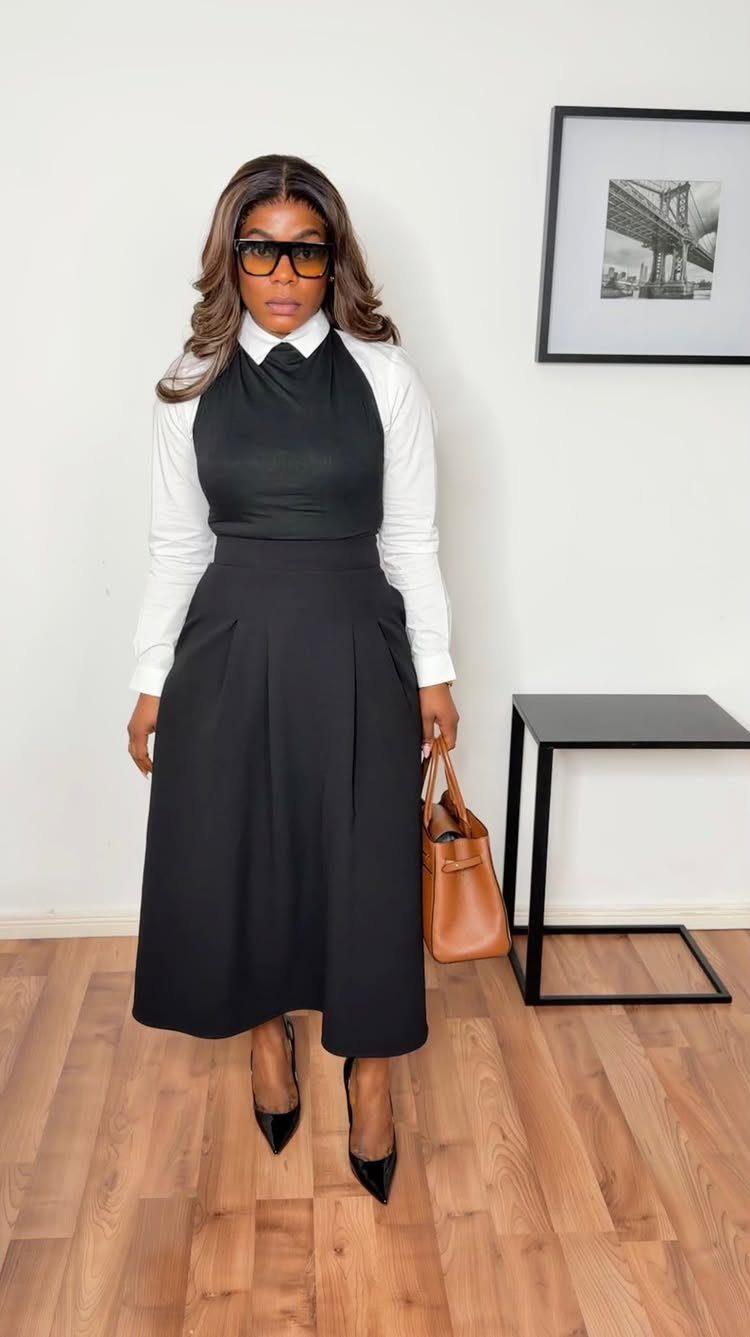
A pinafore dress turns a basic white shirt into an outfit that reads intentional. The exposed collar and cuffs do the styling work; you just need the shirt crisp enough to hold its line beneath the dress.
Choose a pinafore with a clean bodice and a skirt length that clears your knees for ease of movement.
Black forgives the occasional coffee splash and transitions to evening if dinner follows your last meeting. The pinafore layer sits cleanly over the collared shirt; add a fine-chain necklace or leave the collar bare.
Check that the shirt sleeves do not bunch at the dress armholes.
A cuff that buttons rather than a barrel sleeve slips through more cleanly. Pointed heels extend the leg; a leather tote in brown warms up the black and white.
Frequently Asked Questions
How to dress business casual but stylish?
One strong piece does the work: a silk blouse that catches light at the collar, a blazer that keeps its shape through hours of sitting, or wide-leg trousers with enough weight to fall clean. Then keep everything else quiet.
One statement piece, a belt, or a textured bag is enough; two fight each other. The polish comes from fit and fabric, not from piling on trends.
What is business casual attire for a woman?
For women, business casual sits between full suit formality and weekend ease: tailored pieces that read professional on their own, not because they match.
Think blazers that work over jeans or trousers, silk blouses that outlast trend cycles, midi skirts with enough give to sit in, and smart layering you can adjust as the thermostat shifts.
It sits between streetwear and traditional business dress: put-together, never overdressed.
What shoes work best with business casual outfits for women?
Pointed flats or low heels add polish without the ache of full pumps. Brown loafers ground a silk blouse and charcoal trousers.
Leopard heels or a textured sole add interest without demanding attention. The rule is structure and comfort together: a shoe that extends your line but lets you walk to the coffee station and back without thinking about your feet.