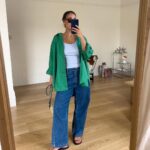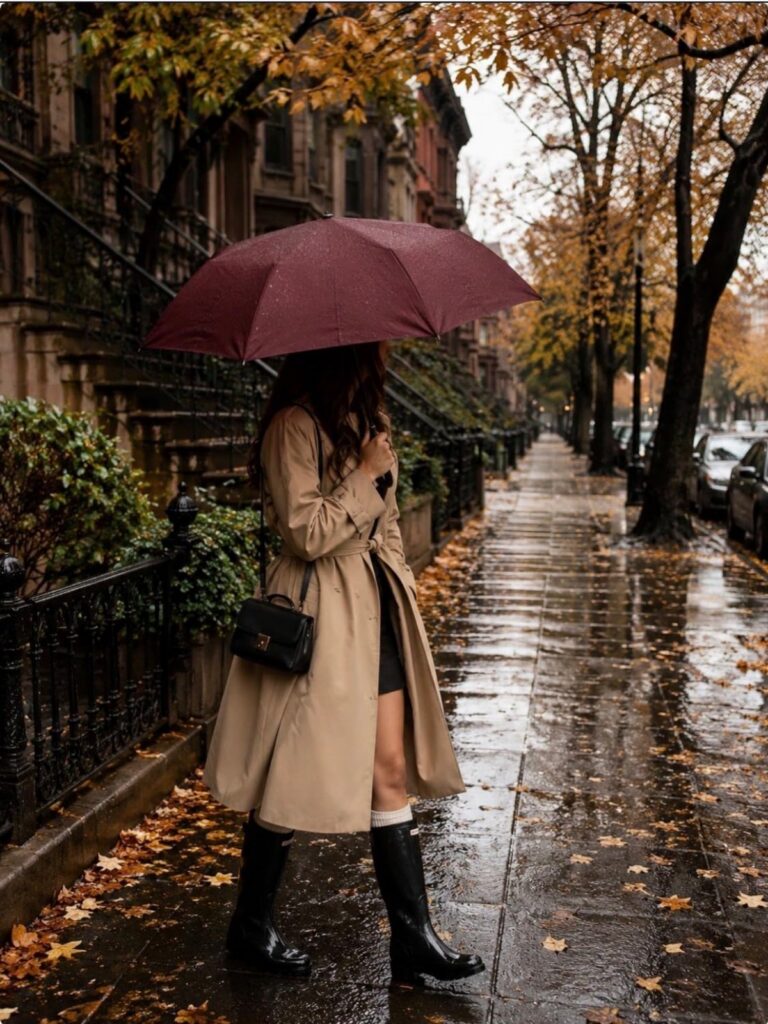
These pieces range from a striped top that costs less than lunch out to a wool coat worth saving for, and the one that earns its place first depends on whether your fall means rainy commutes or heated offices.
A trench that still reads current belted, open, or layered over knits is what separates a capsule from a shopping list.
1. Trench Coat
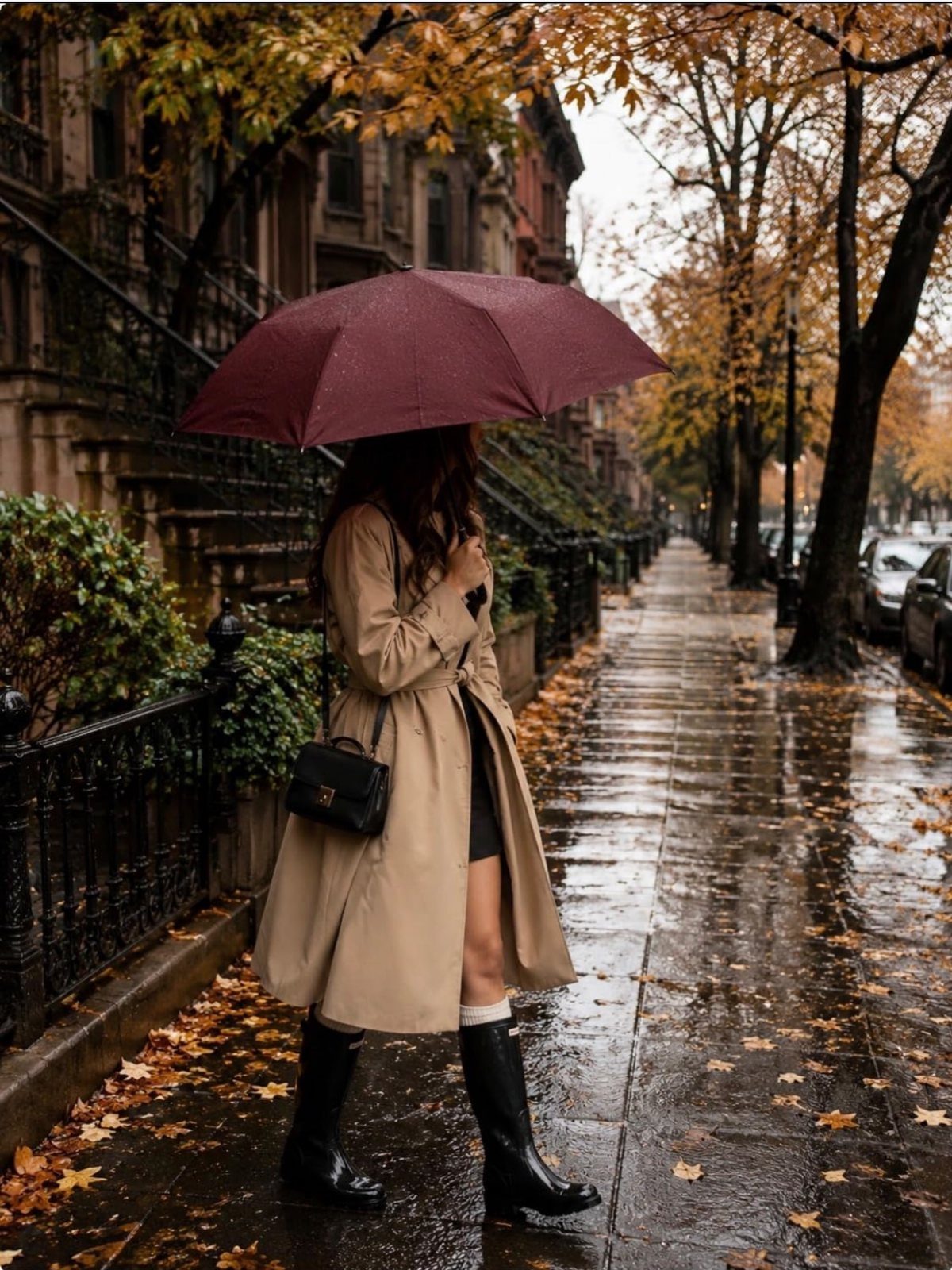
A trench coat handles that awkward stretch between your summer jacket and your heavy winter layer, which is exactly when French style looks most deliberate.
Mine needs to be beige or navy to earn its keep; a neutral shade doubles the outfits it works with.
The Scott Trench from Sezane has held up for more than 5 years now and still reads current, which is the test of whether you bought right.
Belted, open over a tee, or layered over knits as temperatures drop; each version extends the season.
If your climate runs mild, this may be your only outerwear investment.
2. Blazer
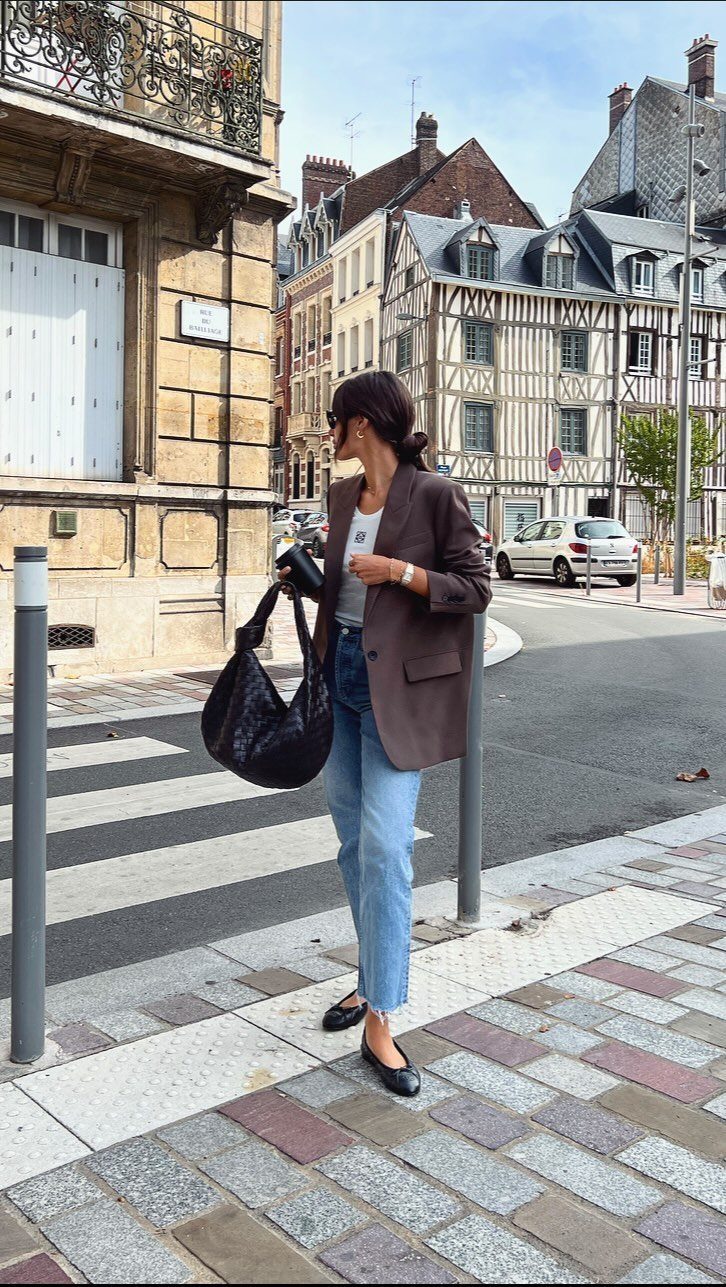
Tailored blazers in brown, black, or navy pair with almost anything already in your closet, which matters when you are building from pieces you own.
French styling leans on the tension between masculine cut and feminine ease.
I throw mine slightly oversized over a tee and jeans; the structure does the work, your attitude fills in the rest. For evening, the same blazer over a dress with flats reads intentional rather than dressed up.
Skip cropped or aggressively oversized versions for a capsule. They date faster than the classic cut you will still want to reach for down the line.
3. Straight-Leg Jeans
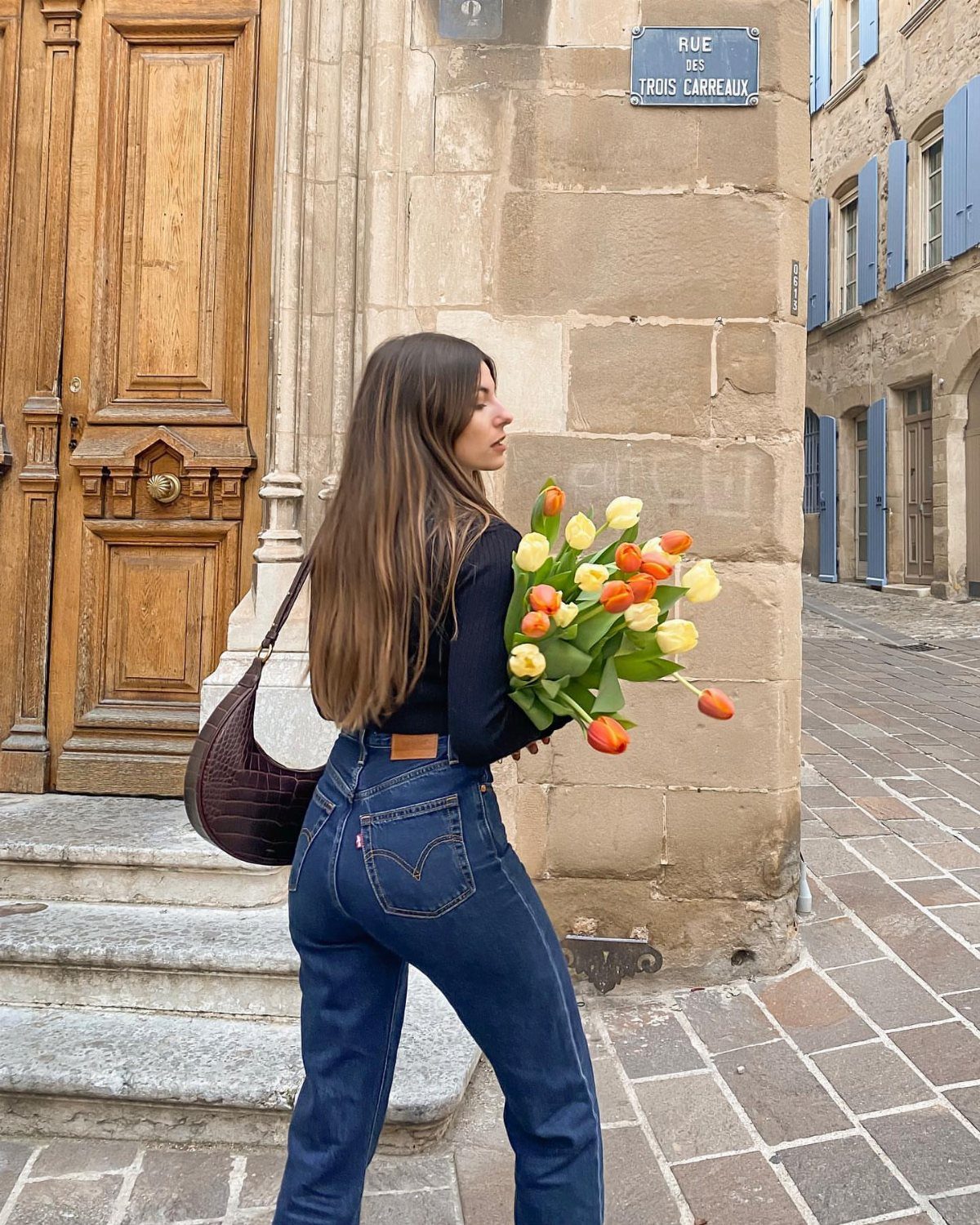
Straight-leg denim hits the balance French dressing insists on: polished enough for a blazer, relaxed enough for weekend errands.
I buy Mother and Paige because both brands offer multiple inseams; at 5’2", I need that option or I am at the tailor. Dark washes read more refined and mix more easily into work-adjacent outfits than faded or distressed finishes.
Skip anything too tight or too trendy. You want a shape that looks deliberate, not like you spent the morning fussing with it.
4. Ballet Flats
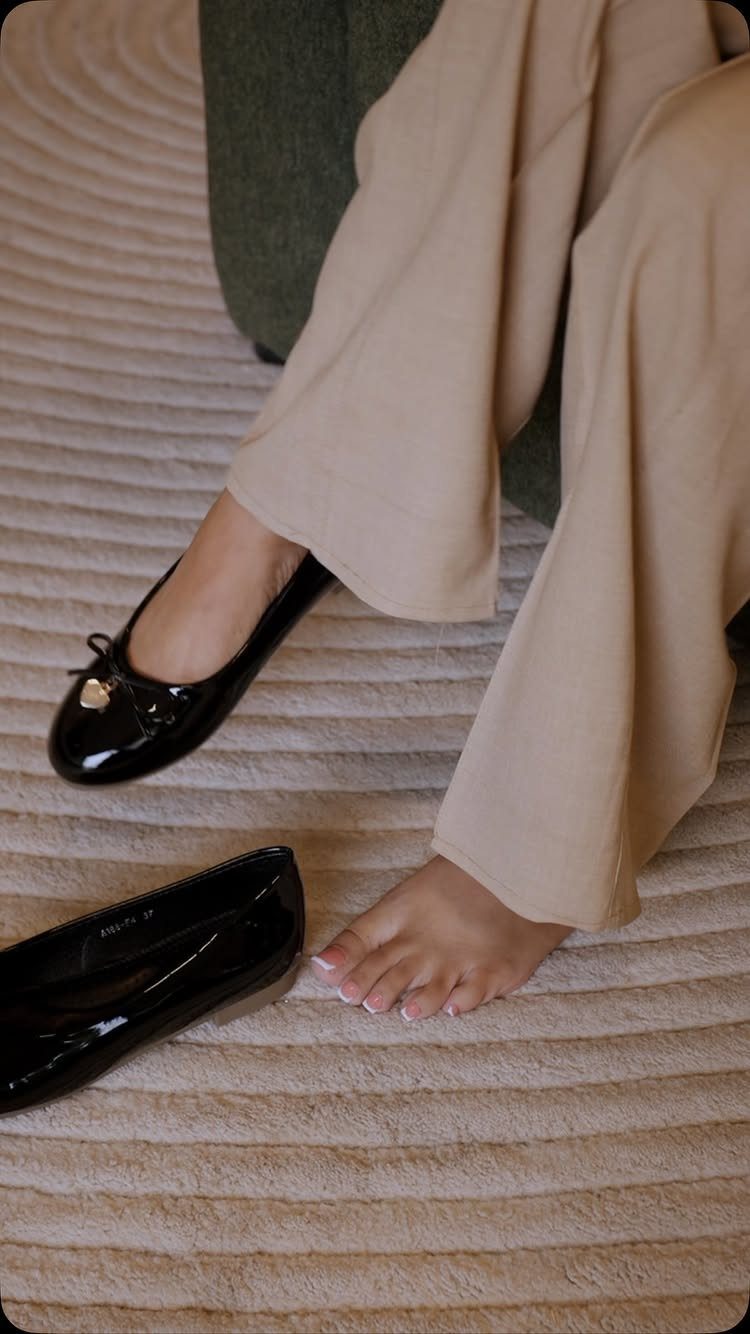
Ballet flats solve the walking problem that kills most dressed-up shoes, and French women walk everywhere.
Patent leather with a tiny bow reads classic rather than cute; that distinction matters after 30.
I own 3 pairs from Margaux for exactly this reason, comfortable enough for miles, polished enough for dinner. They work with straight-leg jeans, with dresses, with trousers; the versatility justifies the cost per wear.
A strap adds support if your feet need it. Either way, skip the embellishment cycle; a clean, simple design still outperforms every update.
5. Wool Coat
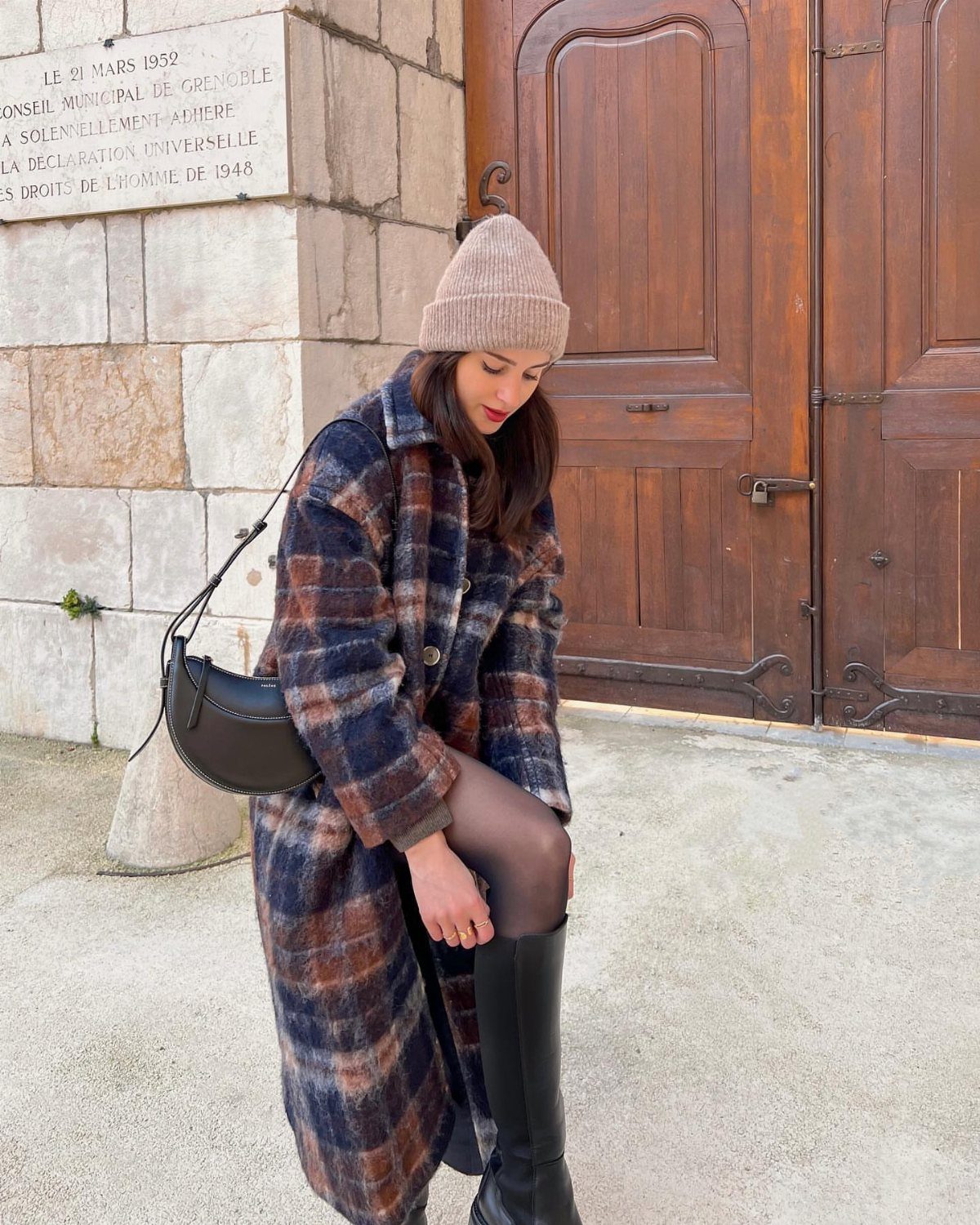
A wool coat is where you spend once and stop shopping.
Paris in October taught me this the hard way; an unexpected cold front sent me into a store on Rue du Faubourg Saint-Honore, and that purchase outlasted every coat I owned before it.
Plaid or solid, the cut matters more than the pattern. Roomy enough for a blazer underneath, structured enough to read sharp over a thin knit.
This is not the place to chase a bargain. A well-made wool coat at full price costs less than 3 replaceable ones.
6. Striped Top
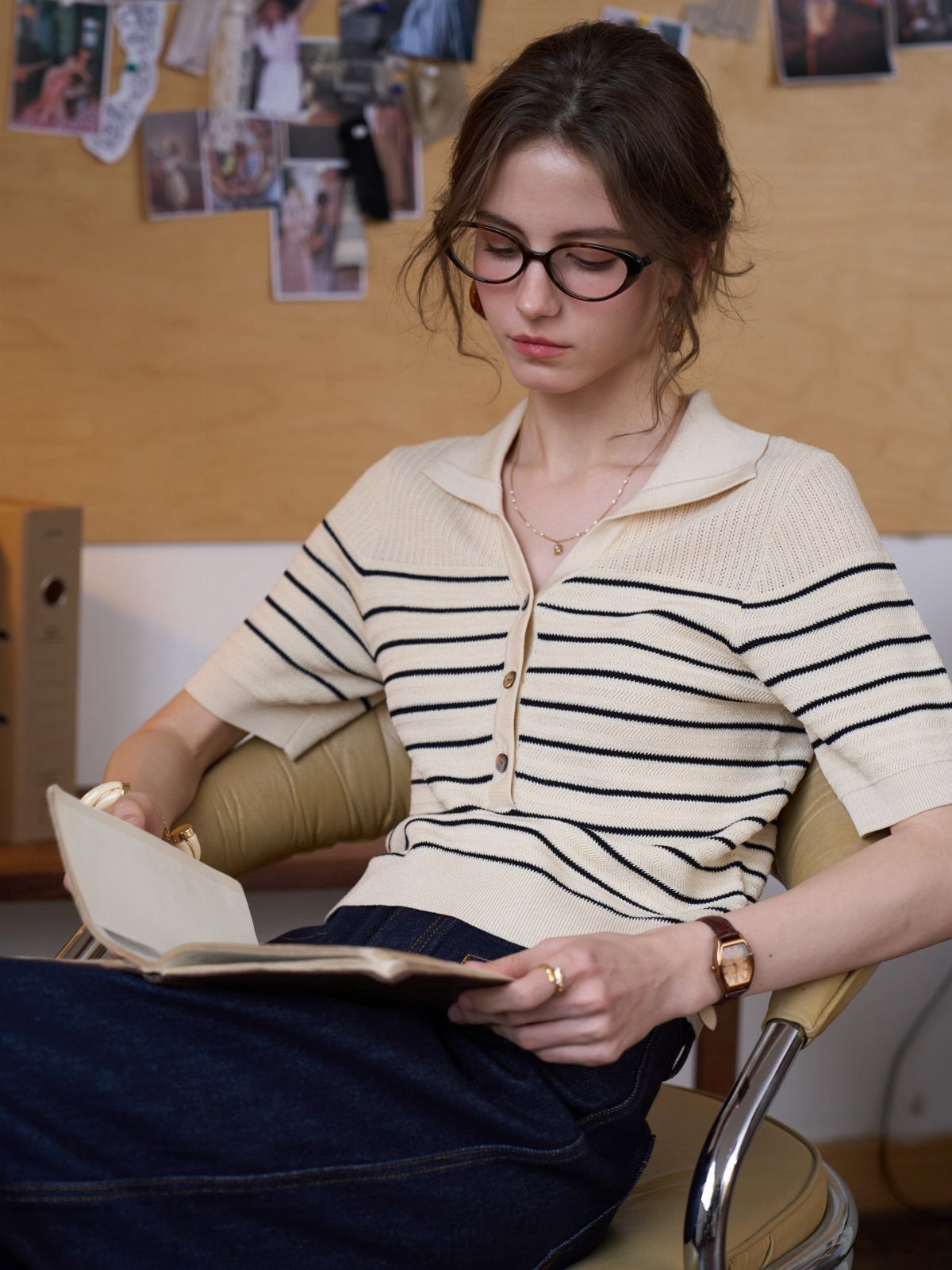
The Breton stripe telegraphs French style faster than any other single piece, which makes it useful when you want effort to read as ease.
Cream and navy or cream and black; the classic versions stay current decade after decade.
Short sleeve works under blazers, long sleeve stands alone. I treat mine as a neutral, which it functionally is, pairing with denim, trousers, or tucked into a high-waisted skirt.
Quality cotton holds its shape wash after wash. The cheap ones pill at the underarms and stretch at the neckline within a season, which defeats the point of a staple.
7. Tote Bag
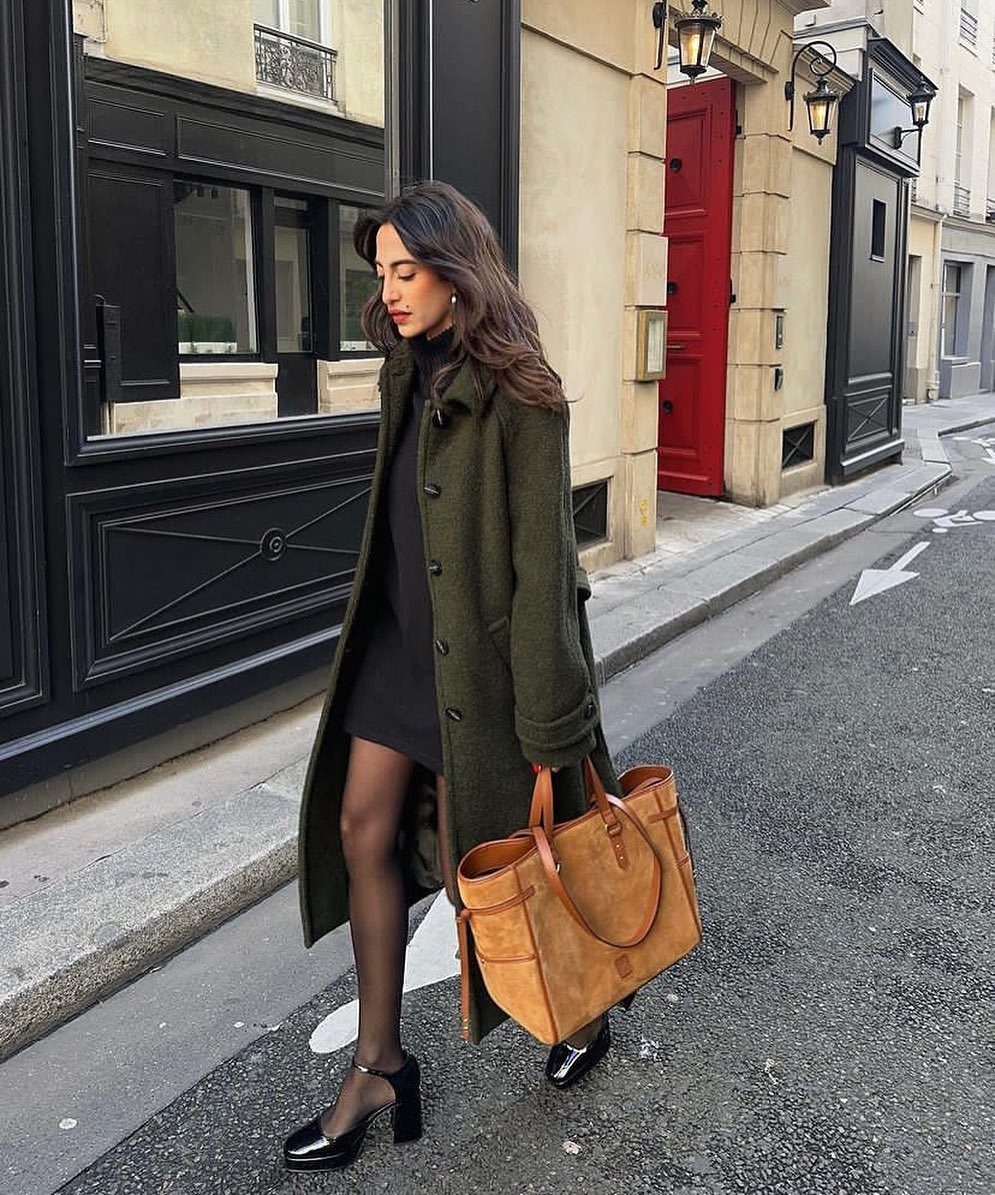
A tote needs to hold your real life without looking like you are carrying your whole life.
Suede or leather in tan, black, or olive earns the most pairings; this one hits that note exactly.
Structure matters more than size: soft enough to slide under a cafe table, substantial enough to stand on its own when you set it down.
I look for a handle drop that clears a coat sleeve in fall, short enough that the bag sits high on the shoulder.
Skip the crossbody conversion hardware that adds bulk. One clean strap, one open top, and a pocket that actually fits your phone.
8. Ankle Boots
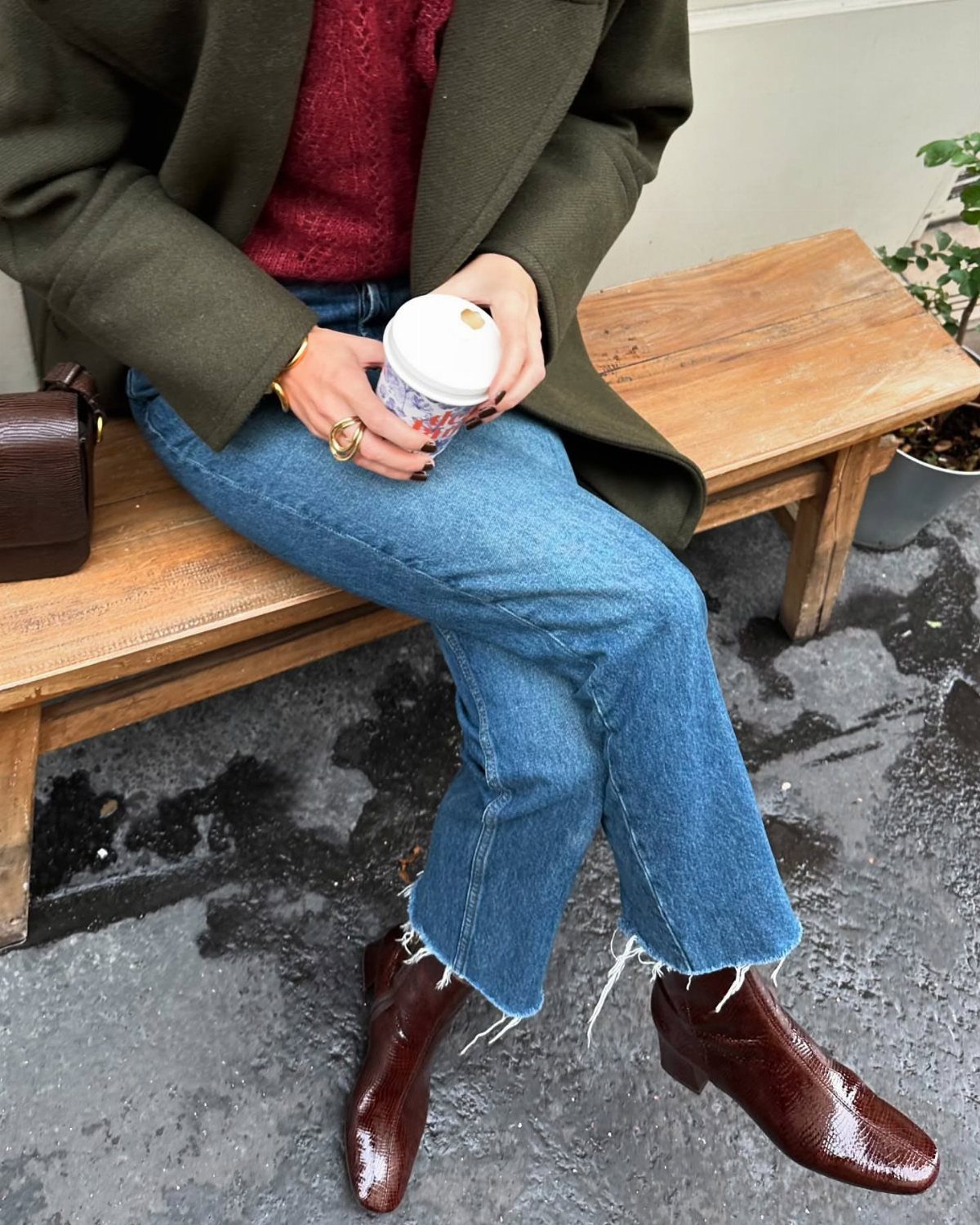
Fall footwear needs to handle every hem length you own.
Ankle boots in black or camel cover that range; a reddish-brown patent pair adds interest without limiting outfits.
A slight heel keeps trousers from dragging, and the cropped shaft lets the toe show under flares exactly the way French styling intends. I check that the ankle opening is slim enough to tuck under straight-leg jeans without bunching.
Rubber soles for wet sidewalks.
Leather that scuffs forgivingly. Skip anything that demands a specific sock weight or you will spend October hunting for the right pair.
9. Knit Sweater with Wide-Leg Trousers
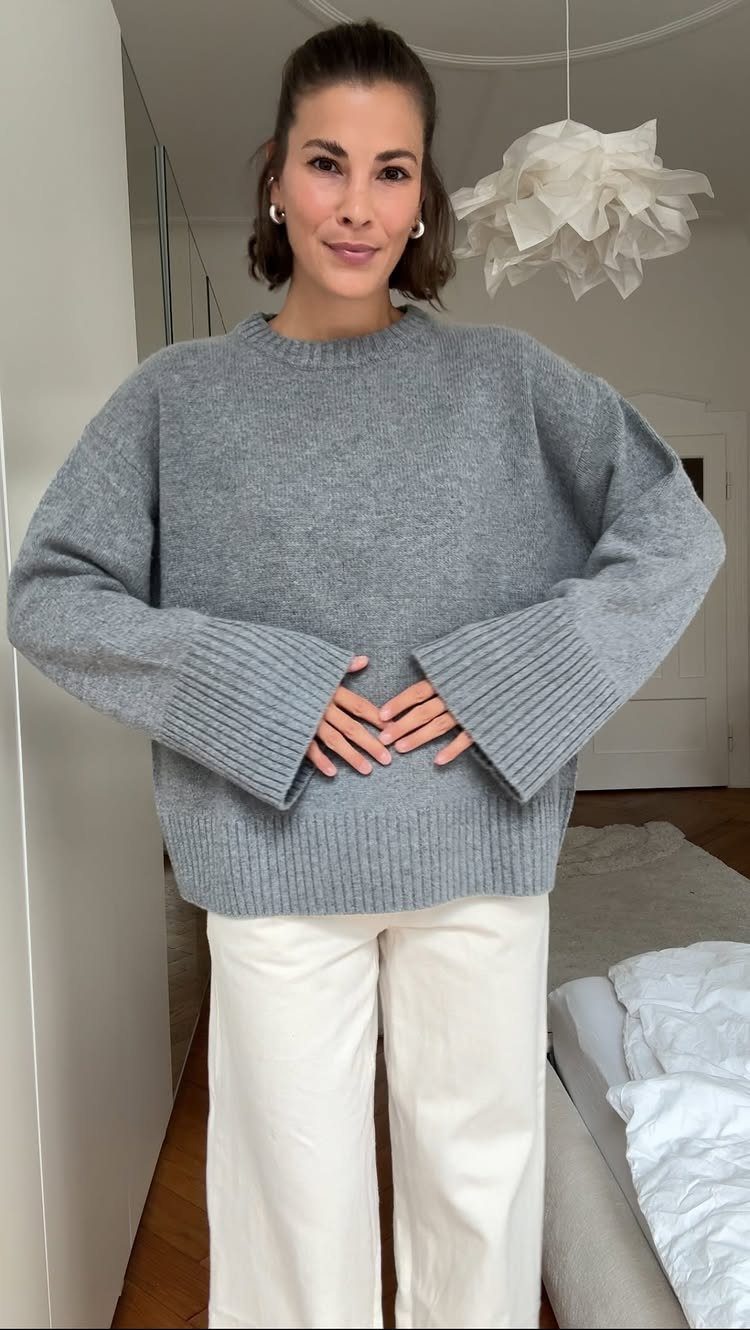
Wide-leg trousers need a knit that knows its place.
An oversized sweater works because the volume stays controlled: one loose piece, one structured piece, and the contrast does the styling.
For this pairing I prefer the sweater slightly longer than standard, hitting mid-hip, so the trouser waist defines the shape rather than fighting it. Neutral grey and off-white mix back to everything else in a capsule.
Fabric weight matters.
The knit needs enough body to hold its shape; anything too flimsy collapses into the trouser line and reads sloppy. Cashmere or a dense cotton-wool blend performs here.
10. Knitwear and Knee-High Boots
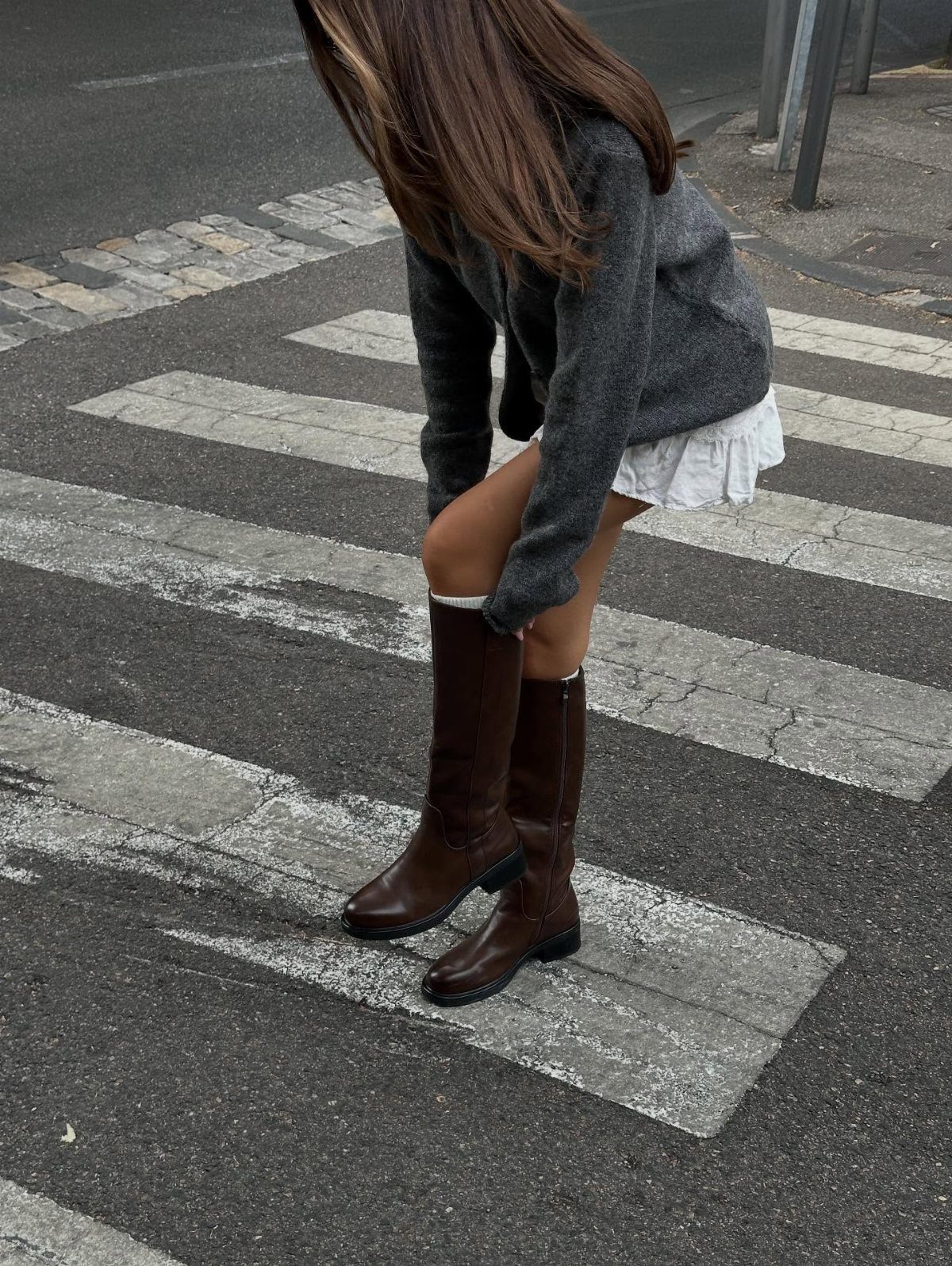
The sweater-over-skirt formula works when proportions hold steady.
An oversized charcoal knit needs a shorter white skirt to balance it; the knee-high boots then bridge the gap without chopping the leg. I check that the boot shaft meets the skirt hem or the eye loses its place.
Tights are optional until true cold hits.
Without them, this is a mild-day outfit; with them, it extends weeks into November. The boots should be fitted through the calf, not slouchy, to keep the line clean.
This pairing favors those comfortable with leg showing. If you are not, a longer skirt and shorter boot shaft achieves a similar ratio.
There is no better basic for fall than a cashmere sweater. It can be remixed endlessly—on its own, over button-downs, over dresses, under blazers, tucked into skirts… it’s the wardrobe workhorse that also feels hella nice on.
11. Printed Silk Scarf Accent
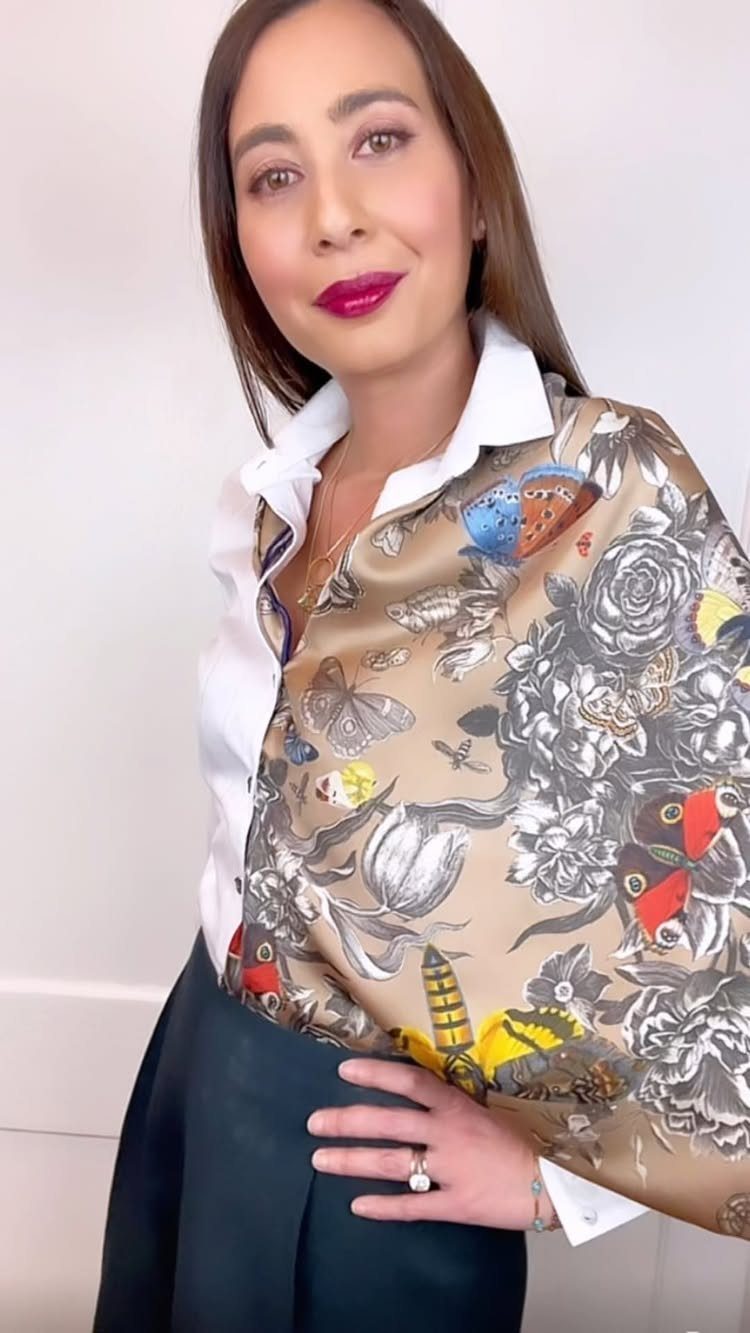
A printed silk scarf is the fastest way to make a basic outfit look considered.
A large scale scarf draped over one shoulder reads more modern than the neck-tied version; both work, but the drape suits wider necklines and heavier fabrics in fall.
I look for prints that pull at least one color I wear constantly so the scarf never sits unused.
Silk weight matters for the drape you want.
Too light and it slides off; too heavy and it reads winter-only. A substantial one works with a cotton shirt, light enough for under a coat without bulk.
Tuck the corner or let it hang; the choice is mood, not rules.
12. Ruffled Blouse with Tailored Pants
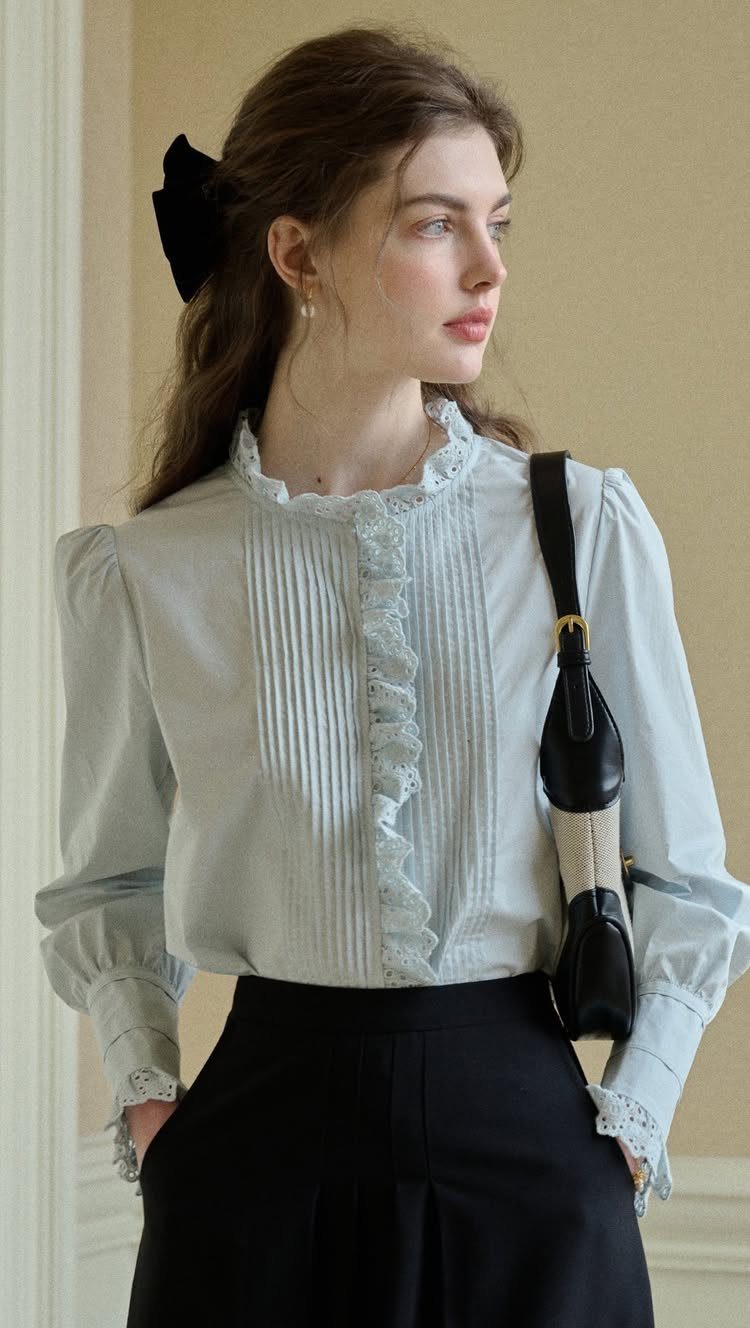
A ruffled blouse brings its own drama, so the rest stays quiet.
The hair bow adds a second feminine note; remove it and the outfit shifts more serious.
Fabric needs to hold the ruffle structure through a day of sitting and moving.
Cheap versions collapse by noon and the look turns unintentionally disheveled. Tailoring at the trouser waist keeps the line sharp against the blouse volume.
Building a Capsule Wardrobe
Start with what you actually do in a week, not what you wish you did.
A French fall capsule works because it matches real routines: commuting, standing in line, sitting at a desk, walking cobblestones. Count the hours you spend in each setting before you decide how many blazers versus sweaters you need.
Pull everything out and try it on.
Pieces that fit last fall may not fit now; bodies change, and a capsule built on denial becomes a closet of guilt. Donate before you organize so you are not staring at mistakes every morning.
Choose a number that feels tight but not punishing.
Twelve to 15 pieces plus outerwear and shoes is the range most people land on once they stop keeping backups "just in case." The constraint forces creativity; too much choice kills it.
Before I add anything to my cart, I lay it against 3 pieces already hanging in my closet to see if it actually talks to them. If it only works one way, it is not versatile enough for the count.
Color Palette
Neutrals are the starting point, not the whole story.
Black, navy, gray, cream, and brown form the backbone because they share undertones that let them sit together without clashing. But a palette of only neutrals reads as careful rather than confident.
Burgundy, forest green, and rust layer in where they connect back to at least 2 base pieces.
A cardigan that hits your jeans, your trousers, your skirt, and your dress earns its place before you check out. Color works in a capsule when it travels farther than one outfit.
Prints behave like color.
The Breton stripe functions as a neutral because it pairs with everything; a floral or plaid needs the same test. If you cannot name 3 pairings immediately, the print is a vacation piece, not a capsule piece.
One rule I follow: the new item should create four outfits with existing pieces. That is the threshold where a purchase stops feeling like consumption and starts working like a tool.
Investment Pieces
Quality shows in the seams and the lining, not the tag. Check that the shoulders sit right, the sleeves are long enough for your arms, and the closure feels solid in your hands before you decide.
Fabric content matters more than brand. Scuffs on soft leather turn into the kind of patina that makes a bag feel like yours; cracked leather only ever looks like something you should have thrown out already.
The pieces that deserve investment are the ones you reach for weekly: outerwear, boots, the bag you carry daily. Trend items, even expensive ones, are not investments because their lifespan is measured in months, not years.
Buy the thing that solves the problem you keep having.