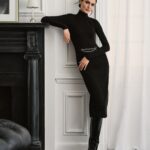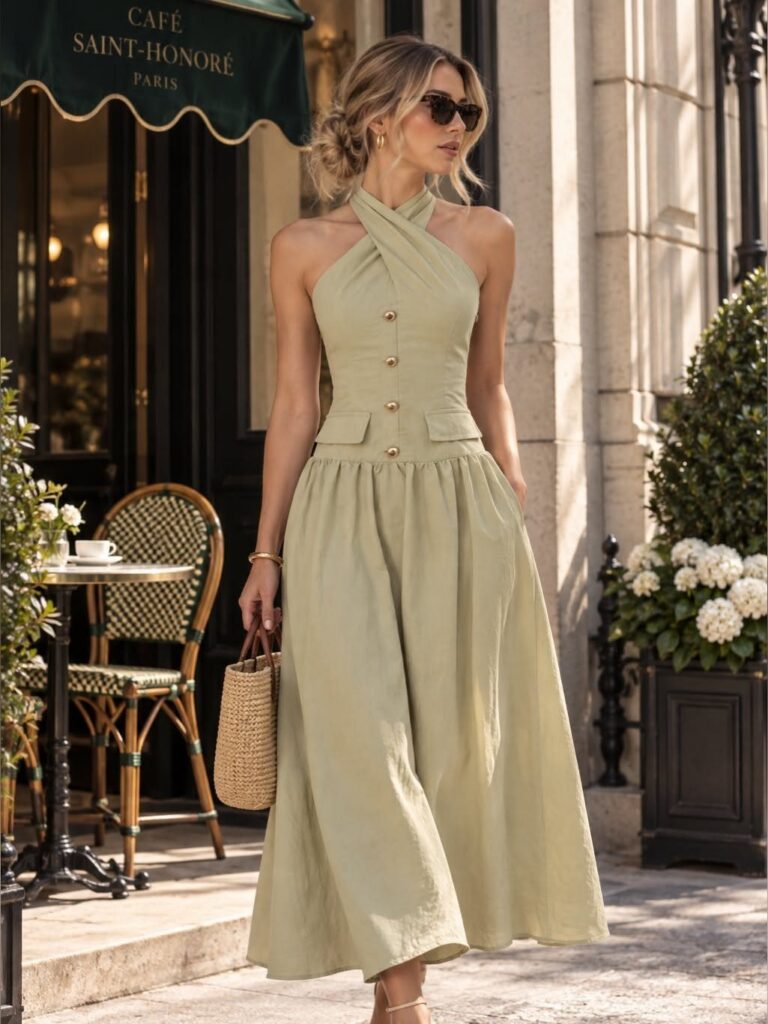
These outfits range from a single patterned maxi dress to a cropped jacket over a long blouse, so the deciding factor is whether you need structure at the waist or a continuous vertical line from neck to hem.
A drawstring or partial elastic band on high-waisted trousers lets you set the rise exactly where your natural waist sits, which is the make-or-break detail for long torsos.
1. High-waisted Trousers
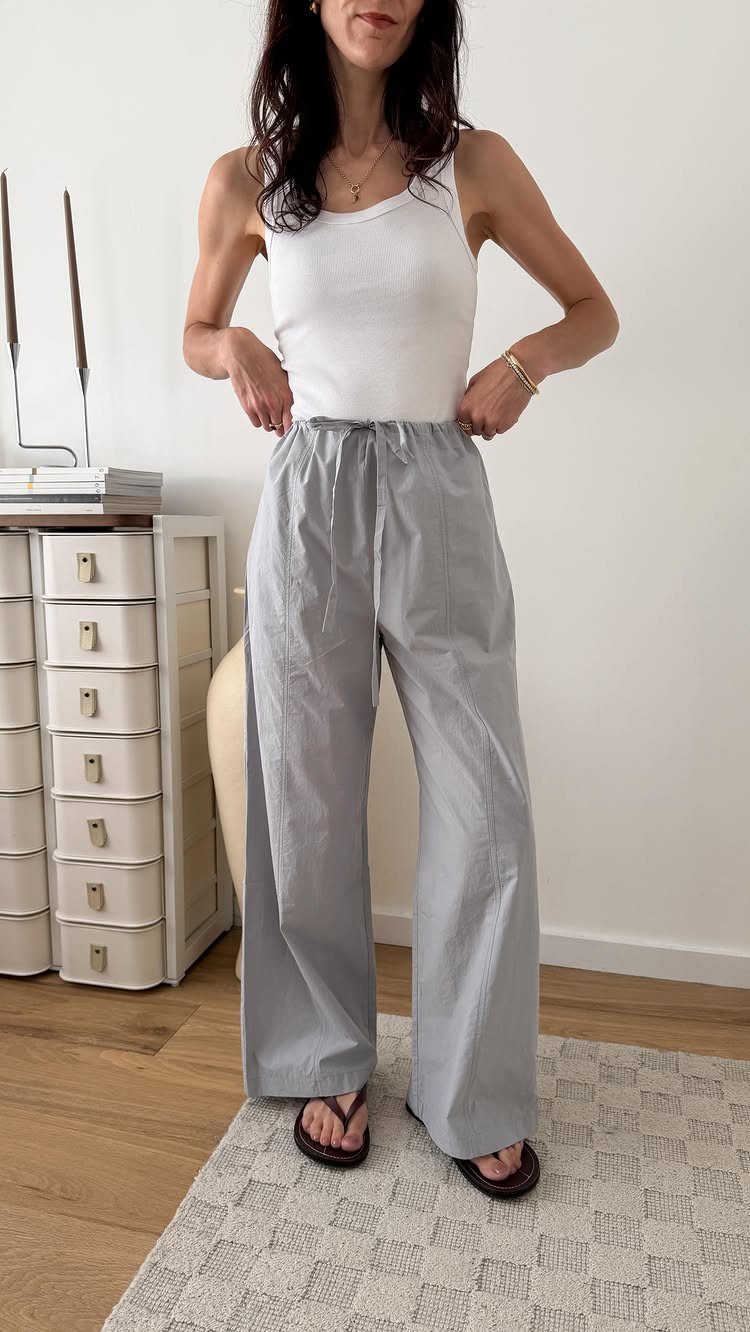
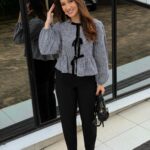
High-waisted trousers do the single most useful thing a long torso needs: they move your waistline up visually, so your legs read as longer and your middle as shorter.
High-waisted trousers look best when they sit right at the natural waist with a clean, wide leg that falls straight from the hip.
I always tuck in the top, which is the move that makes this work.
A thin ribbed tank or a fitted blouse keeps the line neat; anything loose and untucked wastes the effect. A drawstring waist lets you adjust exactly where the band sits, which helps if your torso length falls between standard sizes.
For color, I like keeping the top neutral so the eye travels up and down without stopping.
Grey and white, dark denim with a pale blouse, or any similar pairing does the same job. One-third top and two-thirds bottom is the proportion photographers aim for, and it works for long torsos too.
2. Waist-defined Dresses
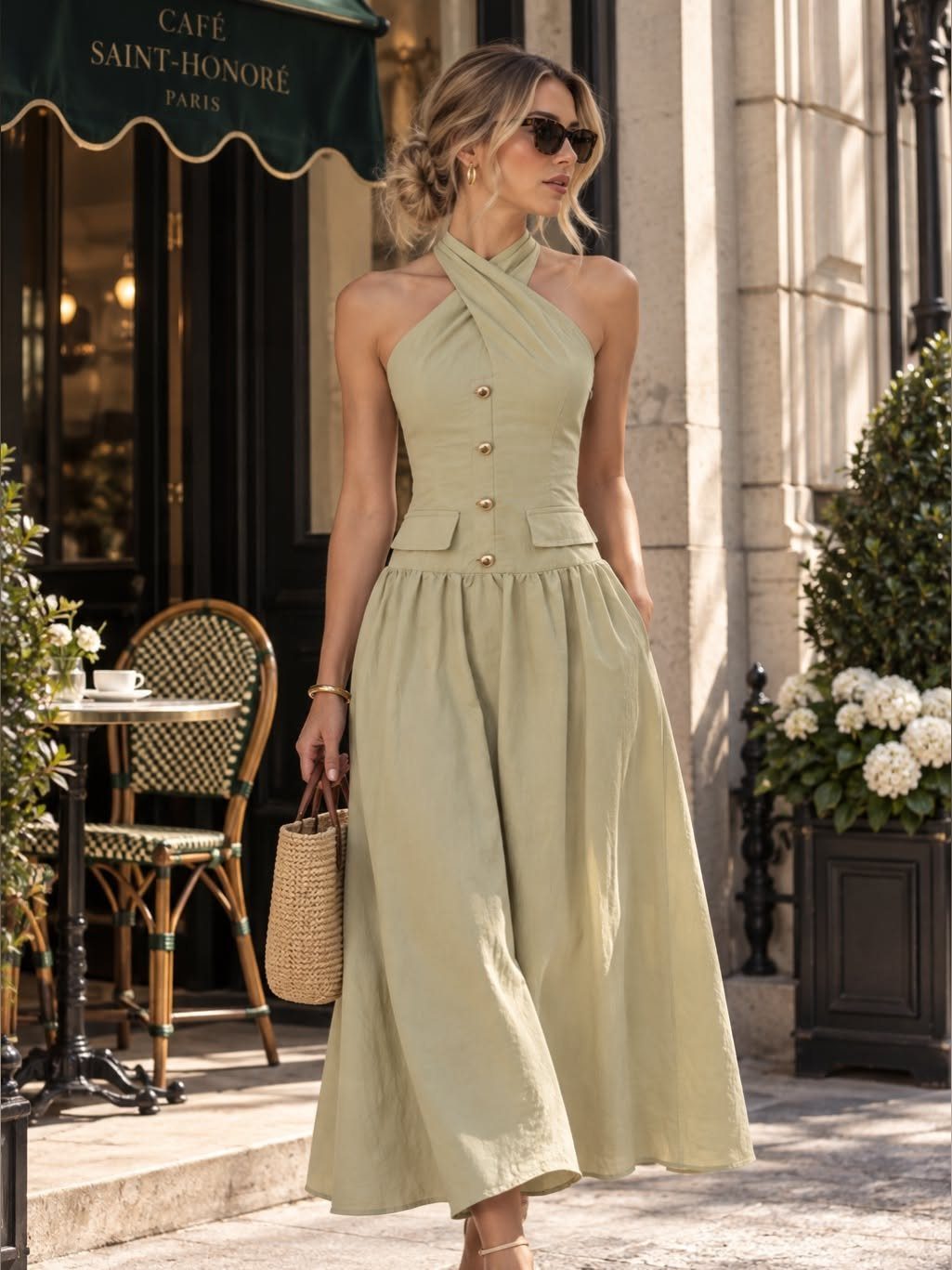
A dress with a clear waist seam or tie gives you structure without requiring you to find one on your own.
A halter dress draws the eye up to the shoulders, and a cinched waist keeps the torso from looking endless.
I look for dresses where the waist hits at my actual narrowest point, which on a long torso can sit lower than where a standard dress places it.
Trying on is non-negotiable here, a waist that lands an inch too low throws the whole proportion off. The midi length helps too, it adds length below rather than above the waist, which balances the overall silhouette.
Puff sleeves or a fuller skirt can add volume where you want it, but I prefer keeping the top sleek like this halter and letting the waist do the work.
3. Monochromatic Outfits
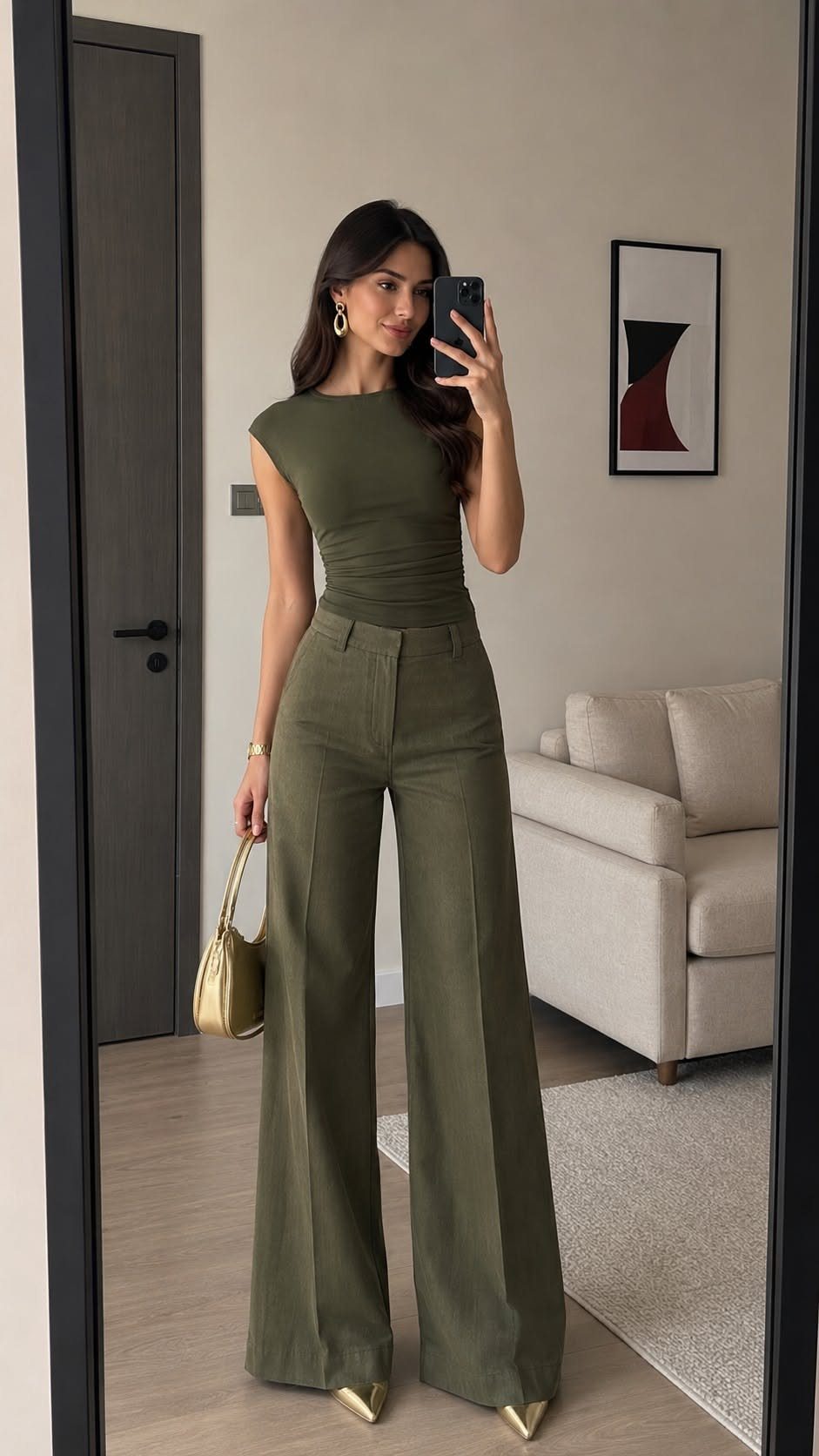
One color head to toe removes the horizontal breaks that chop a long torso into sections. A single-color set reads as one continuous column because the eye does not stop at waist or hem.
I find this especially useful with softer, muted tones, olive, sand, slate, because they blur edges even more than black does. A sleeveless cut adds shoulder line without adding complexity, and a wide leg keeps the vertical line going.
If you want to vary the texture, that helps more than varying the shade. A knit top with woven trousers in the same color family still reads as unified.
The only place I break the rule is with shoes, which I keep in a tone that either matches or is deliberately neutral, never a sharp contrast that would sit right at the bottom edge and call attention to where the outfit ends.
4. Long Blouses
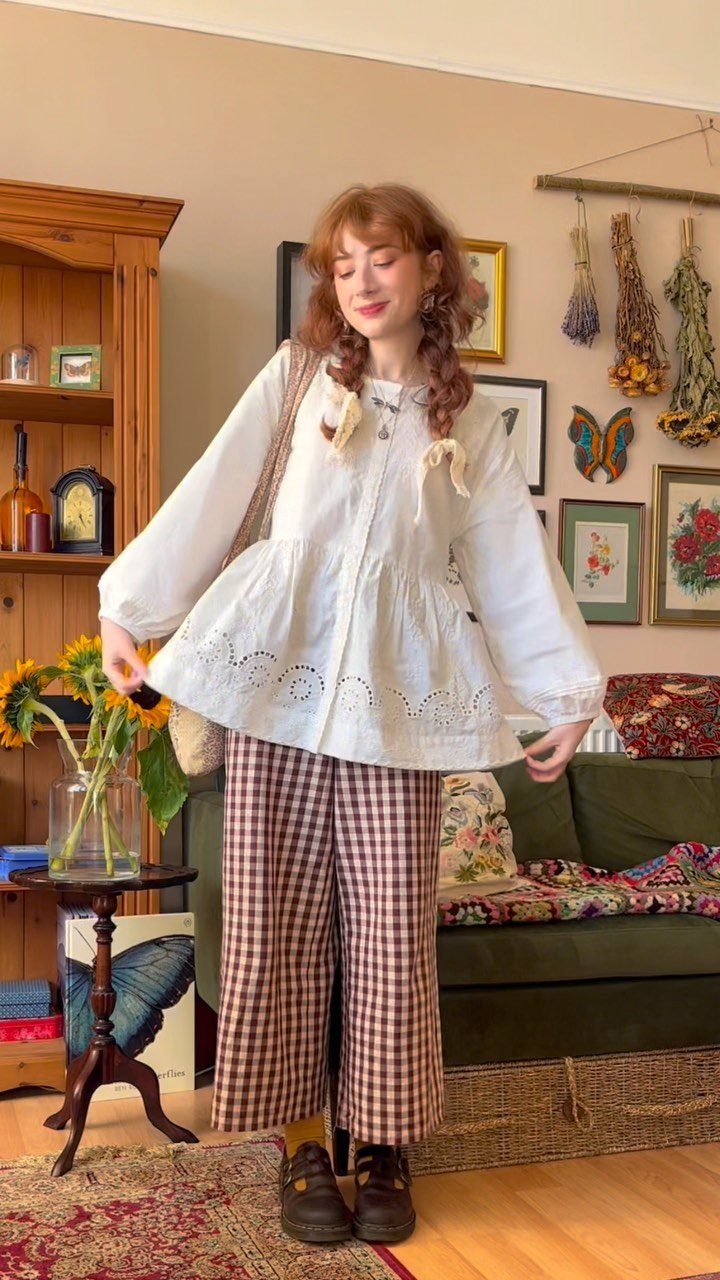
A blouse that covers the hip line gives coverage without the boxiness of a tunic, and when paired with high-waisted pants, it shortens the visual torso in a way that actually balances the body.
An eyelet hem adds detail without bulk on a long blouse.
I wear these with pants that sit at the natural waist or higher, never low-rise, because the blouse needs to end where the waist begins.
Tucking would defeat the purpose; the drape and length are what make this work. The checkered wide-leg trousers shown give enough structure below that the soft top does not look sloppy.
For fabric, I look for something with a little movement, cotton voile or a light silk, so the blouse does not stiffen into a tent shape.
The eyelet or another small texture near the hem draws the eye downward, which helps ground the outfit.
5. Cropped Jackets
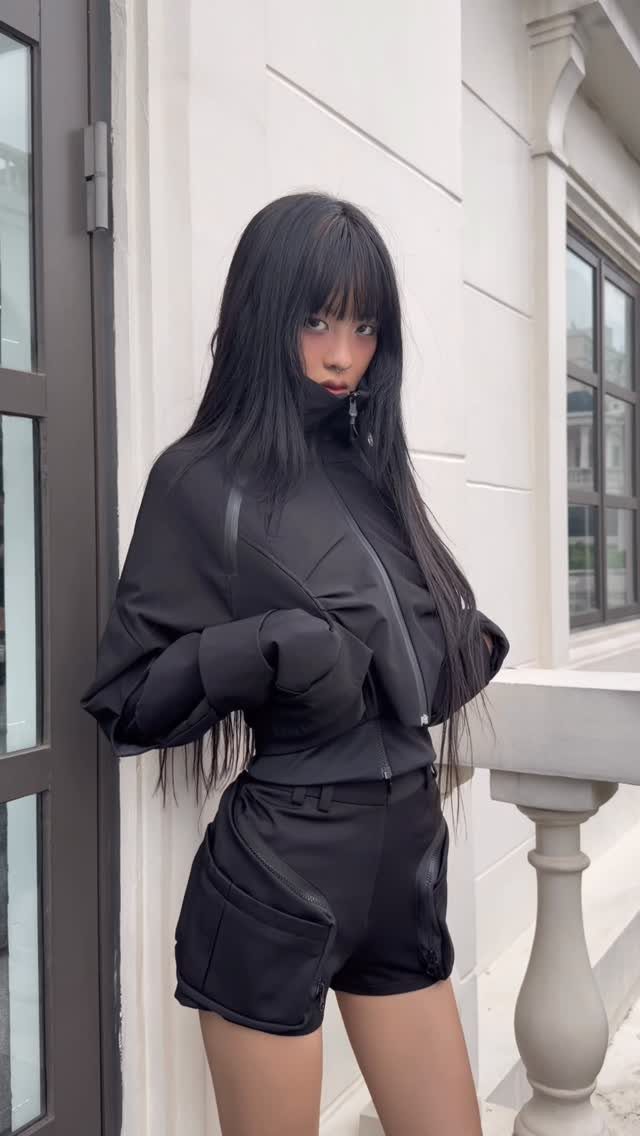
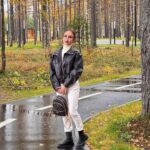
A cropped jacket hits at the waist or just above, which means it can sit on top of high-waisted bottoms without hiding them.
A cropped technical jacket stops exactly where the shorts begin, creating a clear break that defines the torso length rather than extending it.
I use these as a finishing layer rather than a warming one. Over a fitted tank or a thin turtleneck, the cropped shape adds structure without the visual weight of a longer coat.
The zip front here keeps the line clean; I avoid anything with a belt or drawstring at the hem, which would compete with the waistline I am trying to show.
This is my go-to when I want to wear a high waist but the weather calls for another layer. The jacket does not need to match, but it should not contrast so sharply that the eye stops at the break.
6. Layering
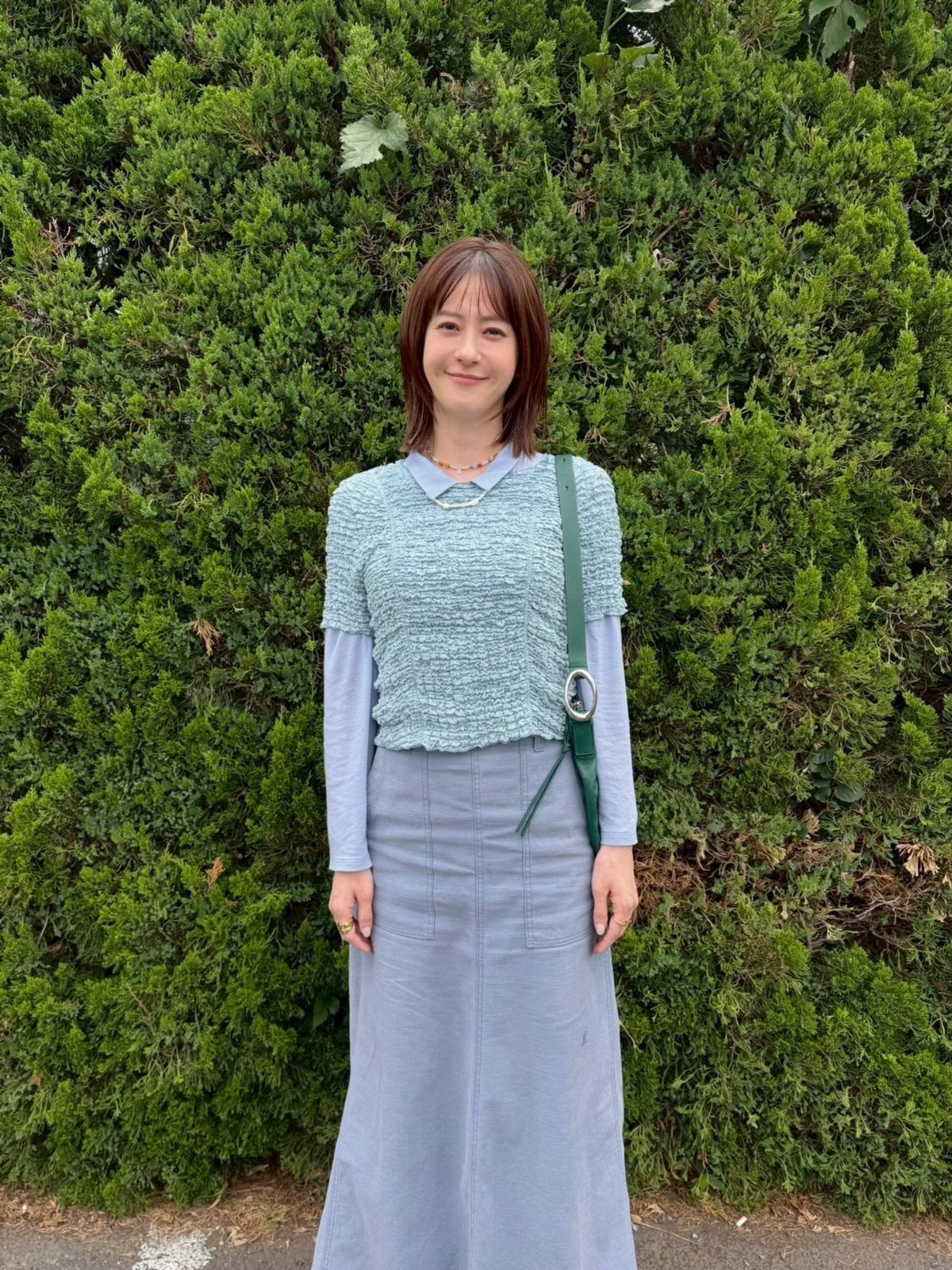
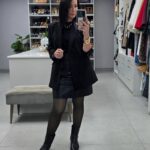
Layering for a long torso is about adding interest without adding horizontal lines that cut the body wrong. Layering works best when both pieces share a color family, so the eye reads them as one vertical gesture.
A fitted underlayer with a slightly boxy or cropped overlayer flatters most long torsos; both layers loose rarely works.
The collar and cuffs showing at neck and wrist give the outfit its point; without them, the layers would just look like bulk.
The maxi skirt here continues the vertical line all the way down, which I find more flattering than stopping at the knee.
The risk is always volume.
I check myself in a mirror from the side, because a long torso can start to look thick if the layers sit away from the body. Thin, textured knits work better than heavy ones for exactly this reason.
7. Wide-leg Jeans with Sleeveless Top
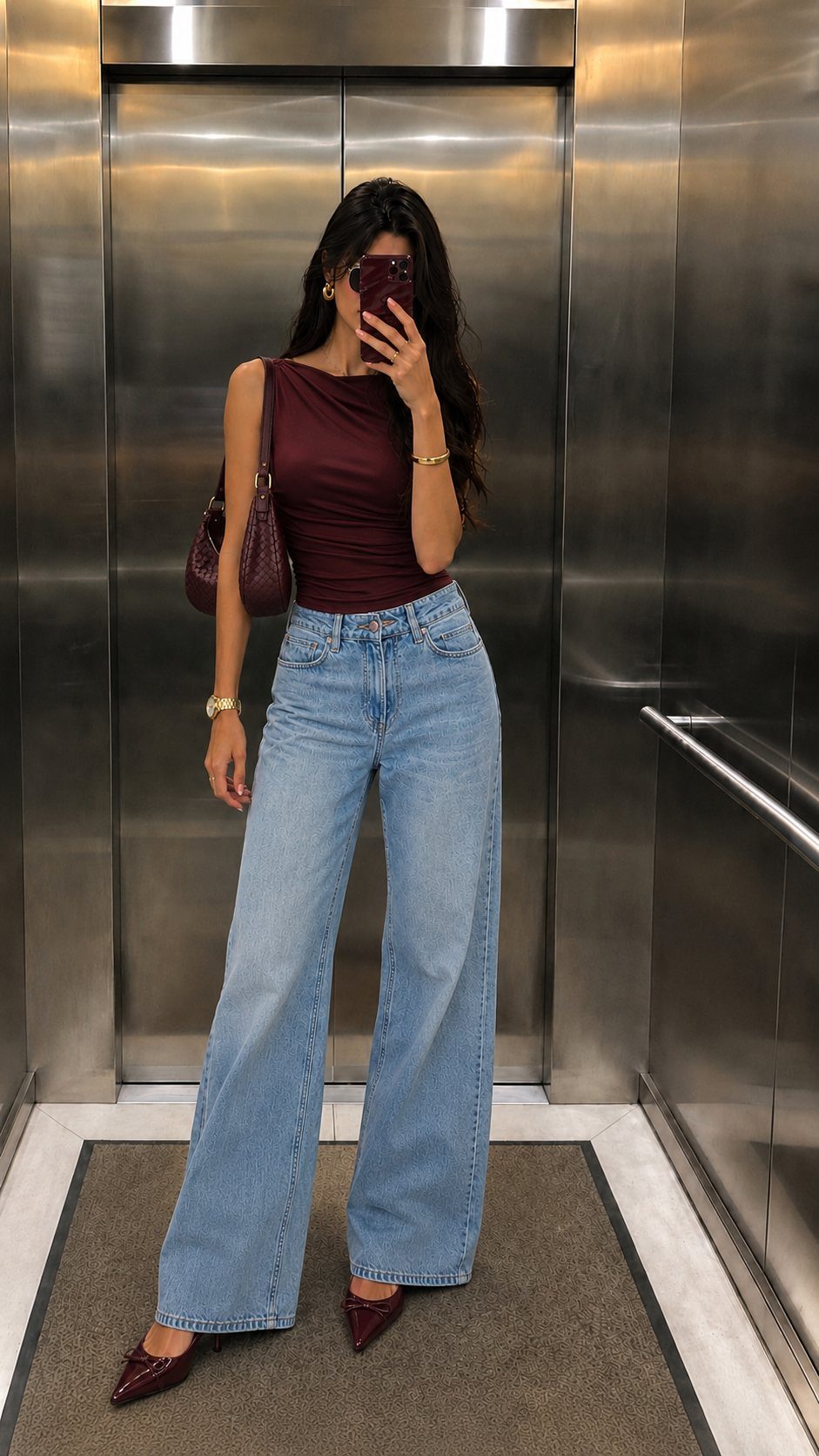
Wide-leg jeans with a sleeveless fitted top reverse the usual proportion problem: the volume below anchors you, while the bare shoulder line keeps the eye up.
The burgundy top here is trim through the body, which matters because a loose top with wide legs would read as shapeless.
I tuck or choose a cropped length so the waistband shows, since the high rise is doing the lengthening work on your legs.
The matching bag and shoes in the same tone as the top create one vertical block of color against the lighter denim, which is simpler than trying to match the wash.
A pointed toe extends the leg line even under the wide hem. If you prefer a heel you can walk in all day, a kitten heel gets most of the effect without the commitment.
8. Patterned Long-sleeve Maxi Dress
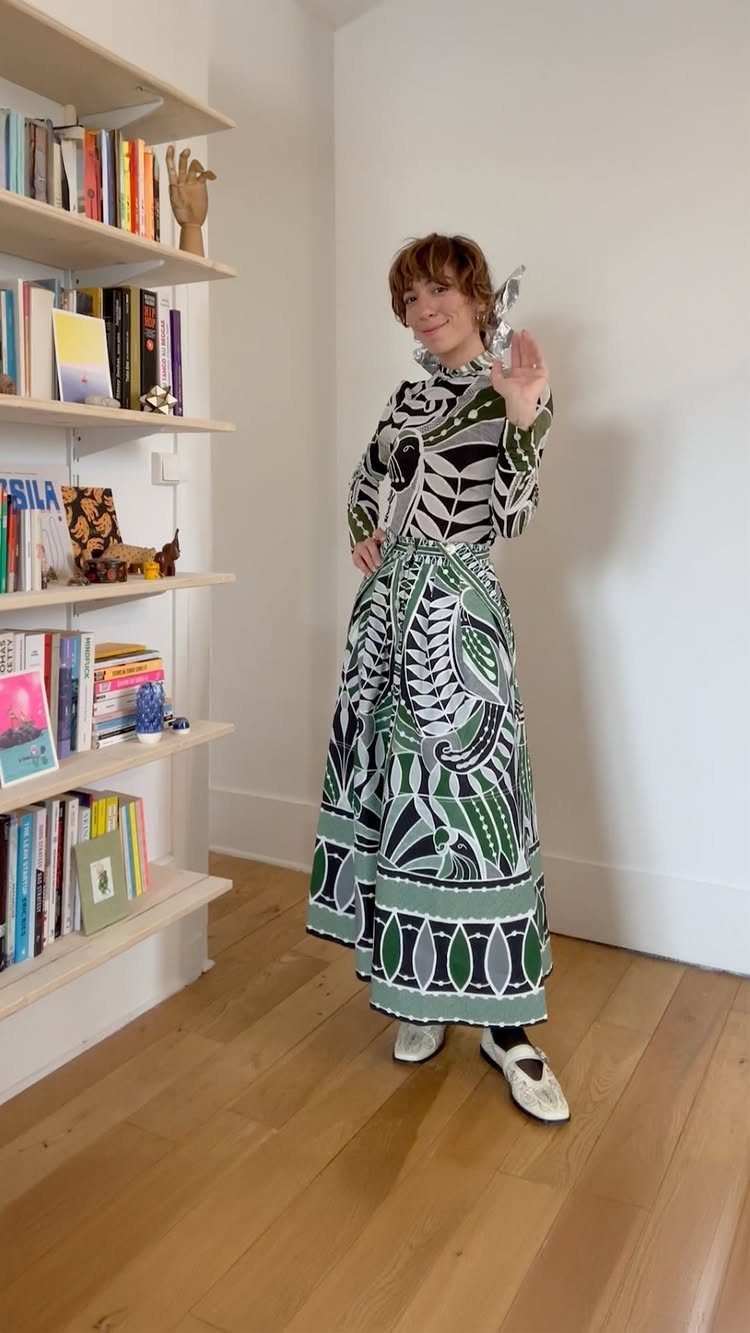
A patterned long-sleeve maxi dress covers the torso in one unbroken sweep from neck to ankle, which removes the question of where your waist sits entirely.
The all-over geometric print here keeps the eye moving rather than settling on any one horizontal line.
I look for long sleeves rather than sleeveless because they add balance to the length below, a bare arm with a full skirt can feel top-light on a long torso.
The flat white shoes keep the dress as the single statement; anything with height would compete with the pattern.
Fabric weight matters more than usual. Too light and the skirt clings at the hip, too heavy and the whole thing becomes a tent.
A cotton or viscose blend with a little structure usually hits it right. A belt would break the vertical line this dress is built to give, so I skip it.
Styling Tips for Long Torsos
High-waisted pieces only work if the rise actually lands at your waist, not near it.
I check this sitting down; a waistband that gaps or slides when you bend will keep sliding all day. A drawstring or partial elastic band helps, but a hook-and-bar closure with a short zip gives the cleanest front.
Fitted tops matter, but the fit needs to be close, not tight.
A ribbed knit with a touch of elastane keeps its shape without clinging. If the fabric buckles at the small of your back, size down or try a shorter length.
Baggy clothing is the hardest rule because relaxed shapes are everywhere right now.
I test volume one piece at a time: wide leg with fitted top, or boxy shirt with slim pant, never both loose. A half-tuck can rescue a slightly oversized shirt, but full untucked rarely works on a long torso.
Best Colors and Patterns
Solid colors do the heavy lifting, but which solid matters.
Black shortens vertically less than it absorbs light; on a long torso, that can flatten you into one dark block. I prefer mid-tones like olive, rust, or slate, which keep the continuous line but add dimension.
Subtle patterns work when they read as texture from a few feet away.
A micro-stripe or tiny dot in a tone-on-tone palette does this; a bold horizontal stripe does not. If you want pattern, wear it below the waist where the eye is already traveling down.
Bright tops with patterned bottoms reverse the usual advice, and it does work when the bright is truly saturated, a clear red or cobalt, not a pastel.
The eye stays high, the pattern stays low, and the break between them is the waist you define. A solid shoe in the top color extends that upward pull.
Footwear Choices
Low-vamp shoes show more instep, which reads as more leg. A classic ballet flat or a pointed-toe pump with a shallow opening does this; a high-vamp oxford or a bootie that covers the ankle does the opposite.
Keeping the vamp line below the ankle bone helps keep the leg line looking longer.
Color matters as much as cut. A shoe that matches your skin tone or your trouser color extends the line; a sharp contrast, even a low-vamp one, puts a period at the end of the sentence.
Nude is not one color; I look for a shade with the same depth as my skin, not lighter.
A kitten heel gives most of the leg-lengthening effect of a higher heel without the posture change that can tilt a long torso forward.
If you wear flats, a slightly pointed toe adds the illusion of length that a round toe does not.
Frequently Asked Questions
What kind of pants are best for people with a long torso?
High-waisted trousers with a wide leg that falls straight from the hip work best, since they move your waistline up visually and make your legs read as longer.
Wide-leg jeans also help, especially when you tuck in a fitted top so the waistband shows.
A waistband needs to land at your actual natural waist, not just near it, because one that gaps when you sit will keep sliding all day.
What is the most flattering dress style for a long torso?
A waist-defined dress with a clear seam or tie gives you structure, and the key is finding one where the waist hits at your actual narrowest point.
A midi length helps too, since it adds length below the waist rather than above it, which balances the overall silhouette.