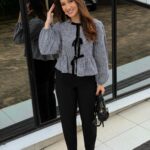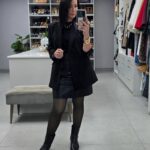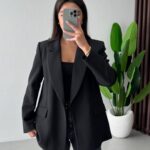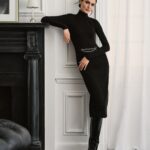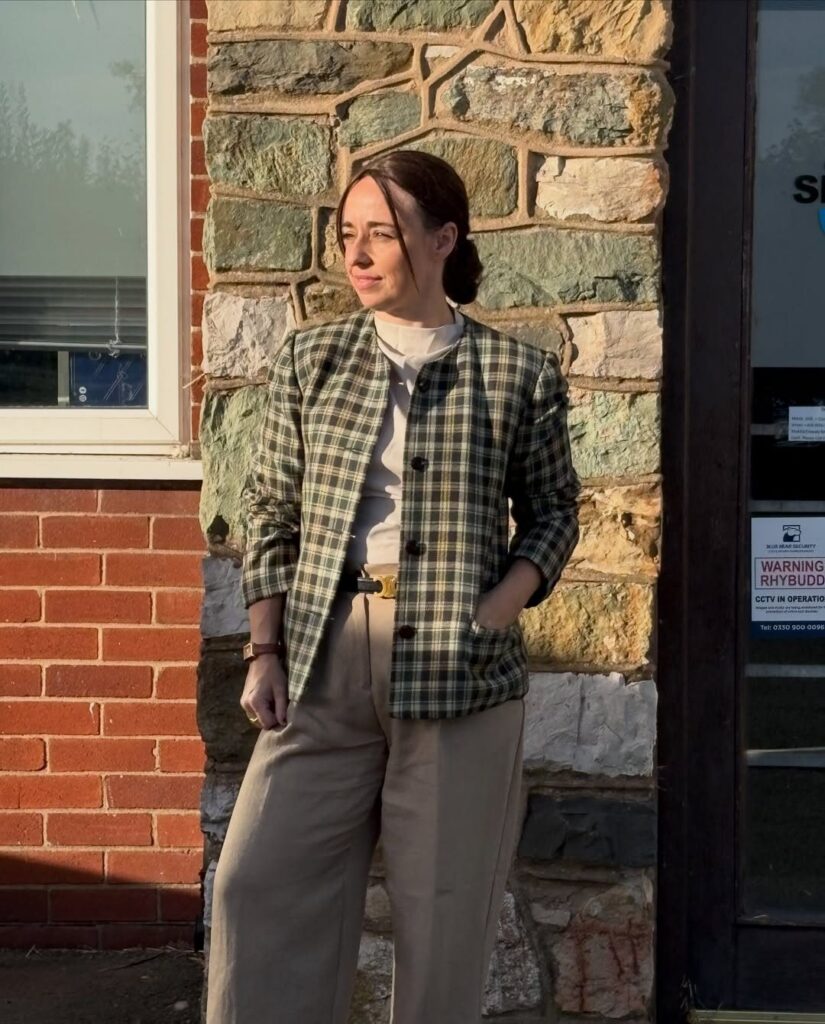
These ideas for comfortable work clothes range from a sweatshirt paired with tailored trousers to a ponte knit dress you can throw on without thinking, and the one that belongs in your closet depends on whether your office runs hot, cold, or both in the same afternoon.
The hidden elastic panel in a high-waisted trouser is the detail that separates an outfit that looks comfortable from one that accidentally is.
1. Cardigans and Blazers
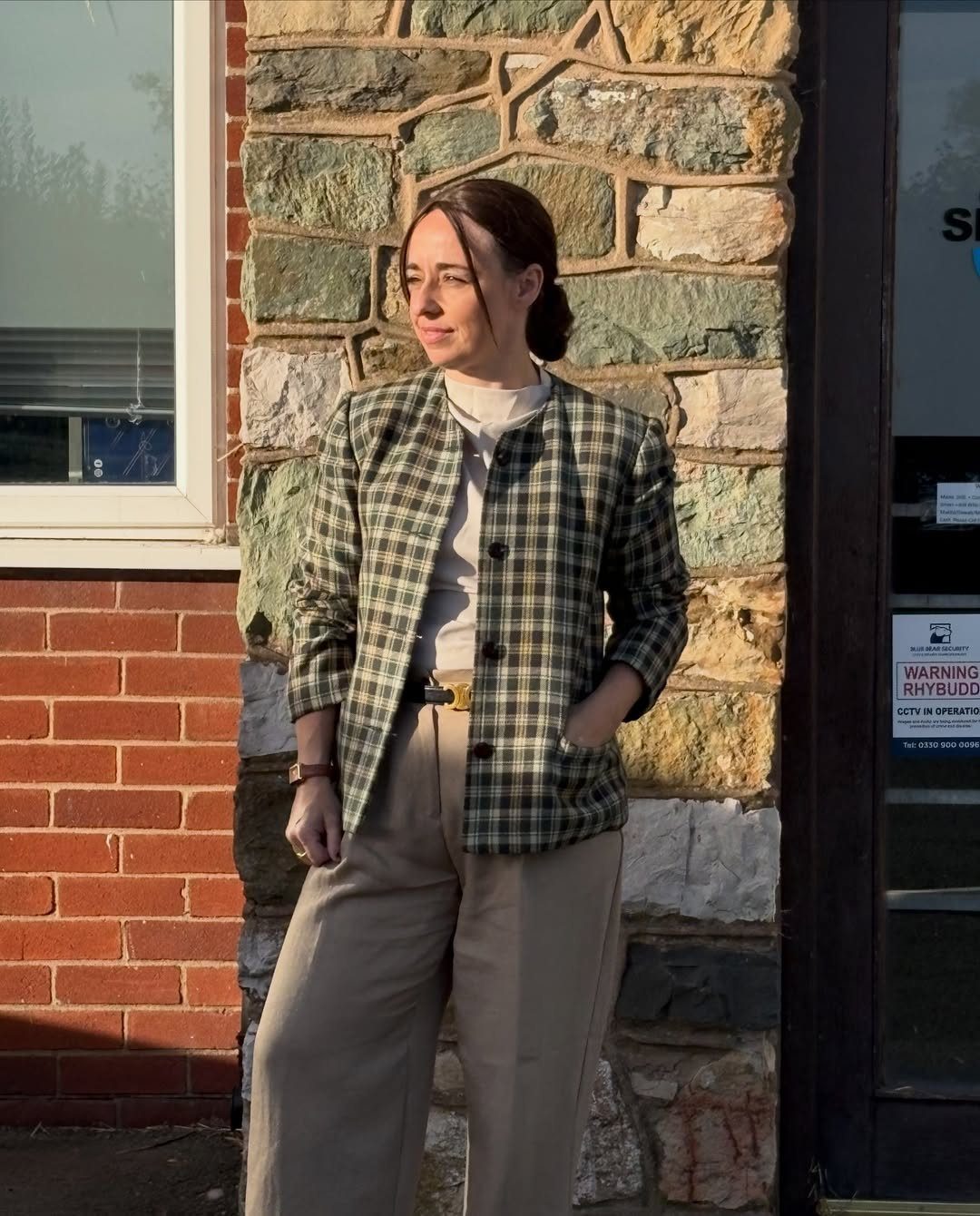
A good cardigan or blazer lets you peel off or layer up as the office temperature swings, which in my experience is every single day.
I reach for a plaid or textured version when I want structure without the stiffness of full tailoring, and I like that the button-front style reads as intentional even when I’m wearing it more like a shirt than a jacket.
A hip-length cardigan or blazer that clears the belt works with the high-rise trousers already in most closets.
If you are buying one, check that the shoulder seam hits where your actual shoulder ends; anything wider adds bulk you do not need.
Cardigans with a finer gauge knit lie flatter under a coat for commuting. Blazers in stretch cotton or a soft wool blend move better than stiff suiting and still pass for meeting attire.
2. Comfortable Trousers
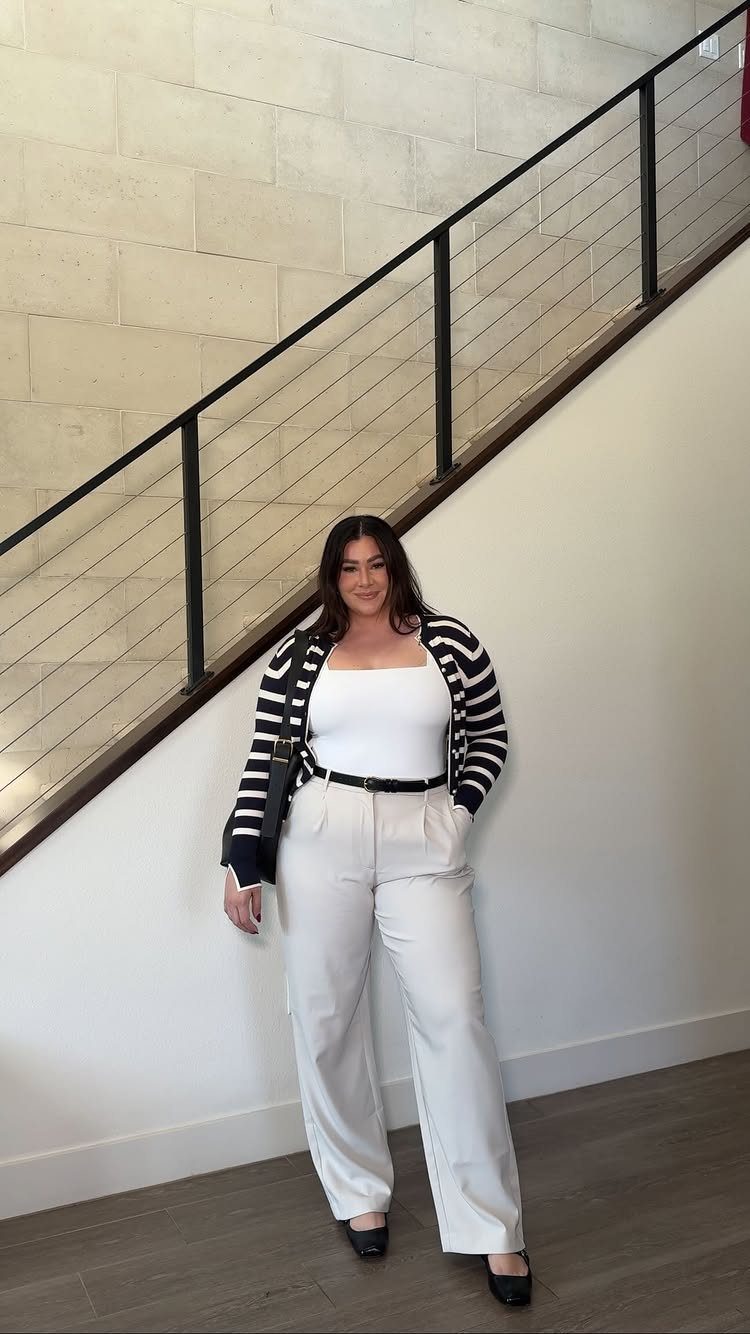
Wide-leg trousers with a bit of room through the thigh are the closest thing I have found to wearing pajamas while still looking like I made an effort.
High-waisted trousers that fall straight to the shoe elongate the leg without requiring a heel.
I look for a hidden elastic panel or a partial stretch waistband, especially in cream or white fabrics that do not forgive tightness. A belt helps anchor the look so the comfort element does not read as accidental.
Machine-washable crepe or ponte knits hold their shape through a full day of sitting and stand up to regular washing better than linen blends that wrinkle within hours.
If you are between sizes, size up and have the waist taken in; the leg is harder to fix.
3. Work Dresses
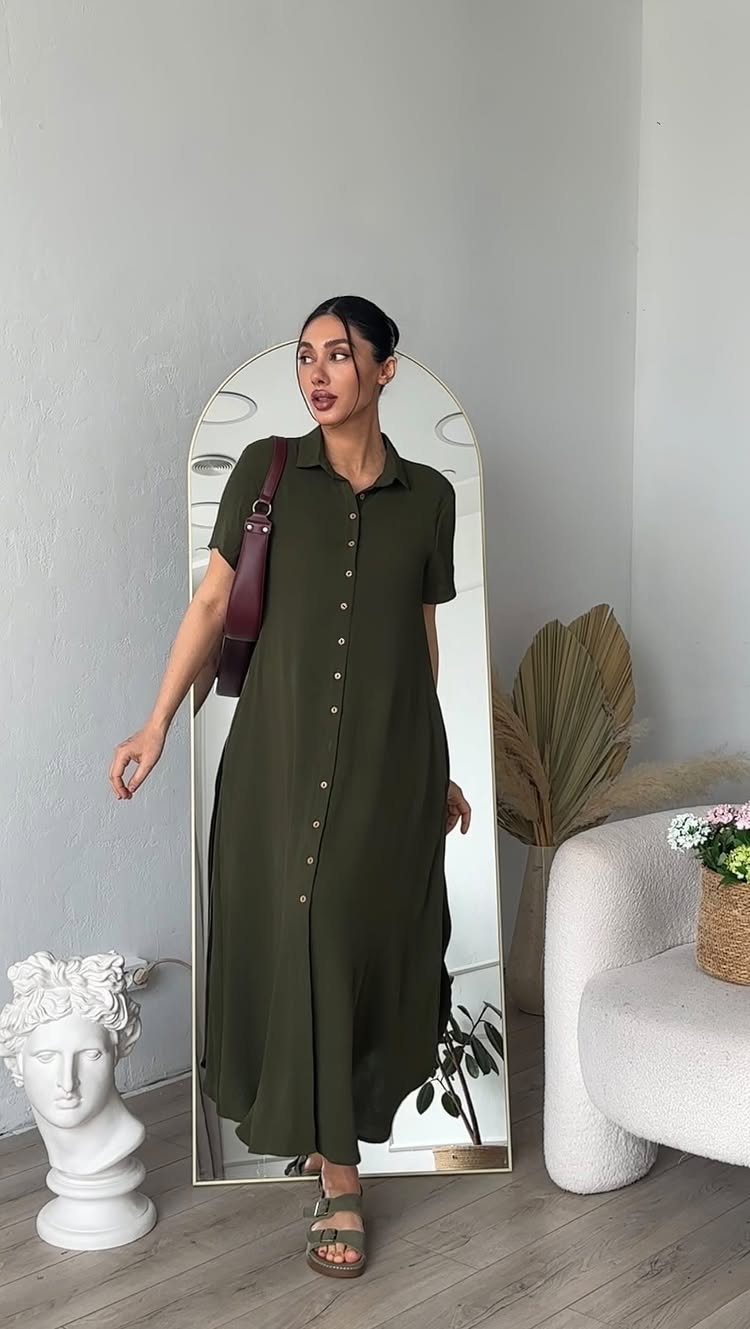
A shirt dress in a solid or subtle print gives you one decision in the morning instead of three.
A shirtdress that buttons to the hem lets you adjust the vent for walking room or leave the last few open over trousers if you want to change the silhouette later in the day.
Stretch cotton or a cotton-spandex blend keeps the shape from going boxy after lunch, and a midi length works with flats for commuting and heels for presentations without looking like you changed outfits.
I find that a self-belt or a thin leather belt defines the waist just enough; without one, the effect can slide toward housedress.
Pockets that lie flat are a bonus. If the fabric is thin, a nude slip underneath keeps everything office-appropriate under fluorescent lights.
4. Sweatshirt with Tailored Trousers
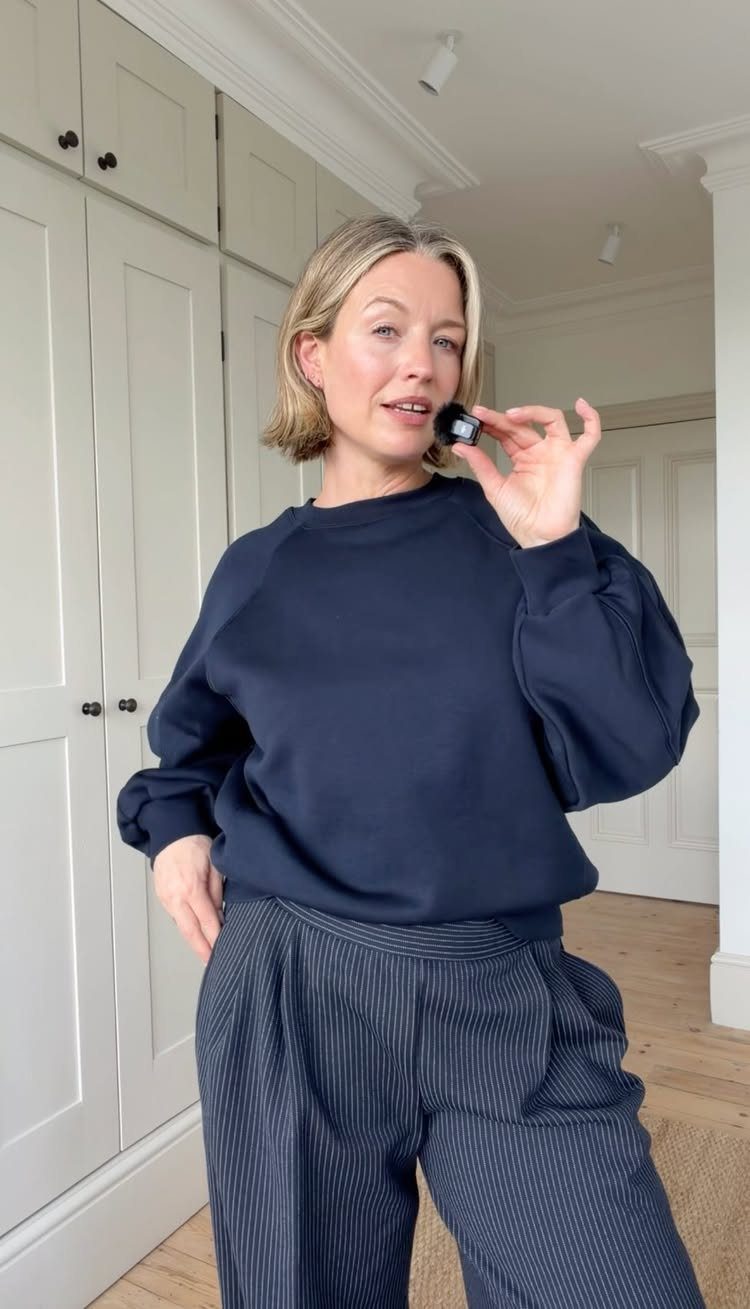
Matching a sweatshirt to tailored trousers in the same color family is a trick I borrowed from how men have been dressing for years, and it works because the eye reads the single tone as intentional rather than lazy.
A pinstripe trouser carries the formality in a pairing with a sweatshirt, so the top does not have to.
Before trying this, check your sweatshirt’s weight.
A mid-weight cotton or cotton fleece holds its shape; anything too thick or with a loud logo reads weekend. The trousers should be pressed with a crease, since that detail signals office.
I would not wear this to a client pitch, but for a desk day with one internal meeting, it is the most comfortable I have ever been while technically in trousers.
5. Sweater Vest Over T-shirt
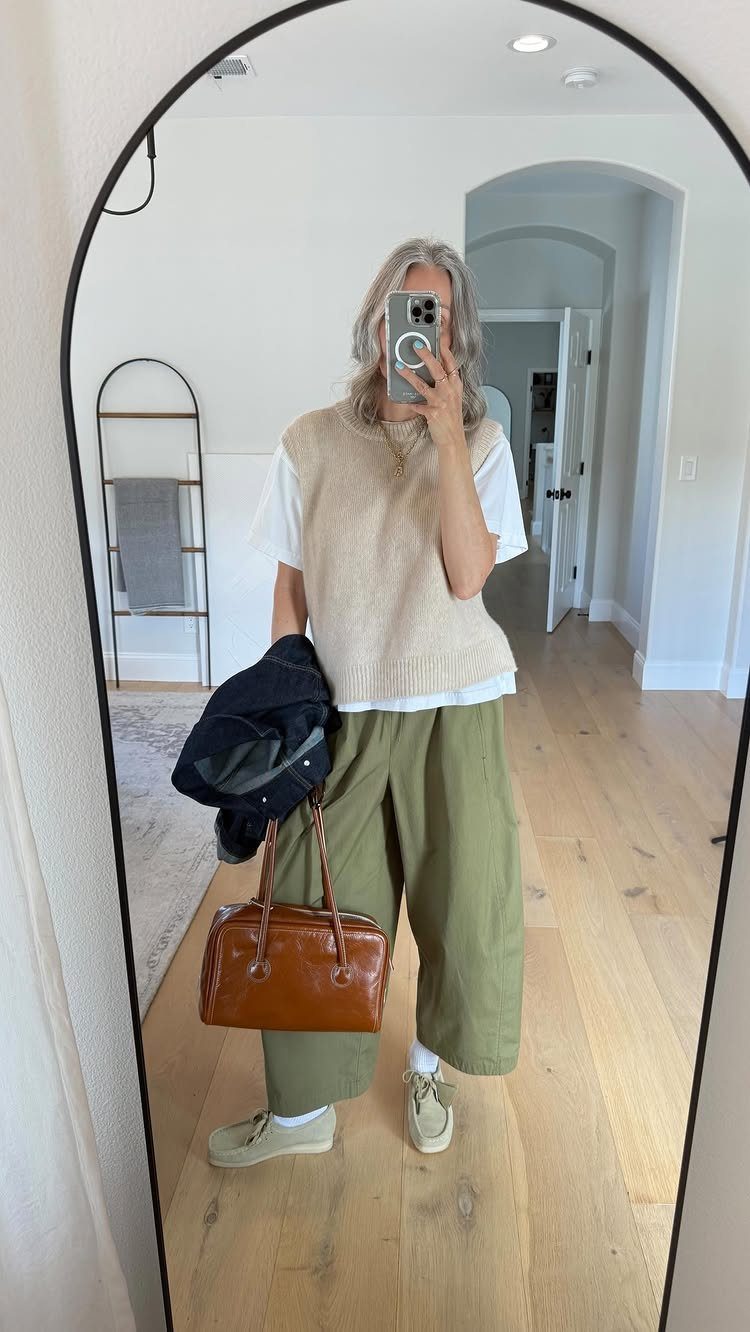
A sweater vest over a plain t-shirt gives you the layering effect of a full sweater without the bulk under the arms, which matters if you are carrying a bag or typing all day.
A relaxed-fit knit vest lets the tee underneath lie flat without pulling or bunching.
The proportion that makes this work is a vest that hits at the hip, not cropped, over a tee that is slim rather than boxy.
Wide-leg trousers balance the line so you do not look top-heavy. Check the armhole depth before buying; too high and the vest rides up, too low and it reads sloppy.
I prefer a fine-gauge knit that does not add texture noise, especially in a neutral that lets me repeat the combination with different pants.
6. Sleeveless Knit with Trousers
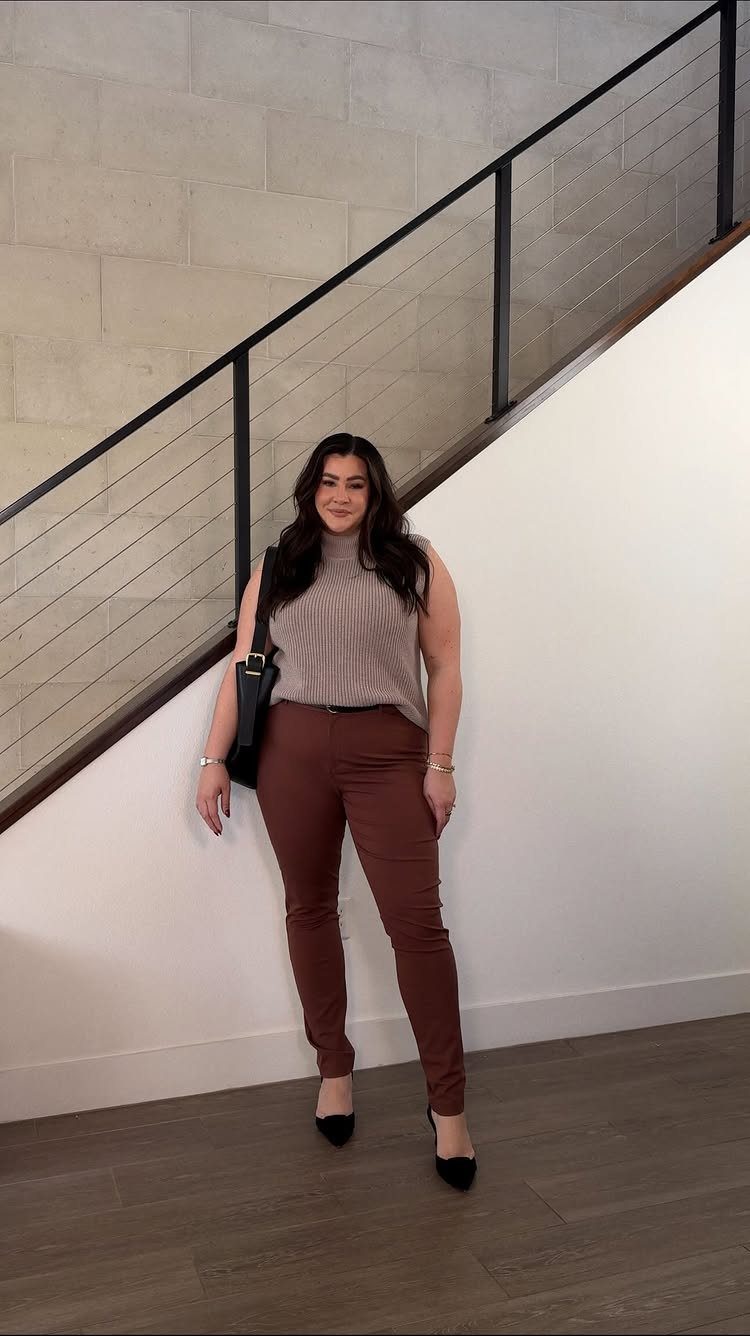
A sleeveless ribbed knit is what I wear when I want the polish of a blouse but the give of a t-shirt, and the absence of sleeves means no bunching under a blazer if the afternoon turns formal.
A fitted sleeveless knit paired with trousers that sit just below the natural waist keeps the line continuous.
The ribbing matters: a wider rib adds visual weight, while a fine rib reads sleeker and layers more easily.
Check that the neck is high enough for your office; a scoop or V can shift too casual without the visual anchor of sleeves.
I would add a pendant or small earrings, since the bare arm and neckline leave room for one focused piece of jewelry without competing.
Styling Tips for the Office
Mixing and matching starts with a color plan. Base pieces in 2 neutrals that share a temperature, warm with warm or cool with cool, make a camel trouser and a cream top look related rather than random.
A third color, used only in accessories, keeps the combination from feeling like a uniform.
Layering for temperature swings means each piece must stand alone.
A cardigan that looks finished buttoned, a blouse that works without a jacket, a vest that reads complete over a tee. Test this before buying: remove one layer in the fitting room and check whether what remains looks intentional.
Footwear anchors the tone.
A crepe trouser with a pointed flat reads office; the same trouser with a leather sneaker reads errand. I own one pair of each in matching colors so the swap changes the mood without fighting the outfit.
Jewelry works best when it solves a problem. A thin chain belt or simple pendant necklace adds polish to a shirtdress without competing with its clean lines.
A pendant fills the open neck of a sleeveless knit. One piece, placed with purpose, beats three competing for attention.
Importance of Comfort in Workwear
Comfort in workwear is not about softness alone.
A garment can feel pleasant against the skin and still fail: waistbands that dig after lunch, sleeves that ride up when you reach for a file, fabrics that hold sweat through a presentation.
The test is a full day, not the fitting room mirror.
Productivity follows when clothing removes itself from your attention.
I notice this most in meetings: if I am adjusting a strap or shifting against a seam, I am not listening. The right piece disappears.
Confidence comes from predictability. A stretch trouser that holds its shape from 8 AM to 6 PM lets you stop checking your reflection.
A machine-washable fabric that emerges from the dryer ready to wear removes the Sunday evening ironing load. These small reliabilities accumulate.
Breathable fabrics matter in temperature-controlled offices, which tend to overcool in summer and overheat in winter.
Cotton, viscose, and lightweight wool blends let your body regulate itself. Synthetic shells that trap air work against you across a long day.
Finding great workwear for women isn’t just about looking polished — it’s about finding pieces you actually want to wear all day. The best professional staples are versatile, comfortable, and office-appropriate without feeling stiff or dated.
Care for Work Clothes
Machine-washable workwear saves more than dry-cleaning money. It saves the decision fatigue of planning around a drop-off schedule, the closet space of a "to clean" pile, the risk of a stained blouse sitting too long.
Not all "machine washable" labels mean the same thing.
I check for cold water and gentle cycle instructions, which indicate the fabric was engineered for home care rather than merely surviving it. Hot water and regular agitation will eventually break down elastic fibers and distort knit structures.
Ponte knits and stretch crepes recover well from washing.
Soft wool blends often need a mesh bag and flat drying to prevent felting. I wash these inside-out to protect surface texture.
Wrinkle-resistant finishes help for business travel, though they vary in effectiveness.
A garment that emerges from a suitcase ready to wear beats one that needs hotel ironing, but the finish can wear off over dozens of washes. I treat it as a bonus, not a guarantee.
A machine-washable fabric that emerges from the dryer ready to wear removes the Sunday evening ironing load, which is why I look for stretch blends labeled dryer-safe.
A drying rack in a laundry corner, or even a shower rod, preserves the recovery that tumble heat degrades. Hanging a piece right after wear saves replacement cost later.
Frequently Asked Questions
What are comfortable work clothes?
Comfortable work clothes are pieces that let you move, sit, and focus without adjusting your outfit all day.
I look for hidden stretch waistbands, breathable fabrics like cotton or viscose, and silhouettes that do not bunch or ride up when you reach or type.
The real test is a full day at your desk, not how something feels in front of a mirror.
What is the best brand for work clothes?
M.M. LaFleur comes up often for high-quality professional outfits that hold up to regular wear.
Fabric and fit matter more than any single brand: ponte knits, stretch crepes, and soft wool blends that are machine washable tend to hold up best.
A label matters less than whether the piece still looks intentional after lunch and survives the dryer.