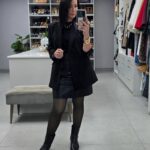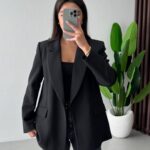
These 6 ideas range from a single-piece dress to a full separates combination, and the right one depends on whether your day demands movement, a matched set, or something you can roll into a suitcase.
A navy blazer with brass buttons, for instance, carries from back-to-back meetings straight into dinner with only a bag swap.
1. Blazers
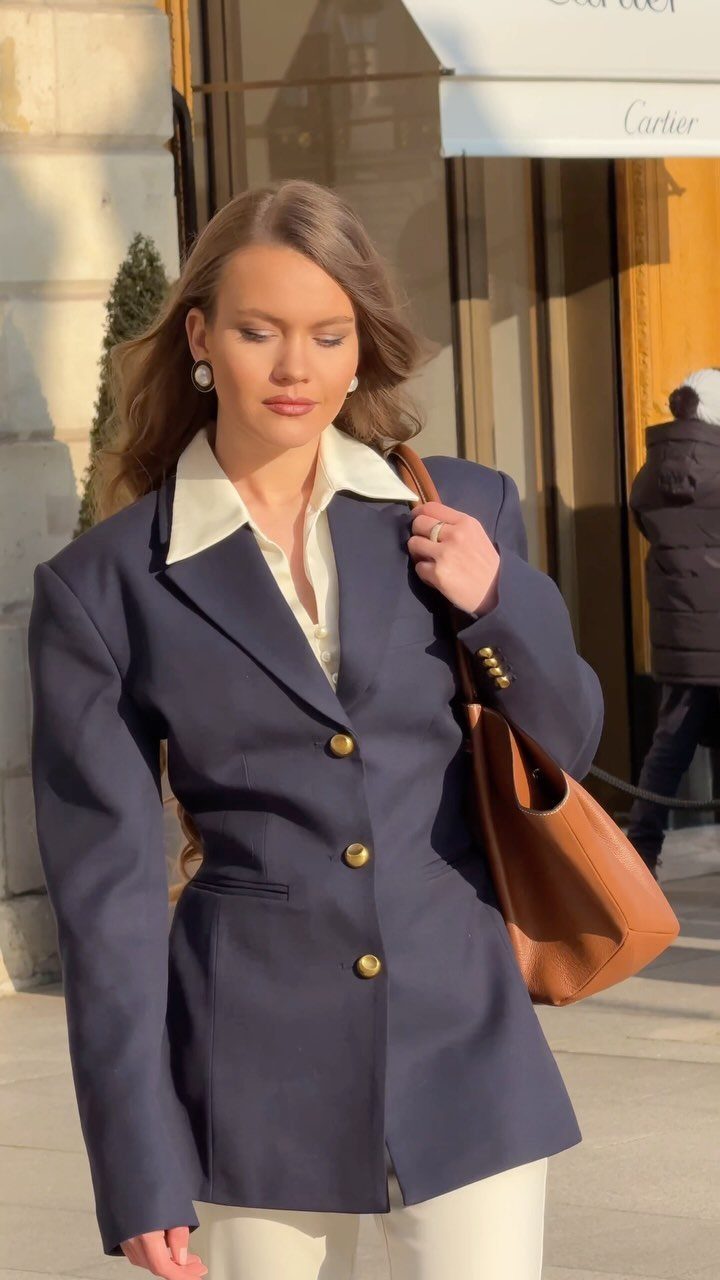
A navy blazer with brass buttons and cream tonal layers underneath is about as close to a work uniform as I get. The tailoring matters more than the color, I think.
A blazer that nips in slightly at the waist and leaves enough room across the shoulders to drive or reach for a high shelf stays comfortable through long days without looking like you borrowed your dad’s suit jacket.
I reach for mine on days with back-to-back meetings, then again for dinner after.
Brass-button styles read slightly more formal than matte hardware, so I would swap the tote for a smaller bag if I wanted to push it toward evening.
Machine-washable versions exist now, though I still dry clean my wool one twice per season and brush it between wears.
2. Work Dresses
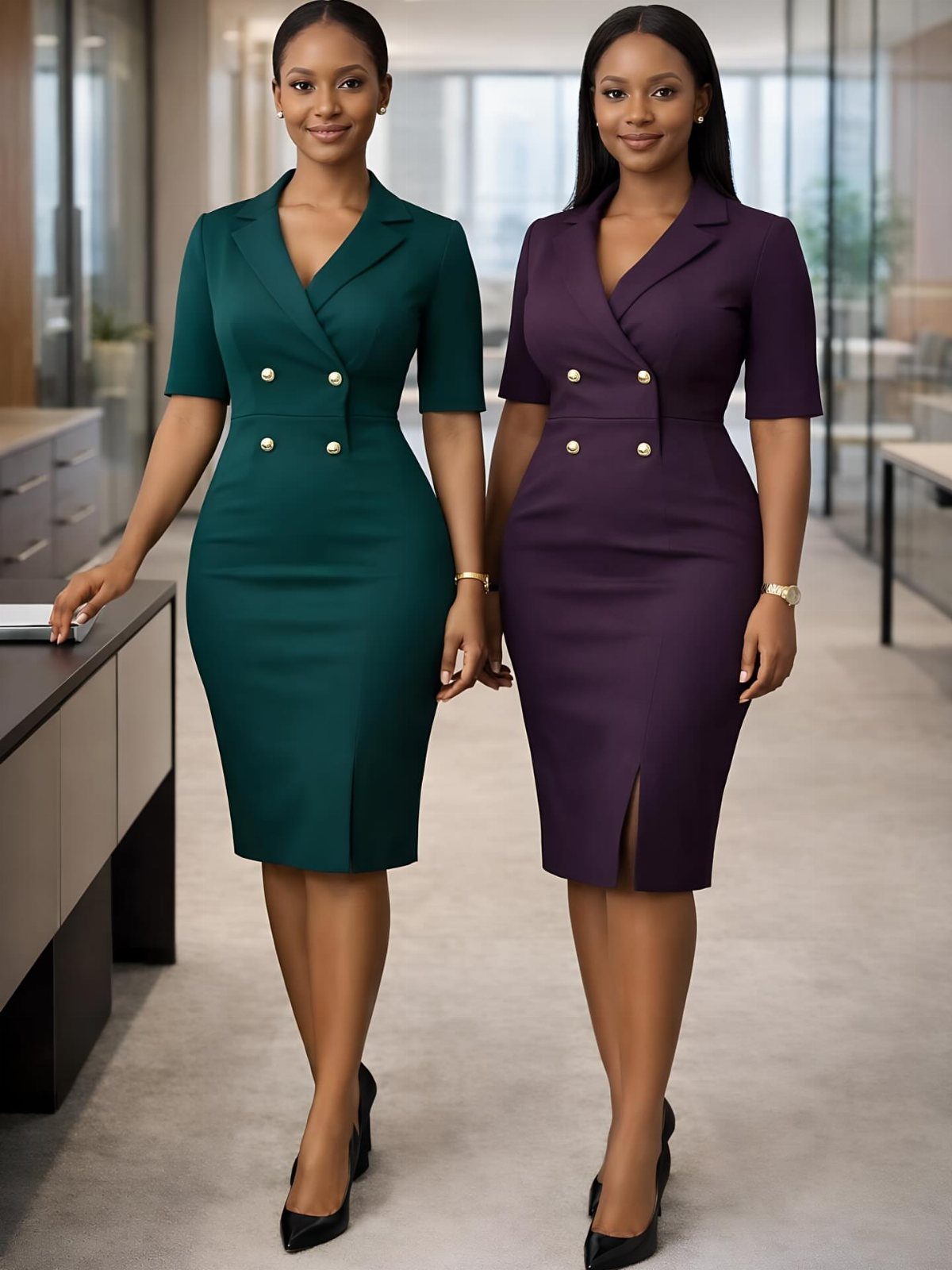
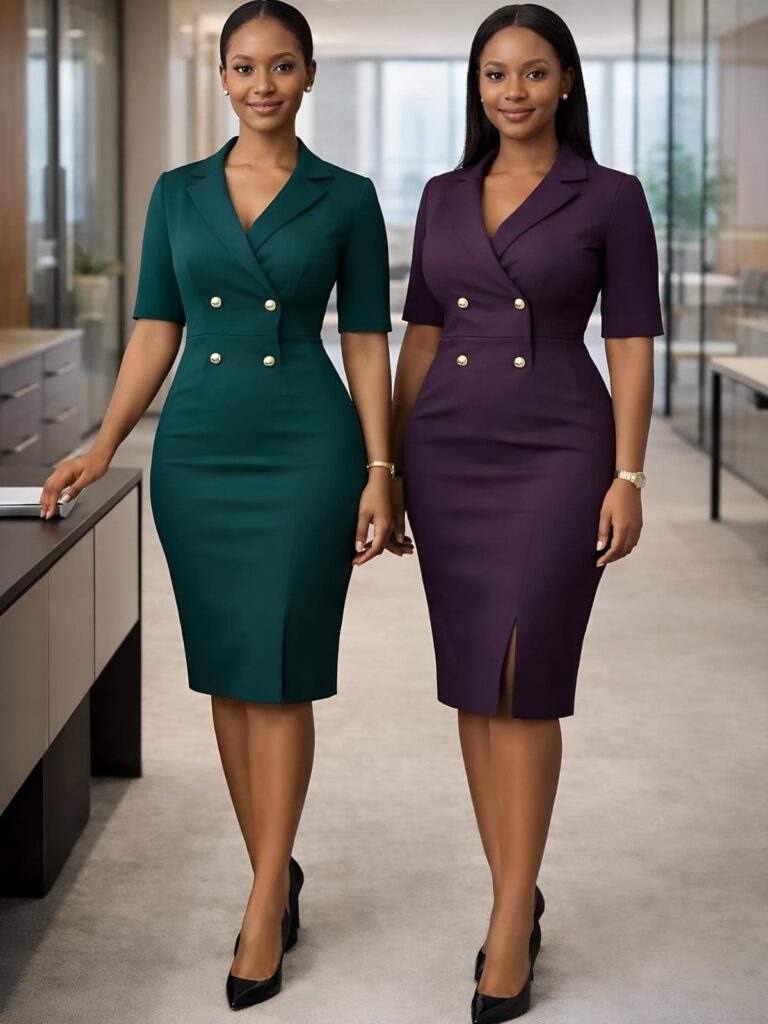
A fitted blazer-style dress in jewel green or purple handles the whole morning decision for me: one piece, no matching required.
Knee length and short sleeves keep it office-appropriate through most of the year, and the cut skims without clinging, which I appreciate on days when I am sitting through long presentations.
Midi and wrap versions work similarly if the neckline stays high enough for your workplace.
For business travel I pack a crepe or ponte knit that I can roll in a suitcase; for client meetings I add a real pump and small earrings.
A simple sheath dress carries into an after-work event with a switch to heeled sandals and a little more makeup.
Two or three of these in rotation, and I stop needing to think about what to wear in the morning rush.
3. Tailored Trousers
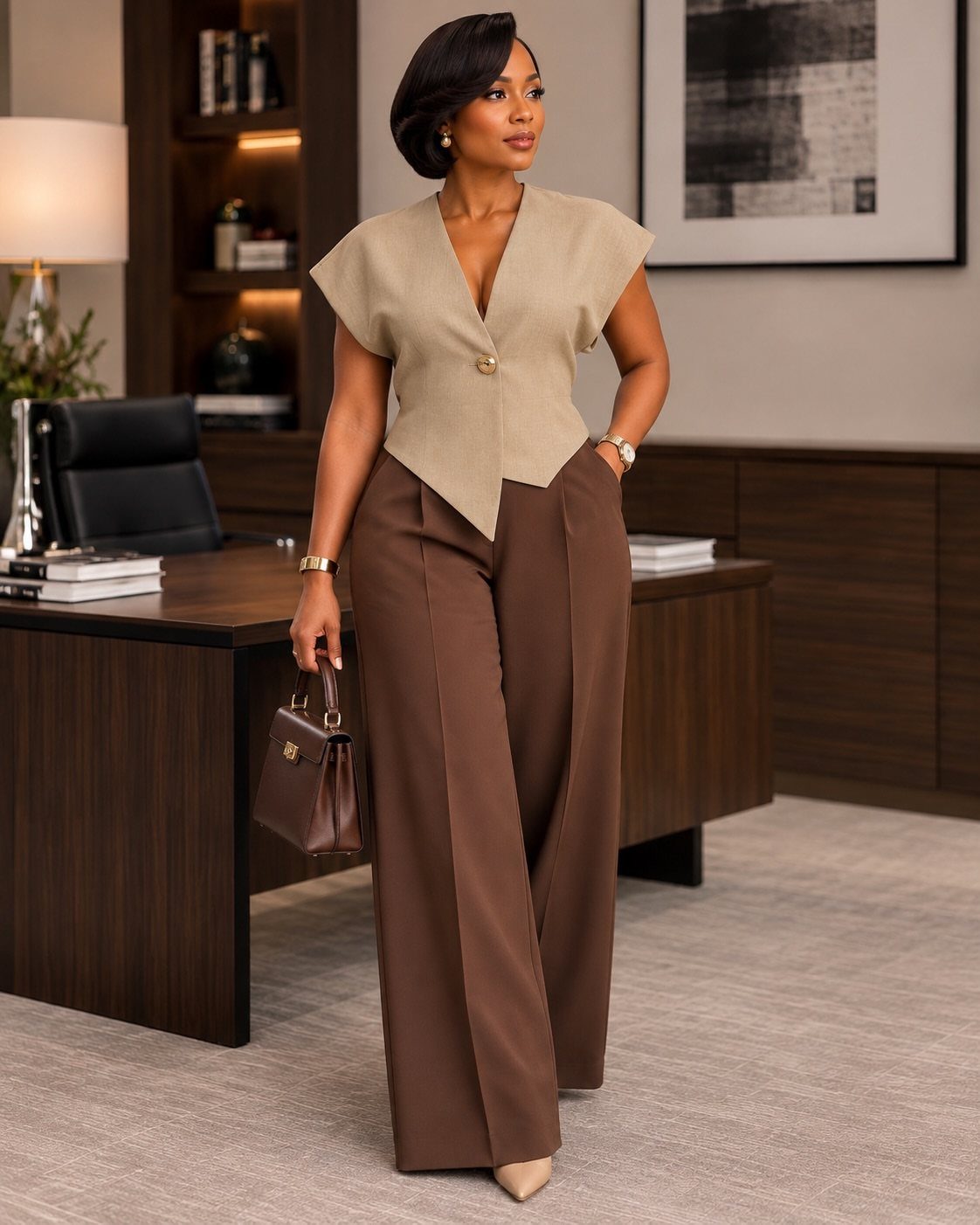
Wide-leg trousers in a warm brown, cut high enough to sit at the natural waist, have become my alternative to the standard black pillar leg.
The volume through the leg balances a slimmer top, and the high waist elongates without needing a heel so extreme I cannot walk to the subway.
Fit is the whole story here.
I look for a pair that sits flat across the front, no gaping, with enough length to break slightly over the shoe. The hem should brush the top of the foot, not float above it or puddle.
I also check that I can sit cross-legged in the dressing room; a seam that digs in at the hip will only get worse as the day wears on.
Vest and trousers in tonal shades read as a full look without the formality of a matched suit.
4. Blouse and Skirt Combination
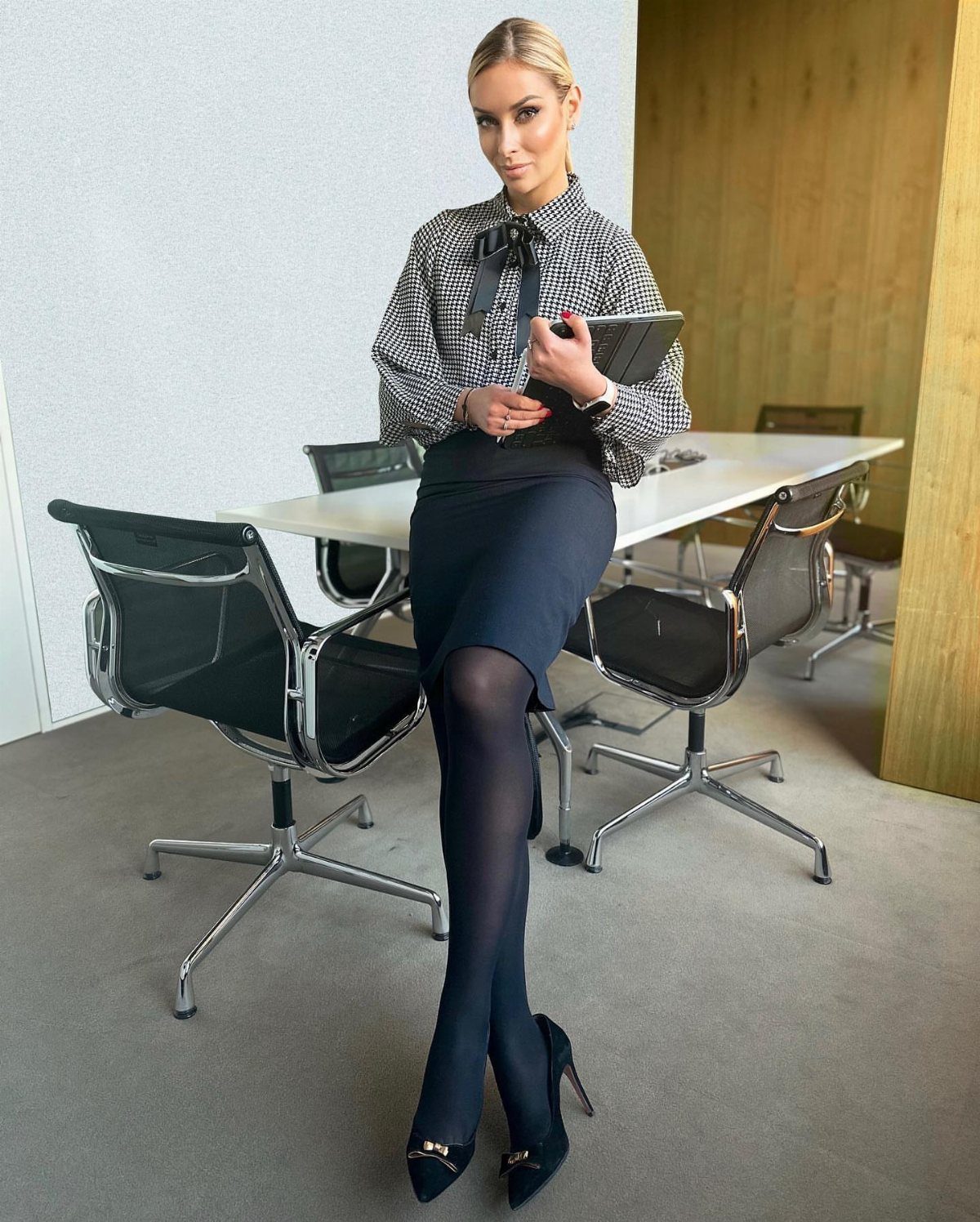
A houndstooth bow blouse against a dark pencil skirt is the combination I fall back on when I need to look like I planned ahead more than I actually did.
The pattern up top does the visual work; the skirt stays quiet and structured below the knee.
The bow itself is a detail to consider before buying.
I have one blouse where the tie is detachable, which I prefer. A fixed bow can flop into your coffee or read as costume if the scale is too large.
Tights and a closed-toe heel ground the look for cooler months; in summer I swap to sheer hosiery and a lower vamp shoe.
I would check the blouse length before tucking: too short and it pulls at the buttons when you reach forward; too long and the skirt waistband lumps underneath.
5. Matching Peplum Skirt Set
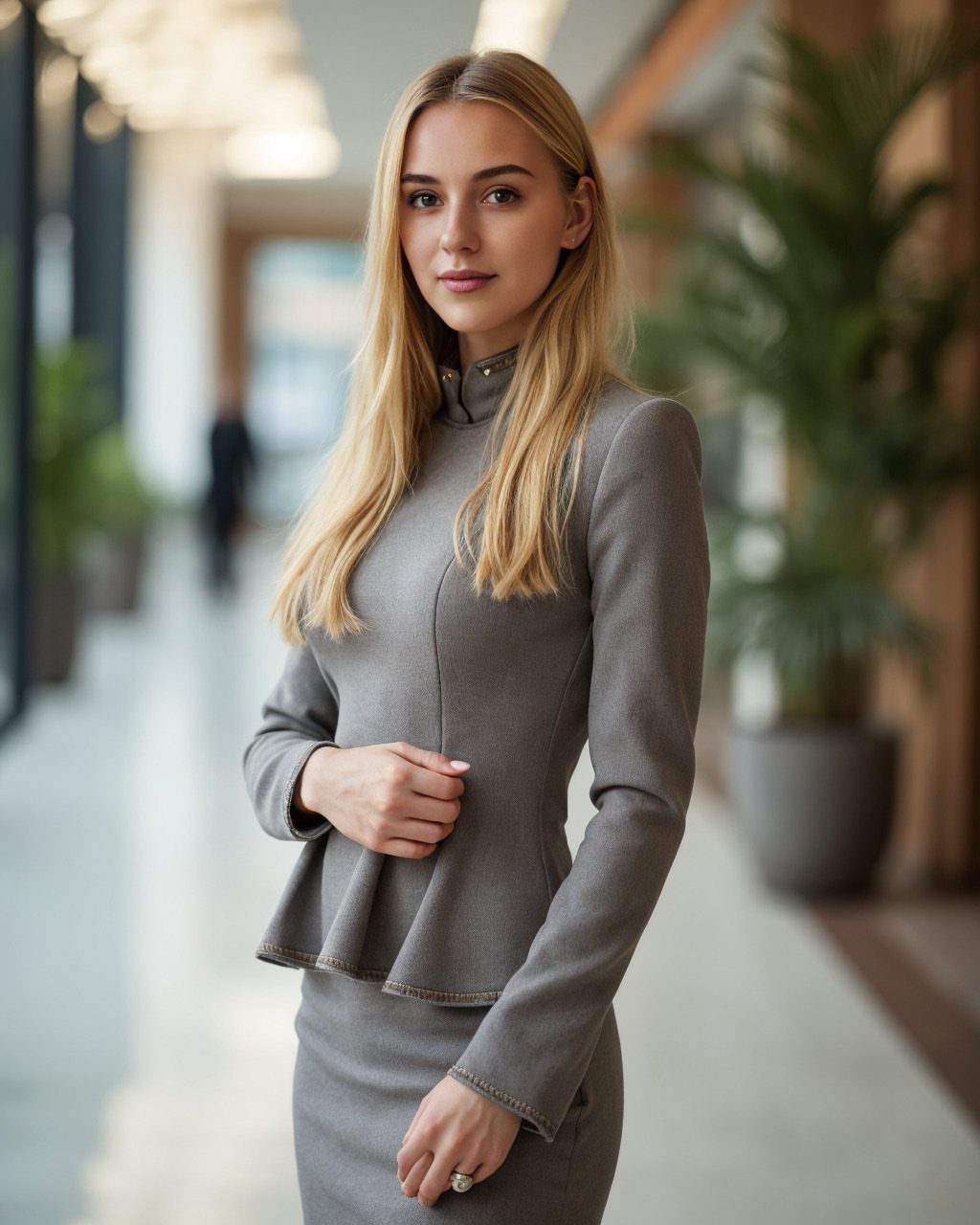
A peplum top with its matching skirt in soft grey is more structured than a dress but reads as one coherent piece from across a conference table.
The flare at the waistline is forgiving without looking like you are hiding anything, and the long sleeves balance the shorter skirt hem I usually see with this cut.
Before buying a set like this I would check 2 things. First, whether the pieces are sold separately or only together, since my top and bottom rarely take the same size.
Second, how the peplum hits: my natural waist is higher than where many brands place it, and a peplum that sits at mid-hip loses the shape entirely.
I would wear this with a simple pump and minimal jewelry; the silhouette is already doing enough.
6. Button-Down Shirt and Wide-Leg Pants
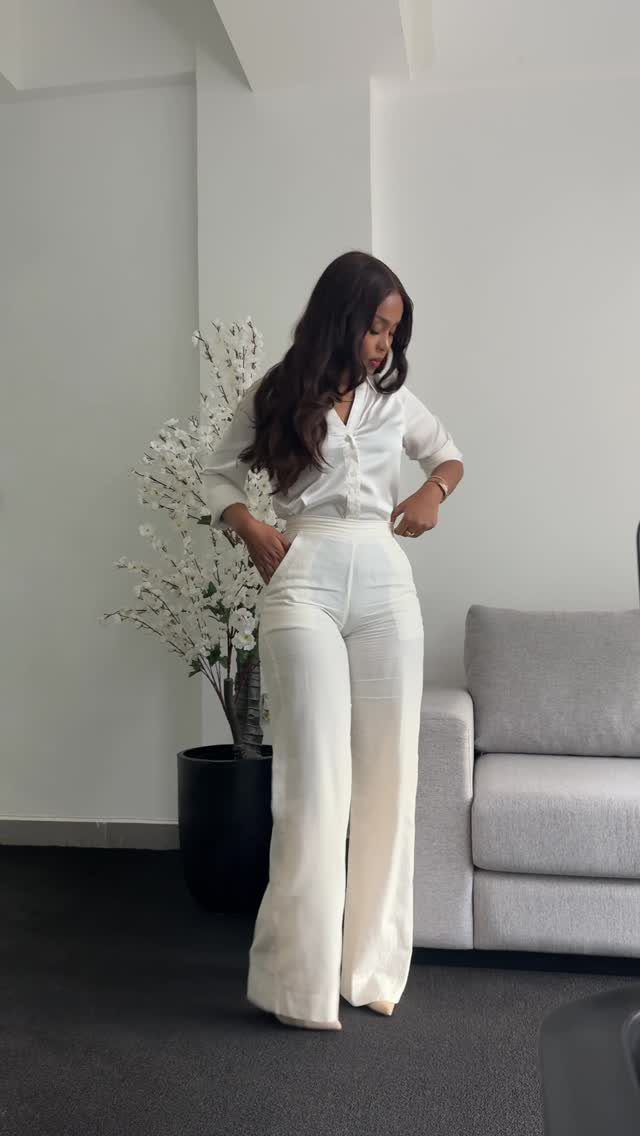
A white button-down tucked into matching wide-leg trousers in crisp cotton or linen is the outfit I wear when I want to look expensive without having spent it.
The monochrome column of white elongates, and the high waist on the pants sits at the narrowest point.
Getting the tuck right takes some trial. I do a half-tuck at first, then check the mirror seated; a full front tuck can pouf above the waistband by noon.
The shirt needs to be long enough to stay put, and the pants need a proper waistband, not elastic, to hold it.
I would starch the collar and cuffs for a client presentation, then wear it softer with the sleeves rolled for a casual Friday.
A slightly oversized shirt works better here than a fitted one; the volume up top balances the pant width without looking like pajamas.
Choosing the Right Fit
The right fit in workwear is less about size and more about how the garment moves with you through a full day.
A seam that pulls when you raise your arm will only feel tighter after lunch, so I still sit, reach overhead, and bend slightly before anything makes it home.
Shoulders are the one place I will not compromise: a blazer or shirt that binds across the back traps heat and limits motion, and tailoring rarely fixes this without rebuilding the piece.
Waistbands should sit flat without gaping when you stand, yet not dig when seated.
Fabric with some recovery, like a wool blend or quality ponte, holds its shape through repeated wear rather than bagging at the knees or seat by 3 PM.
Mixing and Matching
Versatility in a work wardrobe comes from pieces that share a color temperature, even if they do not match exactly.
I group my cooler neutrals, navy, black, and true white, on one side of the closet, and my warmer ones, chocolate brown, cream, and camel, on the other.
This prevents the subtle clash that happens when a warm cream blouse meets a stark black trouser.
Textures can bridge pieces that do not share a color at all. A matte crepe top with a slightly shiny satin skirt reads as intentional because the contrast is in the surface, not the hue.
I limit myself to one pattern per outfit, usually carried in the top or the accessory, never both.
A houndstooth blouse with a striped skirt fights for attention; the same blouse with a solid skirt lets the pattern do its job.
Seasonal Adaptations
Seasonal shifts in workwear are mostly about weight and coverage, not a complete wardrobe change. Cotton poplin and lightweight crepe breathe during a hot commute, and a spare layer at the office saves me from aggressive air conditioning.
Linen trousers and crisp cotton shirts work well here, though I accept that linen will wrinkle; I choose looser cuts where the creasing looks intentional rather than sloppy.
Winter brings in wool blends and heavier ponte knits that hold heat without the bulk of a full suit.
I layer a thin turtleneck under a blazer rather than sizing up the jacket, which preserves the shoulder line. Shoes move to closed-toe pumps and ankle boots, always with enough room for a medium-weight sock without squeezing the toes.
Frequently Asked Questions
What is the 3-3-3 rule for clothing?
I do not follow a formal 3-3-3 rule in my own wardrobe planning. This keeps mixing and matching simple without needing to count items.
Where can I buy classy work clothes?
Ann Taylor has been a reliable source for me because the pieces move from office hours to evening without looking out of place.
I also watch for machine-washable blazers and quality ponte knits at brands that focus on work-specific cuts rather than trend-driven styles. I look for stores where the shoulder fit and waistband construction stay consistent enough that online ordering actually works.
What clothes make you look classy?
Tailoring matters more than any single item. I think the common thread is fit: a seam that pulls or a waistband that gaps undoes the effect of an expensive fabric.
How to dress for the office in 2026?
I am dressing much as I did last year, with small shifts in fabric weight and coverage rather than a full wardrobe overhaul.
The silhouette I reach for most is still a high-waist trouser with a tucked or half-tucked top, which looks current without chasing a trend that will date itself.