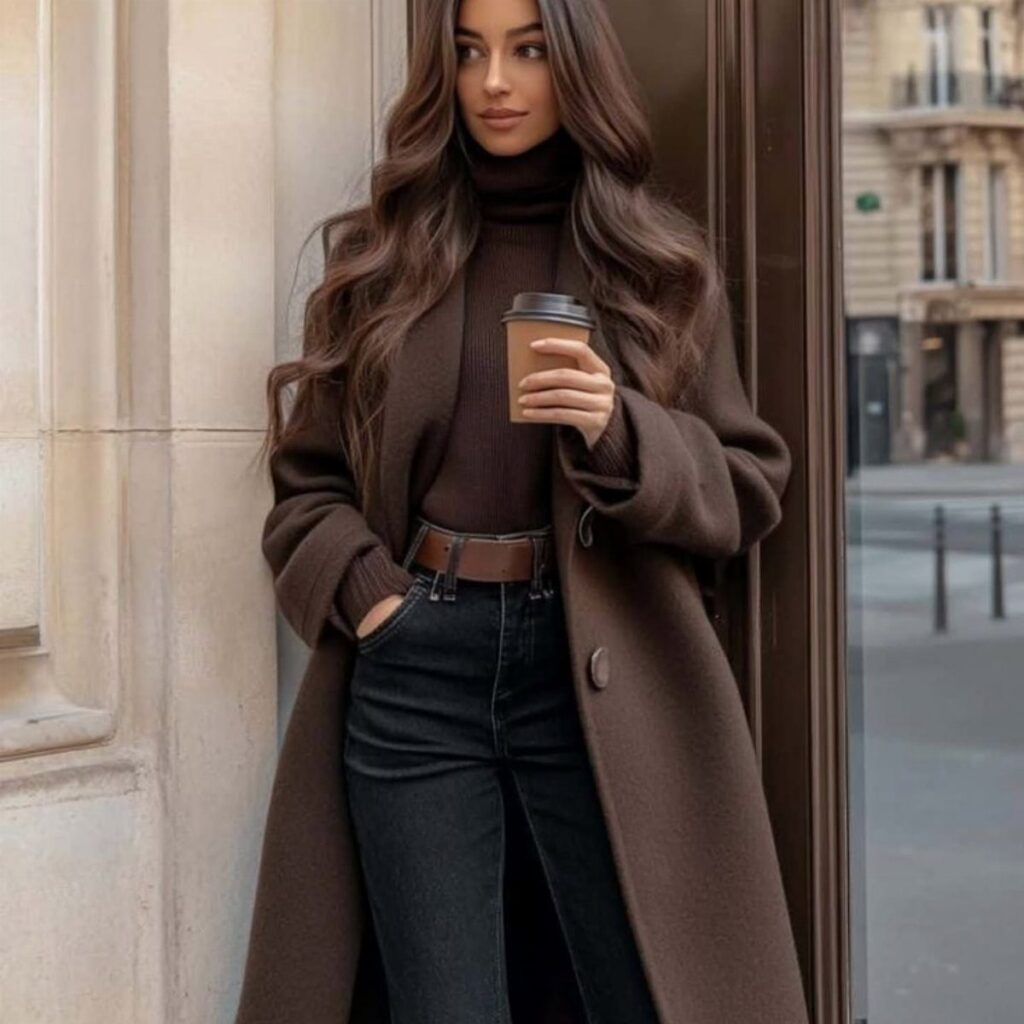
These 7 ideas run from a cardigan you already own to a wool overcoat worth budgeting for, and the right one depends on whether your office leans formal or lets you wear dark denim to a client lunch.
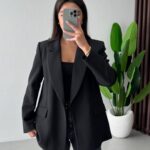
A blazer with a relaxed cut leaves room for a thin knit underneath, which is one way to handle the gap between your coat and your desk.
1. Cardigans
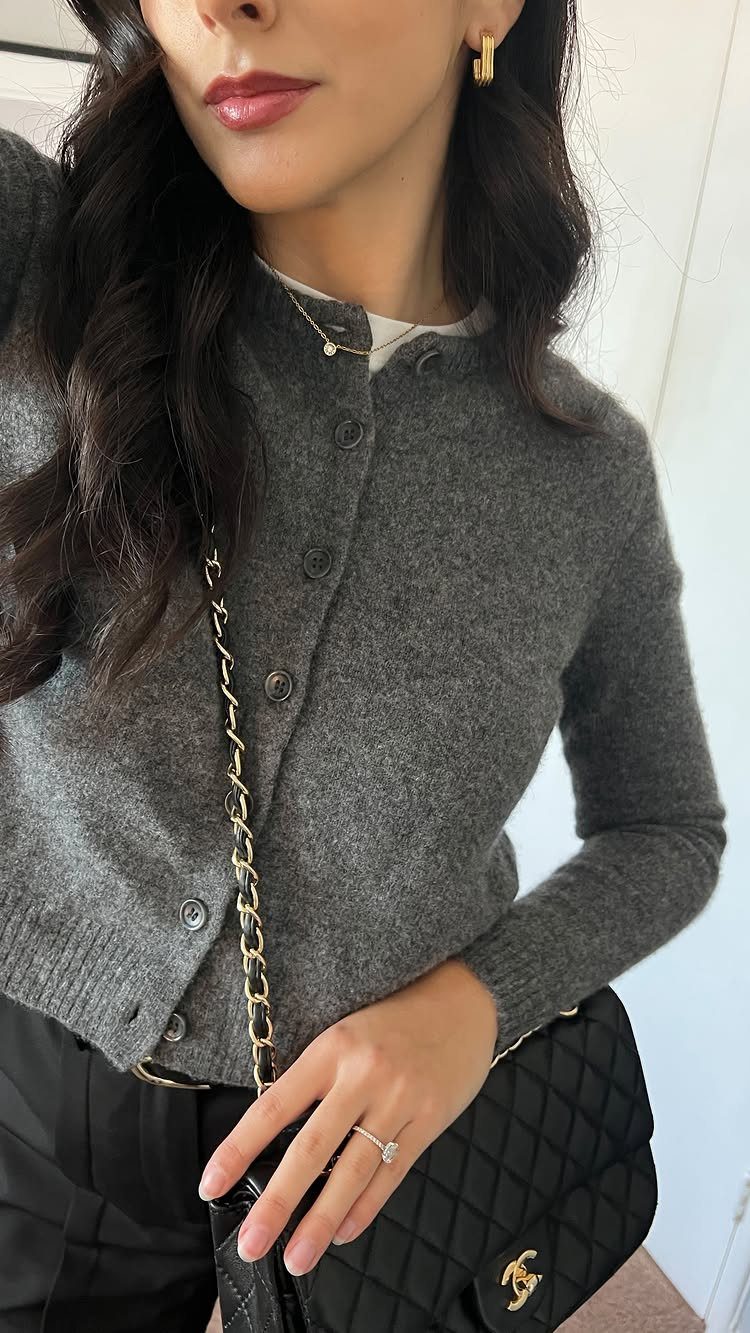
A cardigan works because it moves with you through the day: buttoned against the morning cold, open once the radiator kicks in. I reach for wool or a dense knit that keeps its shape rather than sagging by noon.
A V-neck button-front version layers cleanly over a collared shirt for meetings, while an open-front style reads more relaxed for casual Fridays. A plaid or textured knit cardigan adds interest without competing with the rest of your outfit.
Grey, camel, or black play nicest with what you already own. A quilted bag with slight structure balances the softness of a chunky knit cardigan.
2. Bold Blazers
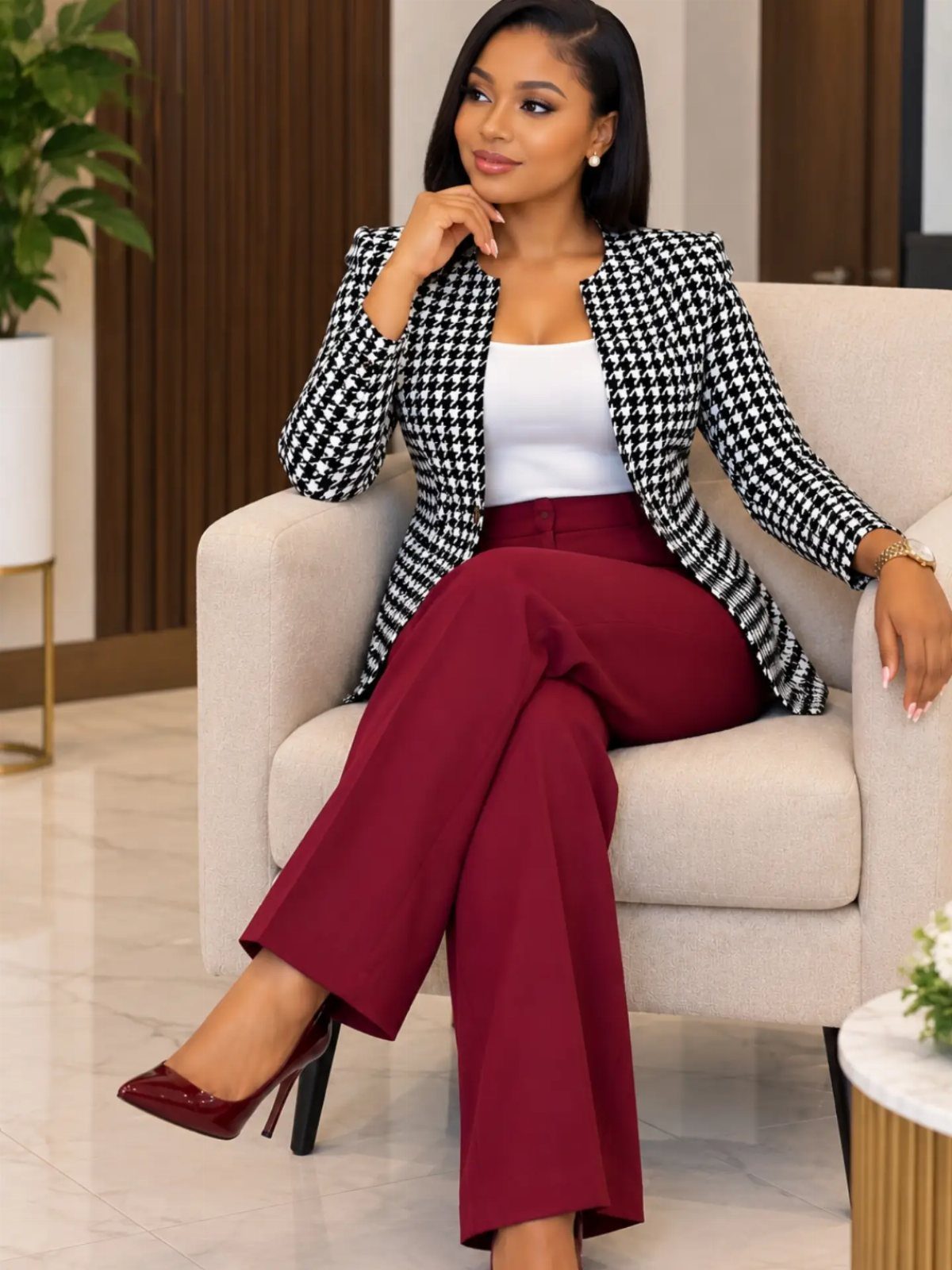
Houndstooth reads as pattern without shouting, which makes it my pick when I want something bolder than navy but not quite a statement coat.
Burgundy trousers do the actual color work, while a black-and-white houndstooth blazer ties them back to something office-appropriate.
A satin or contrasting lapel pushes the formality up; without it, the same cut works with dark denim for a client lunch.
The cut matters more than the print: shoulders that fit, a length that covers your hip line, and enough room for a thin knit underneath.
If your office runs strict, a solid in forest green or burgundy carries the same energy with less noise.
3. Sweater with Tailored Trousers
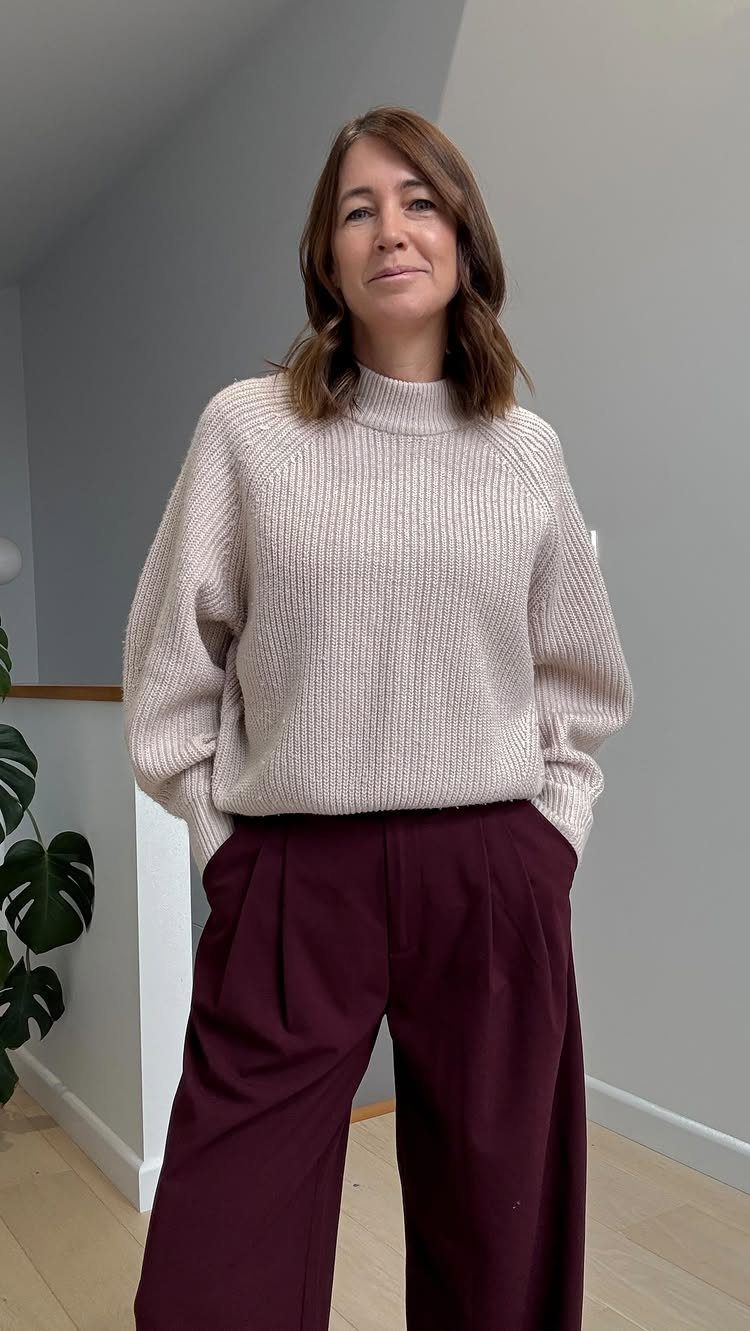
The sweater here is thick enough to read as intentional, not like you grabbed loungewear by mistake.
Ribbed knits and mock necks hold their structure through a day of sitting and standing; thinner weaves pill faster and start to look tired by February.
Burgundy trousers against cream is a combination I return to because it feels pulled-together without the stiffness of a full suit.
Wide-leg pleats balance the volume on top; if your sweater runs oversized, a slimmer trouser keeps the proportion in check.
For the coldest mornings, this layers cleanly under a wool coat or long vest without bunching at the sleeves.
4. Midi Skirts with Boots
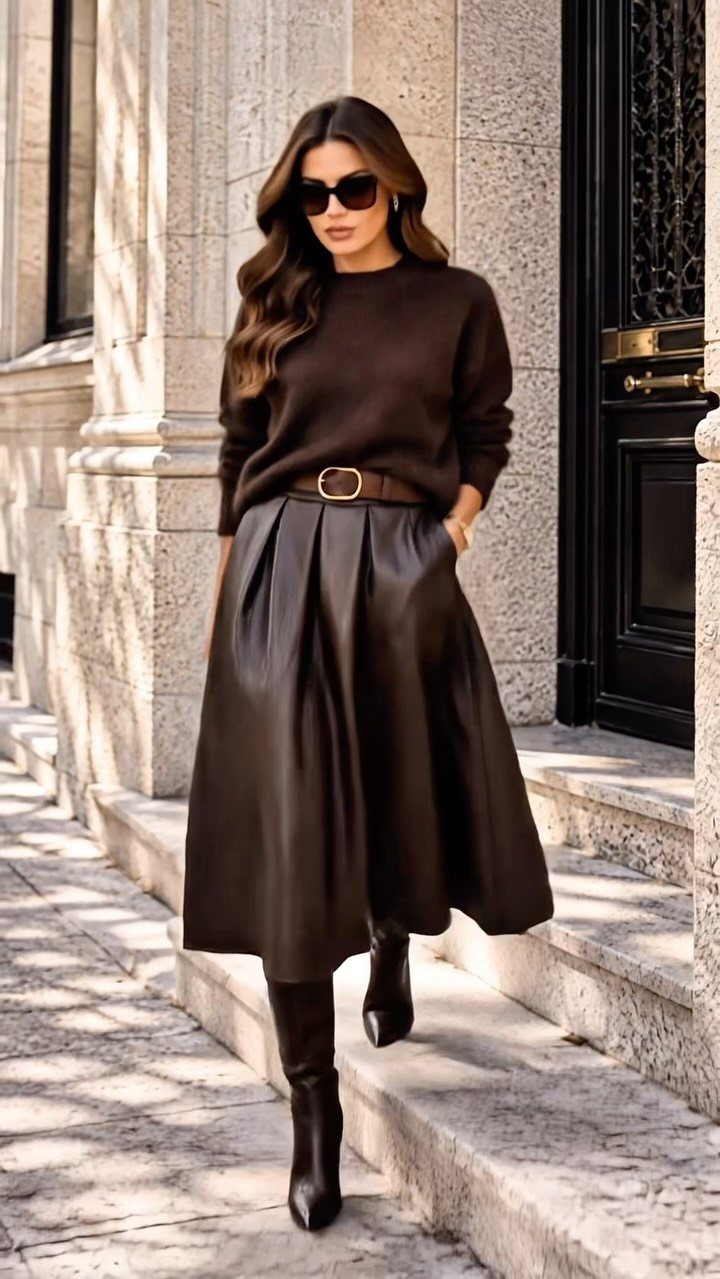
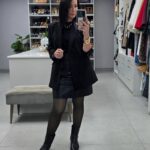
A midi skirt solves the winter problem of wanting coverage without the full commitment of trousers. The pleats here add movement; a straight pencil cut reads sharper for formal offices.
Black against a fitted turtleneck is the version I wear most: it elongates the line and lets one good pair of boots do the heavy lifting.
Ankle boots keep the look modern; knee-high versions add warmth if your commute involves actual walking.
A belt defines the waist where your sweater and midi skirt meet, which keeps the silhouette from going shapeless. Satin or wool both work; save leather-look skirts for after hours.
5. Overcoat
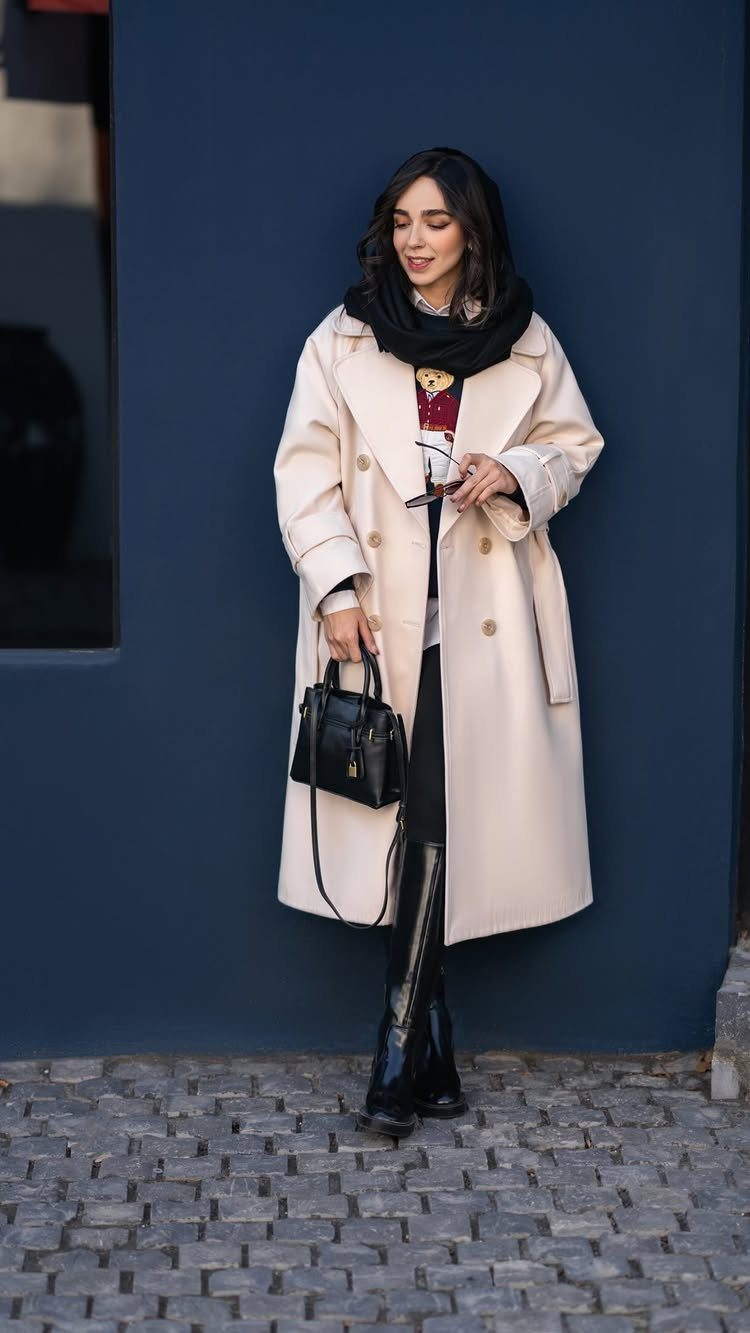
The coat is the first thing colleagues see and the last thing you take off, so this is where I put my money.
Cream reads softer than the standard black, though it demands more care: I check the fabric content for something that brushes clean.
Length matters more than color.
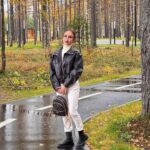
A coat that hits mid-calf keeps the whole outfit warm; anything shorter leaves you adjusting scarves all day. The headscarf here is a practical addition I have borrowed for windy mornings.
Grey, navy, or black stay safe for conservative offices. A single bold coat over quiet basics works if your workplace allows personality.
6. Pullover
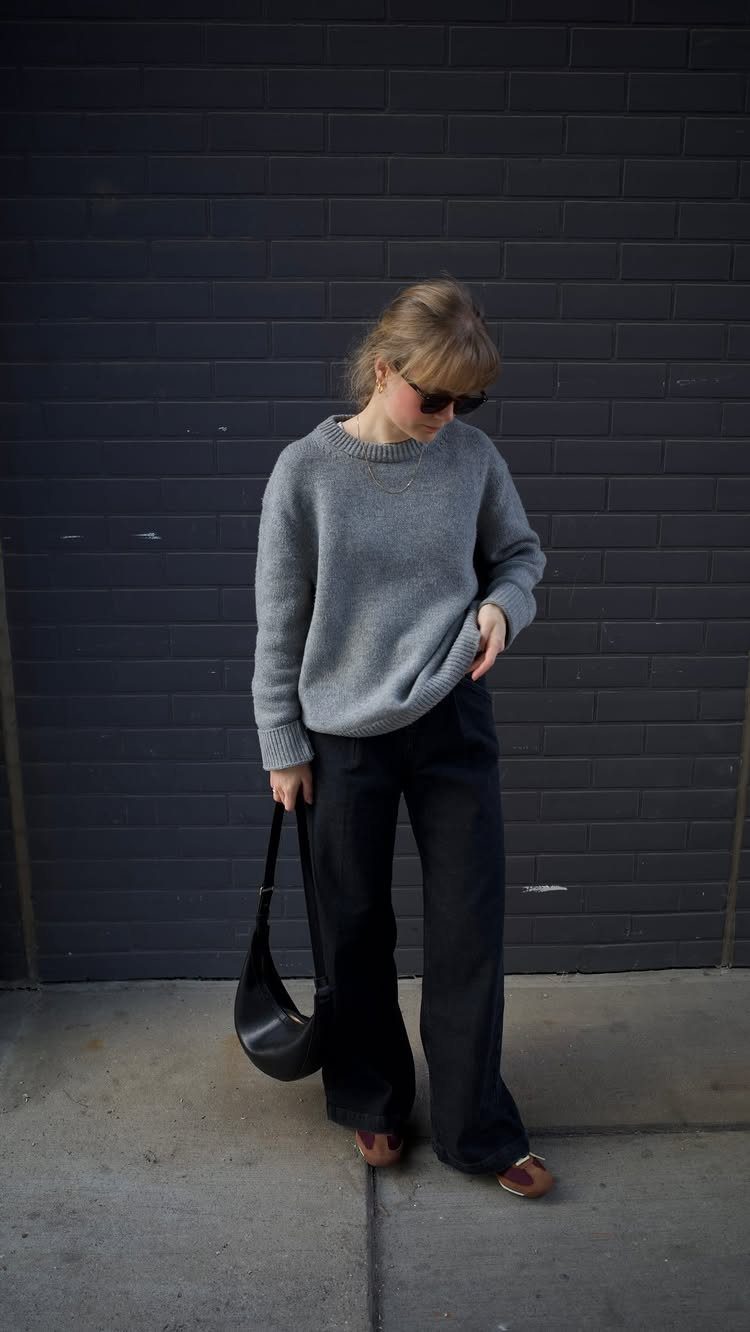
A crewneck pullover is the piece I reach for when a turtleneck feels like too much and a cardigan needs too much thinking.
The grey here is neutral enough to pair with anything; the texture does the actual work of making it look deliberate.
Knit quality shows fast: a cotton blend pills, wool holds its shape but needs hand-washing, and a cashmere mix sits in the middle for care and cost.
I check that the shoulder seam actually hits my shoulder; a dropped seam reads casual, which is fine if your office does.
Wide-leg trousers balance the slim sleeve; with a skirt, I tuck the front slightly to keep some definition at the waist.
7. Knit Dress with Tall Boots
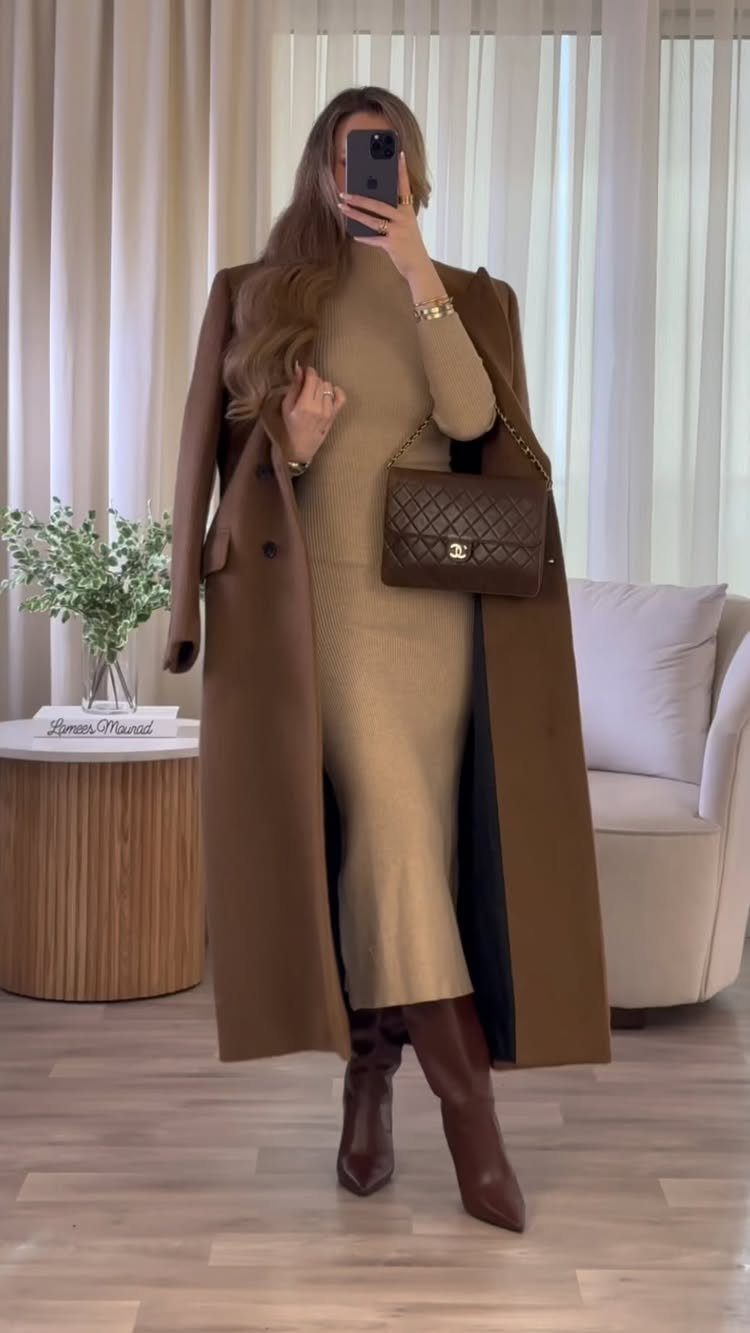
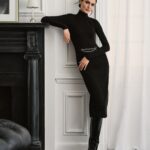
A knit dress carries you through winter without the morning puzzle of matching separates. The tan here reads warmer than black and pairs with whatever coat you already own.
Maxi length keeps your legs covered; add tall boots when the office floor runs cold or the walk from the train is long. A belt at the waist prevents the tube effect that happens when knit hangs straight.
Ribbed or cable textures hold structure better than smooth jersey, which tends to cling where you do not want it. Wool blends itch less than pure wool but still need hand-washing.
This trades the sharpness of suiting for comfort; if your workplace leans formal, save it for days without client meetings.
Layering Techniques
A thin puffer vest zipped under a blazer adds warmth without the bulk of a full coat, a trick I have seen work for women who run cold in older office buildings.
The vest stays hidden, the blazer keeps its line, and you gain an actual layer of insulation where your torso needs it.
For legs, opaque tights under wool trousers or a pencil skirt do more than a thicker pair of pants alone.
The air trapped between the layers matters more than the weight of either piece. On the coldest days, leggings under pants are practical, not sloppy, if your trousers have enough room in the cut.
A long-sleeve base layer in a lightweight fabric sits smoother under knitwear than a bulky cotton tee. Fitted turtlenecks work here because they do not shift or bunch when you pull a sweater or blazer over them.
Dress Code Versatility
Ripped jeans, mini skirts, and tank tops read as weekend wear in almost every office, winter included. Even in a casual workplace, the distinction between relaxed and careless shows in the condition of what you wear.
Excessively bulky outerwear undermines the polish you built inside.
A tailored coat or structured blazer keeps the same warmth without the sleeping-bag silhouette. Loud prints and oversized logos pull attention toward your clothes and away from your work; subdued patterns and solids keep the focus where it belongs.
Trousers hit the right middle ground for most offices: not as informal as denim, not as rigid as a full suit.
A buttoned-up top or an open-collar shirt reads as intentional; halter styles and anything too sleeveless do not, even under a cardigan.
Skirt length matters year-round. At or below the knee is the practical rule for winter office wear.
Winter is, inevitably, a tough season to dress for—and even more so at the office. With the weather fluctuating between freezing and mild, it’s easy to reach for your standard knit sweaters, long-sleeve dresses, wool trousers, tights, and boots.
— Elle
Color Coordination
Charcoal, cream, camel, and chocolate brown layer into each other without the friction of competing hues.
A cream sweater against camel trousers reads as expensive because the tones are close enough to blend, different enough to show you thought about it.
A chocolate brown knit sweater against an ivory midi skirt hits the same balance: warm tones against cool ones, both kept quiet enough for the office. These combinations do not need a statement piece to feel finished.
Dark tights under a skirt in a matching neutral extend the line rather than breaking it. Thin pastel belts on skirts and pants add a quiet note of contrast; bright color-blocking, especially in winter, tends to look forced.
Muted jewel tones like burgundy, forest green, and navy read as class without shouting. Save thin pastels for accents; worn large, they can wash out against winter light and read as spring misplaced.
Frequently Asked Questions
What is female office attire?
Female office attire in winter means skirts at or below the knee, buttoned-up tops or open-collar shirts, and nothing too revealing. Dark tights, thin pastel belts, and rich colors like burgundy or forest green keep the look polished.
What are some good winter work outfits?
Good winter work outfits layer a fitted turtleneck or lightweight base under a wool sweater or tailored blazer, with wool trousers or a pencil skirt and opaque tights.
A slim puffer vest worn under your blazer keeps heat in without adding bulk, and I reach for ankle or knee-high boots to ground the outfit.
For a simpler option, a knit dress with tall boots and a belt at the waist carries you through the day without matching separates.
What should you not wear to the office?
You should not wear ripped jeans, mini skirts, tank tops, or anything too revealing.