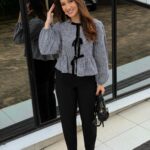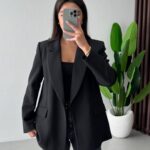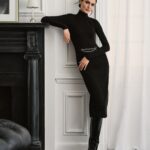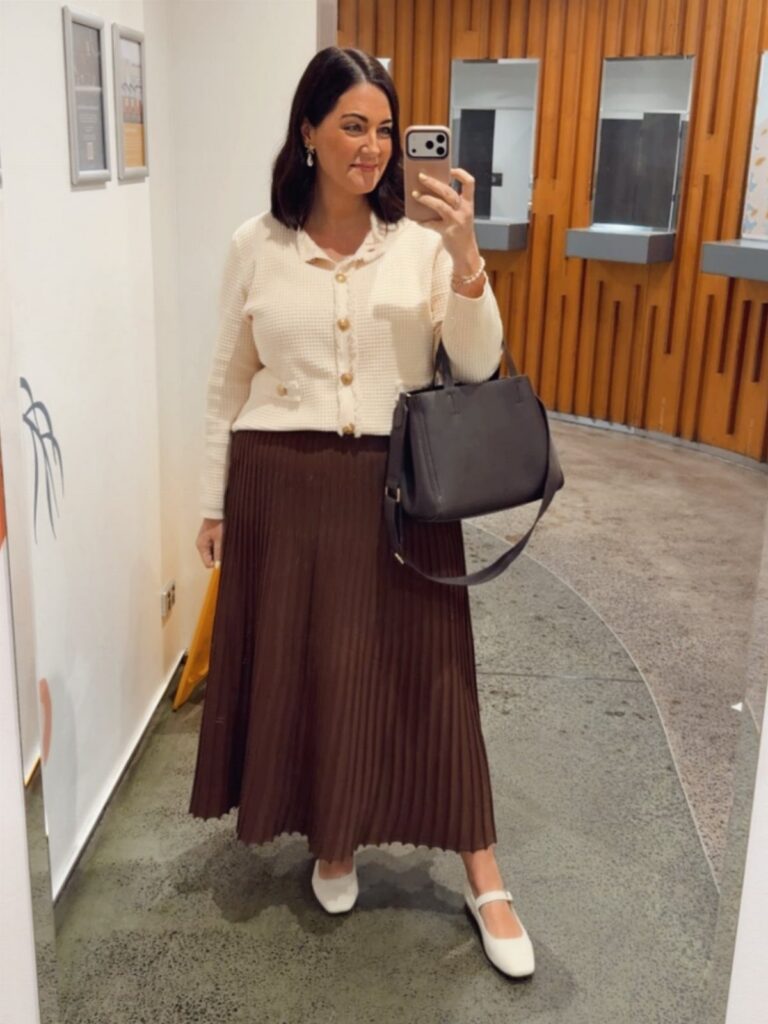
The outfits below move from a lightweight H&M trouser to pieces that justify tailoring, and the one that belongs to you depends on whether your office runs cold enough for wool, formal enough for a full suit, or casual enough for a sweater-over-shirt layer.
1. Plus Size Workwear
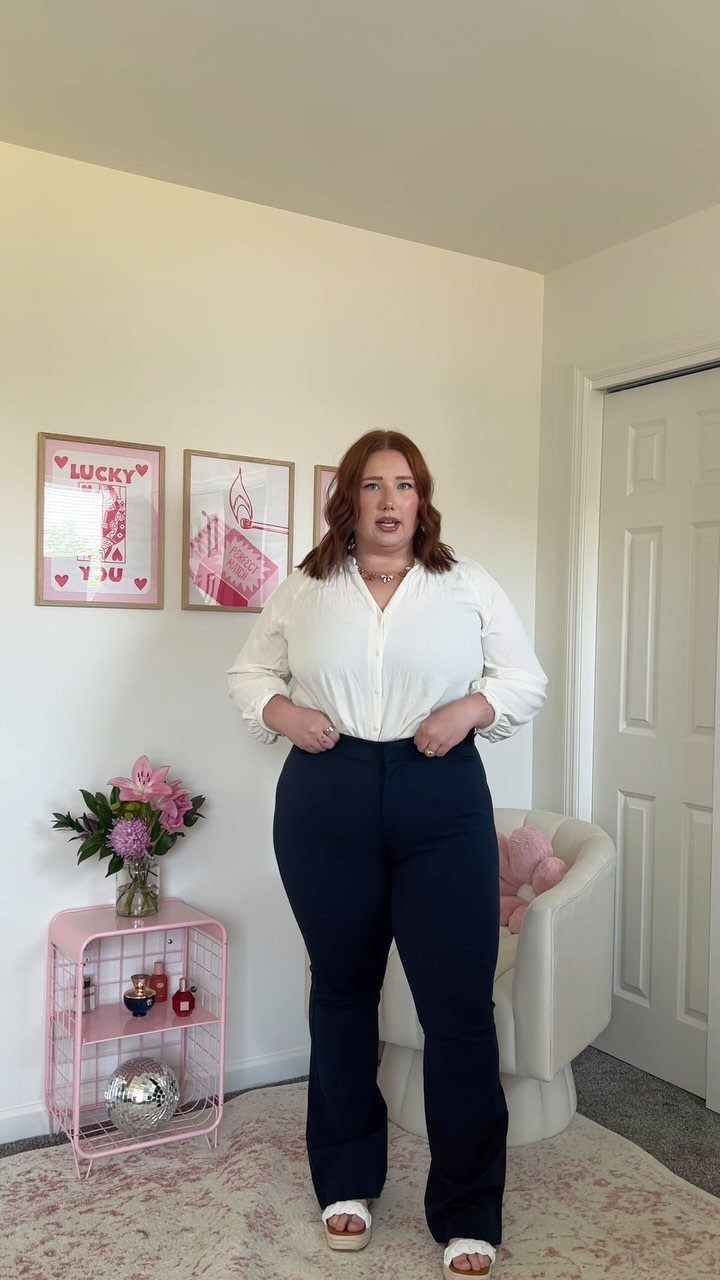
A white button-down tucked into high-waisted navy trousers is the foundation I would build from if I were starting a corporate wardrobe tomorrow.
The pieces are simple, but the fit is doing the work: the shirt nips in where it matters and the trousers hold their line through the hip.
Brands that cater specifically to plus-size workwear cut differently than straight-size lines graded up.
Eloquii designs for curves from the sketch, not the spreadsheet, and their Kady Pant has enough of a following that it functions as a default choice for women who need a reliable desk-to-meeting bottom.
Universal Standard runs on a different model entirely, with a return program built around the reality that bodies change size. Laws of Motion uses AI and micro-sizes to get closer to custom without the custom price tag.
H&M has pushed its core collection to 4XL in many styles, which matters if you are building on a tighter budget and want modern cuts rather than conservative ones.
I would spend the money on the trousers first, add the blazer second, and fill in tops last.
One of the most size-inclusive brands on the market, Universal Standard offers well-made staples created with realistic bodies in mind. For example, their medium is based on the actual median size in the United States, an 18.
2. Dresses
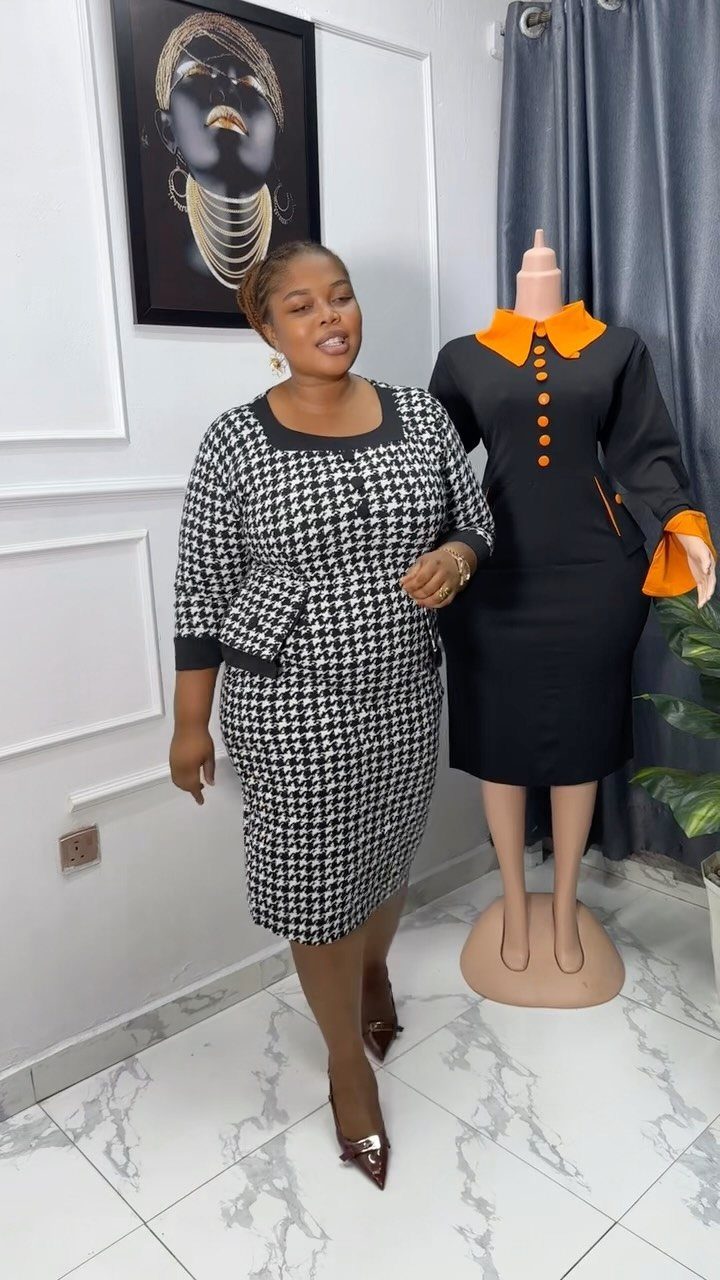
A houndstooth dress carries itself through a day that starts with a morning presentation and ends with a dinner you did not plan for.
The pattern reads as texture from across a conference table and hides the wear that shows on solid colors after a full day.
The cut matters more than the print.
A knee-length sheath with a defined waist and enough ease through the hip to sit comfortably for an hour-long meeting is the version to hunt for. Sleeves that reach the wrist save you from the cardigan question entirely.
If the dress has a neckline that works with or without a pendant, you have flexibility for days when you need to look more formal at the last minute.
Cotton or cotton-blend fabrics breathe through commutes and hold their press better than synthetic jersey.
A dress that transitions to evening usually has a neckline or sleeve that reads as complete on its own, not one that expects a jacket to finish the thought.
3. Trousers
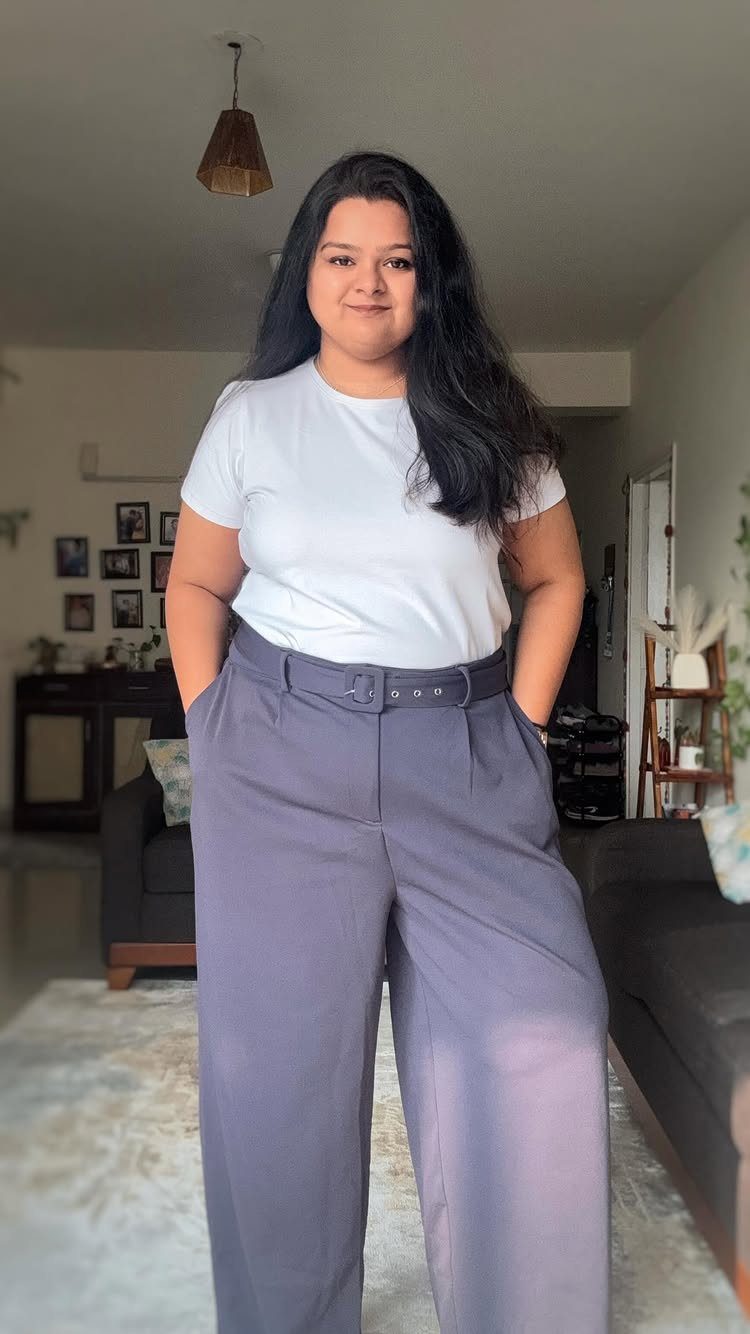
Wide-leg grey trousers with a clean waistband and a white tee tucked in look modern because the proportions are deliberate: volume below, fitted above, nothing competing for attention.
The belt is doing structural work here, not decorative; it holds the waist in place so the trouser can hang straight from the hip.
Cotton remains the most reliable fabric for year-round office wear. It breathes, it presses, and it does not shine under fluorescent light the way cheap poly-blends do.
Wool trousers earn their place in winter if your office runs cold or your commute involves walking through actual weather; the investment is in the weight and the drape, not the fiber alone.
Liverpool cuts trousers for plus-size bodies with a consistent waistband that does not gap, which is the detail that separates trousers you wear from trousers that stay in the drawer.
The leg should break at the top of the shoe or the ankle; anything longer drags and anything shorter starts to read as casual.
Wide-leg silhouettes work across body types because the line is continuous from hip to hem, which draws the eye vertically rather than across.
4. Blazers
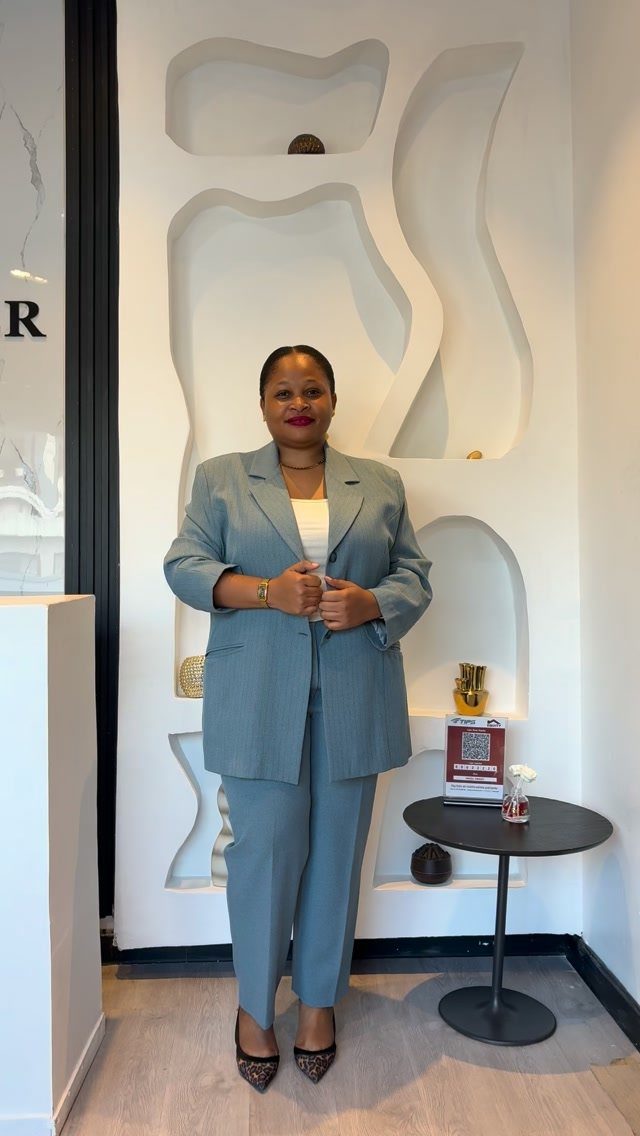
A light blue suit with a single-breasted blazer and matching trousers is a move away from the black-navy default, and it works in offices where the dress code is professional but not funereal.
The leopard-print shoes are the tell that this look was assembled by someone who enjoys getting dressed; they add texture without adding another color to coordinate.
For the blazer itself, I would keep one black or navy in the rotation for client meetings and days when you need to disappear into the room.
A soft knitted blazer trades some authority for comfort and is the better choice if you spend most of your day at a desk or if structured tailoring digs at your shoulders or gaps at the bust.
The knitted version also packs better for travel and does not require pressing after a morning commute.
The shoulder seam should sit at your actual shoulder. A blazer that rides up or slides back when you reach for something is cut for a different shape and will cost you more in tailoring than it is worth.
5. Tunic Blouse with Wide-Leg Pants
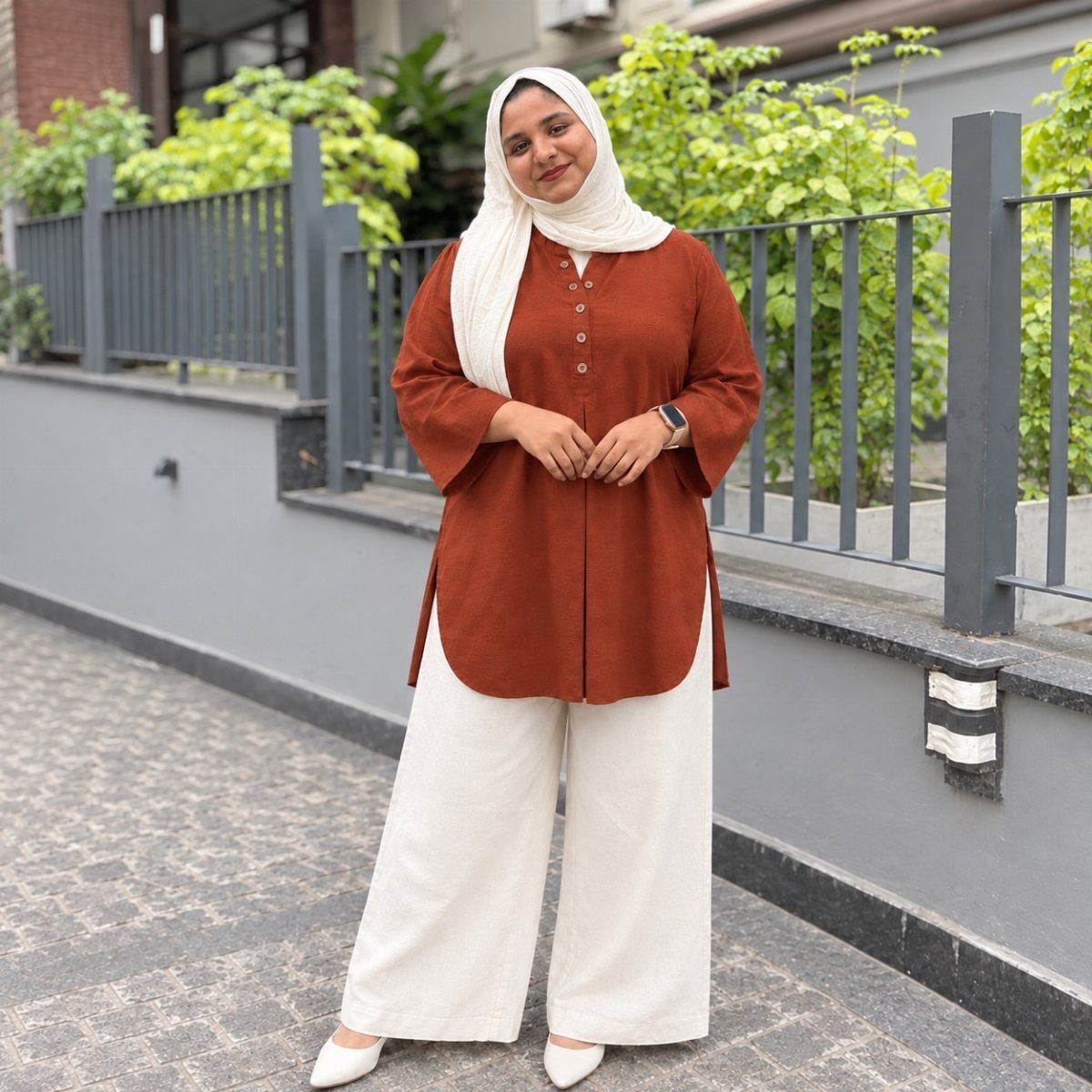
A rust tunic blouse over fluid white wide-leg trousers is a modest corporate look that does not read as apologetic.
The tunic length provides coverage without adding volume, and the wide leg balances the longer top so the silhouette does not feel top-heavy.
The color combination is doing specific work: rust is warm enough to read as approachable in a client-facing role, and the white trouser keeps the look from feeling heavy or season-bound.
If you are adapting this, check that the tunic falls straight from the bust or has only the softest shaping through the waist; any gathering or elastic will add bulk where the eye already rests.
The sleeve should be long enough to stay put when you reach forward, and the trouser needs a clean waistband that sits flat since the tunic will cover construction details the way an untucked blouse always does.
White trousers in a corporate setting require opacity you can trust. Test them in daylight before you commit.
6. Monochromatic Dress and Long Blazer
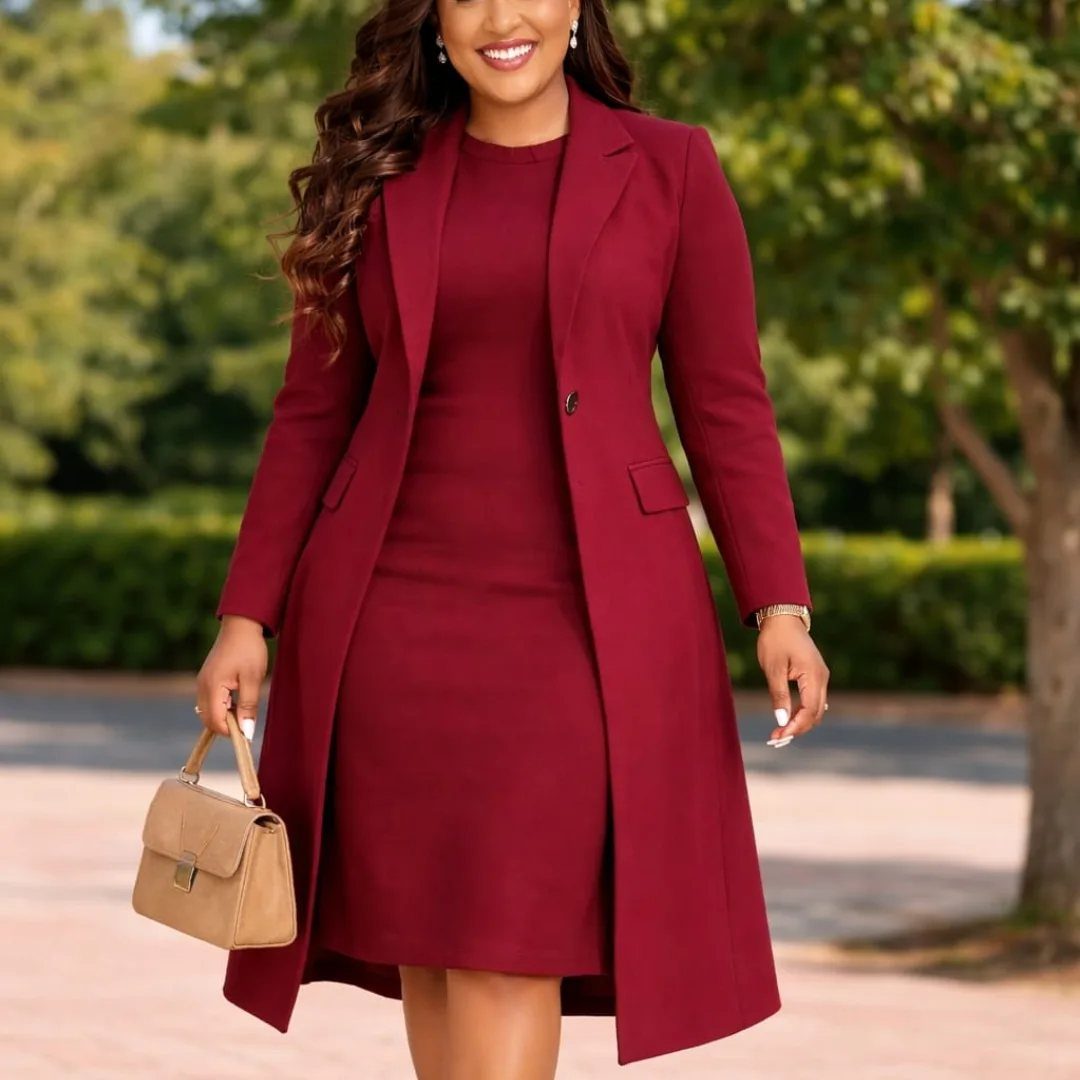
Burgundy from dress to blazer is a monochromatic move that reads as expensive even when the individual pieces are not.
The long blazer, cut closer to coat length, gives you the coverage of a topper without the formality of a suit jacket; it moves like outerwear but functions as a layer you keep on indoors.
The tan handbag breaks the color block at just one point, which is enough to keep the look from feeling like a uniform.
Ponte or a similar knit-backed fabric works for both pieces; it holds the line of the blazer without requiring the structure of traditional suiting, and it travels better than wool.
Check that the burgundies match closely enough. 2 shades that sit near each other but not together will look like a mistake every time.
7. Sweater Layered Over Collared Shirt
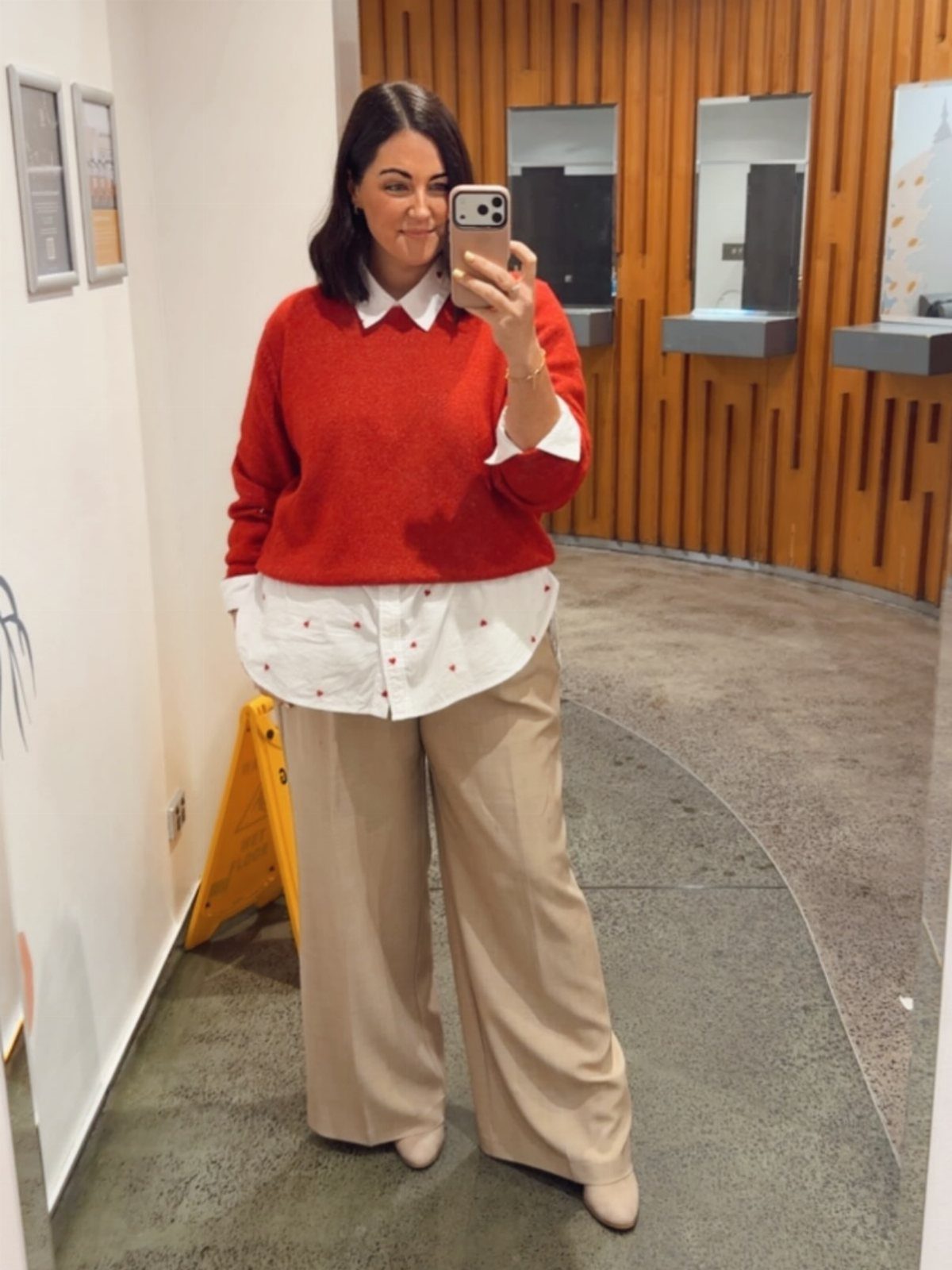
A crewneck sweater over a crisp collared shirt gives you the structure of office dressing with the softness of something you would wear on Saturday.
The collar and cuffs do the formal work; the sweater keeps you warm through an over-air-conditioned meeting.
The shirt must be slim enough to stay smooth under the knit, or the layers read as lumpy.
Check the neck: the collar should sit flat and visible, not slide out or bunch. A cotton or cotton-blend shirt presses cleaner than silk here, and it costs less to replace when the sweater pills against it.
The sweater’s hem should hit at or just below the waistband so the proportions stay intentional.
If it falls longer, the look shifts toward academic and away from corporate. Wide-leg trousers balance the upper volume the same way they do under a tunic: the line runs straight from shoulder to hem.
This is the outfit I would reach for on a day with back-to-back meetings and no time to change between them.
Dressing for Confidence
The fit of your clothes is doing more work than the label inside them.
Most pieces, plus size or otherwise, need alteration before they sit right; the shoulder seam lands where it shouldn’t, the waistband gapes, the sleeve eats your wrist.
A tailor fixes what the factory couldn’t predict about your body, and that fix is cheaper than replacing a blazer you never wear because it rides up when you reach for something.
Sara Chiwaya, who founded Curvily NYC, put the stakes plainly: when brands skip your size, the message is that you don’t belong in the room. That message follows you past the closet.
Presentation is communication, and in client-facing or leadership roles, polished dress gets read as promotion-ready. The goal isn’t to erase your own taste; it’s to make your clothes a reliable tool instead of a daily distraction.
Understanding Dress Codes
Before you buy a single piece, find out what your office actually requires.
Business professional means no jeans, no sneakers, and usually no guesswork: trousers, blouses, blazers, or dresses that read as formal without being uniform. Smart separates are the building blocks, not statement pieces you build around.
If your workplace is client-facing or leadership-heavy, the dress code leans stricter.
The women I know who advance fastest in those environments treat the code as baseline, not ceiling; they show up in the required language, then add one detail that signals they chose to be there.
That might be texture, a color that isn’t black or navy, or shoes that carry some weight.
Avenue’s workwear line hits the same notes: tunics, tailored trousers, blazers, dresses that move from boardroom to evening without a change.
Your office falls into one of those categories, and you need enough pieces in that lane that you’re never caught short.
Building a Capsule Wardrobe
The "full closet, no outfits" feeling usually means you own too many of one thing and not enough of what actually combines.
Seven black trousers does not give you seven outfits; it gives you one pair you wear and six that hang there, identical and ignored. The same trap catches blouses in a dozen prints that refuse to coordinate.
Buy for your actual life, not the one you imagine. One well-made black blazer you reach for weekly beats ten that gap at the bust or pull across the shoulders.
Katie Sturino’s advice, which I’ve seen hold up in practice, is to shop with a concise list and spend more on pieces that earn it: the blazer, the trousers that fit without a gap at the waist, the dress that doesn’t need a jacket to look finished.
Quality here means construction you can see and fabric that recovers from a day of sitting.
Outfit fatigue comes from overload, not repetition; a smaller rotation of pieces that all work together gets you dressed faster and leaves you less overwhelmed.
Frequently Asked Questions
How to dress professionally when you are plus size?
Start with fit, not size. A fitted white button-down that follows your waistline and structured navy trousers that keep their shape past the hip beat any seasonal trend for polish.
Off-the-rack rarely fits anyone perfectly; a tailor can move a shoulder seam or take in a gaping waistband for less than the price of a blazer that hikes up every time you stretch.
Cotton or cotton-blend weaves let air move during your commute and smooth out with an iron, while synthetics that catch the light under fluorescents cheapen the whole look.
Where can I buy plus size business professional clothes?
Eloquii builds from the body outward rather than grading up from a smaller block, and their Kady Pant has become something of a uniform for anyone who needs to look pulled-together by 9 a.m.
Universal Standard built its whole system on size inclusion, with a return window that acknowledges weight fluctuates and clothes should accommodate that.
Laws of Motion asks for your measurements and uses algorithmic sizing to narrow the gap between standard and custom without charging bespoke prices.
If I were building from scratch, trousers would get my first dollars, the blazer would come next, and tops would be last since they hide easiest under a jacket.
What are some good outfits for a plus size woman with a big tummy?
A rust tunic blouse over flowing white wide-leg trousers covers the midsection without puffing it out, and the generous leg keeps the longer top from feeling like it is tipping forward.
The tunic should drop straight from the bust or ease in only slightly; gathers or elastic at the waist draw the eye exactly where you do not want it.
A single-color dress and matching long blazer in burgundy reads as money well spent, and the longer jacket covers without the stiffness of traditional suiting.
For either look, check that the waistband sits flat and the sleeve stays put when you reach forward.