The 12 outfits below run from a $35 pair of Target trousers to a $178 merino Fair Isle crew, so the deciding factor is how much structure your day demands.
A video call that turns into errands needs a different sweater than a school pickup that might stretch to coffee.
The Alex Mill shrunken crew at that upper price point carries enough hand-knit detail to pass for vintage, while the plaid trousers at the bottom keep the same cable-knit feeling grounded in weekend territory.
1. Sweater with Slacks and Sneakers
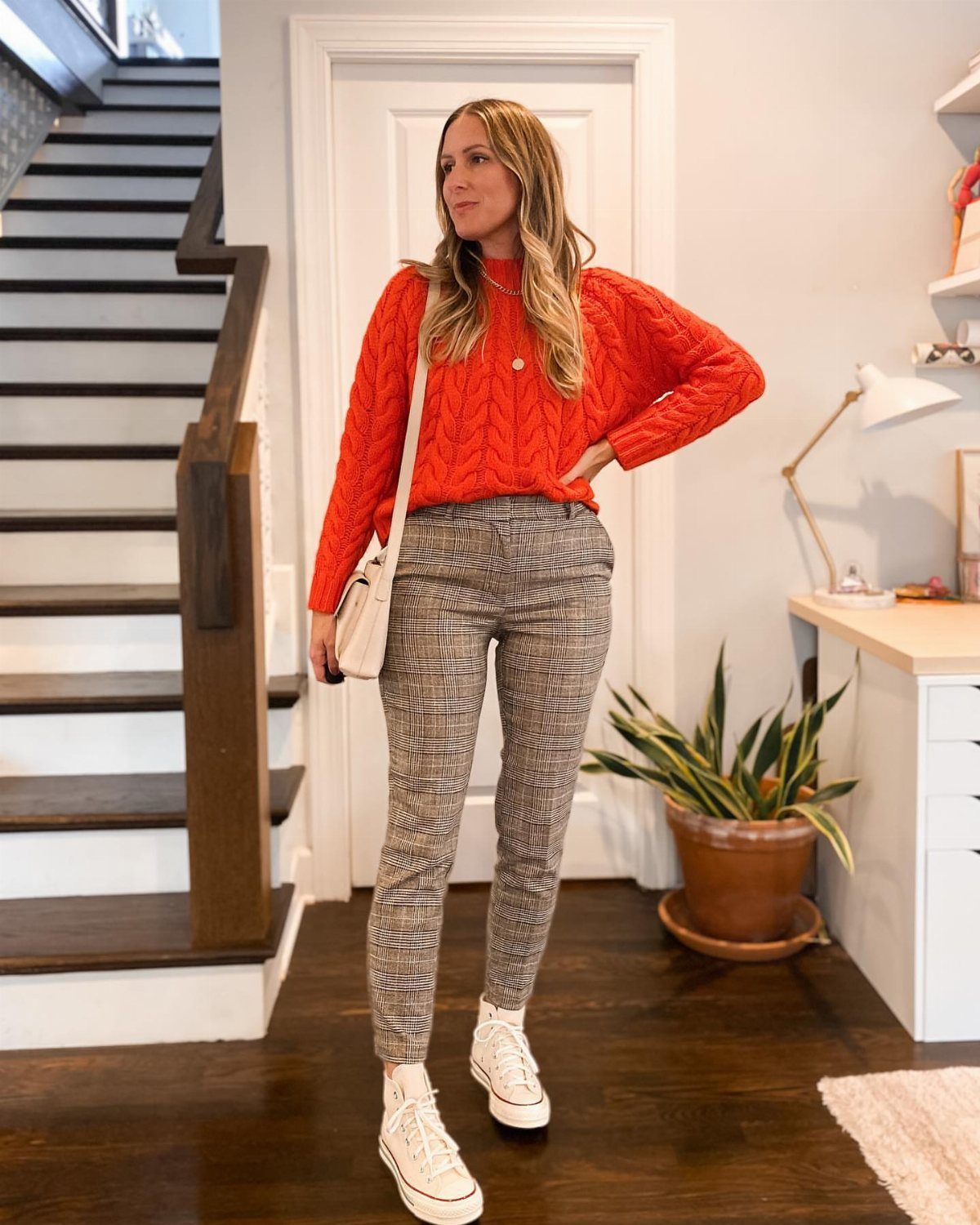
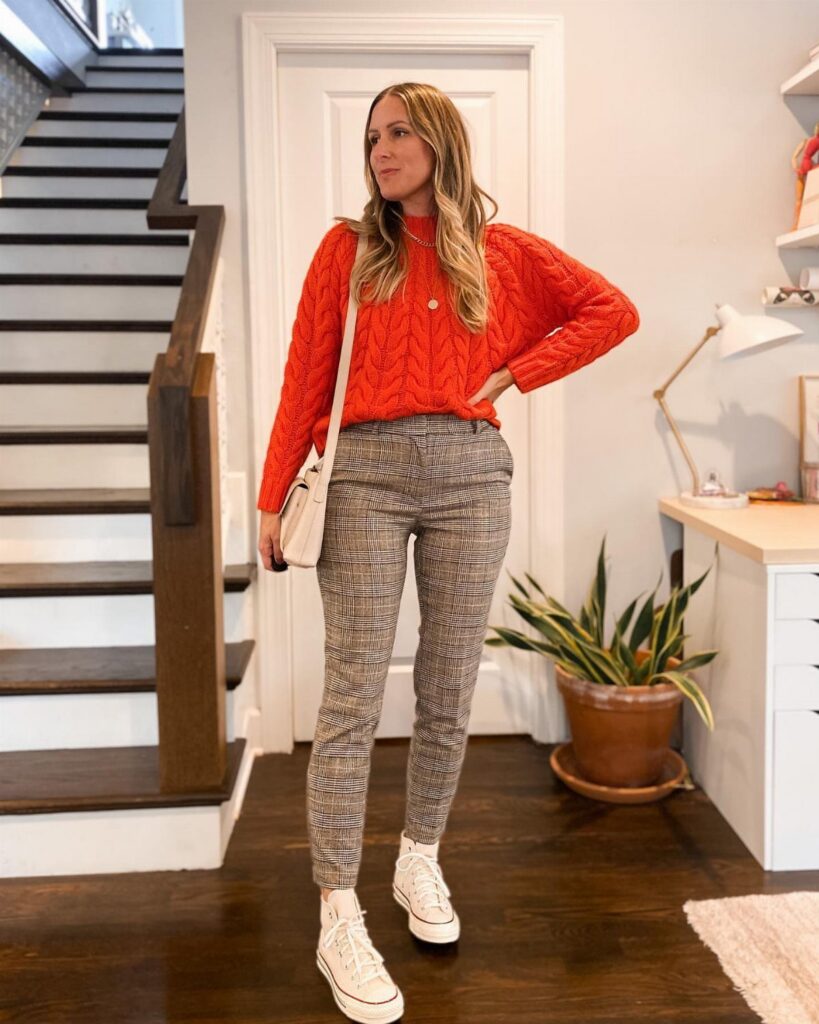
Bright orange cable-knit against plaid trousers already does the heavy lifting, so white high-tops keep the grounding casual rather than competing.
I like this pairing for days when denim feels too expected, and the Target trousers I keep coming back to run under $35 with a cut that reads intentional, not office-leftover.
The sneakers matter here: canvas, not leather, so the outfit stays in weekend territory.
A structured tote finishes it, sized for actual errands. I reach for this formula on WFH days when I want to look assembled on a video call without changing before a grocery run.
2. Collared Shirt Under a Crew-Neck Sweater

A collared shirt under crew-neck knit is the kind of layering trick that looks like effort and takes almost no time.
The visible collar and cuffs frame the sweater, and the shirt tail peeking below hemline adds length if the sweater hits at an awkward spot.
I usually check that the shirt fabric is thin enough to lie flat; a bulky oxford fights the neck and shoulders.
Any shirt color works if it contrasts enough to read as separate layers; a blue-and-cream pairing leans academic, but bolder or quieter choices shift the mood.
For a retro finish, try this over a sleeveless dress so the sweater acts as a top layer rather than the main event.
3. Sweater with Fair Isle Pattern
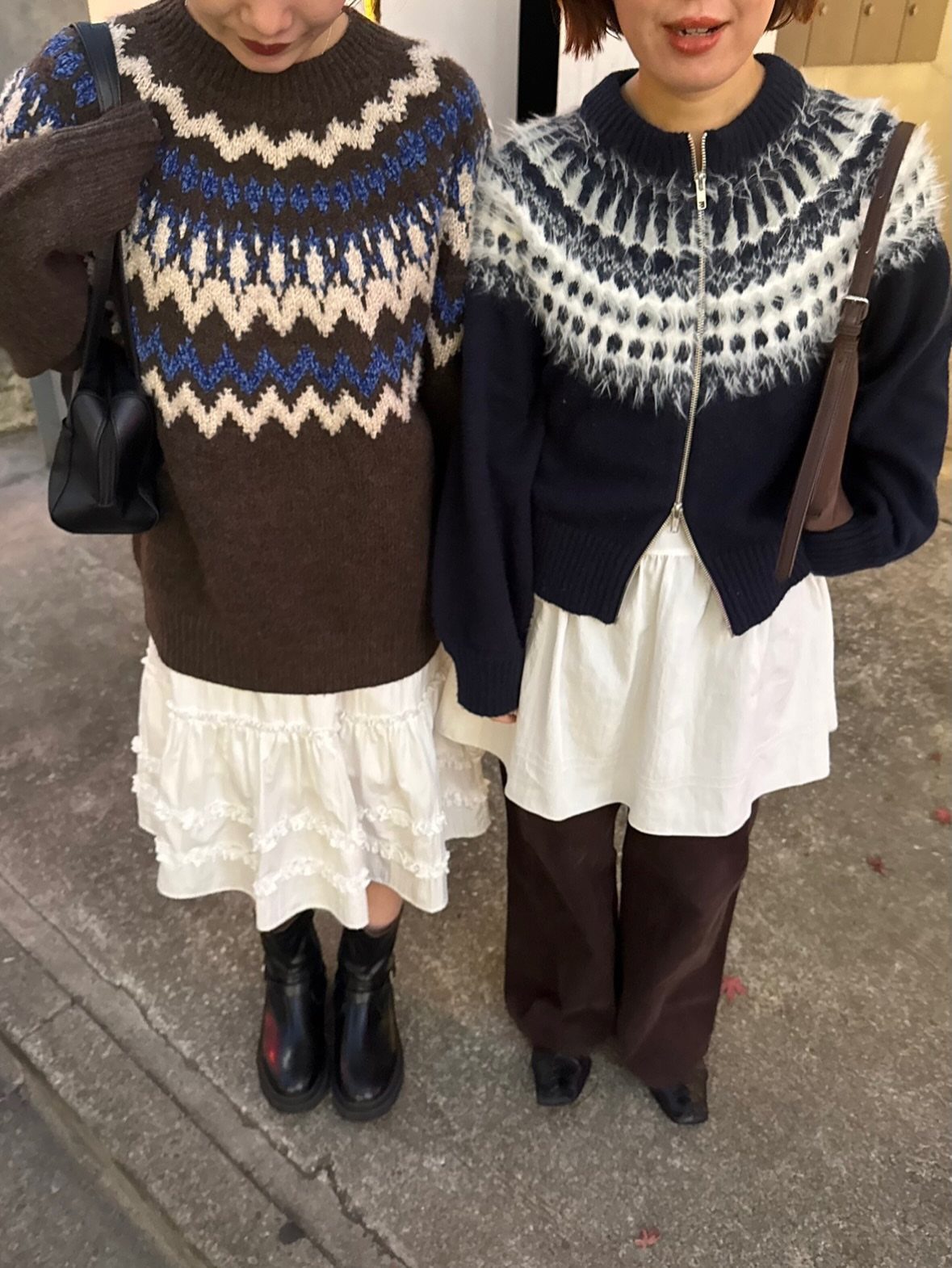
Fair Isle patterning carries enough visual weight that the rest of the outfit should quiet down, which is why I was surprised to see it work with striped jeans in one styling I read about.
The Alex Mill shrunken crew I keep bookmarking runs around $178 in merino wool, intricate enough to pass for vintage.
For most days I would stick to light denim or a long skirt, saving the pattern clash for when I actually want to be noticed.
A red sock flash and boat shoes push it toward holiday party territory; without those, the same sweater reads as January-appropriate. The handmade quality is the appeal, even when the knitting happened far from any Scottish island.
4. Oversized Sweater with Plaid Mini Skirt
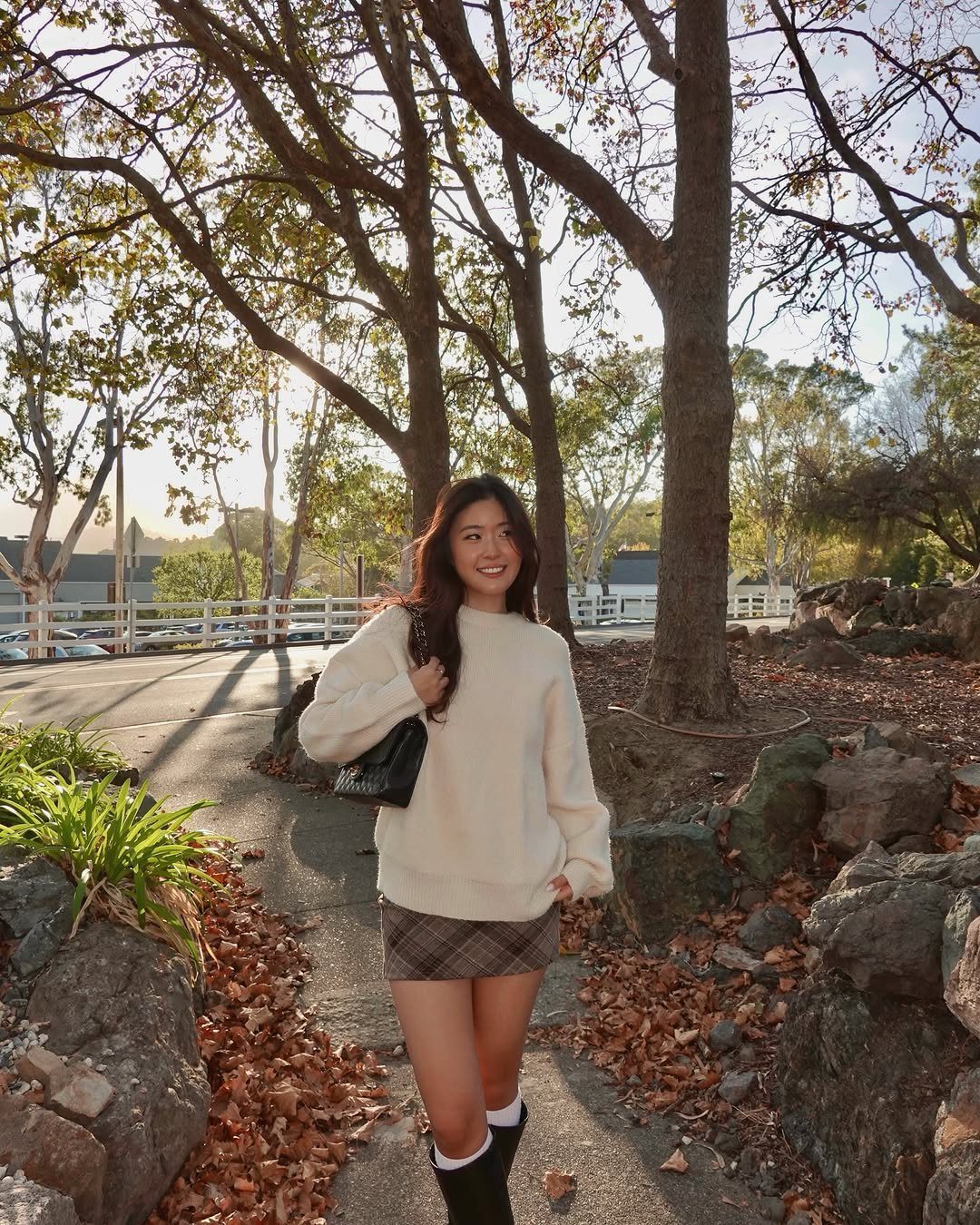
An oversized cream knit with plaid mini and knee-high boots is a proportion play that only works if the sweater is genuinely long in the torso, not just sized up.
I would check the shoulder seam: if it drops past your natural shoulder, the sleeve length needs to land near your thumb base to look intentional rather than borrowed.
The skirt here is short enough that boot height matters; knee-high balances the visual weight of a chunky knit, while ankle boots can leave an awkward gap.
I carry a smaller bag with this volume on top, since a large tote competes with the sweater’s silhouette.
5. Matching Knit Sweater and Pants Set
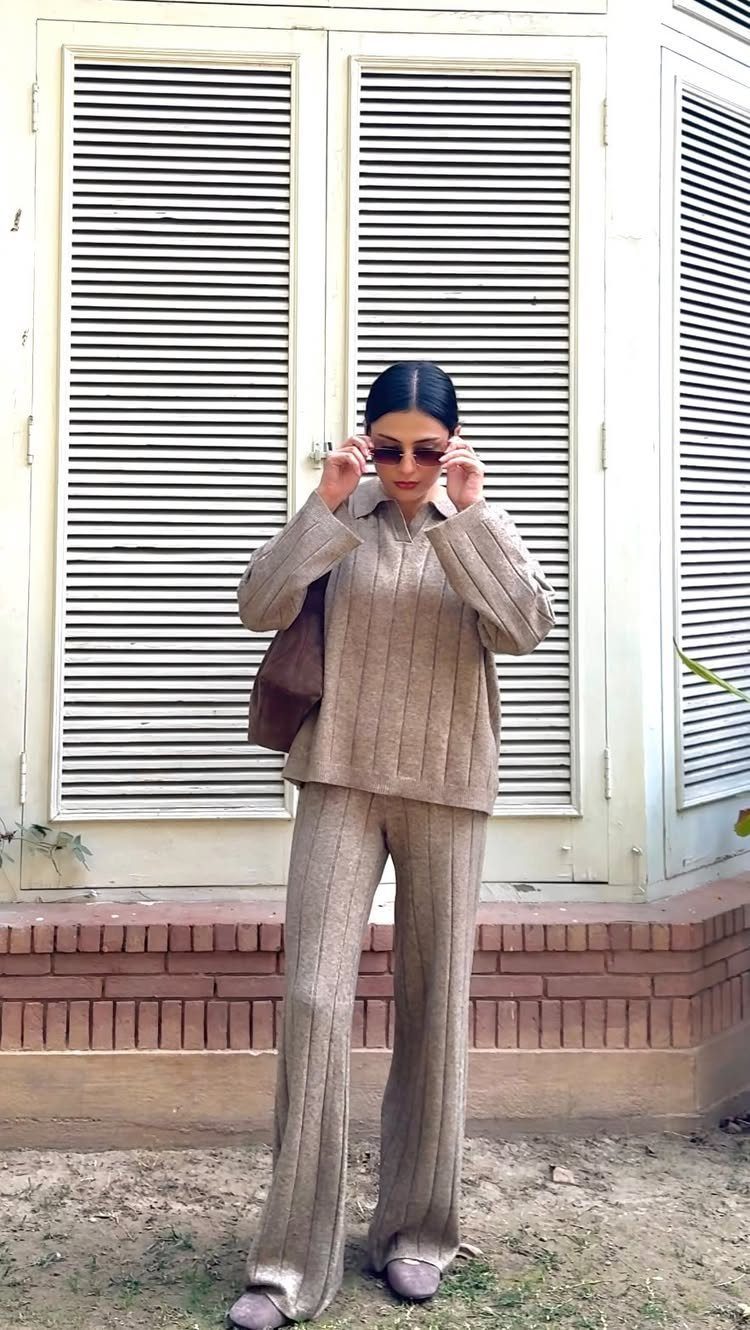
Matching ribbed knit sets solve the morning decision problem entirely, though I would verify the pants have enough structure for public viewing.
The thick waistband visible here is the detail to look for: it needs to hold shape without digging, which ribbed knits manage better than smooth jersey.
I own a similar taupe set that I have worn with Birkenstock clogs for school pickup and with a wool coat layered over for coffee meetings; the sweater alone also works with black leggings when the pants are in the wash.
The collared neckline elevates it just enough that you will not feel underdressed if plans shift.
6. Cable-Knit Sweater with Light Jeans
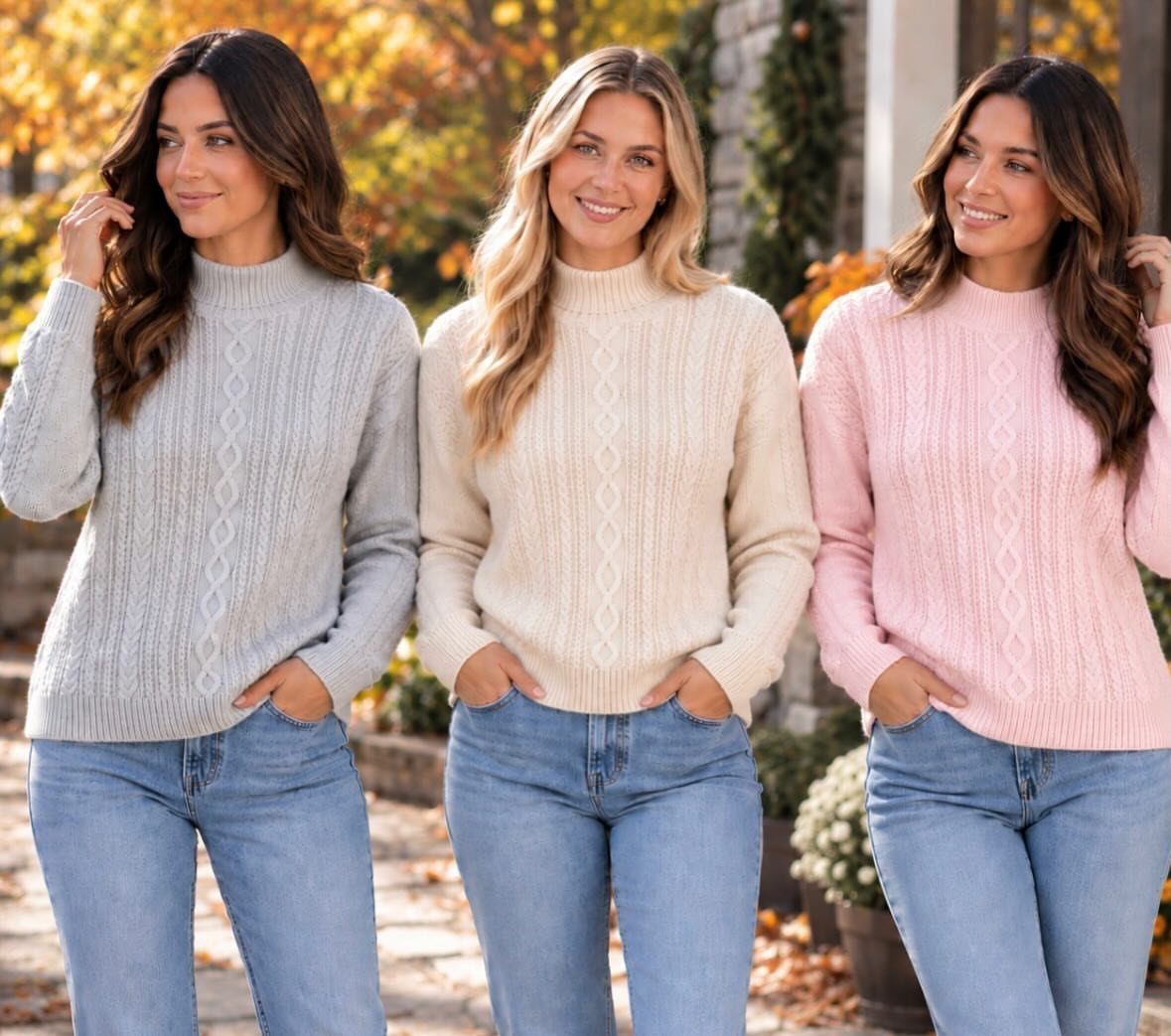
Pastel cable-knit against light-wash denim is a spring transition move that depends on the jean shade being genuinely pale, not medium.
A cable-knit sweater with light jeans reads differently in mint, butter, or blush; choose based on what your closet already holds in jackets and shoes.
Light denim can turn washed-out fast, so I check that the sweater has enough saturation to stand apart.
The mock neck here is easier to layer under a jacket than a full turtleneck, and the cable texture adds interest without requiring jewelry.
For a striped alternative, Polo Ralph Lauren runs vintage collegiate colorways through resale sites at varying prices; I found one in burgundy and navy that my kid now has an accidental twin of.
7. Sweater with Wide-Leg Trousers
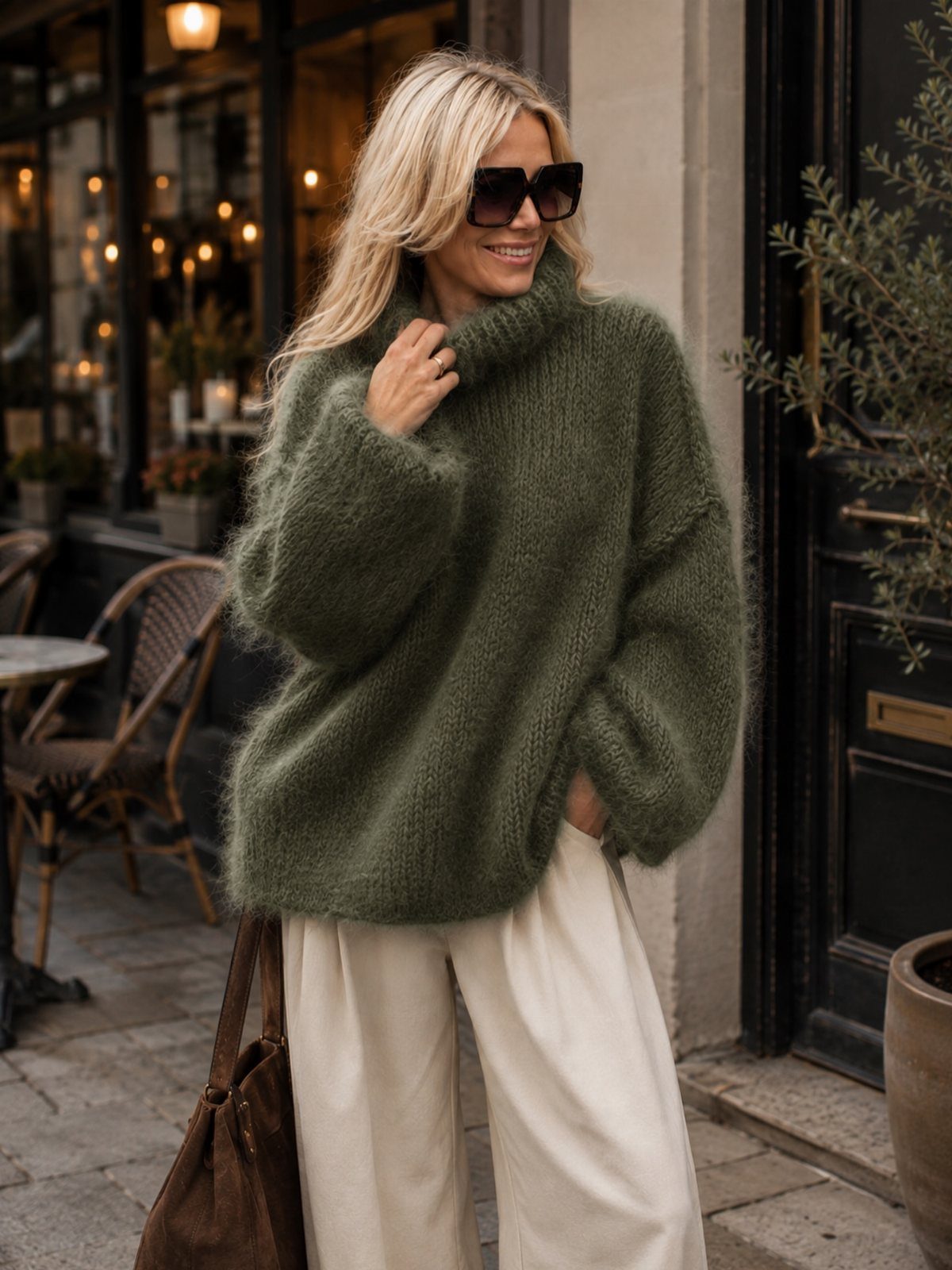
Olive fuzz against cream pleats is a texture pairing that works because the sweater’s bulk has somewhere to go; the trousers hold their line below rather than adding volume.
The turtleneck here is doing structure duty, so check that the neck sits upright without flopping, and that the sweater length hits at or below hip to keep the proportion deliberate.
I would choose a shoe with some height, even a low block heel, so the trouser break doesn’t swallow your frame.
Sunglasses and a small bag keep this from sliding into loungewear territory. For anyone building a work-adjacent wardrobe from weekend pieces, this is the bridge.
8. Cardigan Over a White Turtleneck
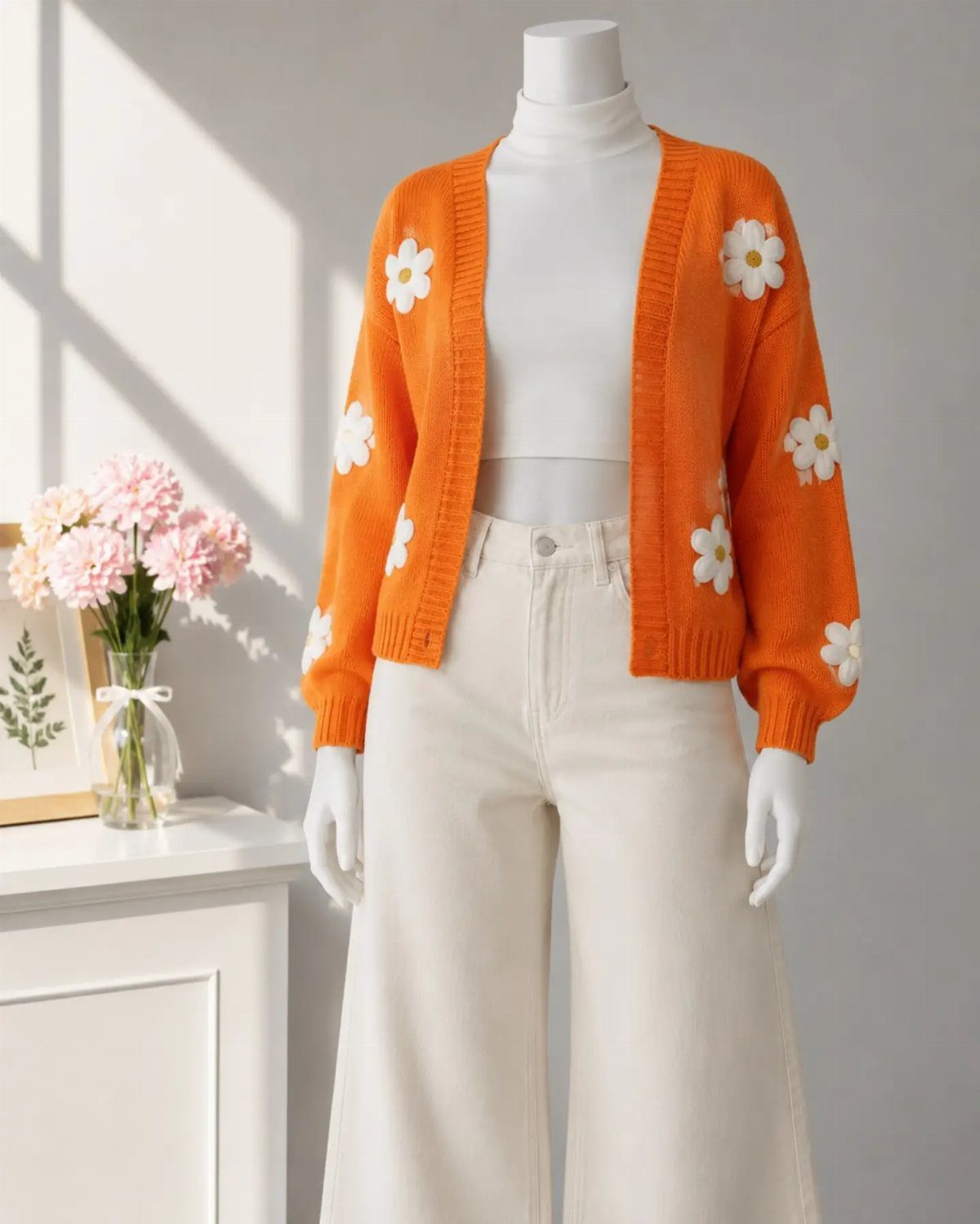
Daisy patches on orange knit read vintage-shop find rather than costume when the base layers stay quiet; the white turtleneck and cream pants let the cardigan be the single statement.
I would check the turtleneck fit first: too loose and the neck bunches under the cardigan’s crew neckline, too tight and you look like you’re bracing for cold that hasn’t arrived.
The cropped turtleneck length matters here, since a longer one would create a visible line under the cardigan buttons.
Wide-leg pants balance the cardigan’s boxiness; a slimmer pant would tip toward mismatched proportions. A small gold pendant necklace finishes the look without competing with the daisies.
9. Plaid Button-Up Sweater with White Pants
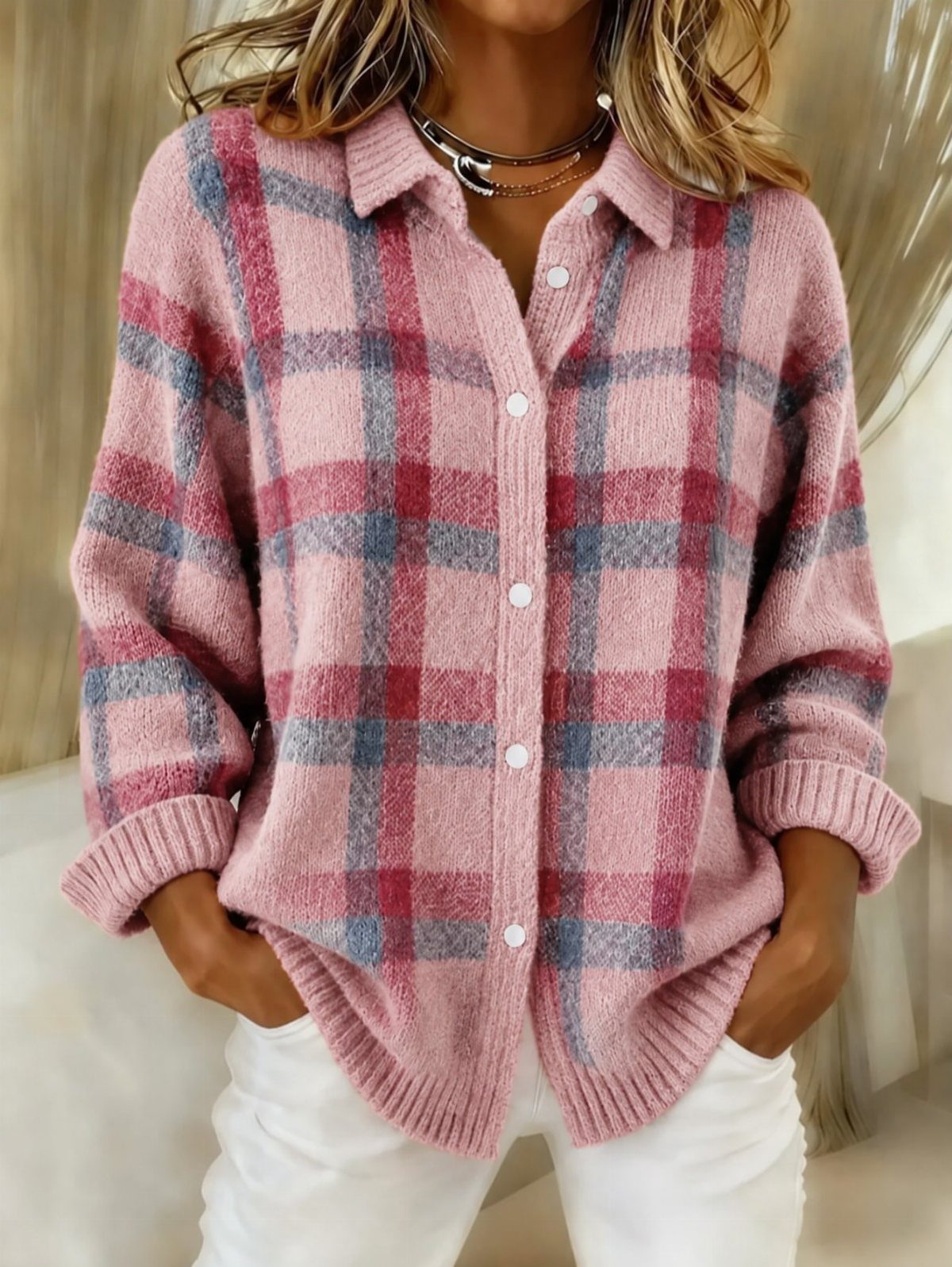
Pink-and-blue plaid knit worn as a button-front shirt is a piece that does its own pattern mixing, so white trousers give it the blank canvas it needs.
The fuzzy texture reads casual despite the collar; I would check that the placket lies flat when buttoned, since knit button bands can gap or ripple.
White pants in winter demand a shoe that can handle actual weather, which is why I would swap the implied bare foot for a loafers or boot option, keeping the pant full-length rather than cropped.
This is a useful piece for anyone whose closet runs to solids: one patterned top that functions as a layer or alone.
10. Sweater with Suede Belted Vest
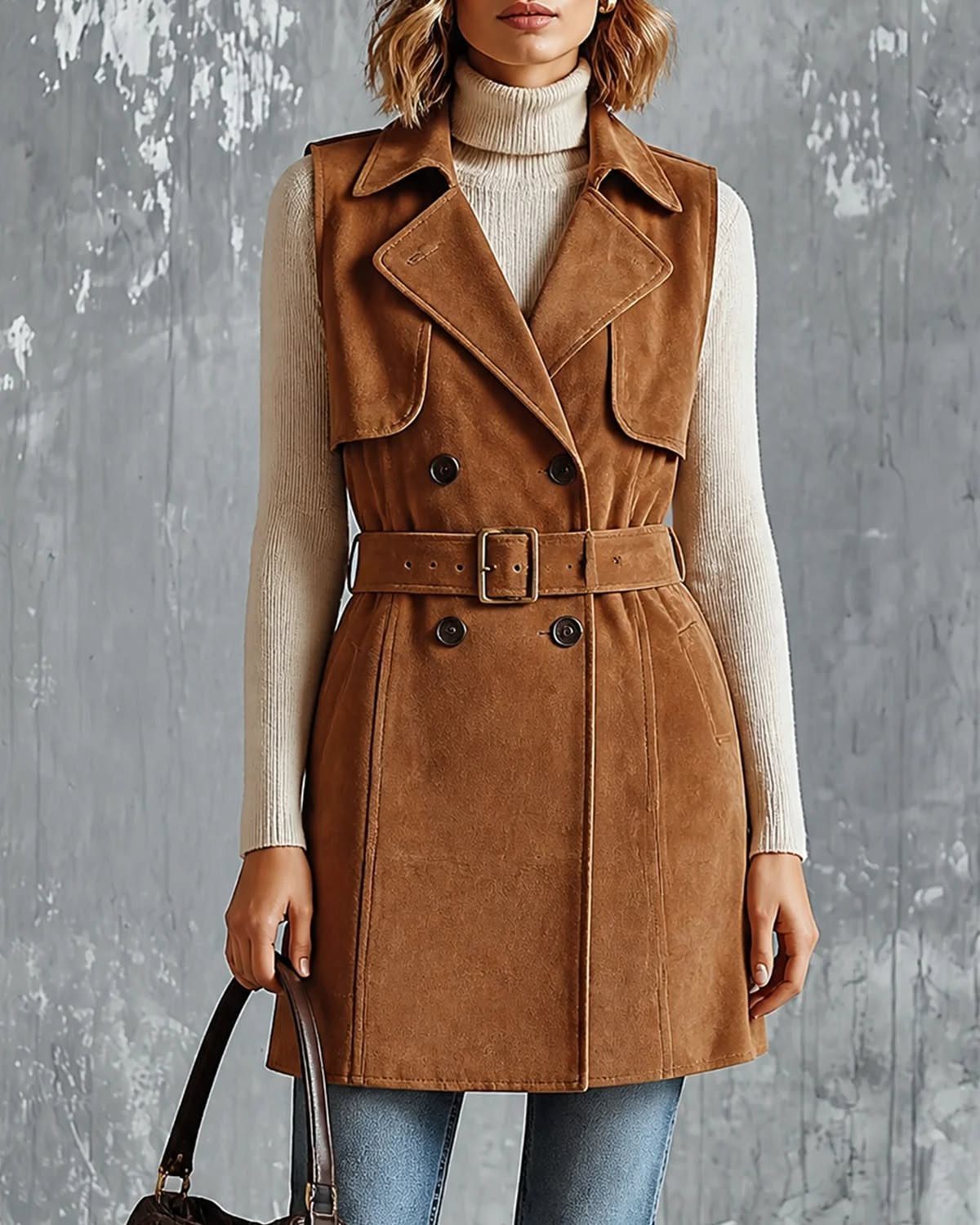
A cream turtleneck under a belted suede vest is layering that depends on the vest’s length; cropped would read as an accessory, but this longline version functions as outerwear.
The belt defines shape that the turtleneck alone would lack, so I would check that the sweater is thin enough to cinch without bunching at the waist.
Ribbed knit works better than cable here, since the texture needs to stay smooth under the vest’s drape.
Jeans ground the suede so the combination doesn’t drift into costume; a darker wash would dress it up, lighter keeps it daytime. This is my preference for transitional weather when a full coat is too much.
11. Matching Ribbed Sweater and Skirt Set
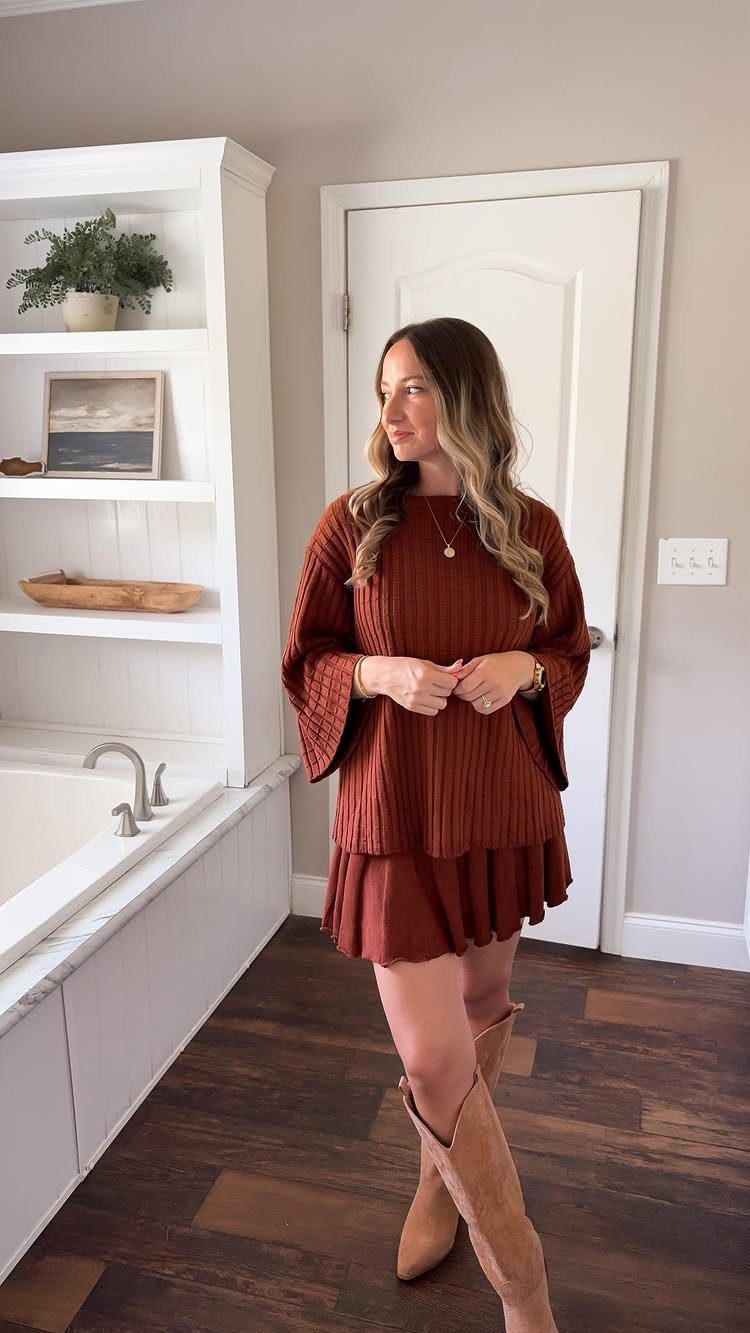
Ribbed knit head-to-toe in rust reads intentional rather than lazy because the texture is consistent and the boots add a second material to break it up.
I would check the skirt’s waistband for actual hold, since ribbed knit can relax over a day of sitting. The sweater’s fit should be close enough that tucking isn’t required; a blouson effect would compete with the skirt’s line.
This set works for the reader who wants polish without having to think about separates, though I would add a coat for any outdoor stretch in cold weather.
12. Cable-Knit Sweater with Denim Maxi Skirt
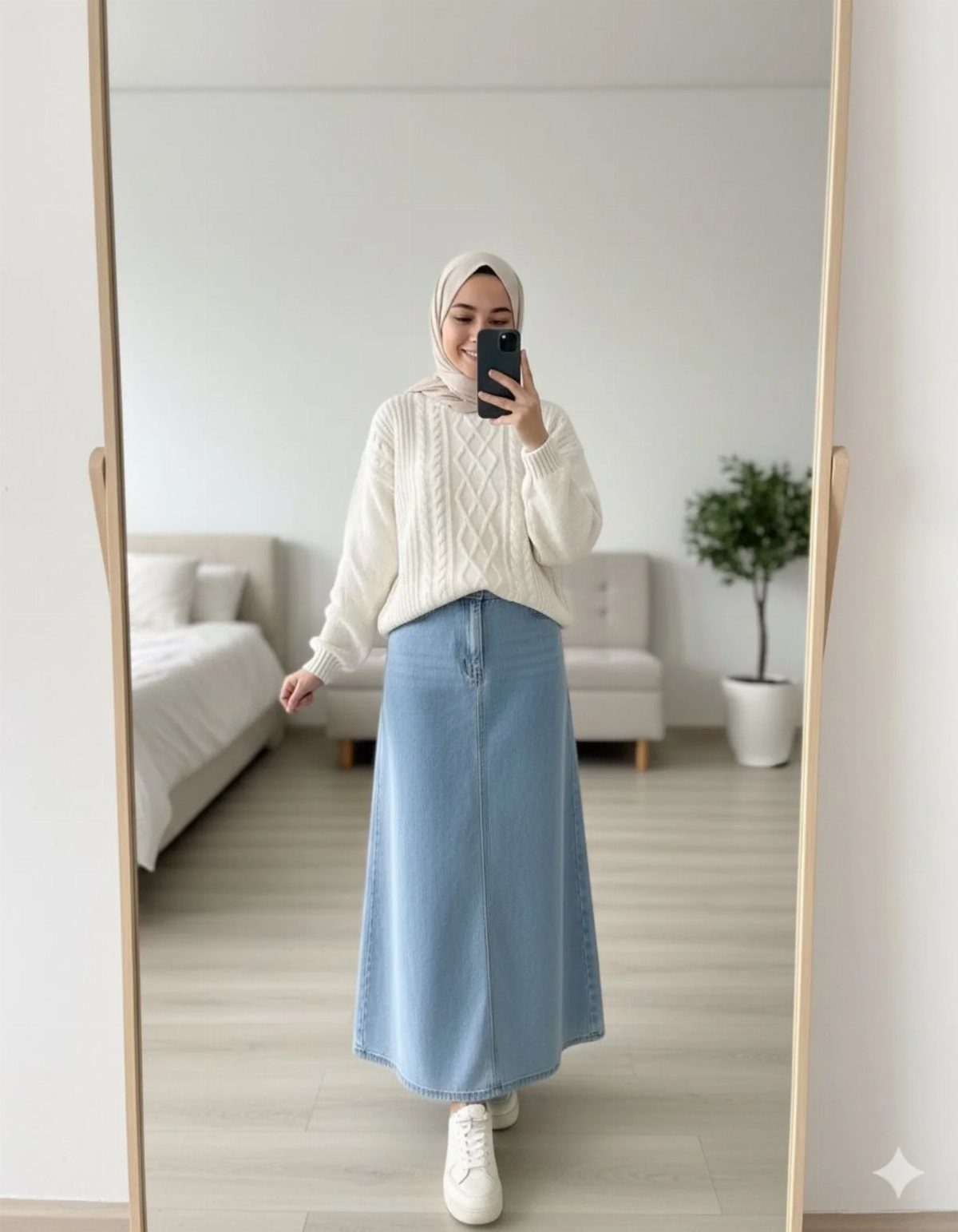
Chunky cream cable-knit against long light denim is a proportion that only works with the skirt’s A-line movement; a straight or pencil maxi would tangle with the sweater’s bulk.
The hijab here is part of the silhouette’s vertical line, not an afterthought, and the sneakers keep the whole combination in running-errands territory rather than attempting evening.
I would check the skirt length against your own frame: too long and the sneakers look accidental, too short and the cable-knit overwhelms. This formula gives coverage without formality, and an all-cream palette means any coat layers over without clashing.
Accessorizing Sweater Outfits
With crew-necks and turtlenecks, I keep jewelry small and high: a short chain or stud earrings sit where the neckline frames them, rather than competing with it.
Ballet flats with a buttoned cardigan read more intentional than the same shoe with an oversized pullover; the proportions need to match the shoe’s neatness.
For the cardigan itself, a basic gray version that buttons clean to the neck gives you the option to wear it alone or open over a tee, and a pair with pocket detail on the jeans adds interest the sweater doesn’t have to supply.
Sweater Care Tips
Most sweaters I own go to the dry cleaner once a season, but merino and some cotton blends handle a cold water hand wash if you reshape them flat to dry.
The mistake I made early was hanging wet knits; the shoulder drops and never recovers. Folded storage is the rule, with acid-free tissue between layers if the knit is heavy enough to crease.
Cedar blocks beat mothballs for smell, and I replace them yearly when the oil fades. Pilling happens on friction points regardless of price; a fabric comb works better than a razor, which can nick the yarn.
Layering Techniques
A cardigan layered under a coat needs sleeve length to spare, or the cuff disappears and you are tugging all day.
I would size up slightly in the cardigan if it is destined for under-jacket duty, but keep the shell layer fitted so the bulk stacks in the right place.
The button-front cardigan functions as a stand-alone top when closed, which changes what you put under it: a camisole or thin tee works, but anything with its own neckline compete.
For crew-neck sweaters over collared shirts, the shirt fabric matters more than the color; a stiff cotton collar will not bend to the sweater’s line, while a washed poplin or voile lies flat.
Layering a sweater over a dress works best when the dress has no sleeves to bunch, and the sweater’s hem hits at a different level than the skirt.
Frequently Asked Questions
What do people wear sweaters with?
Sweaters pair well with slacks and sneakers for casual polish, plaid mini skirts with knee-high boots for proportion play, wide-leg trousers for work-adjacent structure, and light denim or long skirts for spring transition.
Layering options include collared shirts underneath, white turtlenecks under cardigans, or belted suede vests over thin knits.
How to not look frumpy in a sweater?
Check that shoulder seams sit at or near your natural shoulder, and that sleeve length lands near your thumb base for oversized styles.
Pair bulky knits with structured bottoms like pleated trousers or A-line skirts that give the bulk somewhere to go, and add shoes with some height so proportions stay deliberate. Small, high jewelry works better than competing pieces at the neckline.