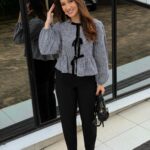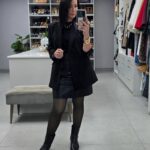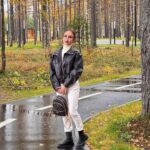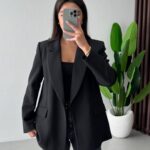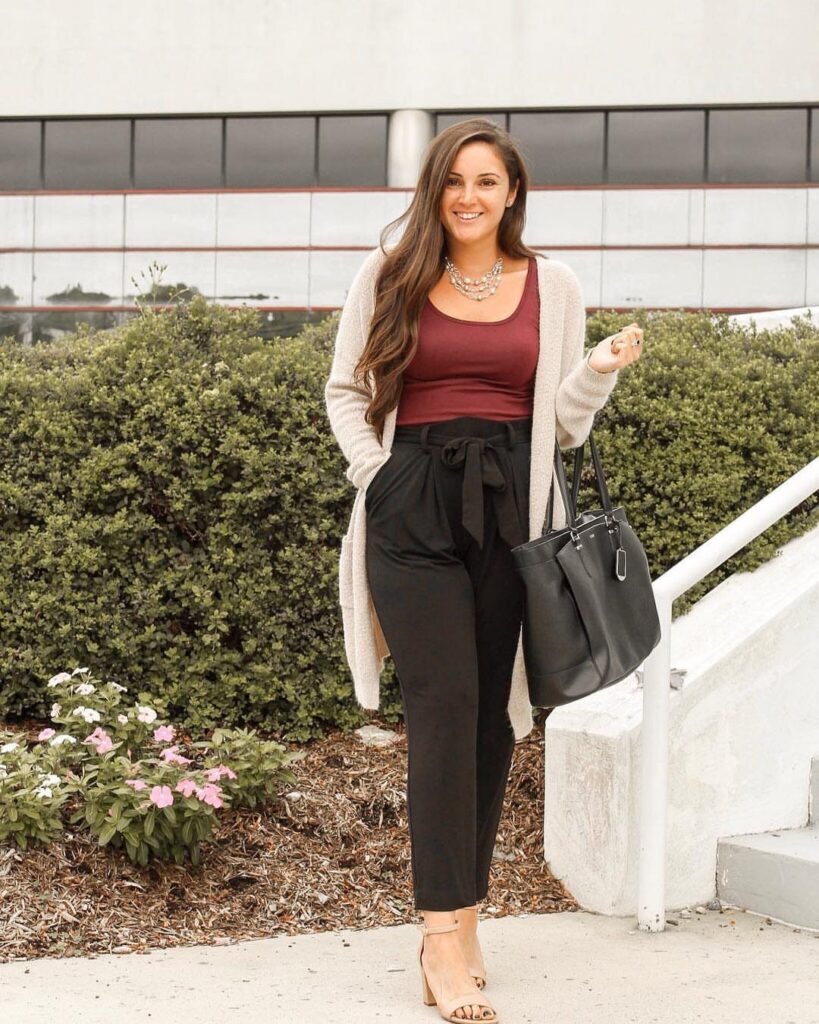
These outfits range from a single silk blouse to a full double-breasted suit, so the deciding factor is how much structure your office demands and how much time you have to layer.
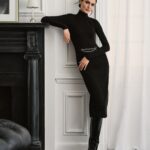
A ribbed knit maxi dress with a thin belt holds its own in a conference room; a white button-down and tan trousers gets you out the door in 2 minutes if the shirt length is right.
1. Wide-Leg Trousers
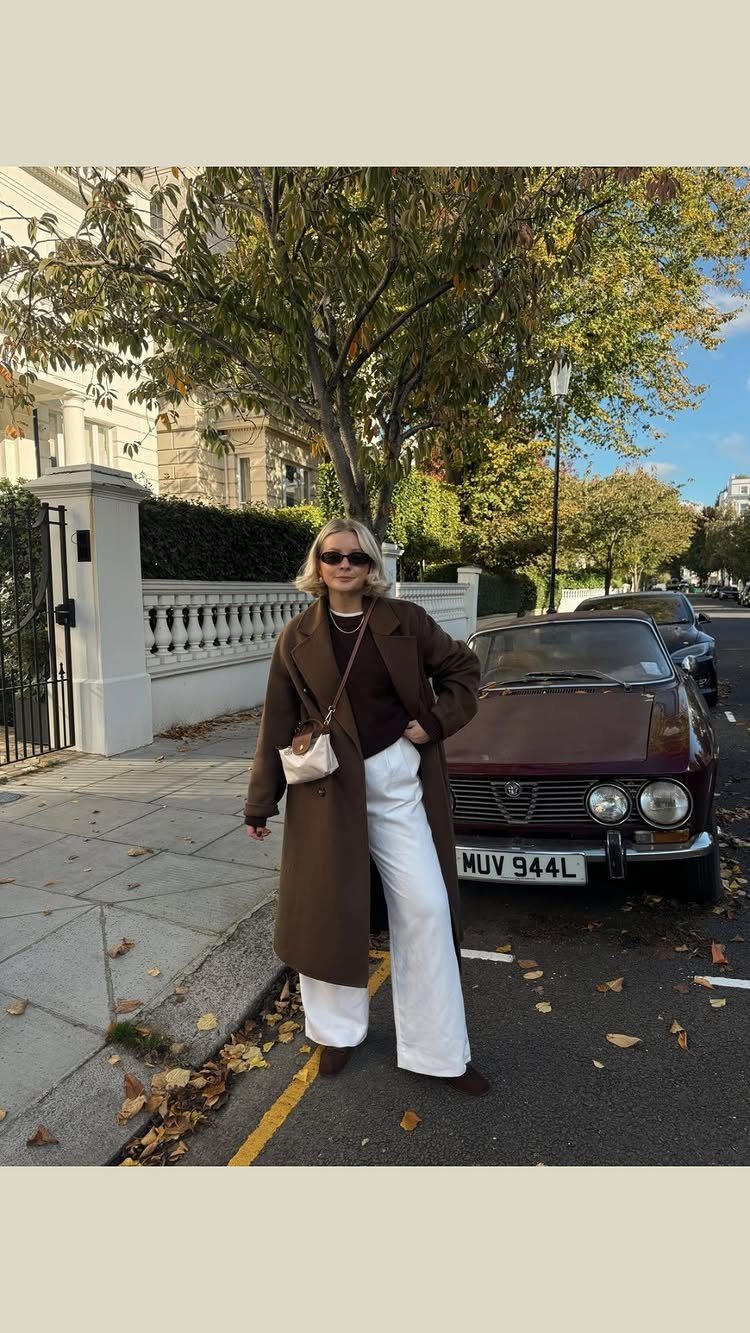
Wide-leg trousers give your legs room to move while still reading as deliberate, not lazy. High-waisted wide-legs that break right at the shoe keep the line clean rather than sloppy.
For fall, a cropped sweater or a blazer that hits at the hip balances the proportions without overthinking it. Cream or winter white reads expensive against darker coats, and it pairs with almost any neutral you already own.
2. Pencil Skirts
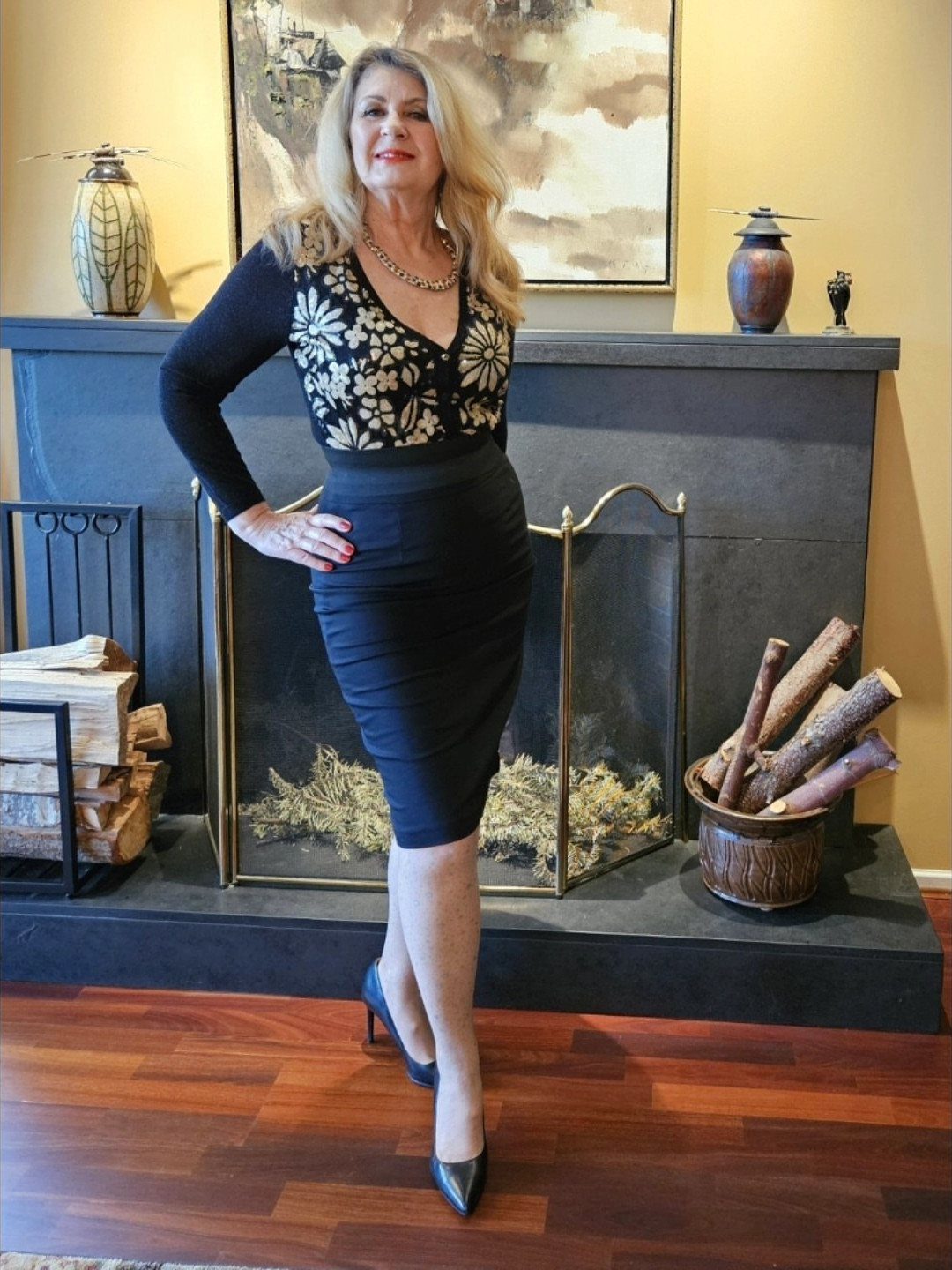
A pencil skirt narrows the silhouette without the fuss of a full suit.
An embroidered cardigan and pointed heels dress it up for a more formal office, but the same skirt works with a simple shell and flats on casual Fridays.
Wool-blend holds its shape through a day of sitting and standing; leather adds edge if your workplace allows it.
The length matters most: at or just below the knee, it stays professional without feeling matronly. Check that the waistband sits flat; any gaping at the hips ruins the line.
3. A-Line Skirt + Collared Sweater
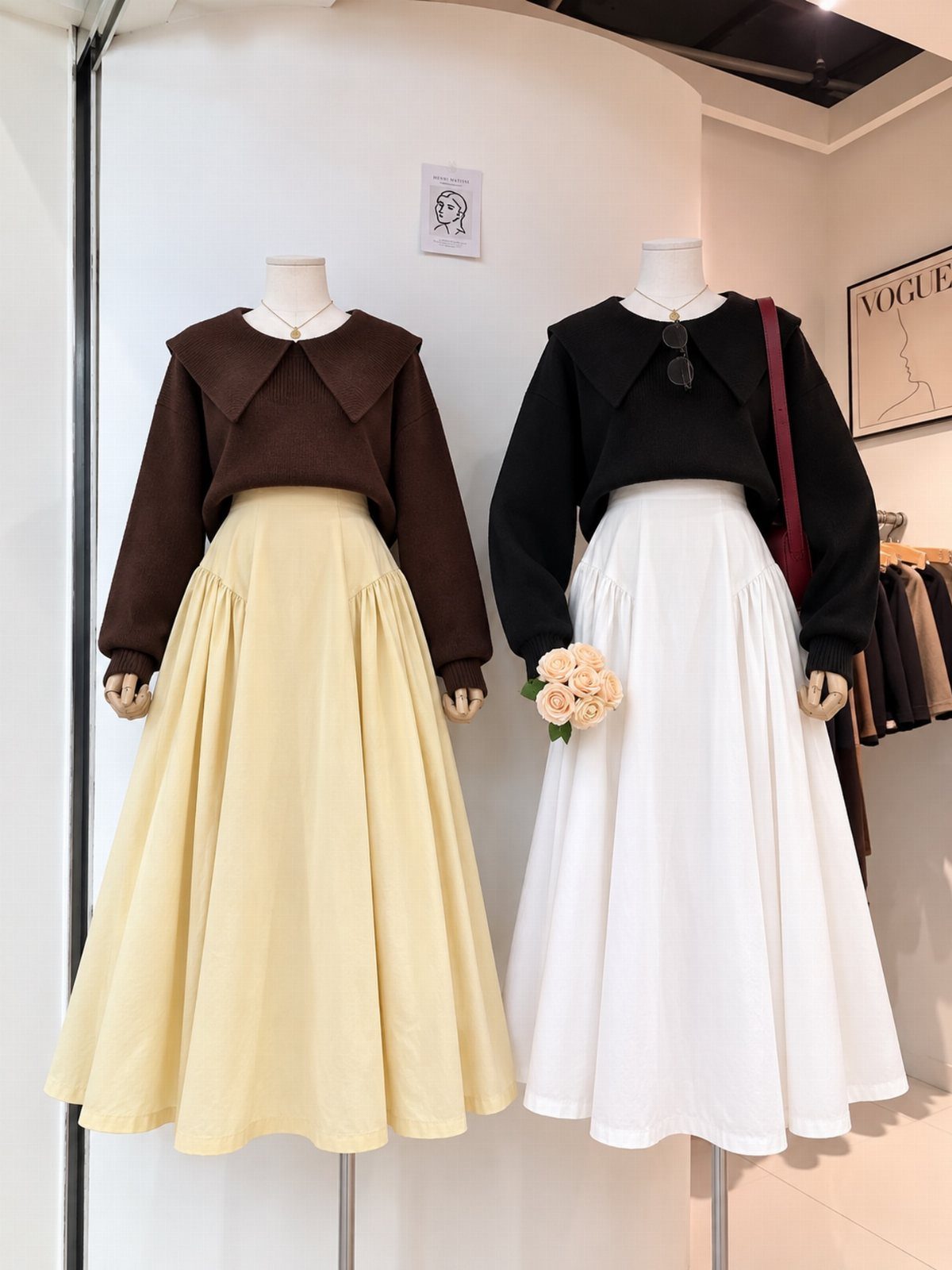
A cropped collared sweater and high-waisted A-line skirt meet at the narrowest point of the torso, which is flattering on almost every body.
This pairing borrows from uniform dressing but feels current because of the proportions: the cropped top, the midi length below.
Decide first whether your office leans traditional or creative.
The brown-and-cream version reads softer, the black-and-white more graphic. A leather A-line works after hours too, swapped to a simple tee and flats; that dual use justifies a piece that might otherwise feel limited.
4. Tailored Suit
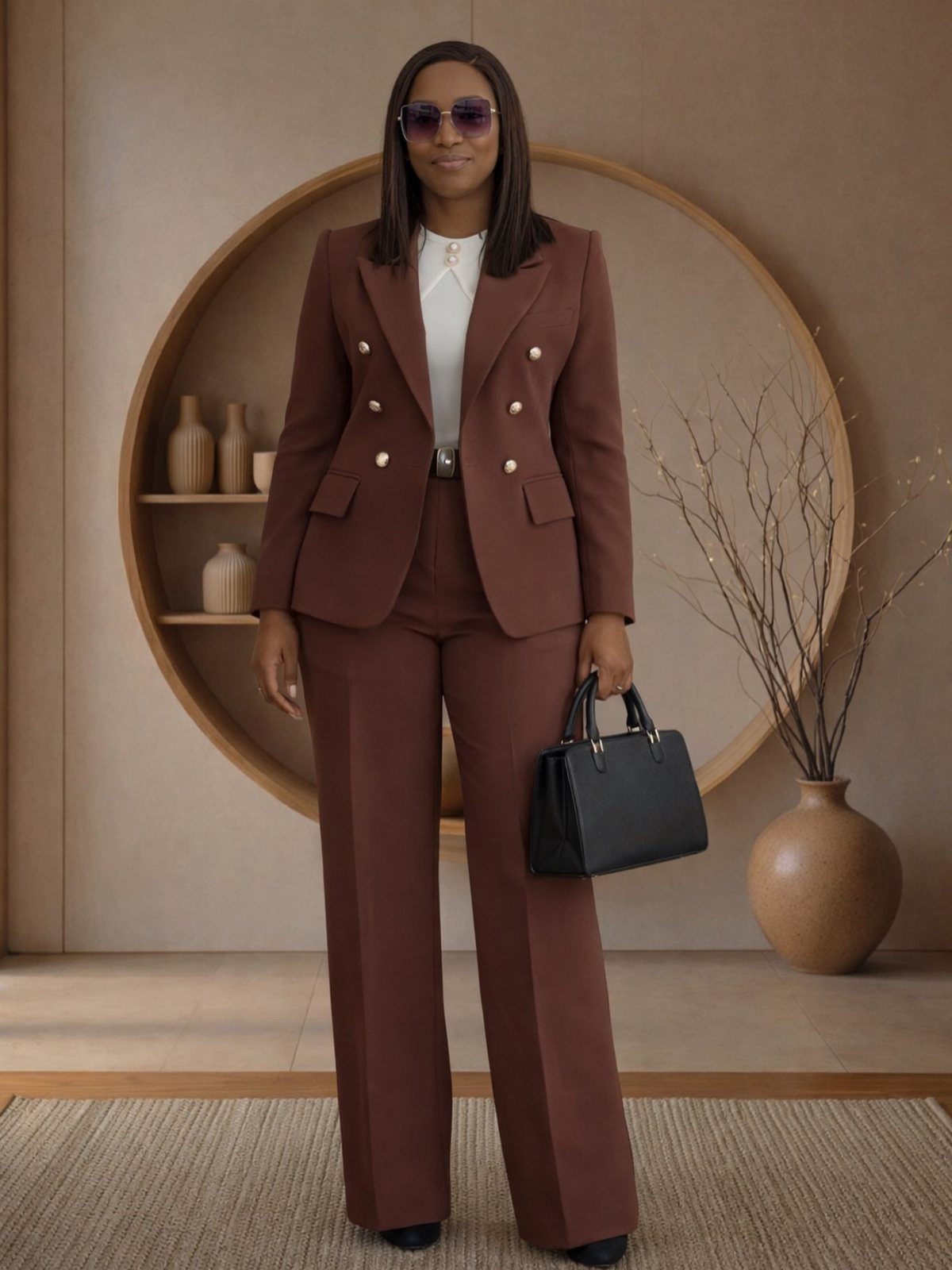
Chocolate brown suiting feels less severe than black for fall, and a double-breasted cut adds structure without the eighties shoulder-pad joke. A strong suit works for presentations, interviews, or any day you need armor.
Fit is everything here.
The jacket should close without strain, the trousers break once at the shoe. If a full suit feels like too much, wear the jacket with dark jeans or the trousers with a cream knit; each half earns its keep alone.
For a skirt option, a boxy single-breasted blazer with a sleek pencil skirt updates the old working-girl uniform without quoting it.
5. Midi-Length Sheath Dress
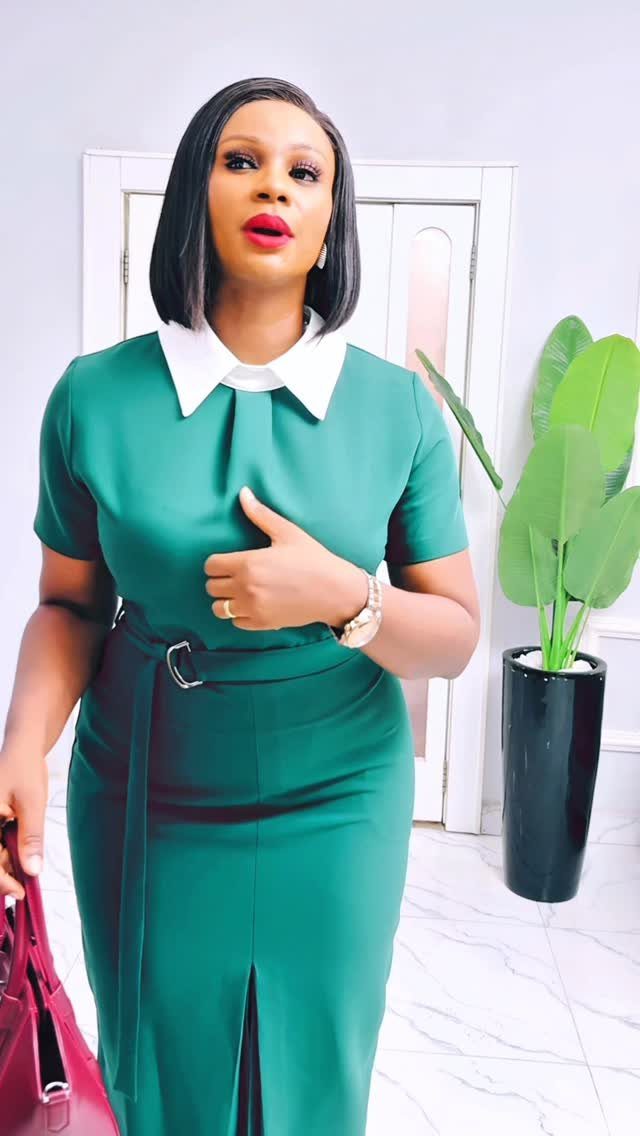
A sheath dress is the fastest way to look dressed: one zip, one belt, done. A white collar built into the dress does the layering work for you, which saves time on mornings when coffee comes first.
Long sleeves make it fall-appropriate without a cardigan; the midi length covers your knees in chilly conference rooms.
Belted at the waist keeps it from reading as a sack, especially in a fluid fabric. If you commute by train or bus, a dress this length stays neat on stairs and between turnstiles better than anything shorter.
6. Polished Blazer
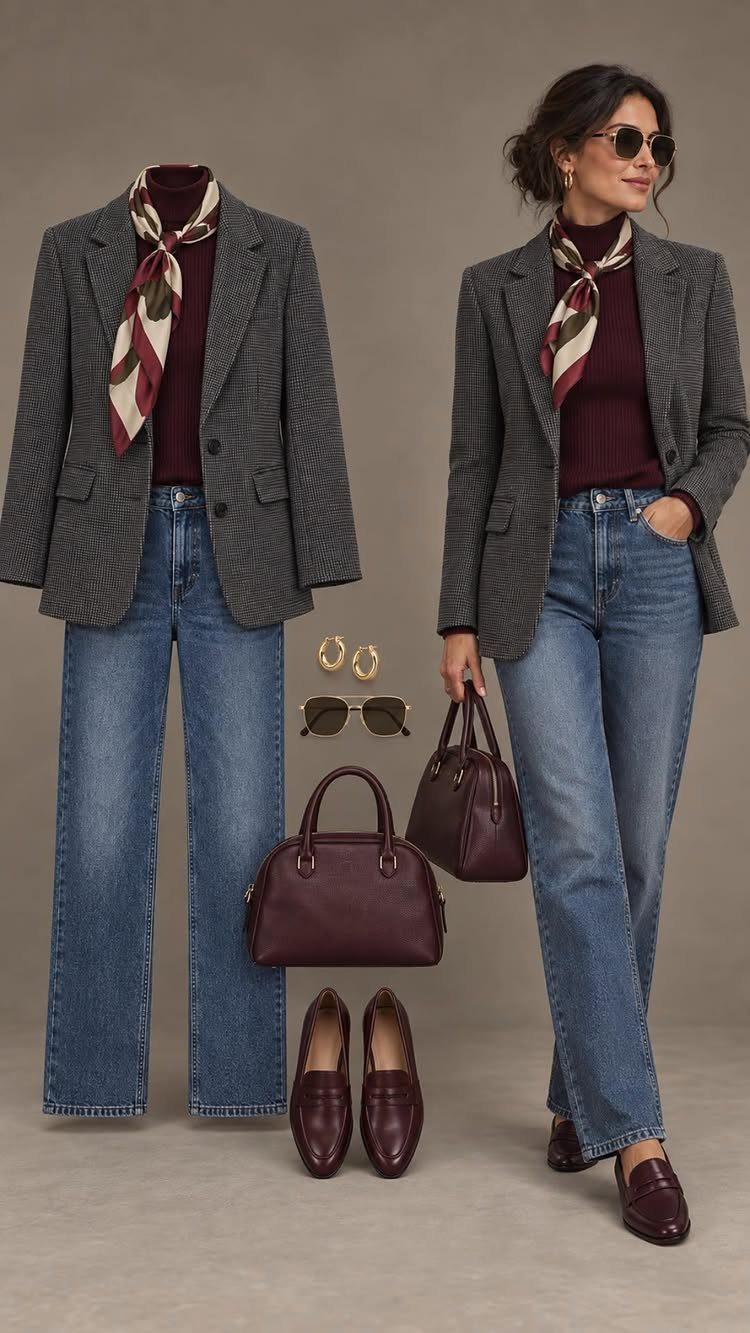
A grey wool-blend blazer with a subtle pattern carries more texture than solid navy without losing versatility. The burgundy turtleneck underneath shows how to anchor it with color rather than defaulting to white or black.
I would wear this with the jeans and loafers shown, or swap to trousers for a client meeting.
Toteme makes a version in this weight that layers well under coats; Another Tomorrow’s single-breasted cut works open over a camisole on milder days. Suede is having a moment too, though it demands more care in wet weather.
Collarless blazers are having a moment this fall, and for good reason. Softer and more feminine than a traditional blazer, they still add an air of polish and professionalism to any look.
— Vogue
7. Knitwear
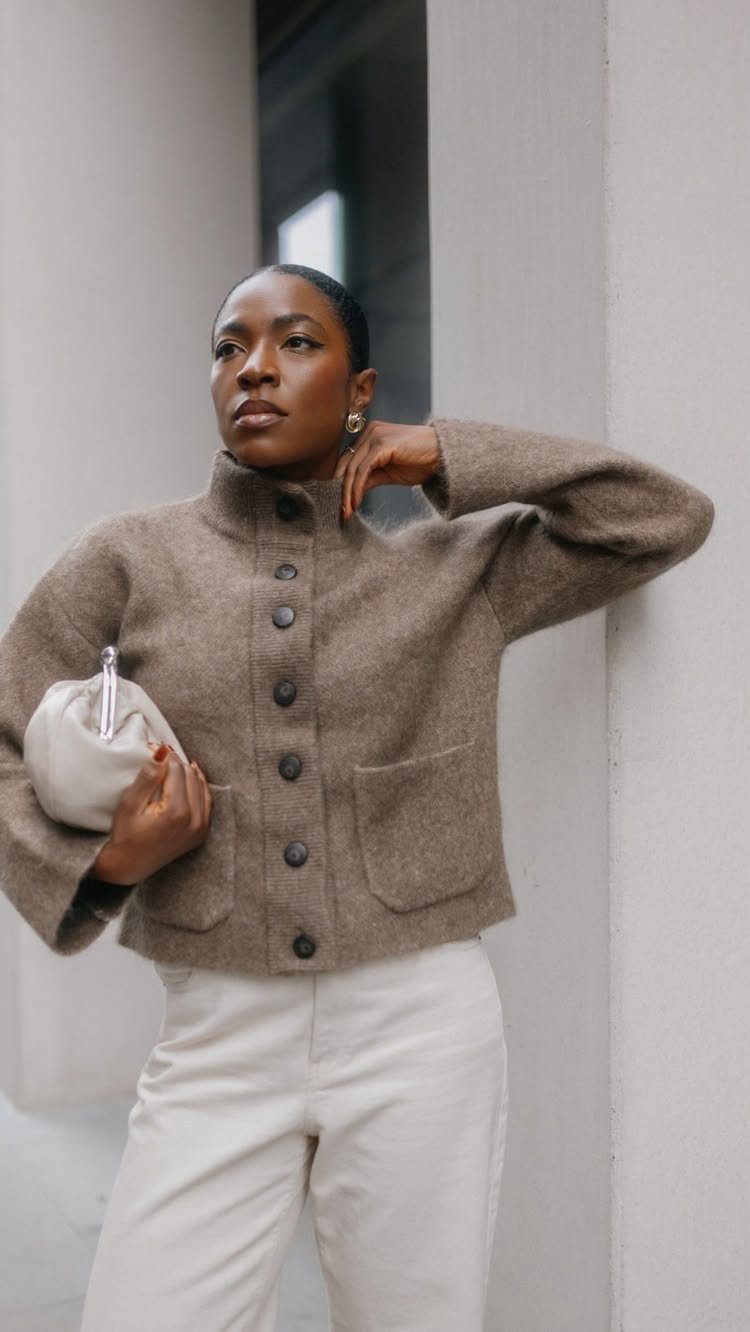
Shrunken cardigans and cashmere tees layer under blazers without the bulk of traditional knits, which matters when you are moving between overheated offices and cold parking garages.
A button-front knit jacket in a dense gauge reads as outerwear on mild days and a middle layer when winter arrives.
Brown against cream keeps the palette quiet enough for client meetings. Check that the placket lies flat; any gaping turns a polished piece into a stretched-out mistake.
Machine-washable cashmere blends exist now at mid-range prices, and they hold up to daily wear better than the hand-wash-only stuff I used to baby. Worth the hunt if you wear knits most of the week like I do.
8. Satin and Silk Blouses
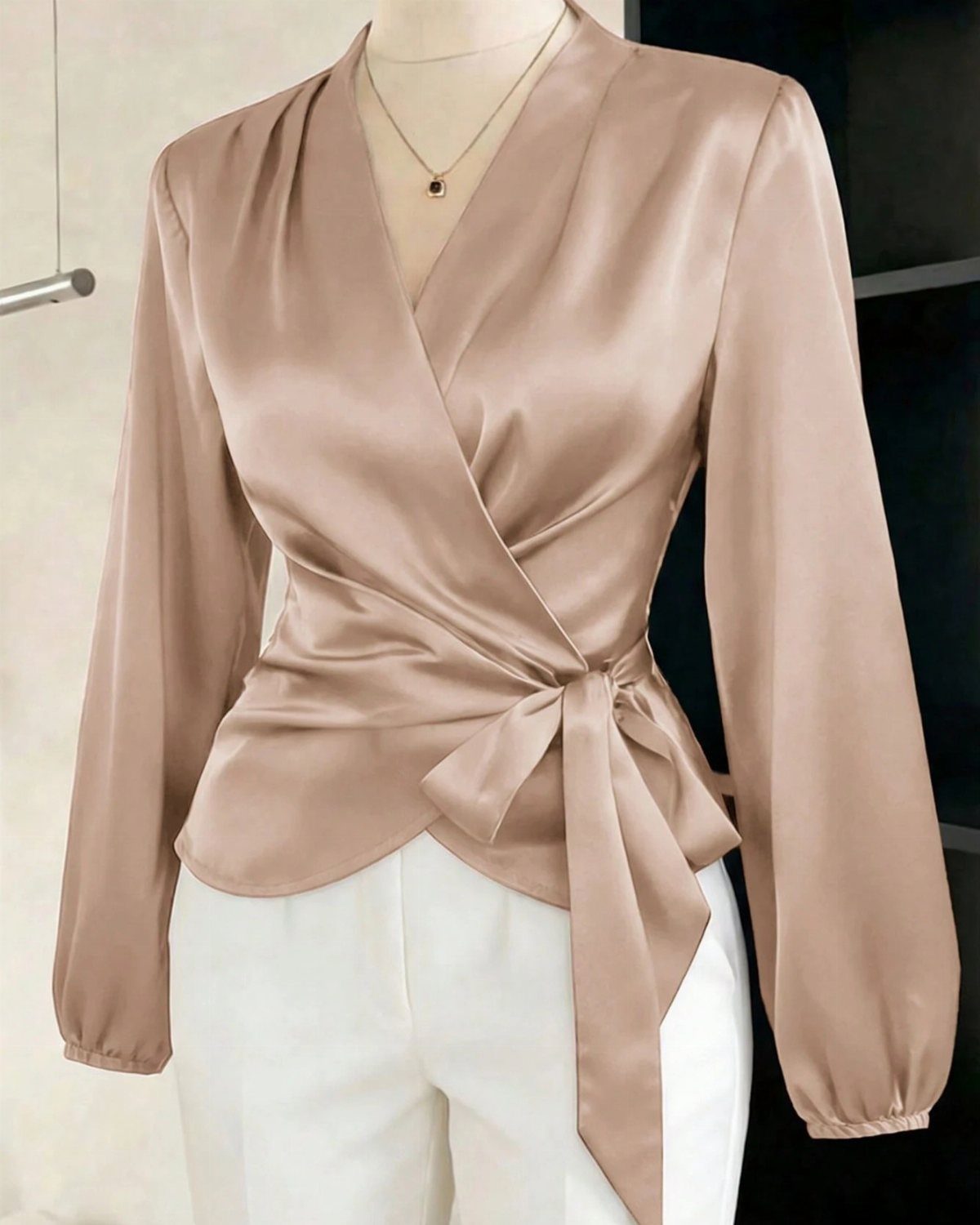
Champagne satin catches light without shouting, and a wrap cut with a waist tie flatters where a boxy shell would hang. The fluid fabric moves between desk and dinner without a change, which saves time on days that run long.
White trousers keep the pairing fresh for fall; swap to charcoal wool if your office leans conservative. A plissé finish adds subtle texture that reads as intentional, not wrinkled.
I hand-wash mine in cold water and hang dry, which takes 5 minutes and extends the life far past dry-cleaning cycles.
Silk tolerates this fine if the water is truly cool. Skip the wrap style if you are seated most of the day; the tie can shift and need adjusting.
9. Sweater Dress with Boots
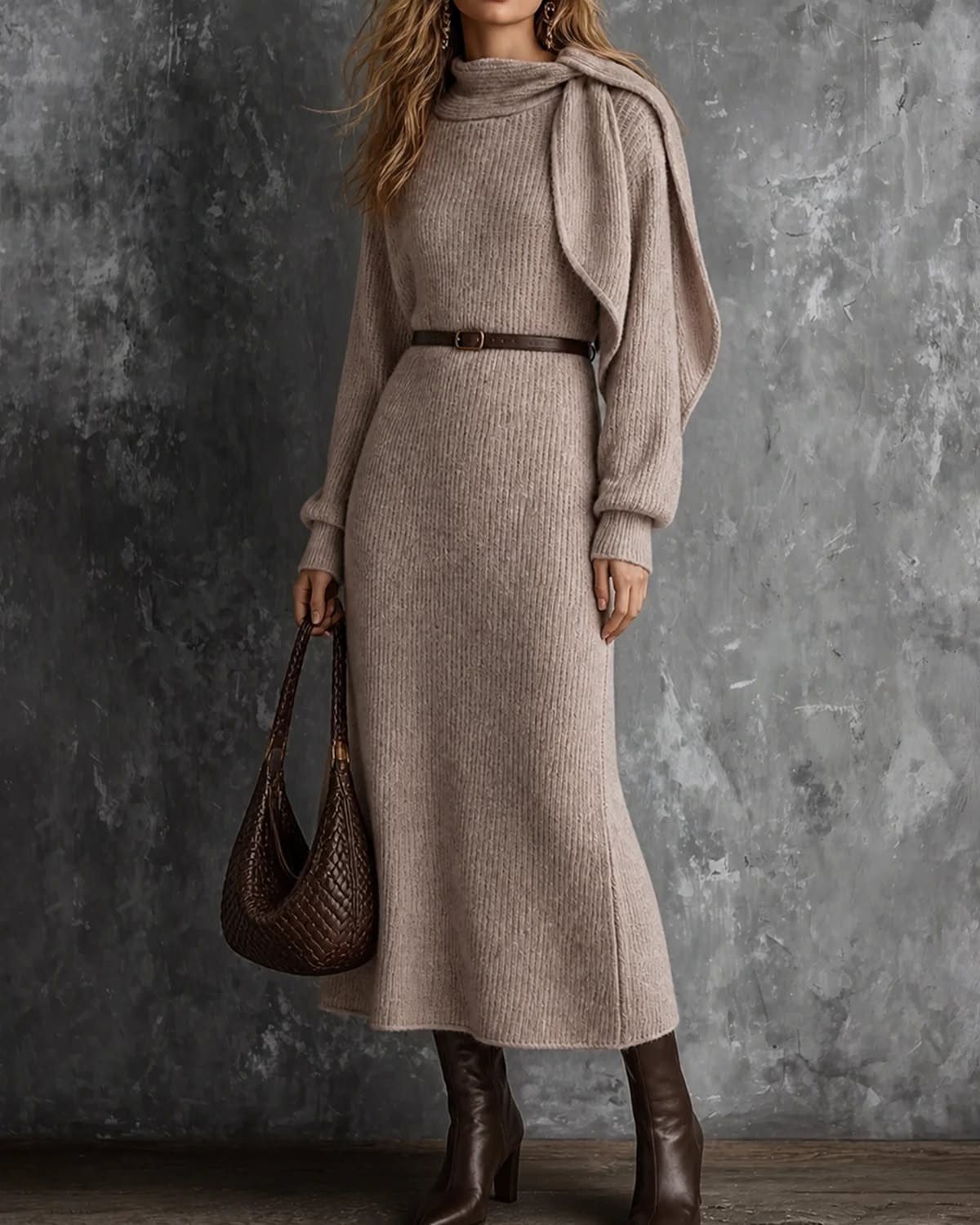
A ribbed knit maxi dress gains shape from a thin belt at the waist, and the vertical lines of the ribbing elongate without effort. Leather boots with a slight heel keep the hem from dragging where a flat would not.
The belt matters more than you might think.
Without it, the dress reads as loungewear; with it, the same piece holds its own in a conference room. Choose a belt in a contrasting tone so the eye finds the waist immediately.
I would size down in the dress if you are between sizes; too much ease and the ribbing loses its structure. A midi length works with tights when the temperature drops.
10. Belted Midi Shirt Dress
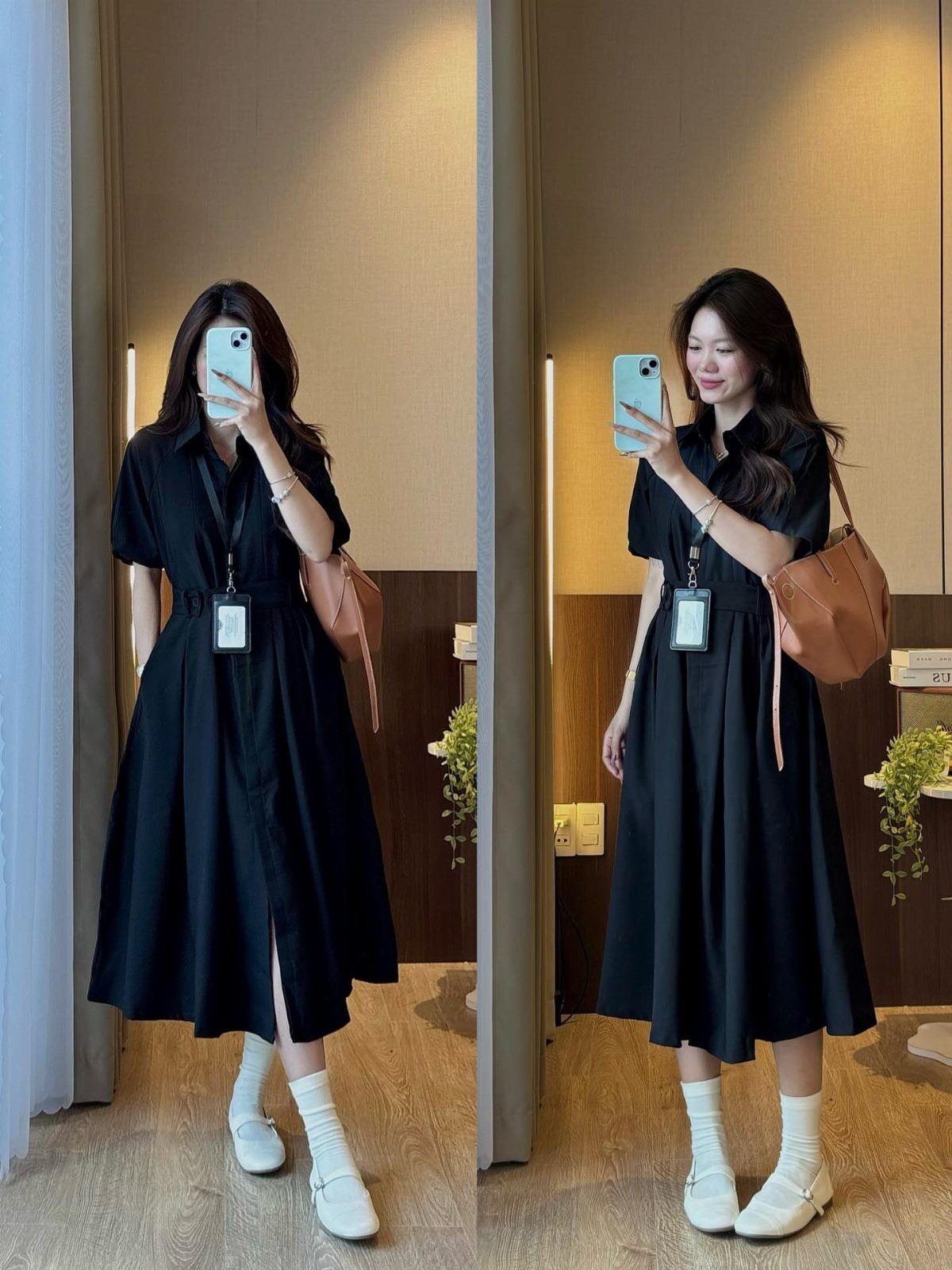
A shirt dress in black with short sleeves and a self-belt gives you the structure of a blazer outfit without the layering. The midi length covers knee scars and cold conference room drafts alike.
Check that the belt sits at your actual waist, not lower where the dress might default; otherwise the proportions read as borrowed.
Flat shoes and socks signal a casual office, but the same dress works with heeled loafers and no socks for stricter environments.
The placket should lie flat across the chest. If it gapes, size up and have the waist taken in; a shirt dress that pulls is a shirt dress that stays in your closet.
11. Trench Coat Over Turtleneck Dress
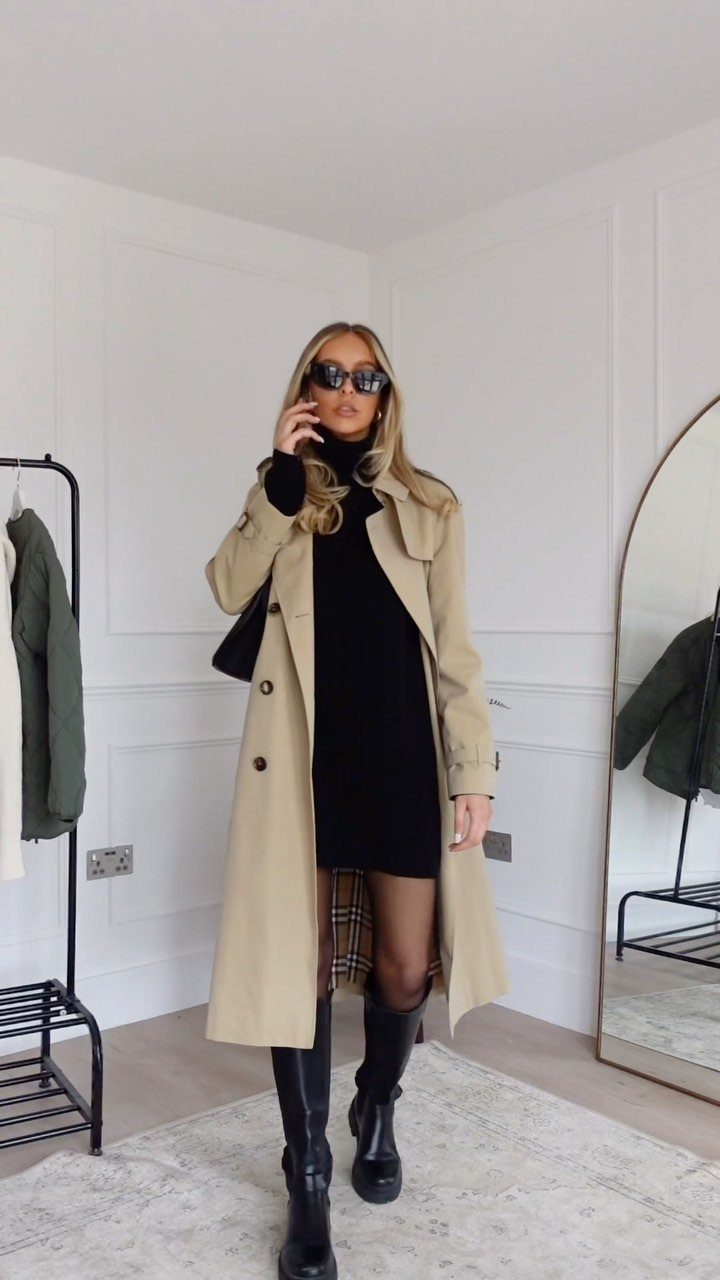
A trench in classic beige over black creates contrast without color, and the combination works in almost any office. Sheer tights and tall boots handle the leg coverage so the dress can stay short without seeming unprofessional.
The turtleneck dress needs to be fitted; any bulk under a trench turns the silhouette lumpy.
Check the sleeve length too: the coat should cover the dress sleeves or leave them fully visible, not create an awkward inch of exposed wrist.
I would choose a trench with a removable lining for the temperature swing this pairing demands. Unlined, it is a September-to-October piece; with lining, it carries into November.
12. Tailored Vest and Trousers
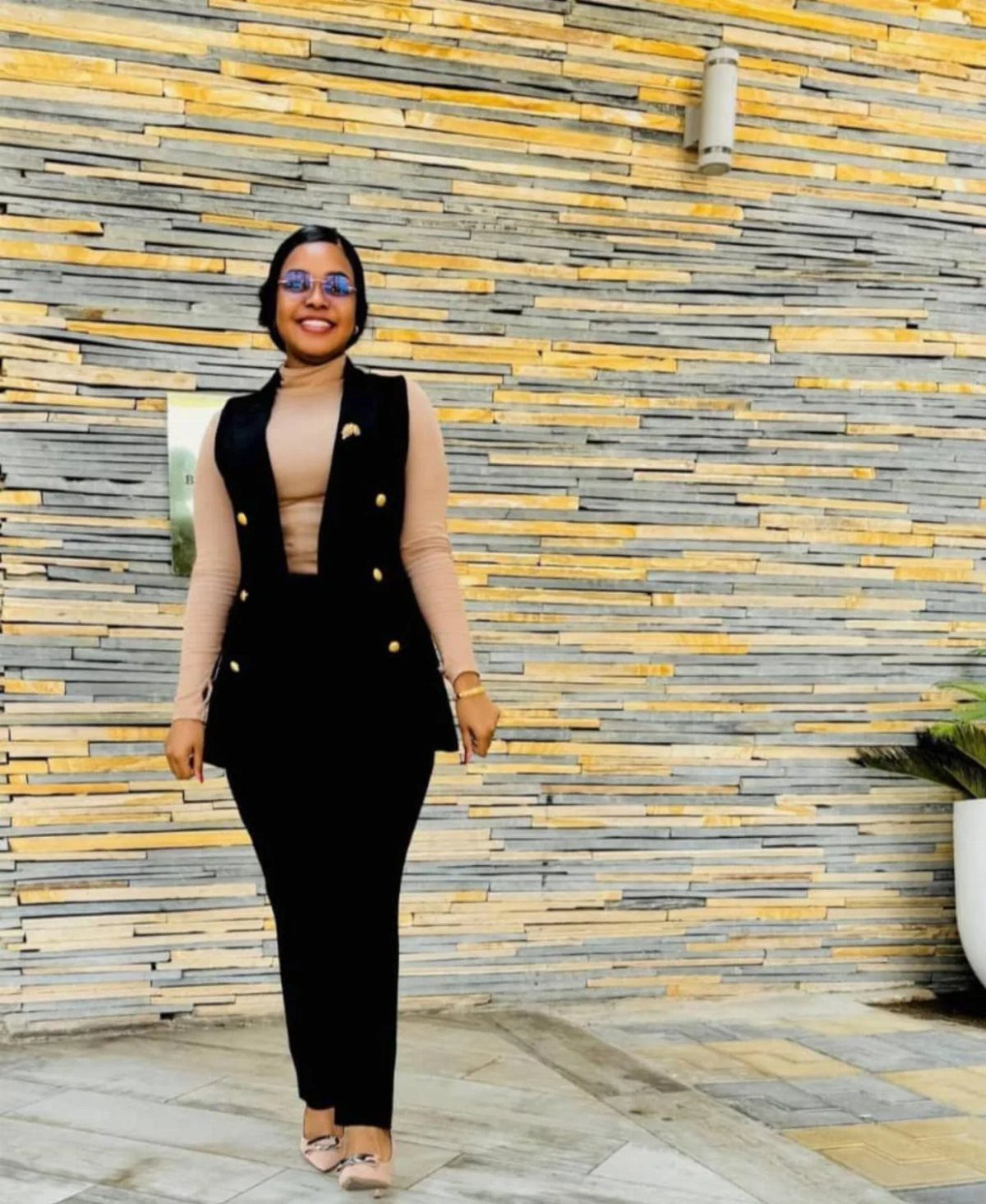
A double-breasted vest over a thin turtleneck gives you suiting structure without the jacket, which is useful when your office runs warm or you are tired of blazers.
The turtleneck must be fine-gauge; anything thicker and the vest will not close cleanly. Black over tan reads as deliberate minimalism, but navy or charcoal vests work the same way with cream or grey underneath.
Trouser fit matters here more than with a jacket, since there is no upper layer to distract.
A split hem adds interest without flash; wide-leg keeps the line continuous from shoulder to floor. I would add a long pendant or skip jewelry entirely; a short necklace fights the vest’s neckline.
13. Short-Sleeve Dress Over Collared Shirt
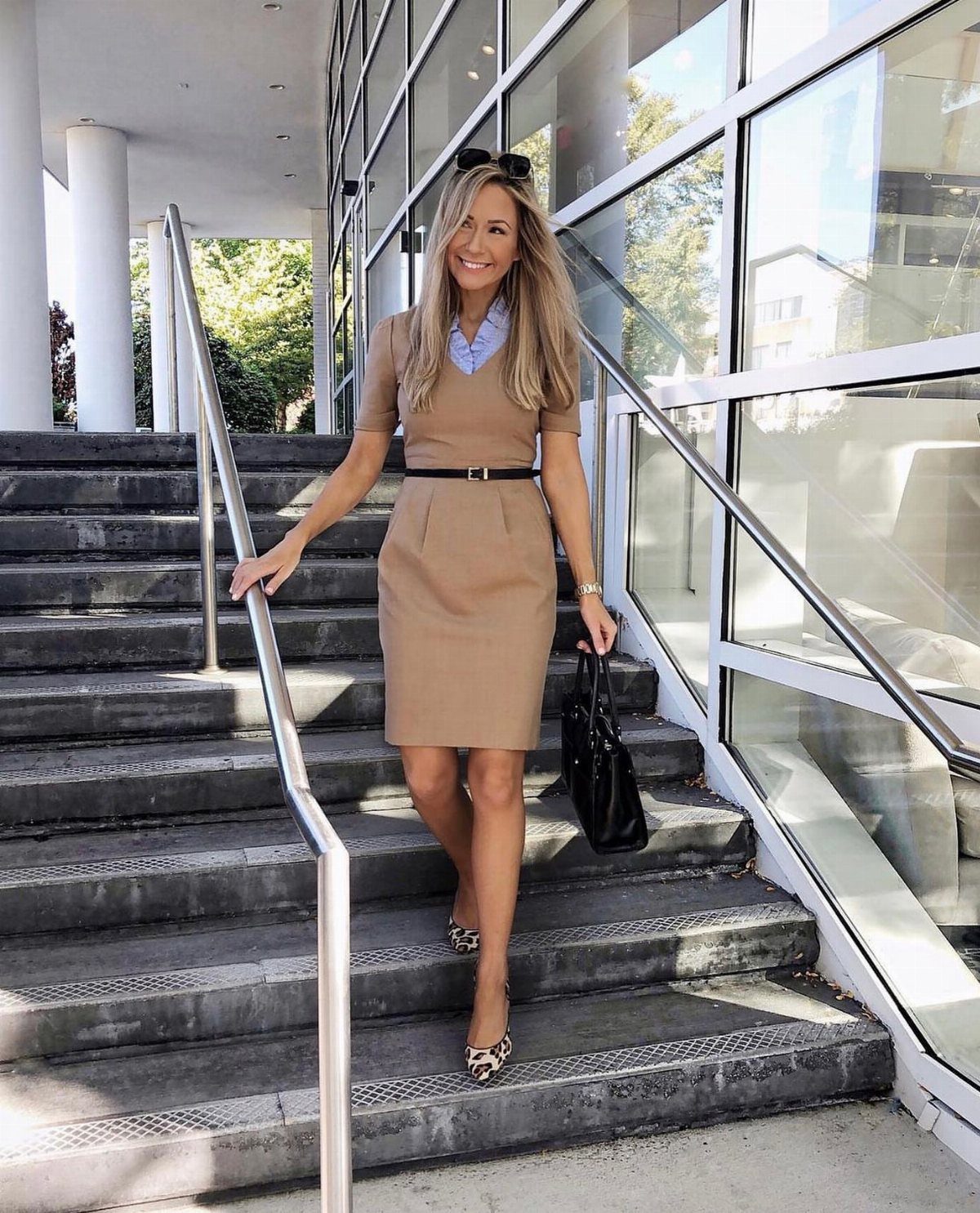
Layering a short-sleeve dress over a collared shirt borrows from school-uniform logic but reads grown-up when the dress is belted and the shirt peeks only at collar and cuff.
A tan short-sleeve dress layered over a light blue collared shirt reads approachable Monday through Thursday without sliding into full corporate territory.
Leopard flats add interest without competing; any patterned flat works the same way. Check that the dress armholes are cut high enough to hide the shirt sleeves at the shoulder, or the bulk reads as accidental.
A self-belt lets you adjust where the waist sits; most benefit from raising it slightly above the natural waist.
14. Blazer Over Mini Dress and Tights
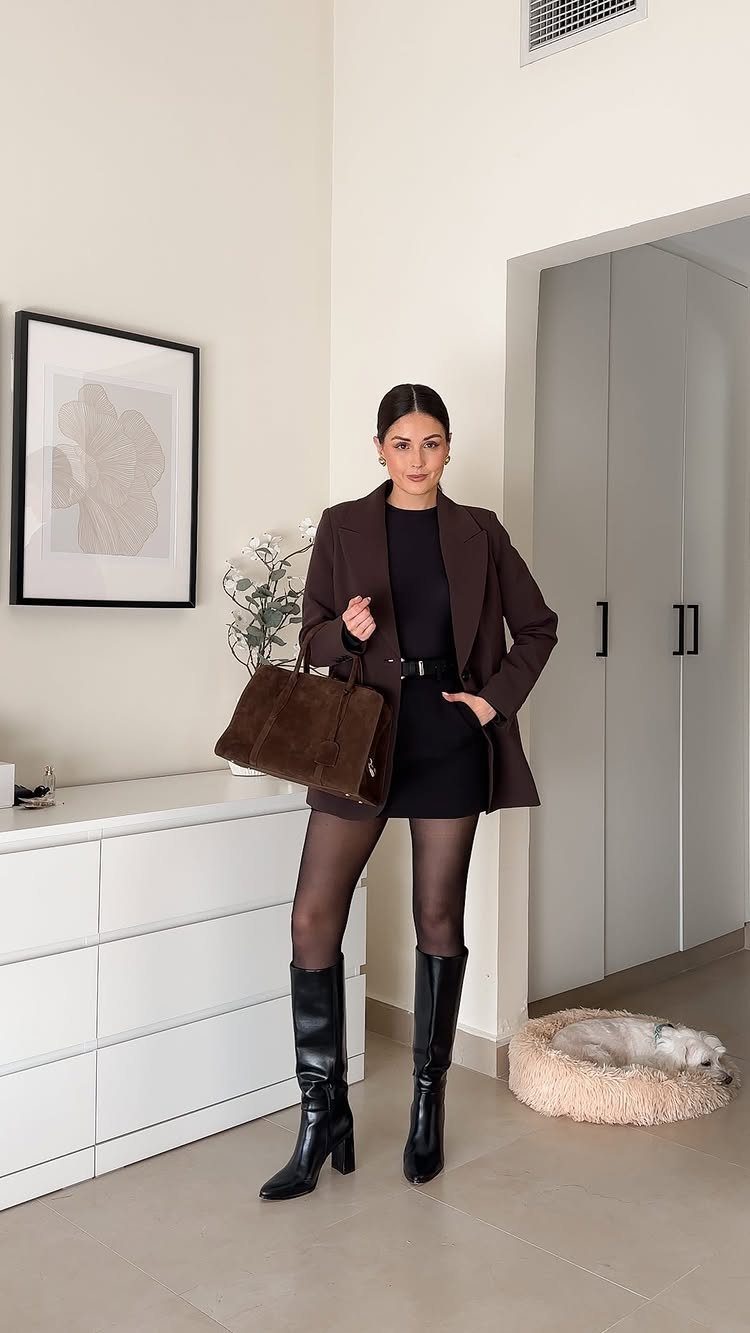
An oversized blazer over a mini dress solves the hemline question for offices that tolerate short but not bare.
The black tights and boots turn the leg into a single dark line, which makes the mini feel less exposed than with bare skin.
The blazer must be genuinely oversized, not just one size up; it should hit mid-thigh to balance the short dress below.
Brown over black is softer than black-on-black and pairs well with the tan and cream pieces already in most fall wardrobes.
15. Button-Down Shirt and Tan Trousers
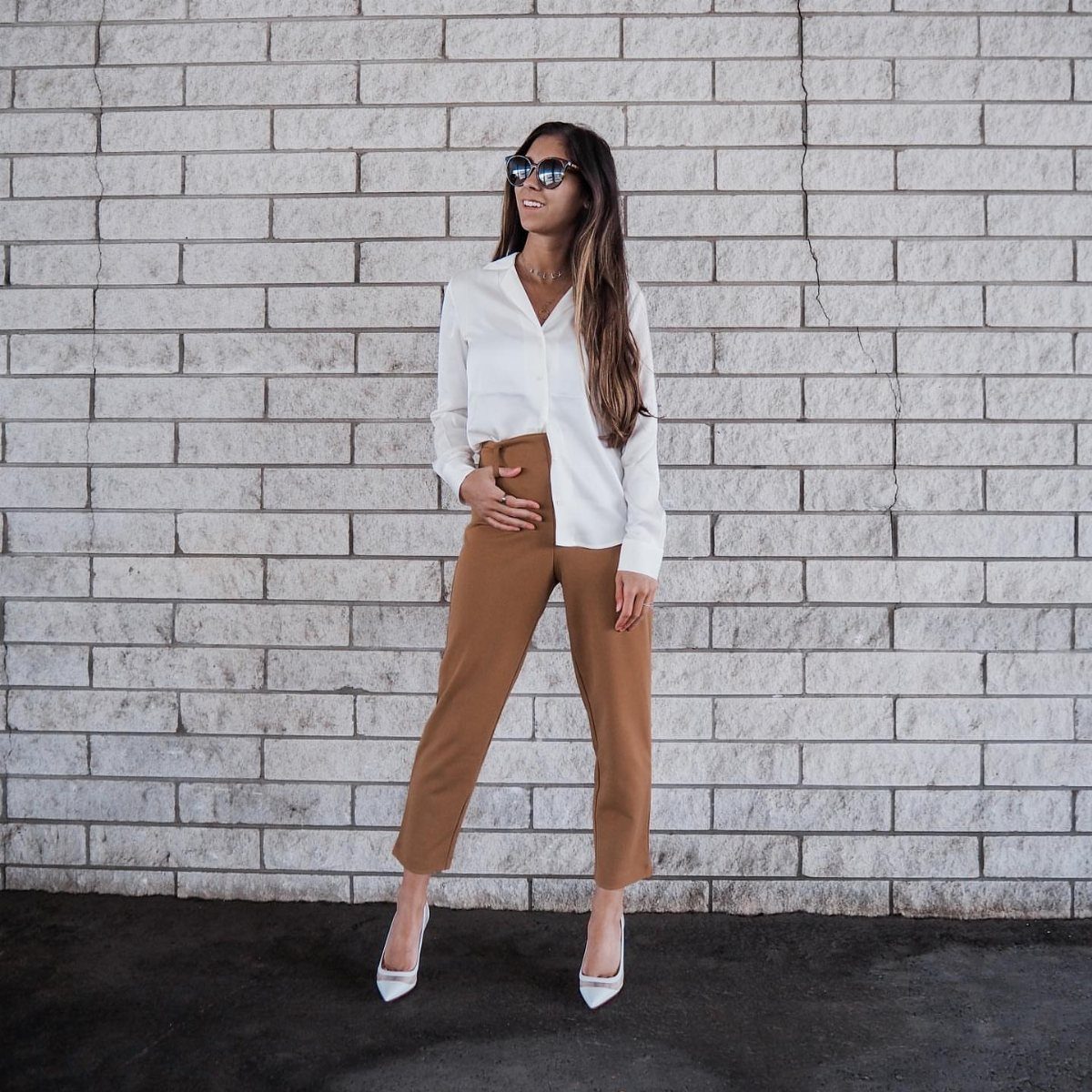
A white button-down tucked into tan trousers is the simplest pairing here, which means fit carries everything.
The shirt must be crisp, not limp; the trousers must sit at the waist, not slide to the hip, or the tuck becomes a pouf.
White pointed heels echo the shirt and lengthen the leg, but nude or tan flats work if you are on your feet all day.
The button-down and tan trousers are office-appropriate on their own; add sunglasses only when you are actually off the clock.
Check the shirt length before buying: too short and it untucks with every reach; too long and the bulk distorts the waist.
Transitioning Summer Outfits
That same sleeveless dress takes on a completely different office life with a hip-length blazer instead of something longer and more seasonal. The shorter jacket keeps the proportions intentional rather than drowned.
Swap summer linen for wool-blend skirts in the same cut; the silhouette stays familiar but the weight reads as deliberate. Cotton tops give way to silk or fine-gauge knits that layer under the same cardigans without the bulk.
Tights, ankle boots, and a leather belt are the fastest way to signal fall.
I add them in that order: tights first on the mornings that already bite, boots once the afternoons stop recovering, belt whenever the outfit needs anchoring. The belt matters most with dresses that lost their summer definition under a jacket.
Best Colors for Fall Workwear
Camel, taupe, and charcoal form the base that everything else sits on. I reach for camel when I want warmth without the heaviness of chocolate brown; charcoal when the office runs formal.
Burgundy, forest green, and sapphire carry a full day without the fatigue of black. I wear burgundy most, since it pairs with every neutral I own and does not show coffee the way cream does.
Rust and ochre add depth where tan would read flat.
I use them in single pieces: a rust sweater against tan trousers, ochre in a scarf against grey. One warm accent per outfit is plenty; two start competing.
Neons and pastel brights feel borrowed from another season. If you want color near the face, dusty rose or soft sage read as quiet updates rather than mistakes.
Best Fabrics for Fall Workwear
Synthetic-heavy blends pill faster and lose their line; I look for wool-dominant fabric that keeps its shape through a full day.
These fabrics have enough polish for a dinner reservation without requiring a change of top.
Cotton knits layer under jackets without the overheating of heavier gauges.
Crepe and ponte give stretch where wool would resist. I use them in dresses and tops that need to travel: they emerge from a bag with fewer wrinkles and recover faster with steam.
Mix textures deliberately: satin against wool, knit against crepe. The contrast reads as thought rather than accident.
Frequently Asked Questions
What colors to avoid in fall?
Neons and pastel brights feel borrowed from another season and read as out of place in professional fall outfits. Dusty rose or soft sage near the face work better if you want color, since they update quietly rather than clash.
My own fall palette stays grounded in camel, taupe, and charcoal, with one warm accent like rust or ochre per outfit so it doesn’t turn into costume.
What are the best fabrics for fall workwear?
Wool-dominant fabrics keep their shape through a full day and layer well under coats.