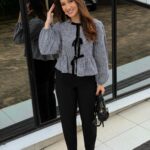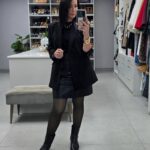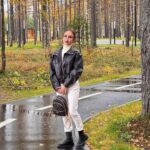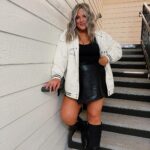
These 10 ideas range from a single burgundy turtleneck tucked into charcoal trousers to full tonal looks in cream and brown, with the deciding factor being how much structure your day demands.
One outfit pairs the same white button-down with a sharp blazer for client meetings; another swaps in a cable-knit sweater vest for a softer line.
A two-and-a-half-inch block heel is my pick for days with subway platforms, the kind that keeps me from shifting my weight forward by 3 PM.
1. Plaid Blazer
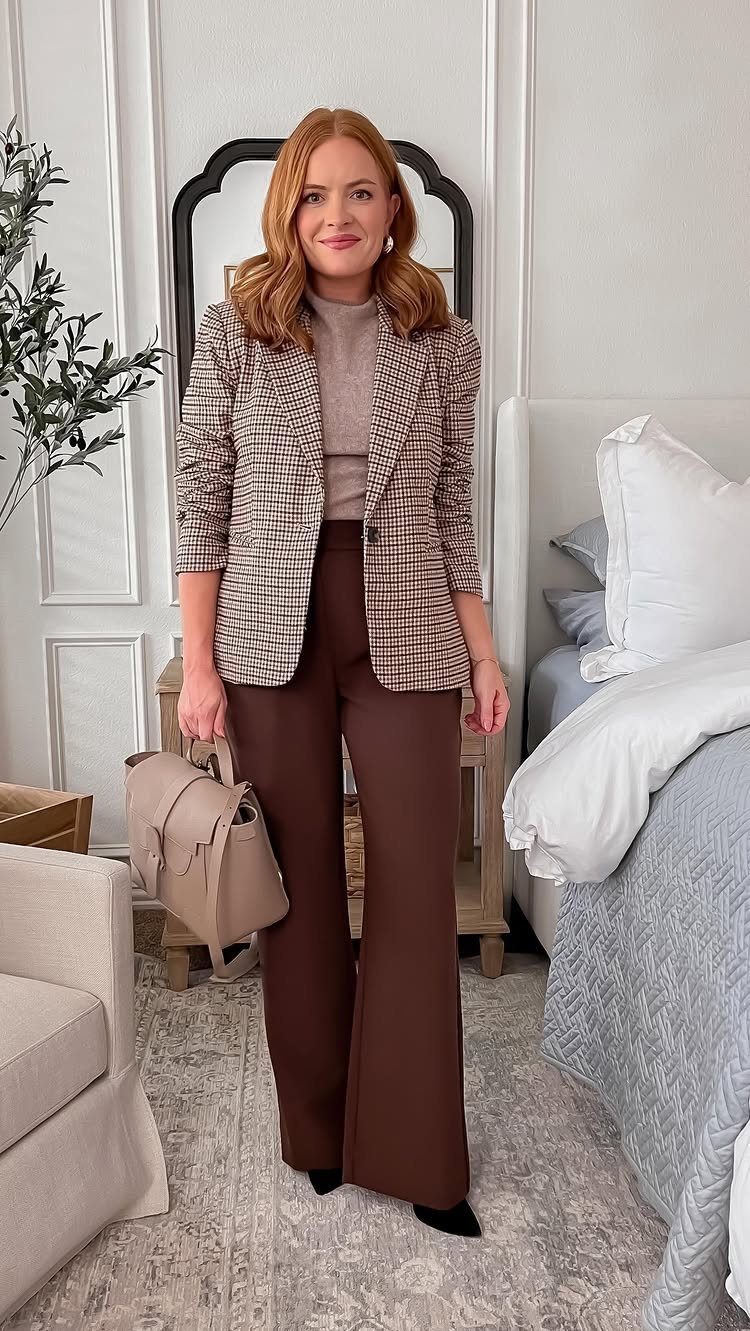
A brown plaid blazer reads as office-appropriate the moment you put it on, no styling tricks required.
I like it over a cream turtleneck with wide-leg trousers in a matching tone; the pattern does the work so the rest stays simple.
A houndstooth blazer in a smaller scale feels current without shouting trend, and a cut long enough to wear open keeps its shape when you’re moving between meetings.
If you own one plaid piece for fall, this is the most useful shape. It handles client meetings and casual Fridays with the same shirt underneath.
2. Cream Sweater
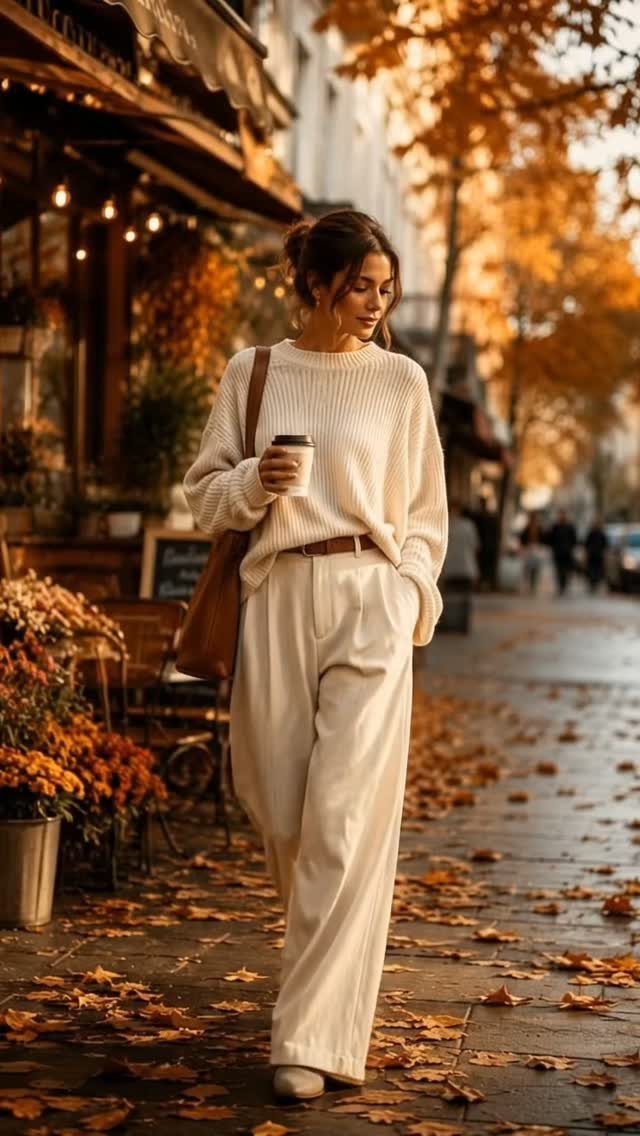
Cream knit sweaters solve the morning problem of what top works with everything. An oversized ribbed sweater sits well with matching wide-leg trousers for a tonal look, or you can split the palette with chocolate or navy bottoms.
I prefer a sweater with enough weight to hold its shape through the day; thin cream knits go limp by lunch.
A brown leather belt breaks up the cream-on-cream if you want definition at the waist.
3. Tailored Trousers
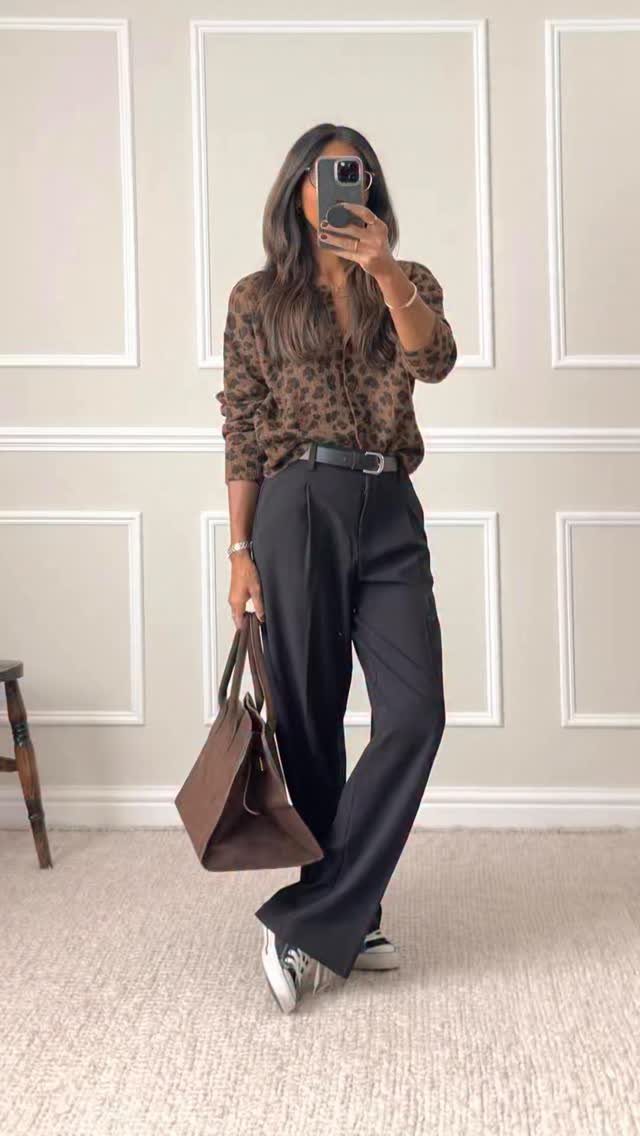
Black tailored trousers with a sharp pleat give you the structure that leggings and jeans cannot.
Trousers that sit high at the waist and fall straight through the leg balance a softer top like a leopard blouse without competing for attention.
I would wear these with a silk camisole and tan blazer for a meeting, or with a fitted turtleneck for days at my desk.
Pleated fronts add room where you need it; flat-front versions read slimmer but show every lunch. Check which cut the photo displays before you order.
4. Dark Brown Trousers
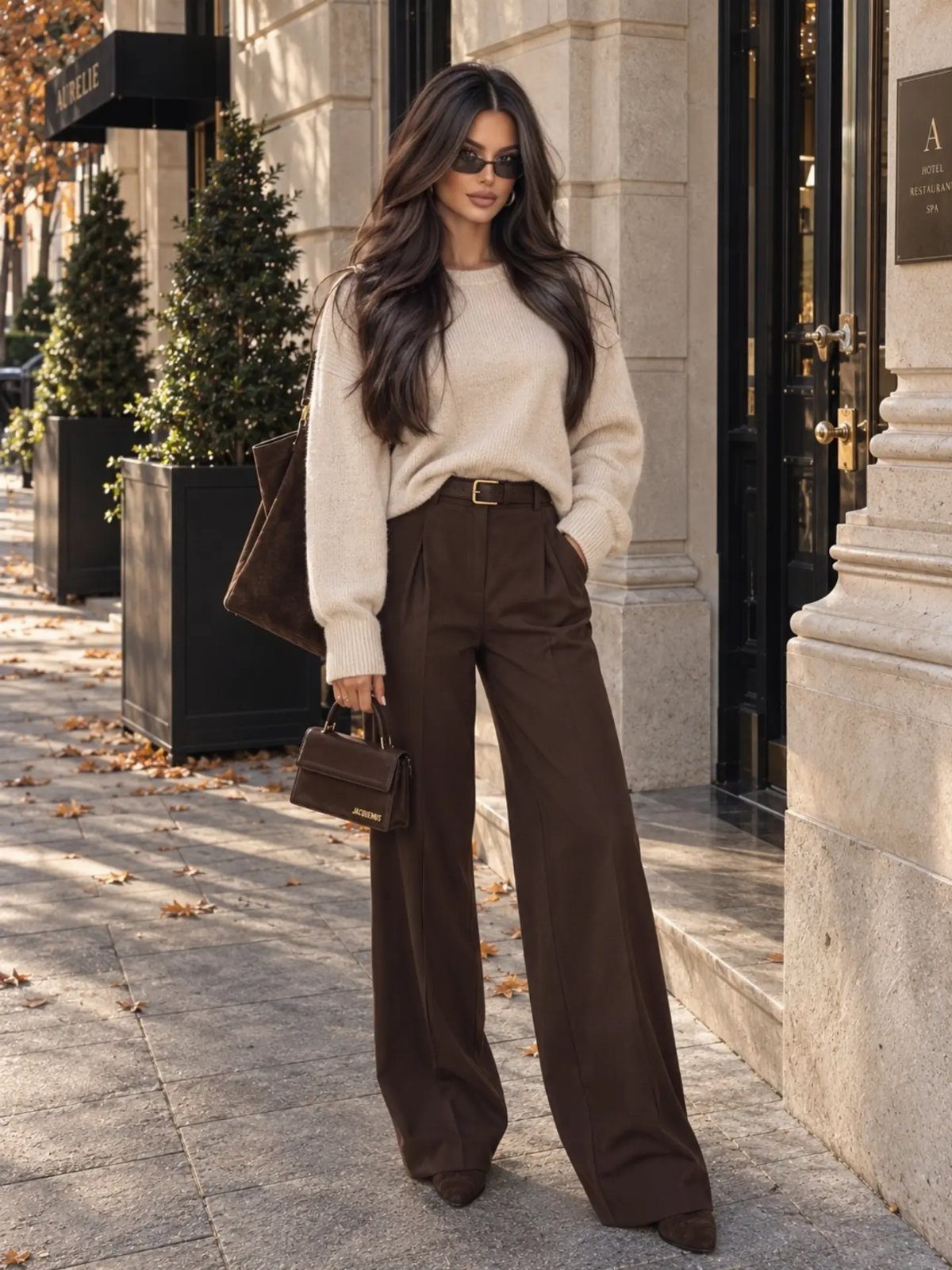
Dark brown trousers ground fall outfits in a color that hides coffee spills and works with every neutral you already own.
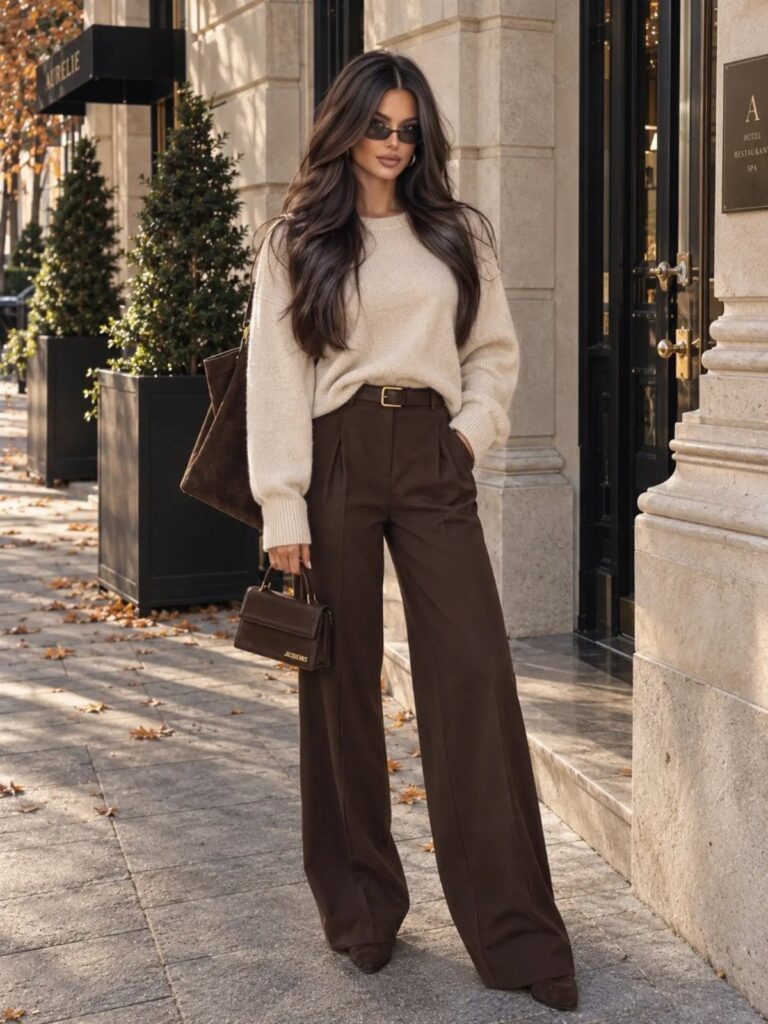
Wide-leg dark brown trousers create a long line when the hem covers most of your shoe; I would add a matching brown belt to keep the eye moving upward.
For a monochromatic take, try a sweater in the same brown family. The effect reads expensive even when both pieces came from the mid-range section.
5. Sweater Vest
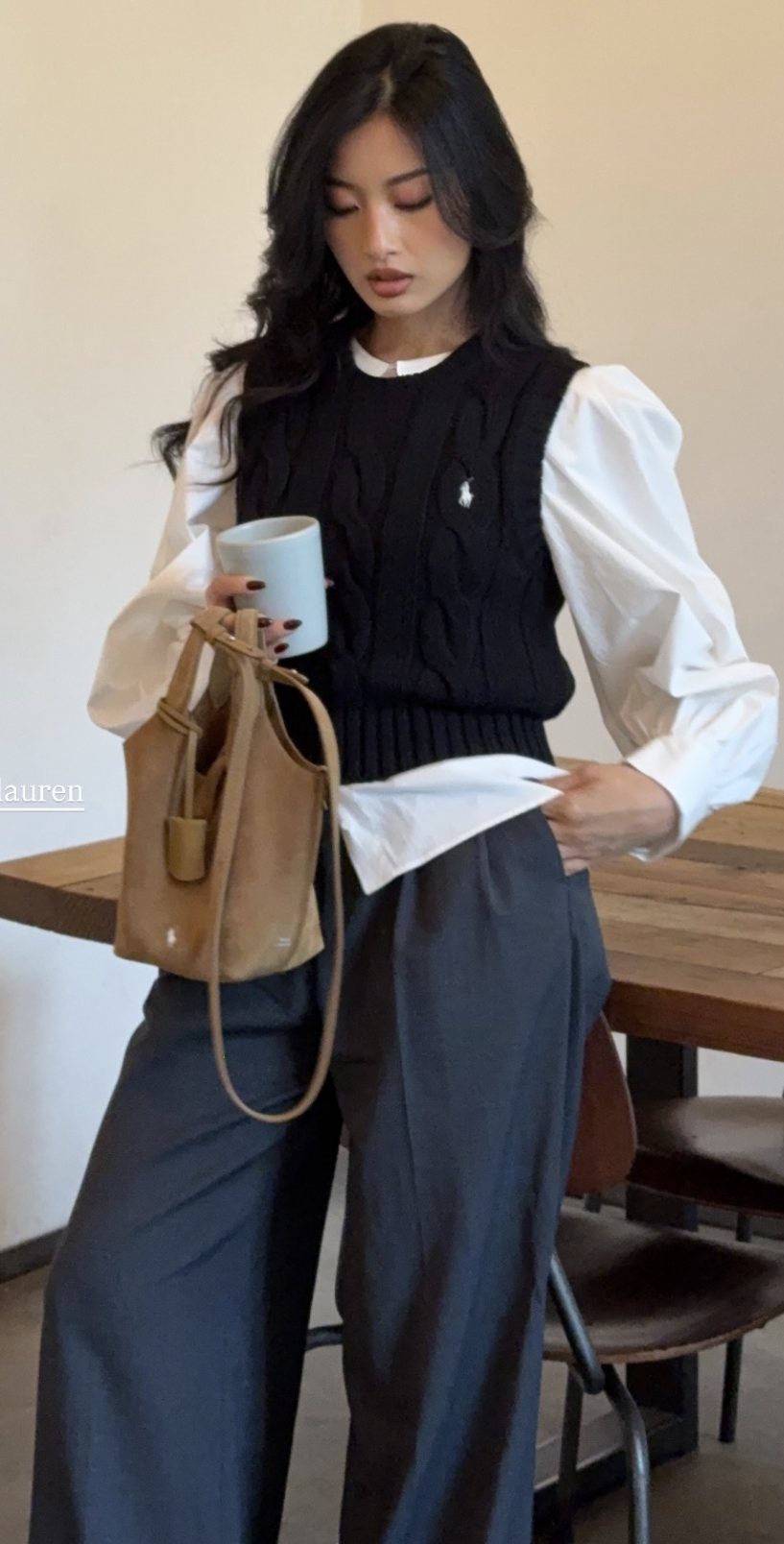
A cable-knit sweater vest over a white button-down gives you layers without bulk, and the collar and cuffs frame the vest so it does not look like you forgot your sleeves.
I would choose beige ribbed knit for my own closet, since it moves between office and weekend more easily.
Tuck the shirt fully or leave it out; half-tucking under a vest reads fussy.
6. Ankle Boots
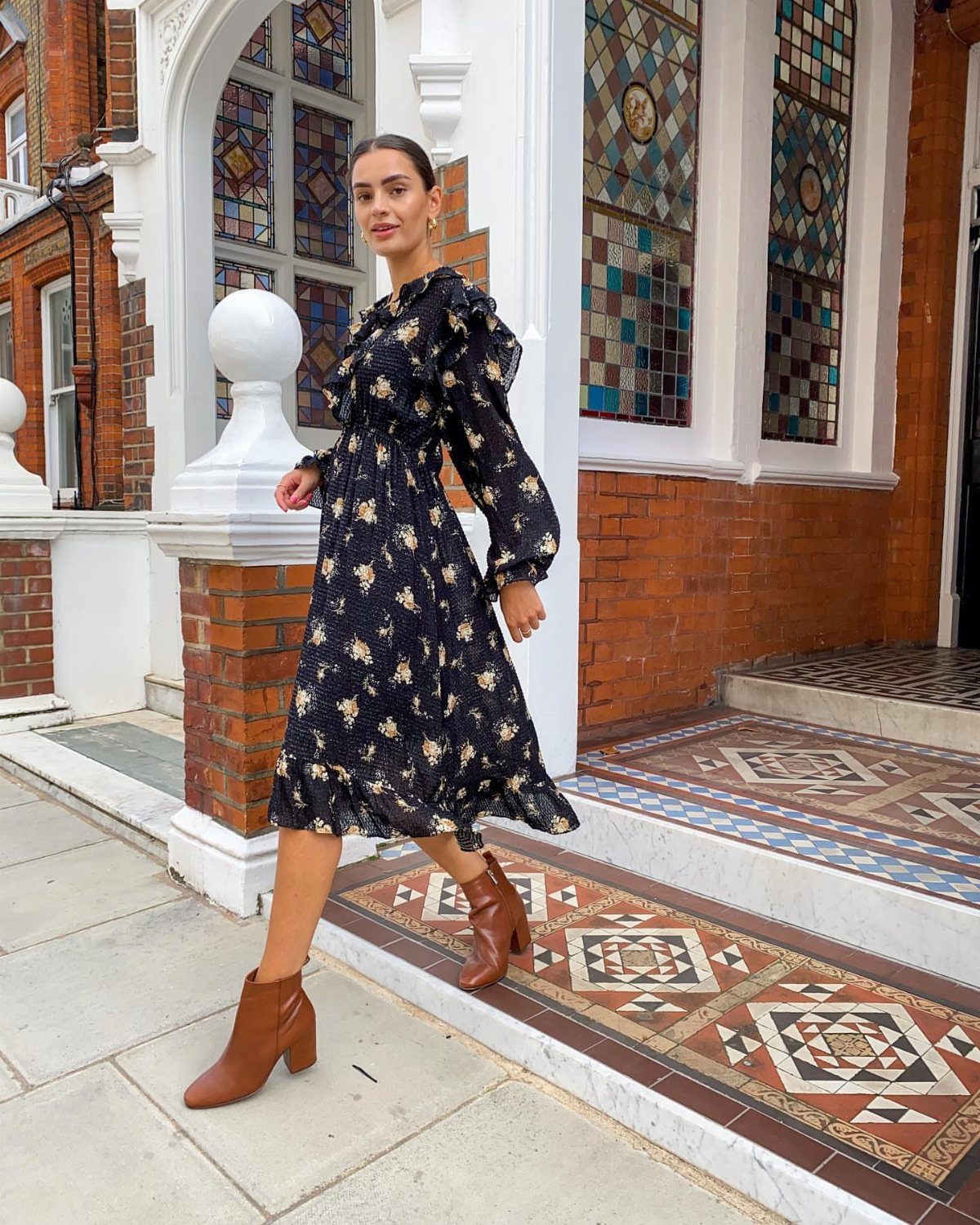
Brown leather ankle boots bridge the gap between summer flats and winter knee-highs, and they handle wet fall sidewalks better than you would expect if the sole has some tread.
A block-heel ankle boot adds height without the instability of a stiletto; I can walk a full city block in boots this shape without planning my route around cobblestones.
Wear them with midi skirts that end at the boot shaft, or with trousers short enough to show the full ankle line.
A floral midi dress works back to an ankle boot because the boot grounds the print in office territory, not weekend brunch.
7. Structured Tote Bag
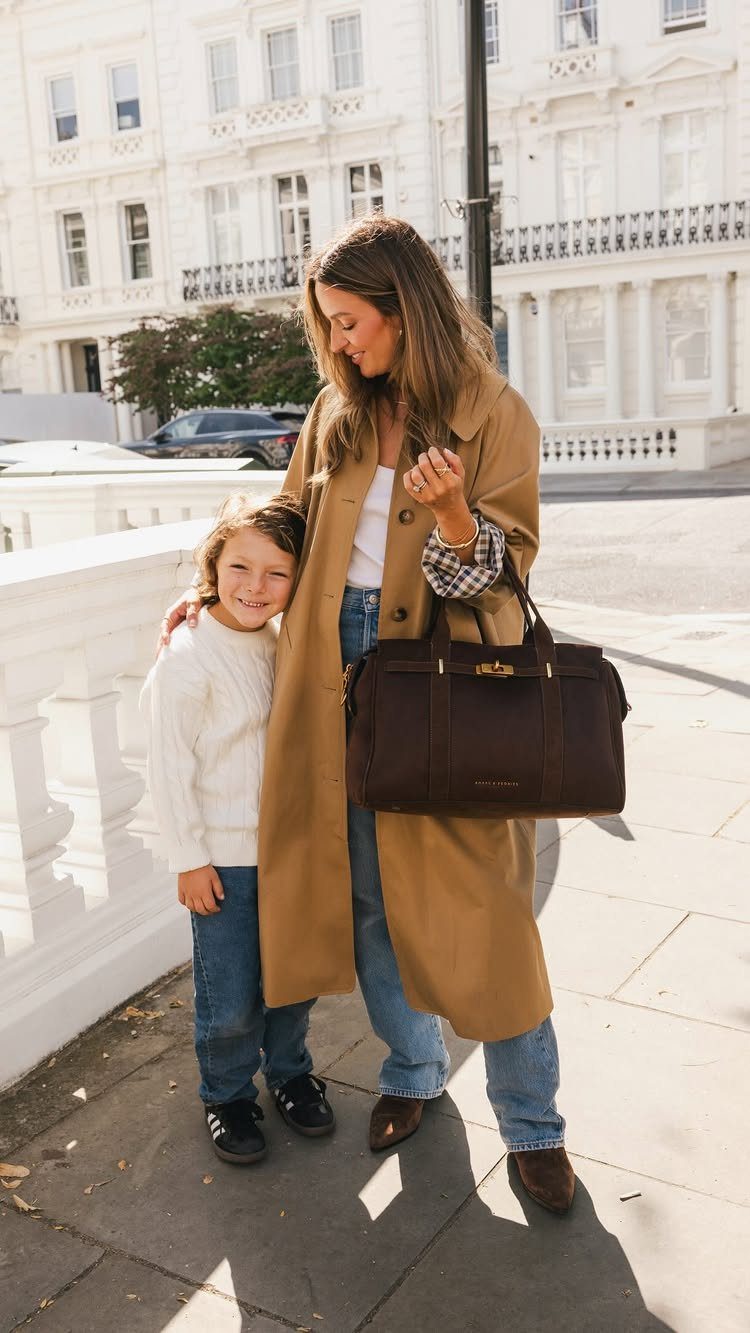
A structured tote bag in brown leather carries your laptop, lunch, and that pair of flats you keep for commuting without collapsing into a shapeless heap by Wednesday.
I would choose burgundy over tan if I already own brown boots and a brown belt; matching your bag to your sweater keeps the palette tight without buying everything in the same shade.
Look for feet on the base so the leather does not touch office restroom floors directly. A tote without a closure works only if you do not take public transit; otherwise, a magnetic snap or zip top saves your sanity.
8. Neutral Colors
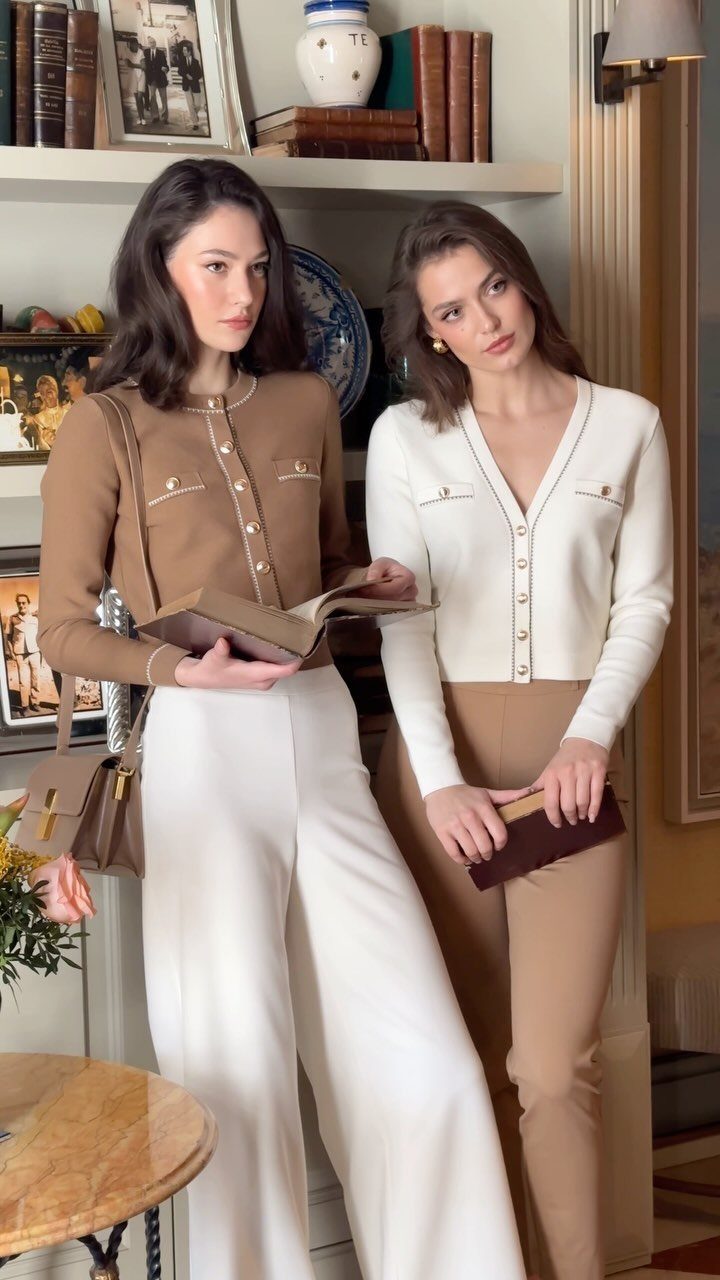
Beige, cream, and brown build outfits that do not fight each other, which matters when you are dressing in dim morning light.
A camel cardigan over white trousers with a brown leather belt gives you 3 neutrals that read as intentional, not leftover.
I would add one piece in a slightly different texture, ribbed knit against smooth wool, so the look does not flatten into a single note.
Color pops are for weekends; in the office, a neutral column draws the eye to your face and your work, not your clothes.
9. Wide-leg Trousers
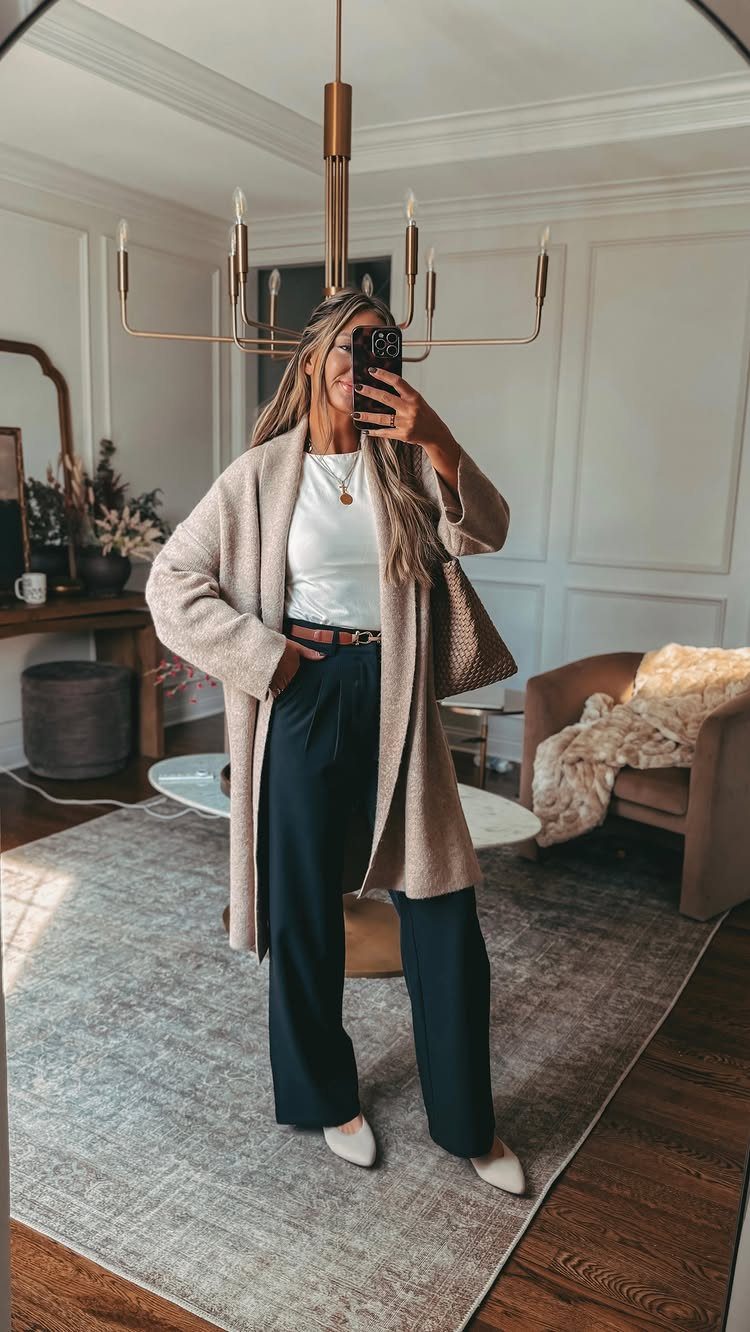
Wide-leg trousers in tan or brown give your legs room to move and your outfit a vertical line that cropped pants cannot match.
I would wear them with a fitted top or a cardigan that ends at the hip; anything longer and you risk looking draped in fabric rather than dressed in it.
A brown leather belt cinched at the waist keeps the silhouette from swimming in fabric. Check the hem: trousers that skim your shoe lengthen the leg, but any pooling on the ground reads sloppy and picks up street salt.
10. Burgundy Turtleneck
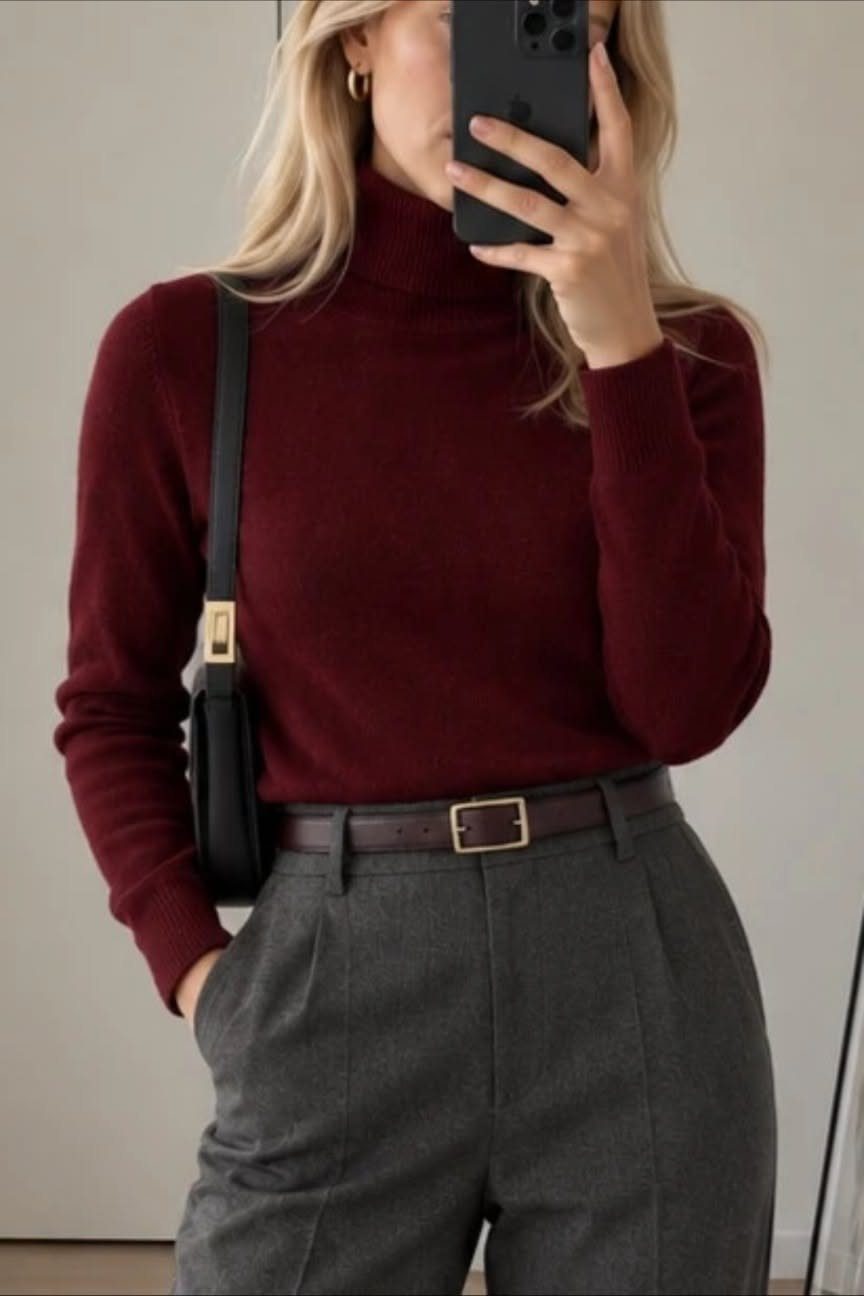
A burgundy turtleneck in a soft knit adds color without the brightness of red or the predictability of navy.
I like this one tucked into charcoal wide-leg trousers with a slim black belt; the two dark tones do most of the work so you don’t have to.
I would wear this with a structured tote in matching burgundy if I owned one, though tan or brown works fine as a neutral bridge.
The neckline should sit close without strangling; a turtleneck that gaps at the throat looks like a costume, not a choice.
Mixing Textures
Texture mixing is where a neutral outfit stops looking lazy and starts looking planned.
I would add a patterned silk scarf at the neck for the same reason the texture change works: it breaks up flat surfaces without adding a new color.
Gold layered necklaces over a ribbed sweater do something similar, though I prefer one or the other, not both at once.
Leather accessories, a belt, boots, or a tote, count as texture too; their slight sheen stands against matte wool in a way that reads expensive without costing more.
Pointed-toe leather flats keep the texture story going where suede boots would shift the whole tone. I switch between them depending on whether the office day holds a meeting or just desk work.
===
Color Coordination
A cohesive palette does not mean matching everything. Camel, brown, and cognac live in the same family but read as separate choices when each item has its own depth.
All three in one outfit works for me only when one piece carries a pattern that breaks the solid blocks apart; otherwise two neutrals plus a texture beat three solids.
Burgundy is the color I add when I am bored with brown but still need office-appropriate. It sits between red and navy in seriousness, and it photographs well enough for a presentation.
Matching your bag to your sweater works only if both are the exact same shade; a near-match looks accidental. I prefer burgundy with charcoal, or tan with brown, pairings that are clearly chosen rather than clearly failed.
===
Footwear Choices
A block heel solves the problem of looking professional while walking to the subway or across parking garage concrete.
I would not go above two and a half inches for daily wear; anything taller shifts your weight forward and shows in your shoulders by 3 PM.
Loafers are the shoe I switch into when ankle boots feel too heavy for a warm October day.
Smooth leather pointed-toe loafers carry the same structure as a boot but breathe better, and they slip off fast at airport security if your office travel resumes.
Feet on a tote base matter for the same reason tread matters on a boot: they keep your purchase away from surfaces you cannot control.
A magnetic snap closes fast without the fiddling a zipper requires when your hands are full.