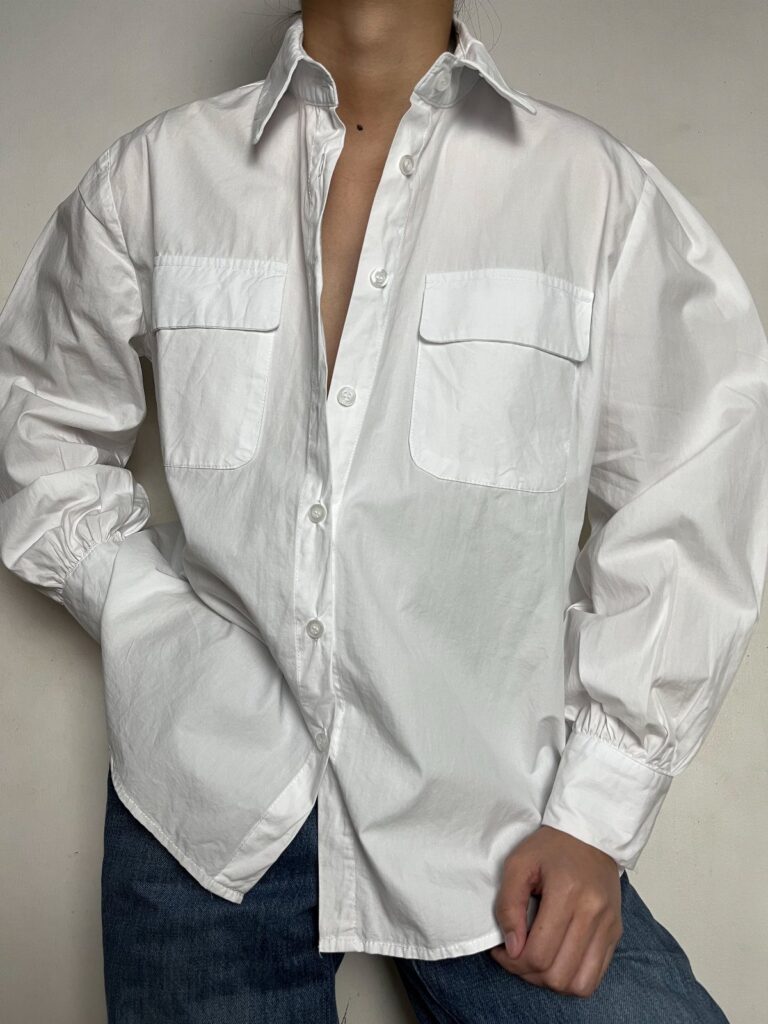
The essentials below range from a cotton tee to a trench coat worth investing in, with the deciding factor being how many of your existing pieces each one can pair with.
Every item here is chosen to work with at least three others you already own, including that single perfect white button-down that replaces three almost-right ones.
1. The Trench Coat
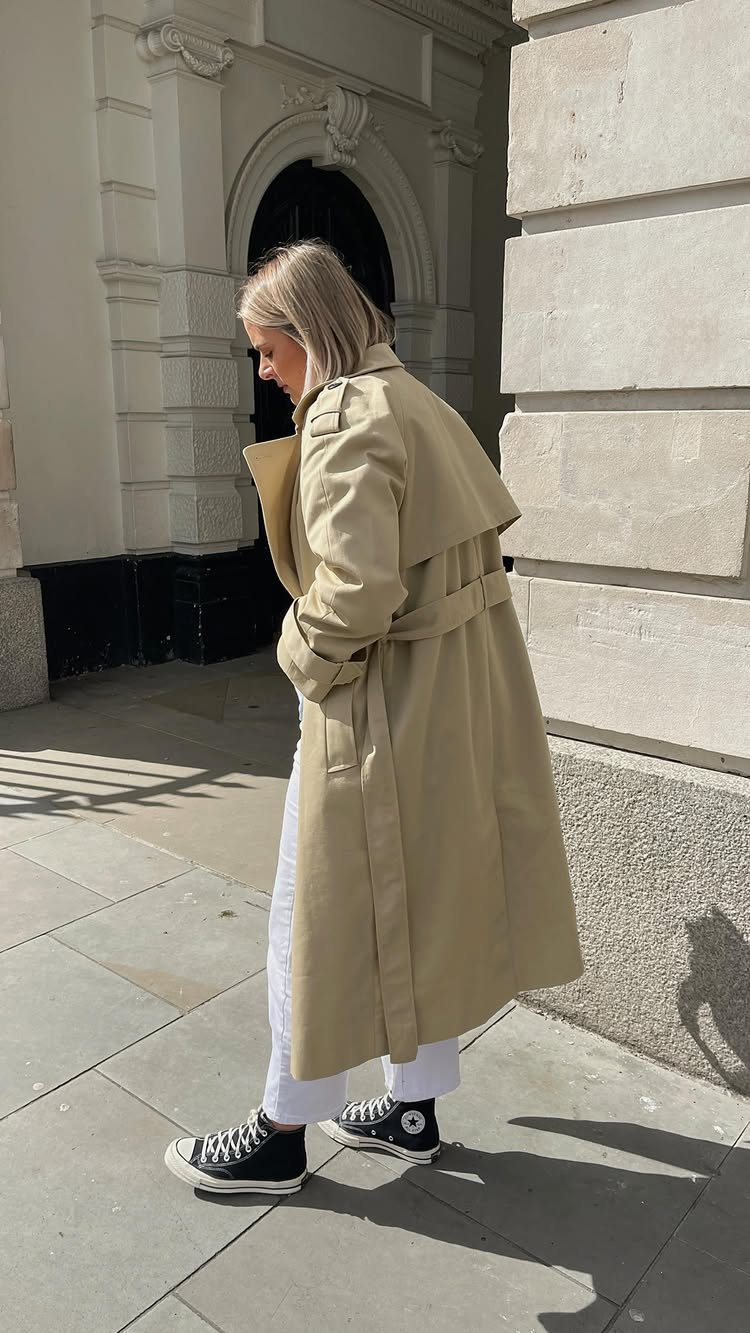
A trench coat is the one outerwear piece that makes jeans and sneakers feel intentional.
For someone building a smaller wardrobe, that single upgrade matters: one coat covers spring drizzles, fall chills, and the awkward in-between weeks when nothing else quite works.
Beige, black, or navy will pair with whatever you already own. The color you pick should match your shoes and bag more than your mood, since this is a piece you will wear for years.
A trench coat from a brand that builds them right can last through years of wear, so the cost per wear drops fast.
I like mine with the belt tied in back for a cleaner line, but that is a preference, not a rule.
The length should hit at or just below the knee; that flatters most figures and works over both dresses and trousers.
2. The Little Black Dress
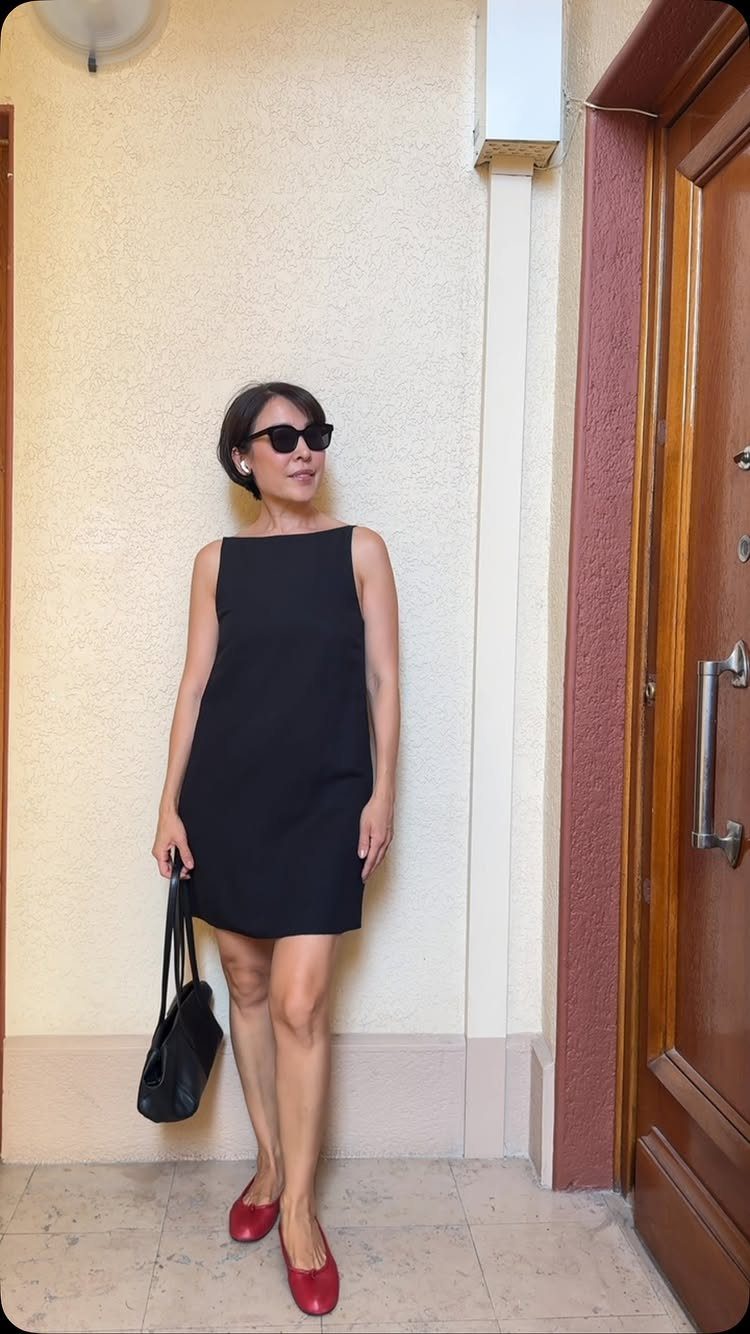
The little black dress survives because it accepts whatever you throw at it. Same dress, different shoes and jewelry, and you have shifted from a client lunch to a dinner date without changing in between.
The silhouette is the decision point. A sheath reads office-appropriate; A-line or wrap styles suit broader hips; something slinky with lace works for nights out if that is your life.
I would choose the shape that feels comfortable sitting down, not just standing in a fitting room, since confidence shows in how you move.
Layer a leather jacket over it for weekend gallery openings, or add kitten heels and one statement necklace when you need to look dressed up without trying hard. The dress does the heavy lifting; your accessories just signal intent.
3. Quality Basic Tees and Tanks
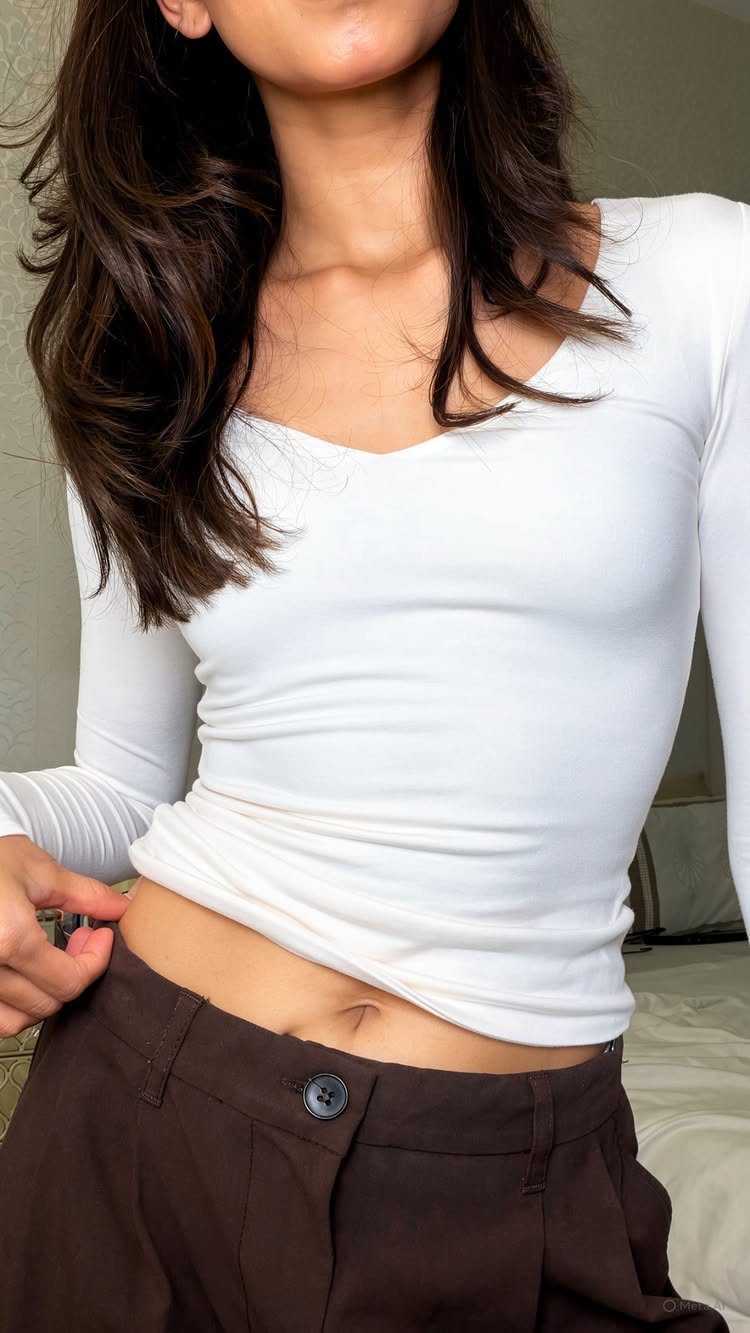
Basic tees and tanks earn their keep by disappearing into outfits so the rest can stand out. They are the pieces you reach for when the statement item is the trousers, the jacket, or the necklace.
Stock white, black, navy, and maybe a striped Breton for variety.
Better cotton holds its shape through washing, resists pilling, and reads as intentional rather than an afterthought. For a capsule built on fewer pieces, that durability matters more.
My most-worn look is a fitted white V-neck with dark jeans and white sneakers.
It never feels underdressed. That is the test: if you can build outfits around it without thinking, the tee belongs in your closet.
4. Perfect White Button-Down Shirt
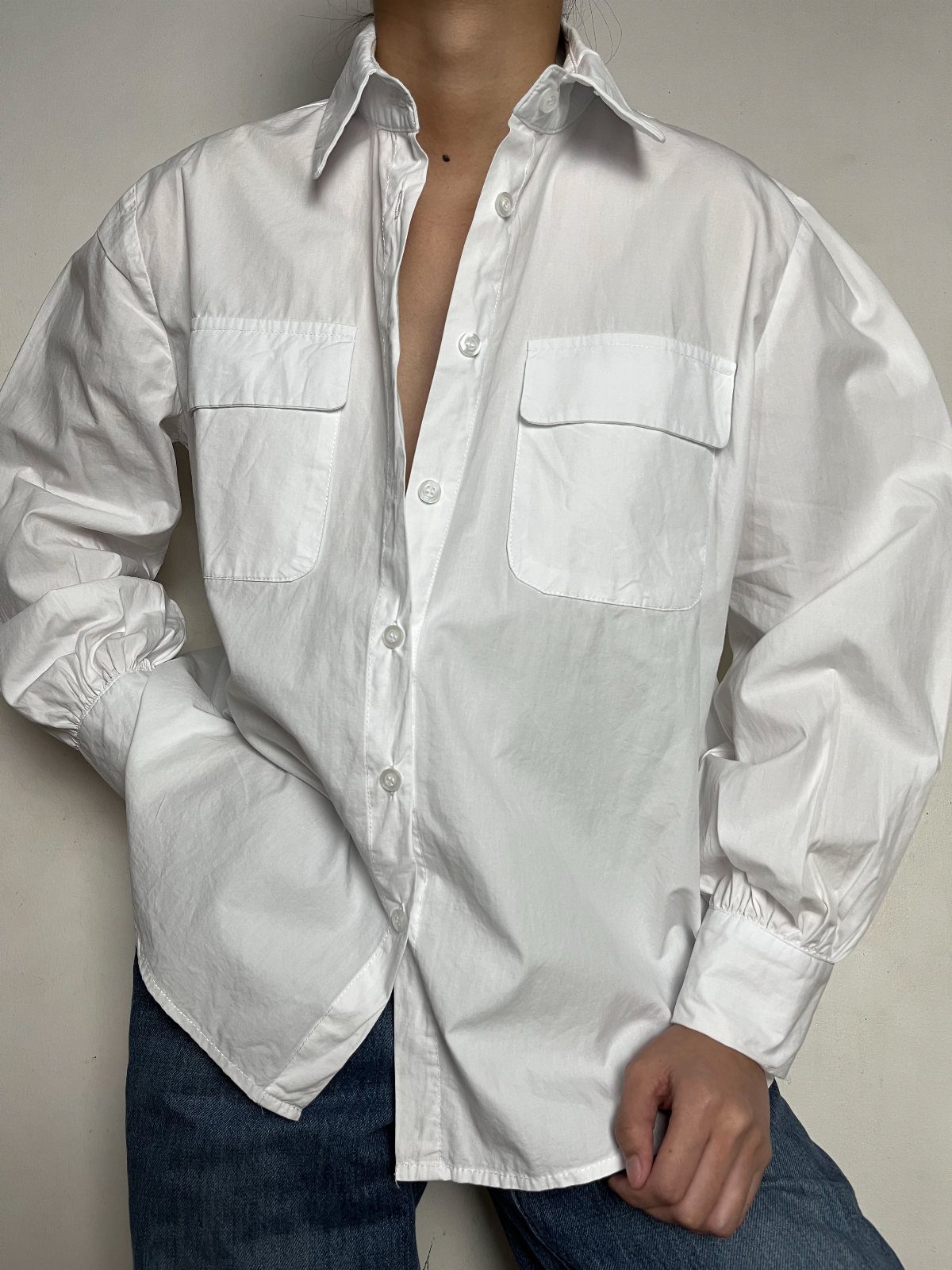
The white button-down is the single shirt that works in a meeting, on a Saturday, and tied at the waist over a dress when you need a layer.
Cotton poplin or silk drapes better than cheaper blends and keeps its structure through a day of sitting and standing.
Tuck it into black trousers for work. Wear it open over a tee with jeans for errands.
An oversized cut gives you room to move; if you buy fitted, size up for layering. I prefer a chest pocket or two for visual balance, but plain works if your jewelry does the talking.
This is where I would spend a little more. One perfect white shirt replaces three almost-right ones, and the cost per wear justifies itself within a month.
5. Neutral Knit Sweaters
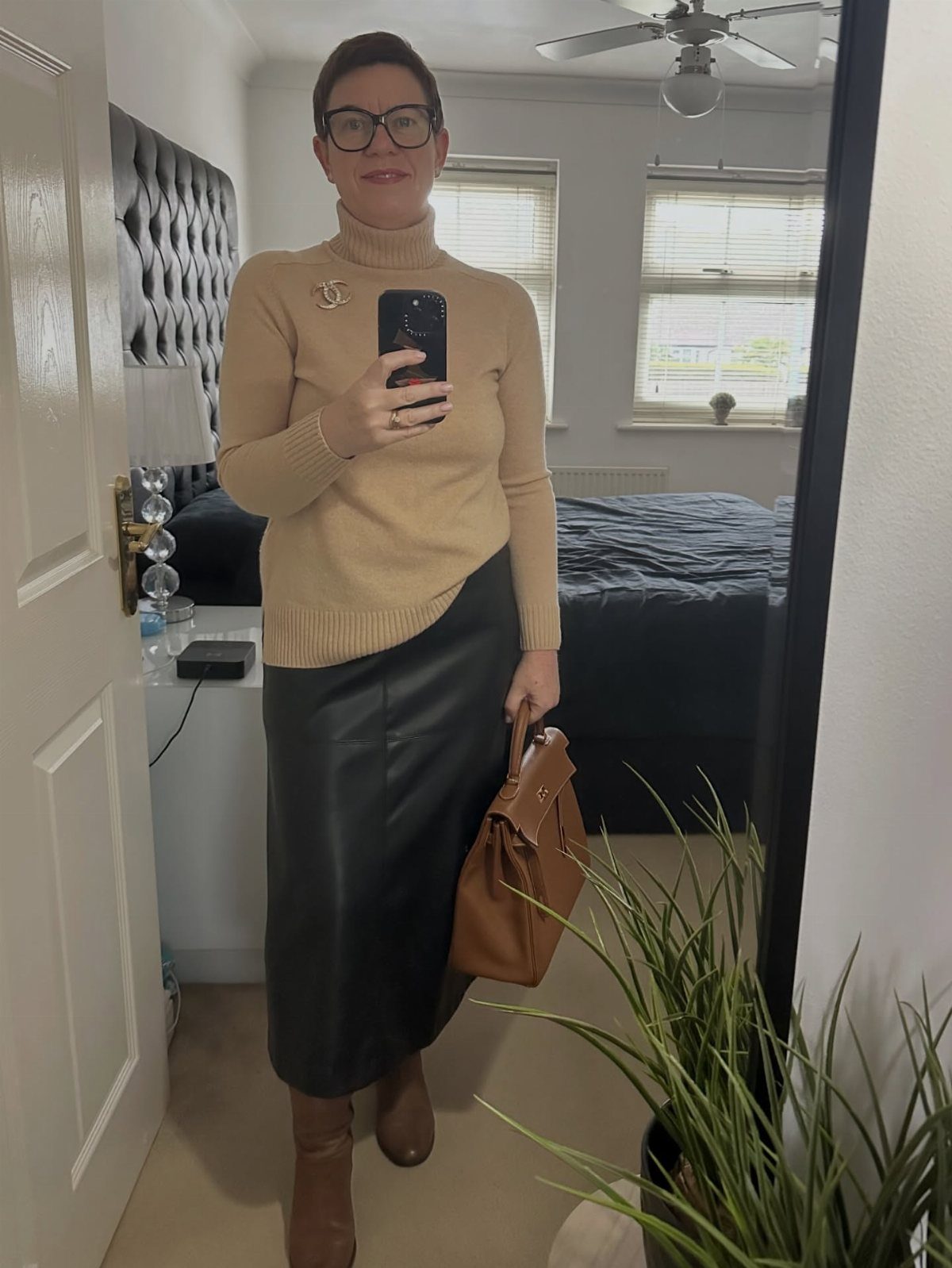
Neutral knit sweaters fill the gap between a shirt alone and full outerwear. A single knit can carry an entire outfit without extra layers.
Choose camel, navy, gray, or cream to match everything else in your capsule.
Cashmere or merino wool from Jenni Kayne, Vince, or J.Crew’s cashmere line lasts years with basic care. I hand-wash mine in cold water and lay flat to dry; the fabric softens over time rather than wearing out.
A crewneck layers cleanly over your white button-down.
A turtleneck stands alone. One of each, in different neutrals, covers most temperatures and most occasions.
6. Classic Leather Loafers
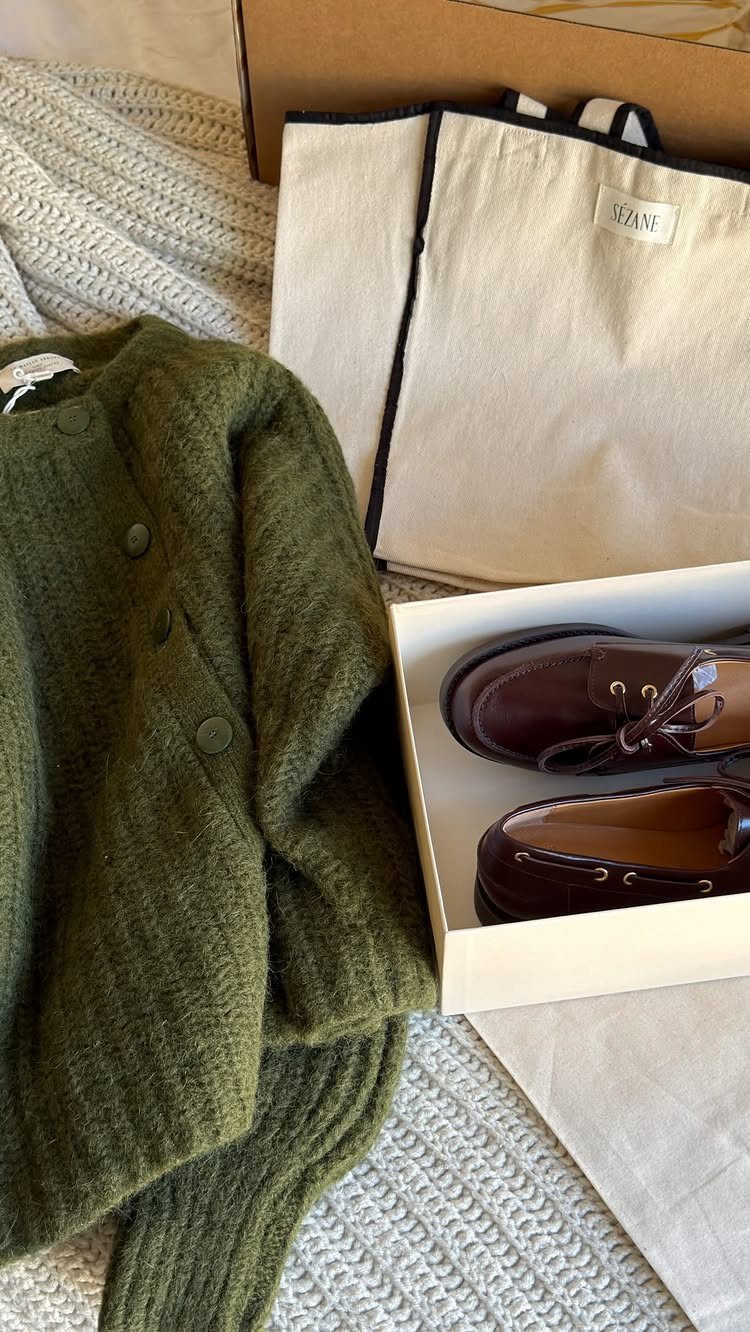
Classic leather loafers are the shoe that bridges sneakers and heels without committing to either. Dark brown reads polished enough for work and comfortable enough for walking.
Leather softens and molds to your foot over months, so the initial stiffness is worth pushing through. I would choose dark brown or black for maximum pairing range; cognac works only if your bag and belt already lean warm.
These are not running shoes. They are the pair you keep at the office, wear to lunch meetings, and slip on when ballet flats feel too bare.
A quality pair from a solid brand gets better with age, which is the point of buying fewer shoes in the first place.
7. Tailored Wide-Leg Trousers
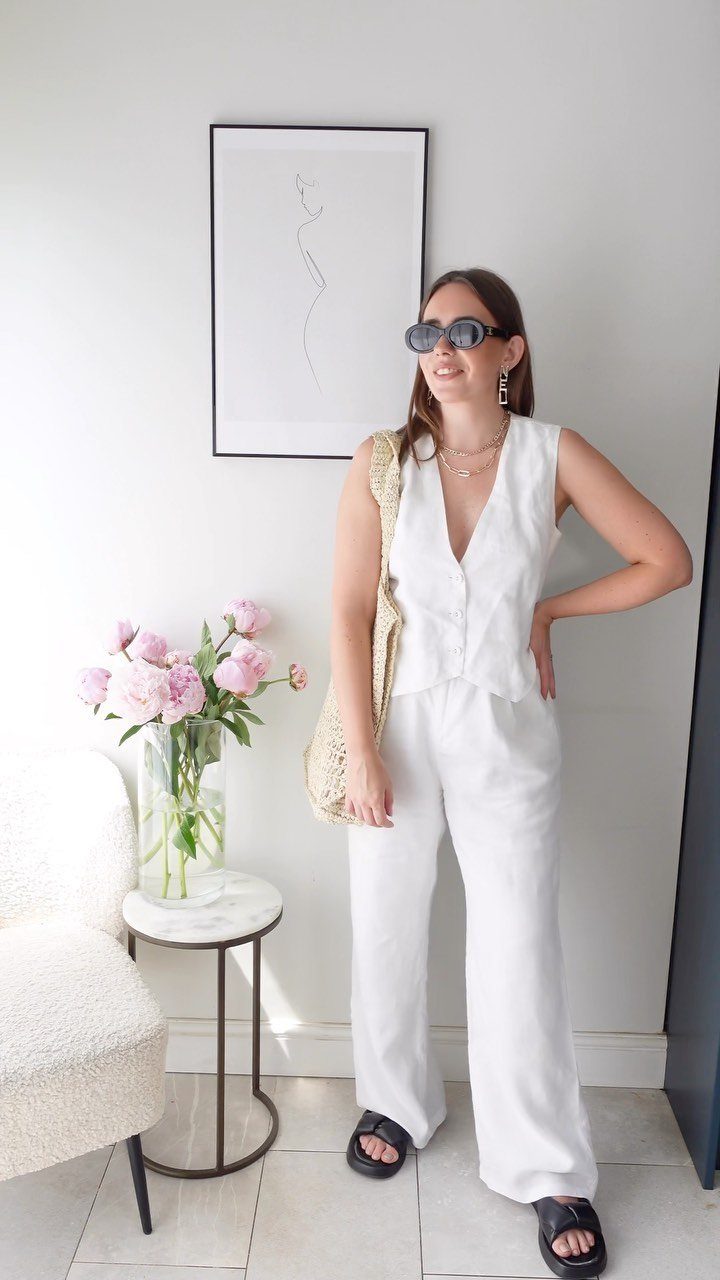
Wide-leg trousers do what skinny jeans cannot: they let air move, they forgive a heavy lunch, and they make a white tee look like an outfit on purpose.
Linen wrinkles honestly and breathes in summer heat, which is why it works so well for this cut.
For a capsule wardrobe, I would choose a heavier wool or wool-blend in black, navy, or warm beige; those carry through fall and winter without looking seasonal.
The waistband should sit at your natural waist, not below it, since the leg volume needs that anchor to avoid swallowing your frame.
Length is the detail to get right.
The hem should graze the top of your foot with flats on, or break slightly over a loafer. Too short and the silhouette looks cropped by accident; too long and you are walking on fabric.
These trousers pair with every top already in a capsule wardrobe: a white button-down, a Breton tee, neutral knits, even a little black dress as a layering piece. One pair, year-round, no planning required.
Personal Style Development
Personal style is not a fixed destination; it is a practice of noticing what you actually wear.
I start every season by pulling out the pieces I reach for without thinking, the ones already in the laundry basket while others still hang with tags.
Those favorites reveal the silhouette, the weight of fabric, and the color range my hand already knows.
From there, I test trends against that evidence. A shape or color that fits within what I already own gets a trial; anything that demands a whole separate wardrobe stays in the store.
Mood shifts day to day, but the frame stays steady: clean lines, no embellishment that fights the rest of the outfit, pieces that match without planning.
A signature look is not the point. It is a closet where every item earns its place by working with at least 3 others you already have.
Choosing Versatile Clothes
Solid colors do the heavy lifting in a small wardrobe. A navy trouser meets a white shirt, a cream knit, a striped tee; the same item in a busy print locks you into one pairing and one mood.
I skip sequins, heavy lace, rhinestones, and oversized studs not because they are wrong, but because they are hard.
They demand a specific companion, a specific occasion, a specific confidence. That is a lot of conditions for one piece to meet.
Neutrals are the practical choice, though not the only one. I keep at least one neutral in every category, top and bottom, so the mixing stays automatic.
If you hate beige, fine: pick the neutral that feels like nothing to you, the color you forget you are wearing. That is the one that will work hardest.
Benefits of Capsule Wardrobe
A smaller wardrobe costs less because the math is simple. I stopped shopping for the hypothetical event, the version of myself who needs something flashy, and the impulse purchases dried up with it.
Time saved is harder to count but easier to feel.
Fewer pieces mean faster laundry, faster decisions in the morning, faster packing. My closet holds only what fits and what I have worn; the empty space is storage I actually use.
The real benefit is mental. Every item in a capsule wardrobe coordinates with most others, so I am never staring at clothes and seeing nothing to wear.
The outfit exists before I think about it. That simplicity is the point: not deprivation, but removing the friction between waking up and walking out the door looking like I meant to.
Frequently Asked Questions
What is a capsule wardrobe?
A capsule wardrobe is a small collection of versatile pieces that mix and match easily.
Each item should coordinate with most others, so getting dressed takes less thought. A capsule wardrobe is about keeping pieces that actually work together and get worn, not about counting how few you can own.
What is the 3-3-3 rule capsule wardrobe?
One mini-capsule method is three tops, three bottoms, and three pairs of shoes that all mix and match.
It gives you multiple outfits from 9 pieces with minimal planning, and works well for travel or busy weeks when decisions need to be fast.