These 16 autumn ideas cover everything from leggings paired with tunics to suede jackets that last years, sorted by the body shape and occasion that actually matters to your choice rather than what’s trending.
Whether you need a sweater that hits at the hip or wide-leg pants that start high on the waist, each photo shows a real look from a curvy woman who posted it, credited below the image.
1. Sweater Dress with Leggings
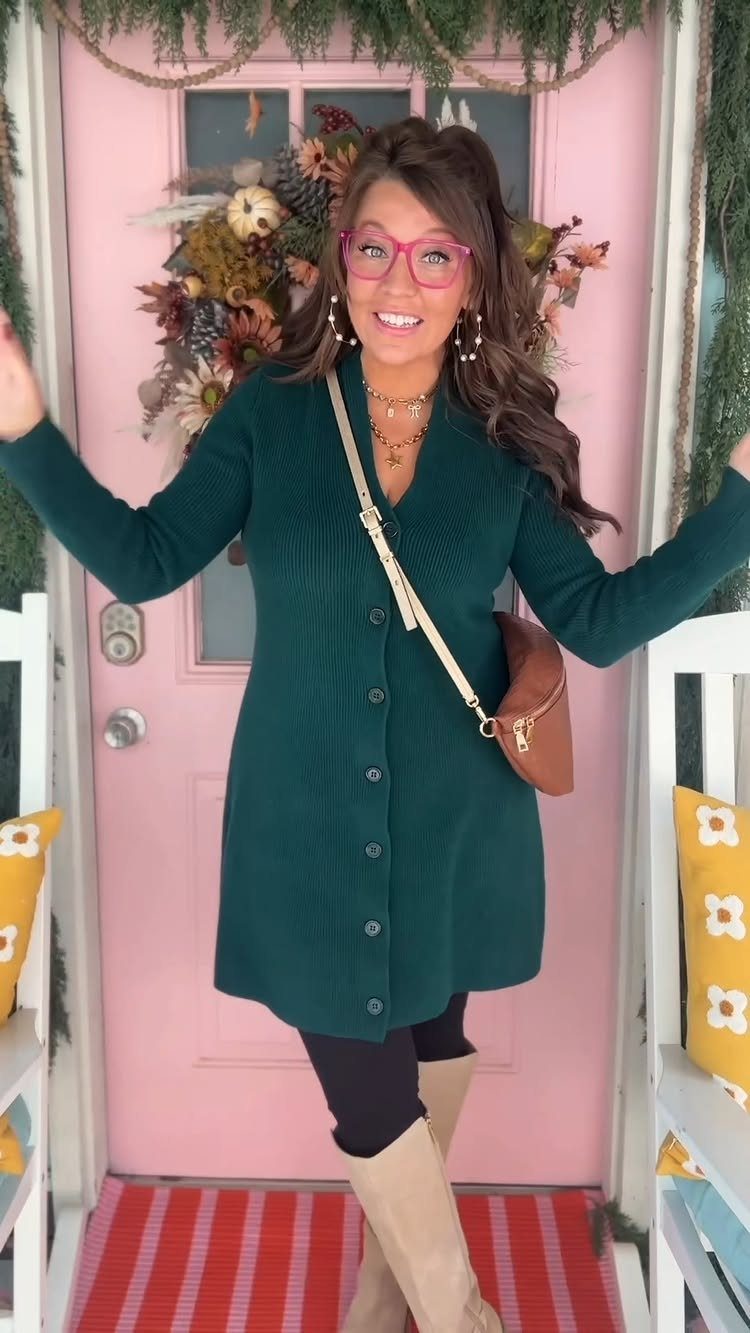
A sweater dress over leggings is the easiest way to look put together when you do not feel like trying.
A sweater dress that hits mid-thigh is the length that works: long enough to cover where the leggings start, short enough that you still have a leg line.
I like black ponte leggings here because they hold their shape and do not bag at the knee by noon.
Tan boots add the polish that heels would, but you can actually walk in them. A fluffy scarf is the one extra that makes this feel dressed up for dinner out; skip it and you have errands covered.
2. Tunic Tops with Leggings
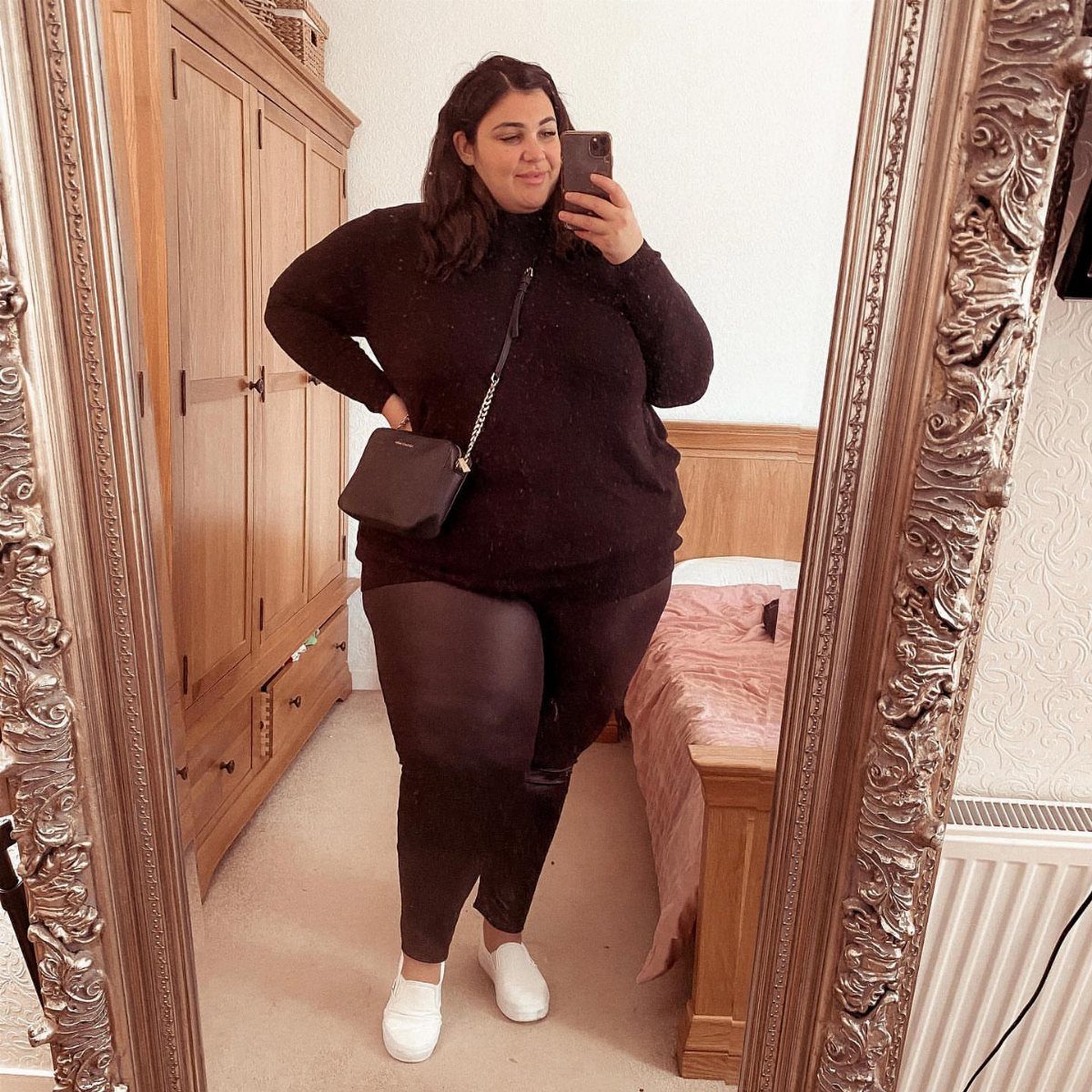
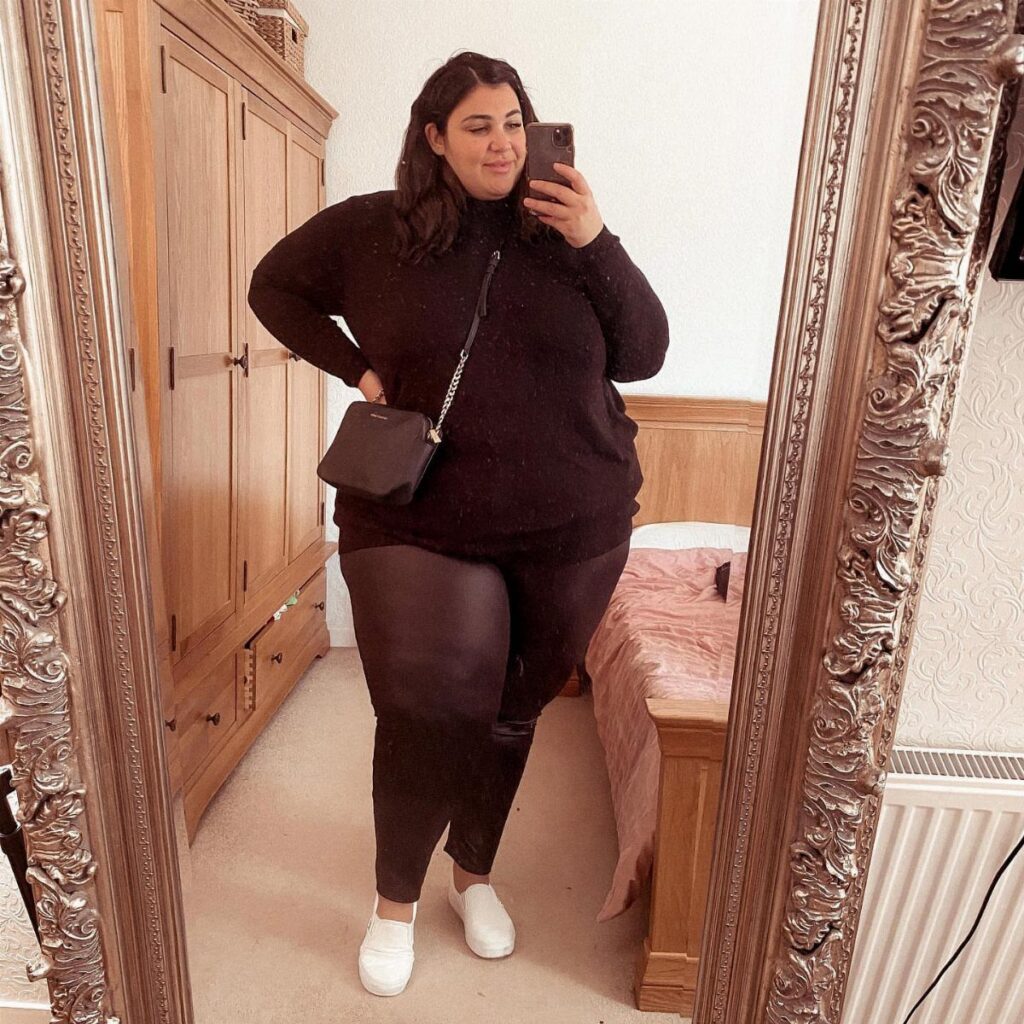
Longer tunics solve the problem of regular sweaters riding up and exposing what you would rather not. The black tunic in the mirror selfie hits upper-thigh, which is the minimum length I look for when wearing leggings as pants.
Lightweight knits work better than heavy ones for this; bulky fabric adds volume where you are already layering.
I would wear this exact outfit, white sneakers and all, for a Saturday of grocery runs and school pickup. The crossbody bag matters more than you might think: hands free, and the diagonal strap breaks up the block of black.
3. Wrap Dresses
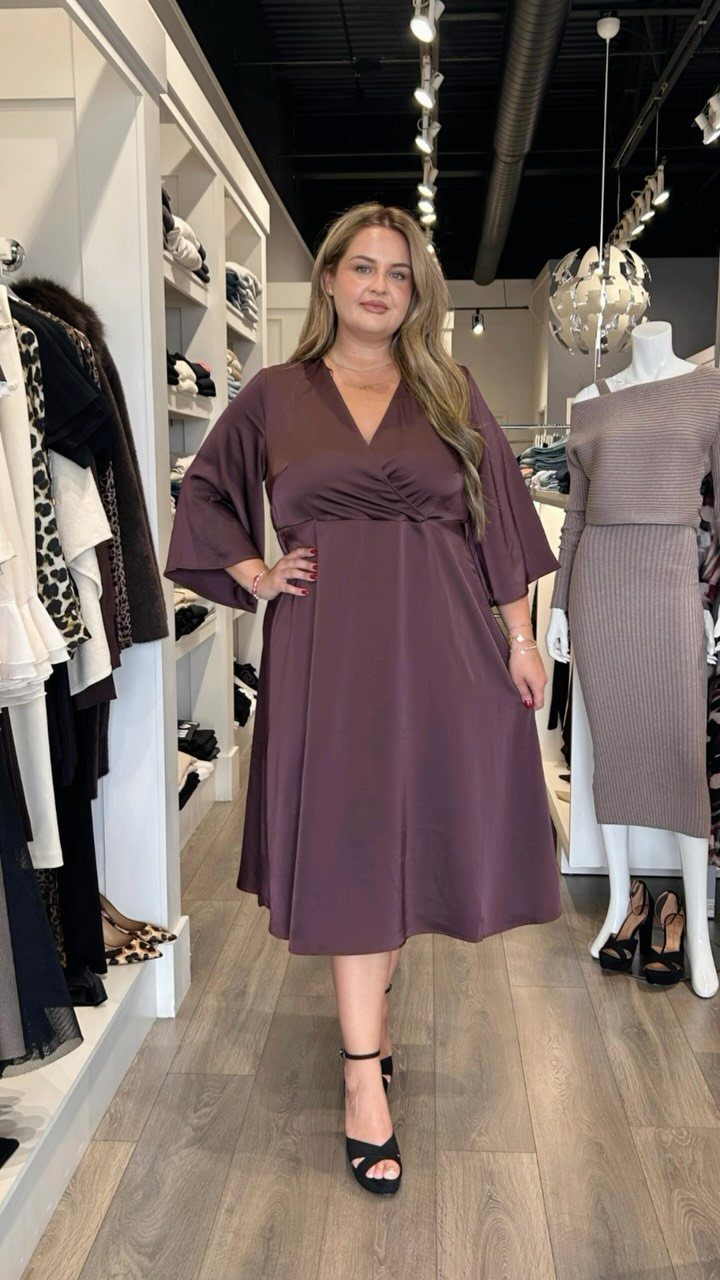
The waist tie on a wrap dress is what makes it genuinely flattering for curves rather than just theoretically so. You control where it sits and how tight; that is rare in ready-to-wear.
A plum color this deep works for autumn without going full winter black.
For warmth, I would layer a thin turtleneck underneath rather than throw a cardigan on top; the V-neck is the whole point, and covering it defeats the purpose.
Wide sleeves like these need a heel to balance them. Flat shoes work, but the proportions tip toward bathrobe.
4. Oversized Knit Sweaters with Jeans
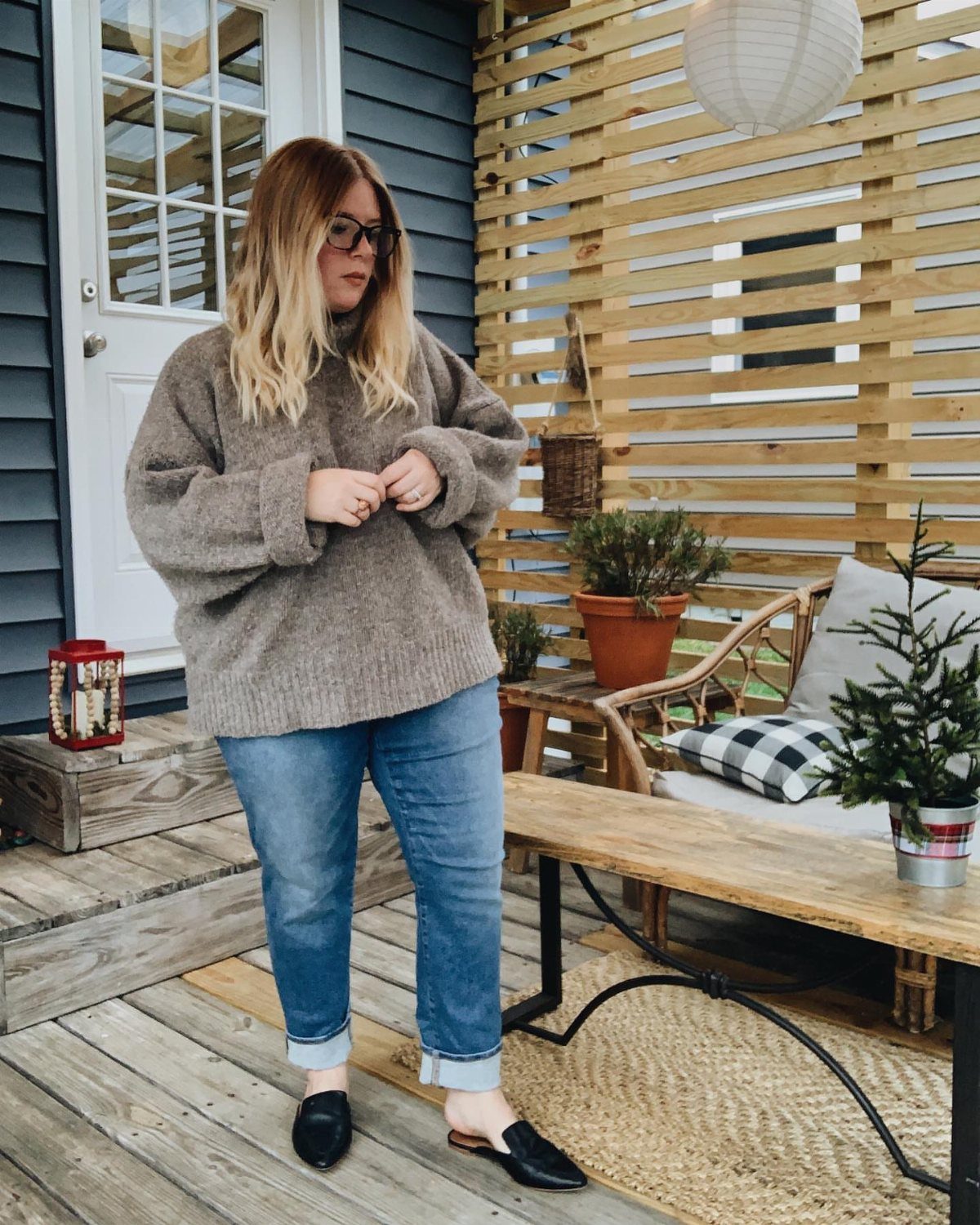
A genuinely oversized sweater, not just sized up, has the shoulder seam hanging past your natural shoulder; that is how you get the slouch without looking like you borrowed it.
Cuffed jeans are the right call here. A full-length wide leg would compete with the sweater’s volume, and a skinny jean would make the top look like a tent.
The black mules are an unexpected choice that keeps this from being too casual; I would probably reach for boots once the temperature drops, but the mule works for those lingering warm days that still show up.
Barrel or baggy jeans are the other option the season is pushing, though they still need that tight-on-top, wide-on-bottom proportion to keep your shape.
5. Tailored Blazers
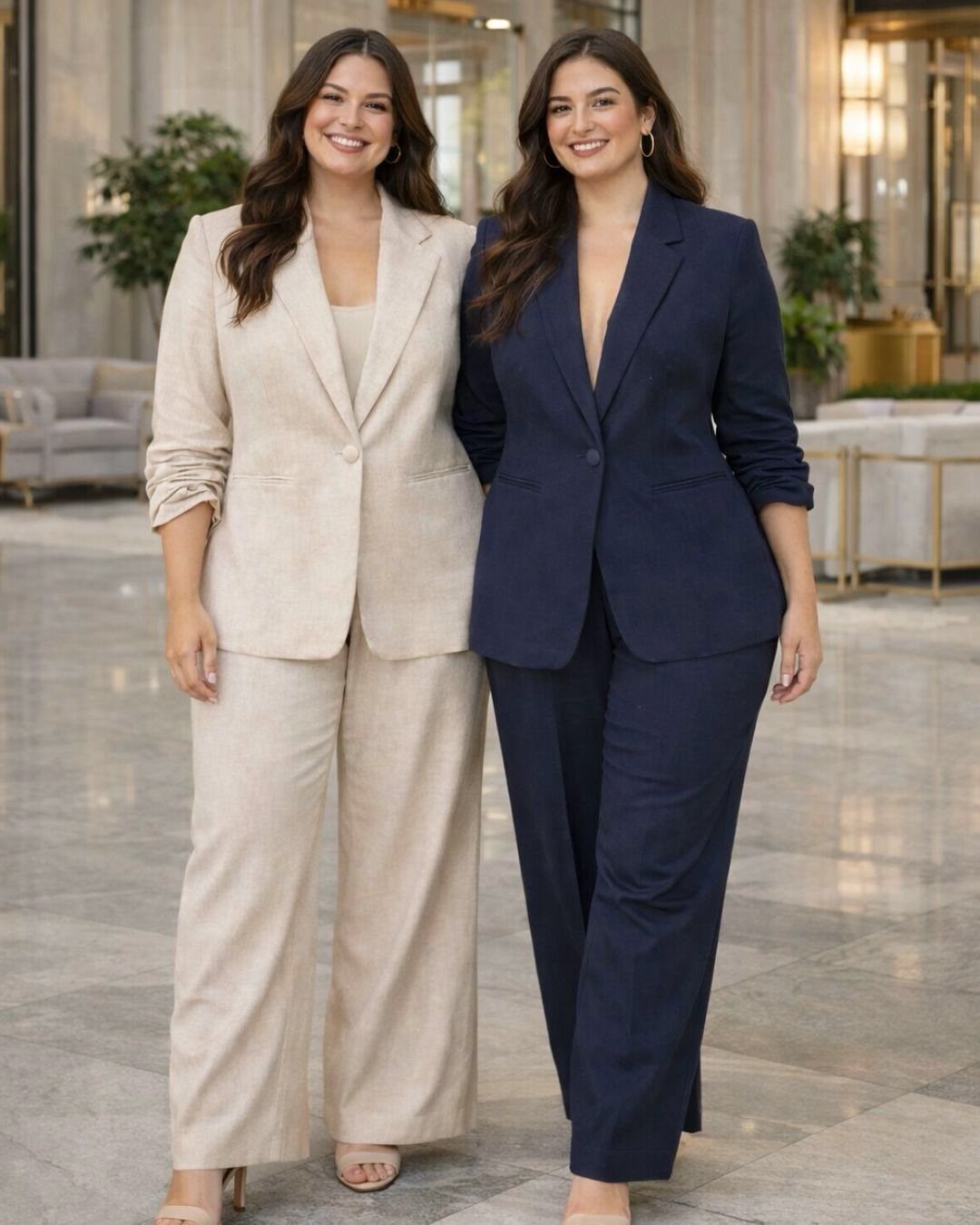
Structure is what separates an outfit from a pile of comfortable clothes, and a tailored blazer is the fastest way to add it.
A tailored blazer that nips in at the waist is the detail I would check first when trying one on.
A longline cut that covers the hips smooths over anything you want smoothed, but the waist definition keeps you from disappearing into a box.
I would wear the beige version with the matching trousers for a meeting, then throw the blazer over jeans that evening.
The double-breasted closure on the Sarah Blazer style draws the eye to the center, which is flattering on almost every figure.
6. Floral Blouse in Muted Tones
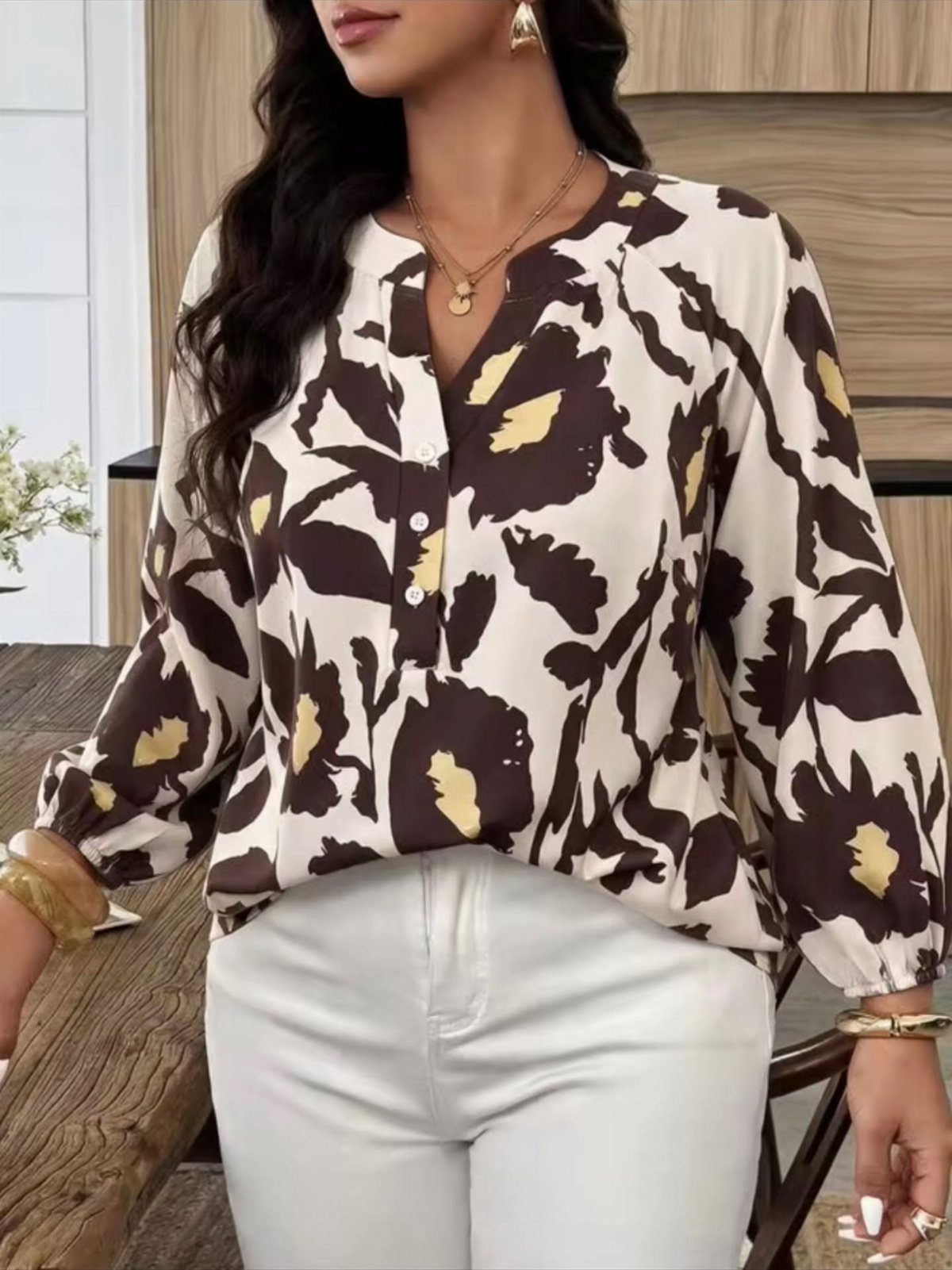
Fall florals only work when the background goes dark; the cream base in this blouse is the lightest I would go, and the brown and yellow blooms keep it seasonal.
A white-ground floral in October looks like you are refusing to let go of summer.
The long sleeves are practical for temperature swings, and the relaxed fit tucks or untucks depending on what you are wearing below.
White pants are a choice I admire more than I make; I would probably put this with dark denim or a chocolate brown trouser for my own life.
The pattern does the work, so the rest of the outfit stays simple.
7. Tights Under Skirts
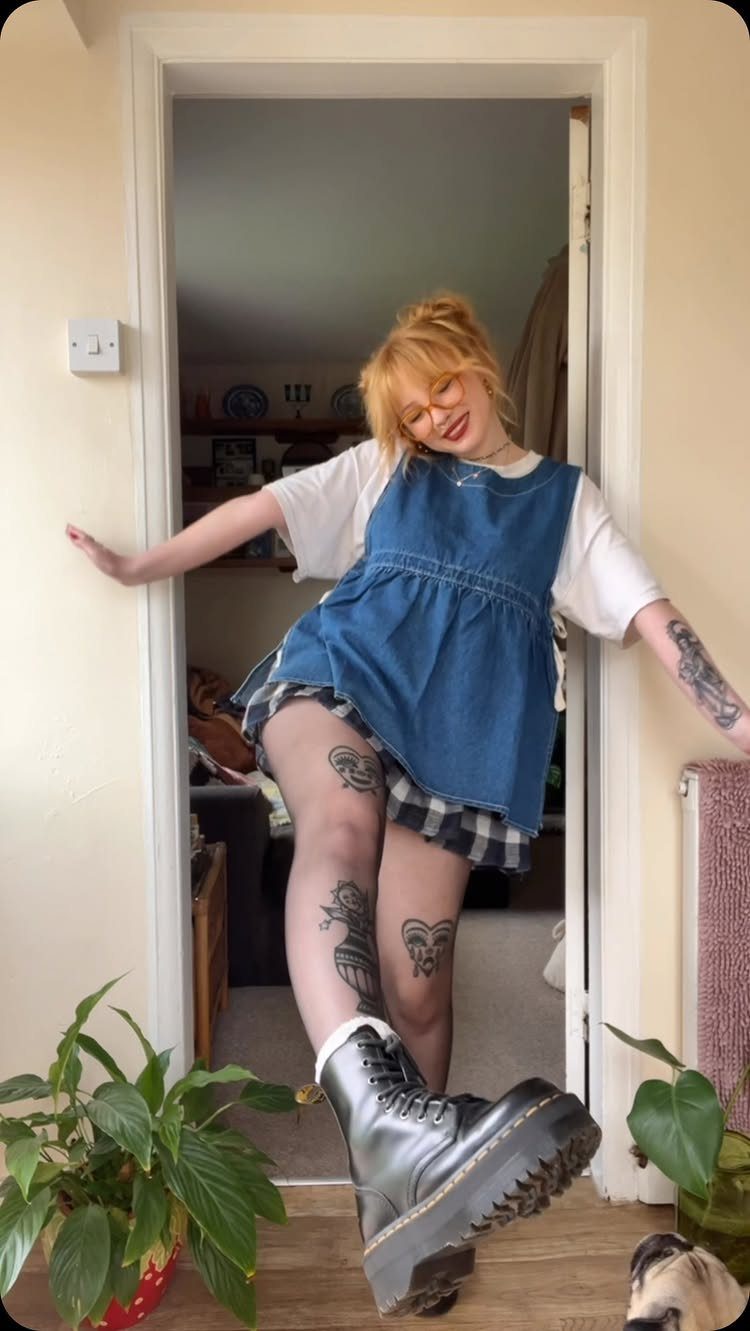
Patterned tights are how you make a skirt work in October without looking like you are trying to be brave.
The sheer black pair here shows work rather than covering it, which is the difference between tights that read as deliberate and tights that read as apology.
A dark plaid skirt and denim pinafore top give you layers to adjust as the day shifts; tights stay on when the cardigan comes off.
Platform boots add height that balances the horizontal breaks, and they keep your feet dry in leaf-mulch weather. I would stick to a mid-weight denier for opacity that still lets texture show.
The maker mentioned this pinafore cost her about £25 with a gift card toward it.
8. Long Floral Midi Dress
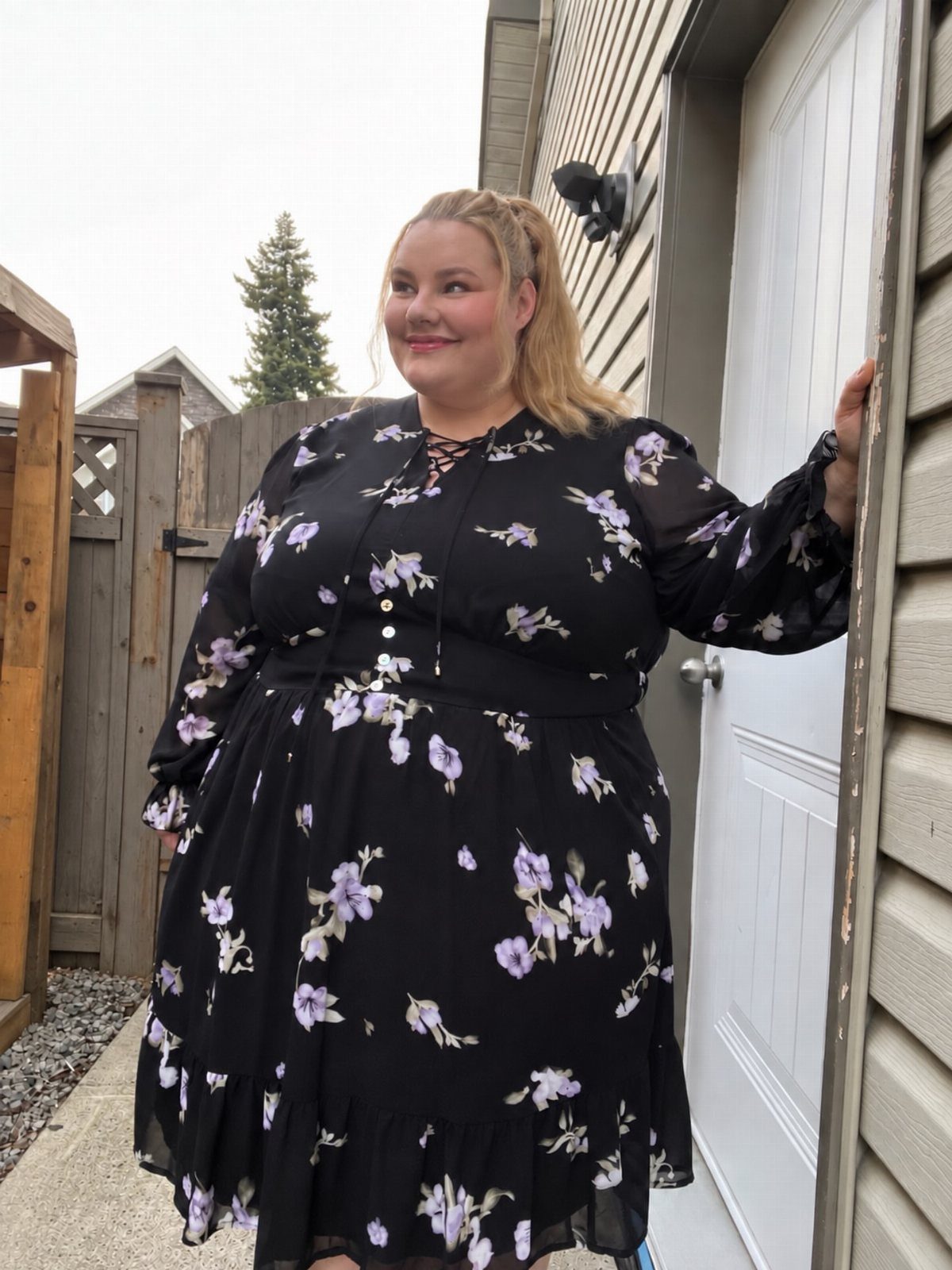
A dark ground floral on a midi length is how you wear print in fall without fighting the season. Black base, muted blooms, long sleeves: this is the formula.
The ruffled hem on this version gives it movement that skims rather than clings.
For curvier figures, a defined waist or a self-belt prevents the midi from reading as a tent; without that waist point, you are depending entirely on the print to do the work.
Add ankle boots and a trench when the temperature drops, or wear it alone on those September days that still hit 75. Knit or jersey versions layer more easily under coats than heavier satins.
Tess Holliday’s version went dark floral too, which confirms the approach.
9. Sweater with Wide-Leg Pants
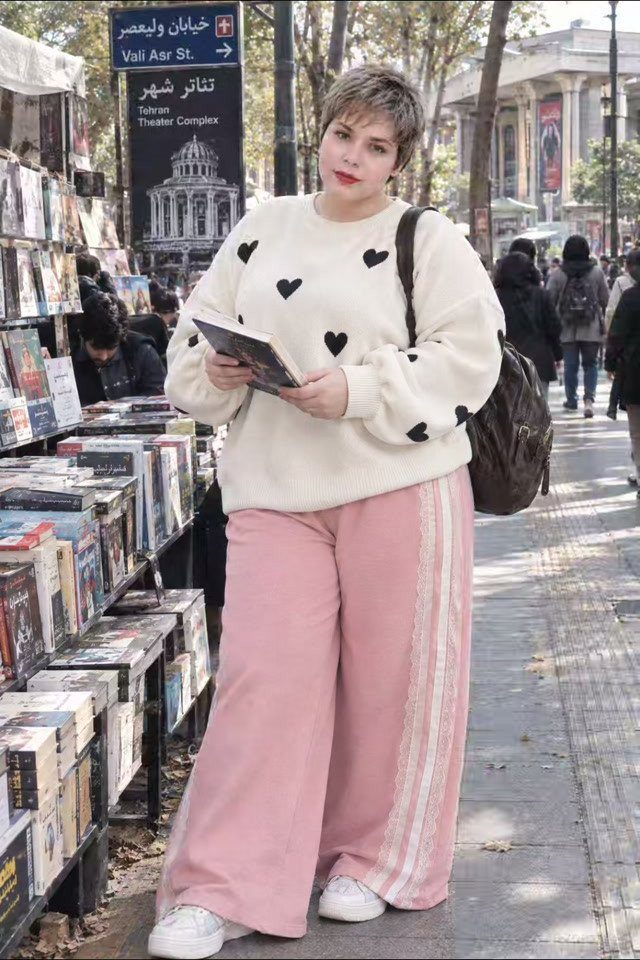
Wide-leg pants with a tucked or cropped sweater give you the proportion play that makes an outfit look considered rather than thrown on.
The pink pair here sits high on the waist, which is where the volume needs to start; lower rises swallow your middle and shorten your leg line.
Paperbag waists with their gathered tops and tie details work especially well on hourglass or pear shapes, since the ruffle sits at the narrowest point and the leg flows from there.
A fitted bodysuit or tight top underneath a looser jacket layer keeps the silhouette from going shapeless. Leaving the tie undone reads more casual for daytime.
For my own fall, I reach for this combo when I want to feel pulled together without anything touching my waist.
10. Mini Skirt with Knee-High Boots
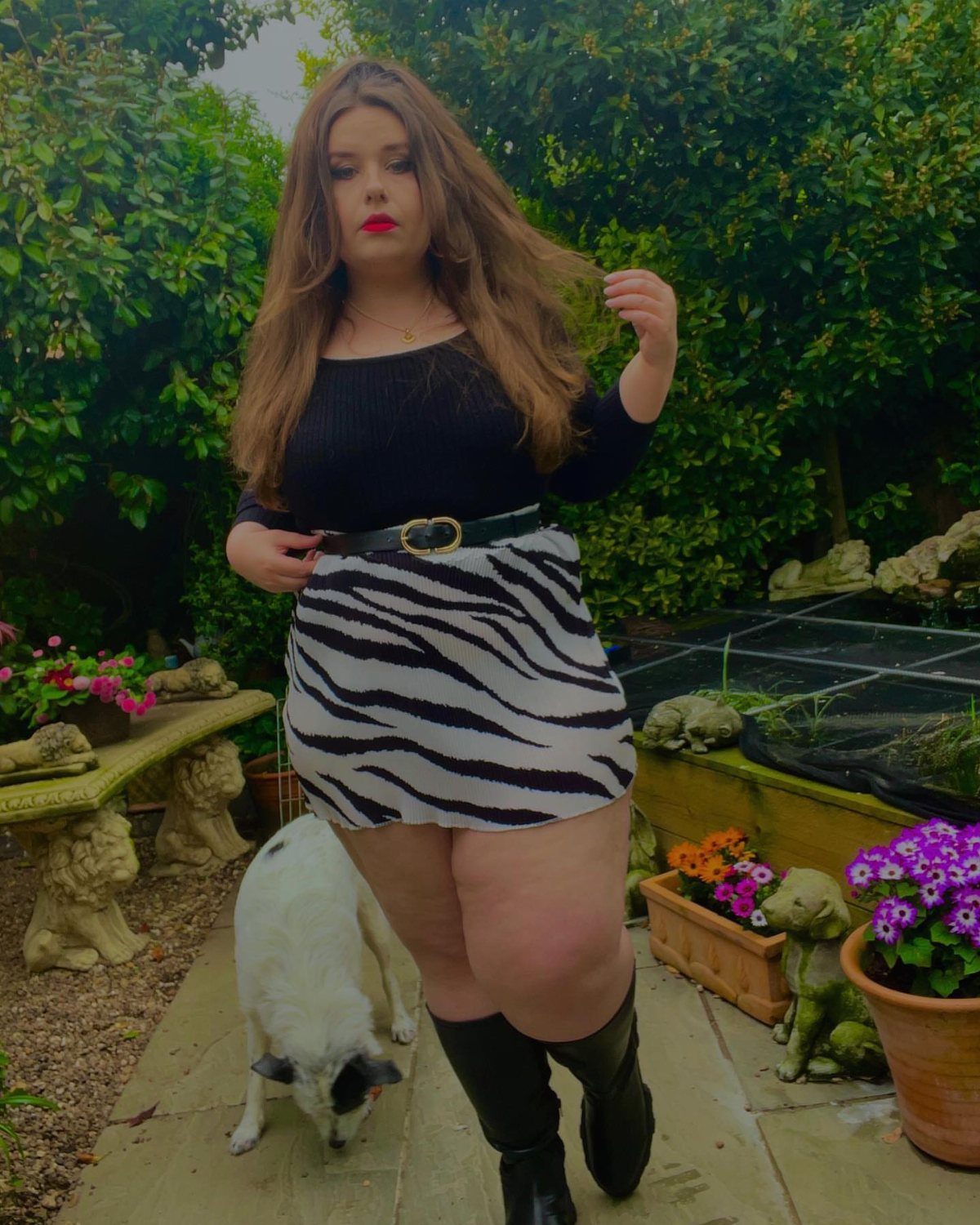
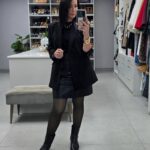
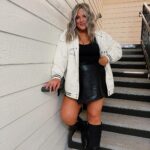
A mini skirt in autumn only works if the boots do the coverage work so the hem does not have to.
Knee-high boots with a mini hit the balance exactly: enough leg showing to keep the shape feminine, enough boot to keep you warm and grounded.
A scoop-neck top with the skirt reads softer than something fitted, more campus than club. I would reserve this for mild days; once tights become necessary the proportion shifts entirely.
For curvier figures, a boot with some structure through the shaft holds its shape against the leg better than slouchy styles.
11. Casual Midi Dress with Sneakers
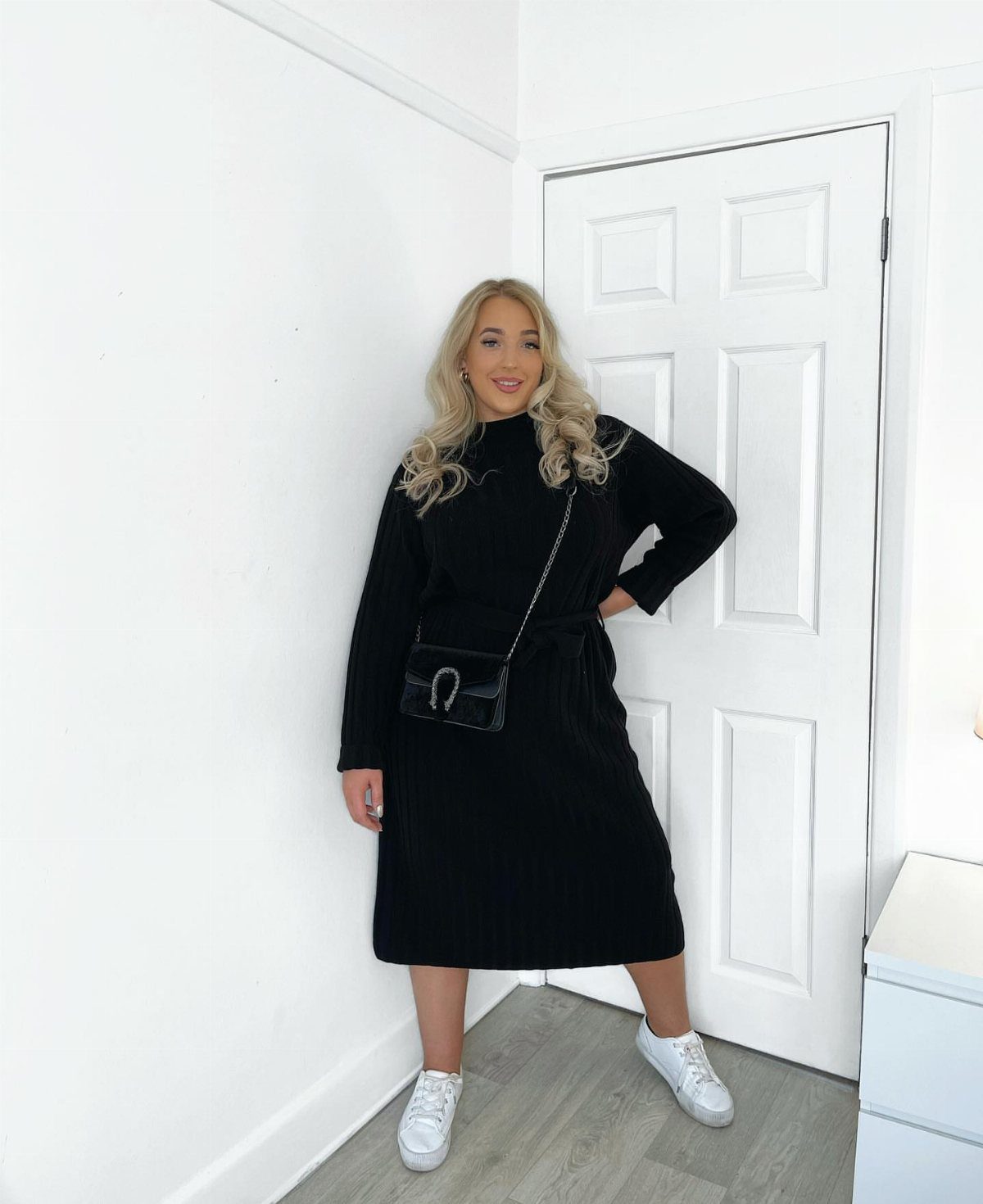
A ribbed black midi dress with white sneakers is the uniform for fall days that still behave like late summer. The long sleeves acknowledge the calendar; the sneakers say you are not pretending it is November.
Crossbody bags matter here because they keep the look active rather than dressy, and they free your hands for coffee and subway poles.
I would wear this exact outfit for brunch on a 68-degree Sunday, which is the temperature where boots feel premature but sandals feel defeated.
Shirt dresses work the same trick with more structure; the ribbed knit version is softer and more forgiving around the middle.
For warmth add a denim jacket, not a blazer; the casualness of the sneakers needs to match.
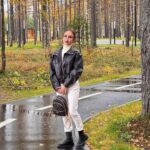
12. Suede Jacket with Black Turtleneck
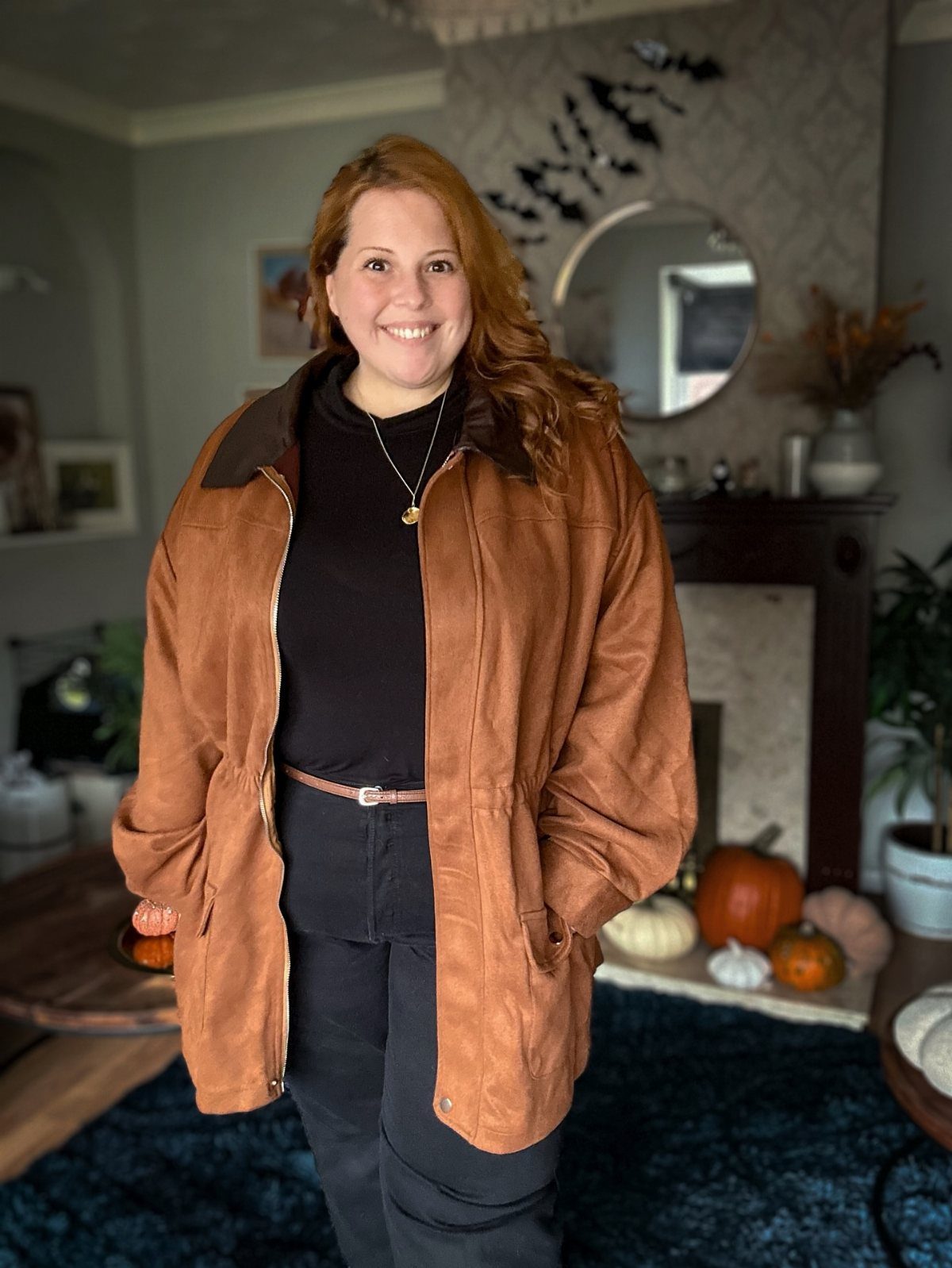
Suede in autumn is one of those textures that signals the season without needing color to do it. The brown here is the warm mid-tone that works with black without the harshness of tan.
An oversized cut like this one needs a thin layer beneath; bulk under bulk and you lose your shape entirely. The black turtleneck is the right call because it keeps the vertical line uninterrupted from chin to waist, which lengthens.
A thin belt at the waist adds definition to a piece that could otherwise read as boxy; this is the detail I would check before buying.
I would wear this for pumpkin-patch afternoons and keep it for dinner after, which is more than I can say for my puffer.
13. Leather Jacket with Wide-Leg Jeans
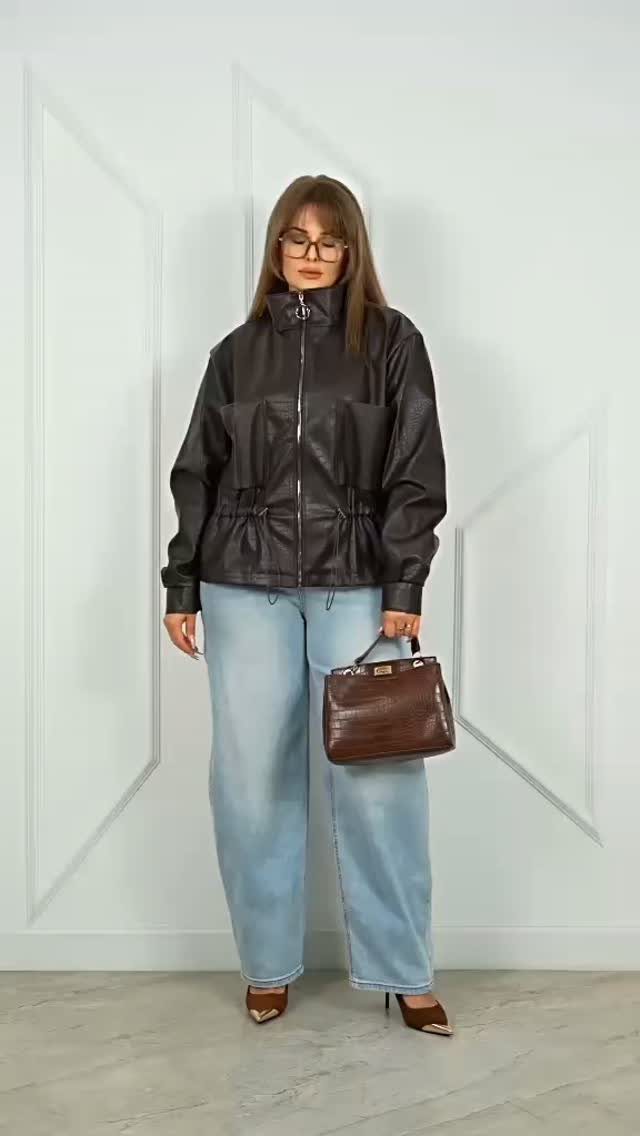
Dark brown leather reads softer than black against light-wash denim, and the combination avoids the biker aesthetic that can feel costume-y.
The heel here is doing real work: wide-leg jeans pool without height, and flats turn the look from intentional to accidental.
I would check that the jacket hits at the high hip; longer cuts fight the waistband and shorter ones leave a gap that breaks the vertical line.
A patterned top underneath, as one version suggests, adds interest without competing; keep it thin so the jacket closes cleanly.
14. Leopard Print Maxi Dress
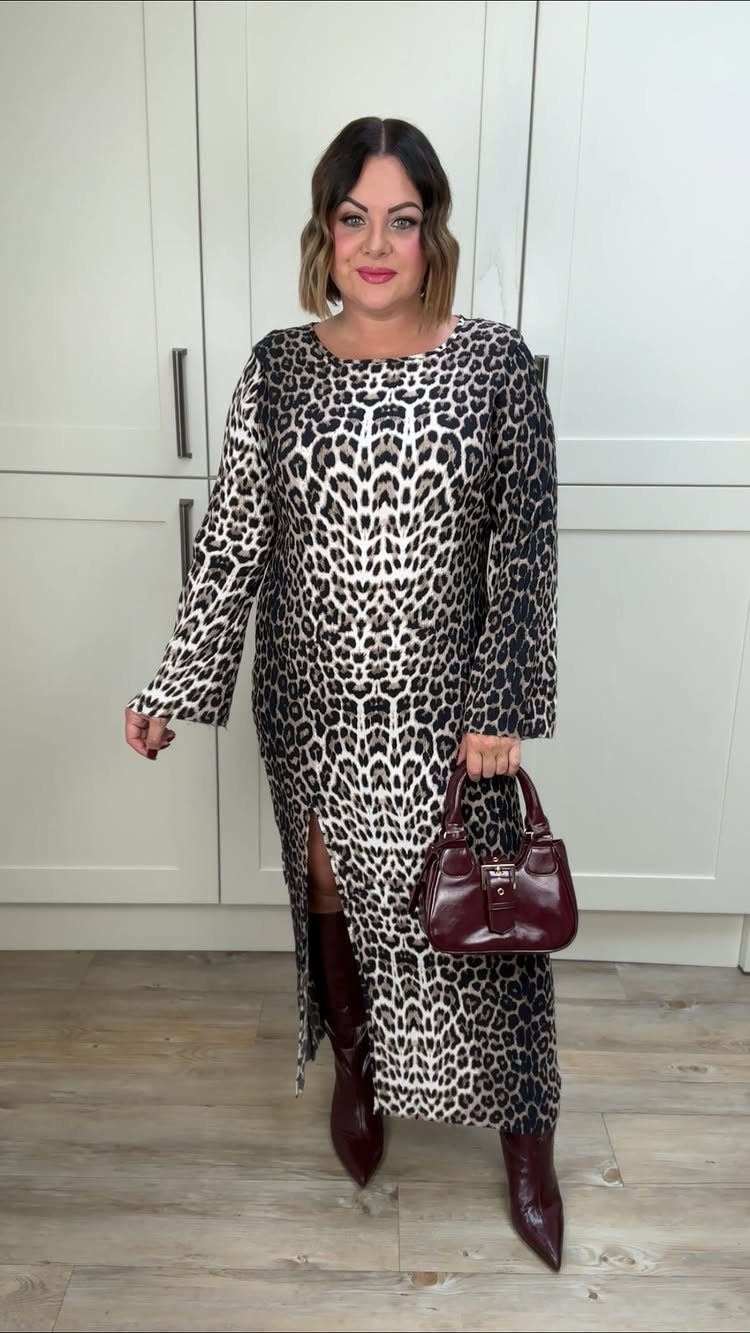
A maxi length in leopard keeps the print from reading as nightlife-only; the long sleeves and high neckline do the same. Burgundy boots are the choice that makes this feel autumnal rather than year-round; black would work but reads safer.
Check the slit in the mirror before you commit to a dress like this; it is the spot where fit matters most.
Too high and the dress becomes about the leg; placed mid-calf, it gives walking ease without shifting the focus. Tess Holliday’s version went this route too, which suggests the approach travels across body types.
For curvier figures, a jersey or matte crepe drapes better than stiff satins that hold volume where you do not want it.
15. Leather Jacket with Leopard Pants
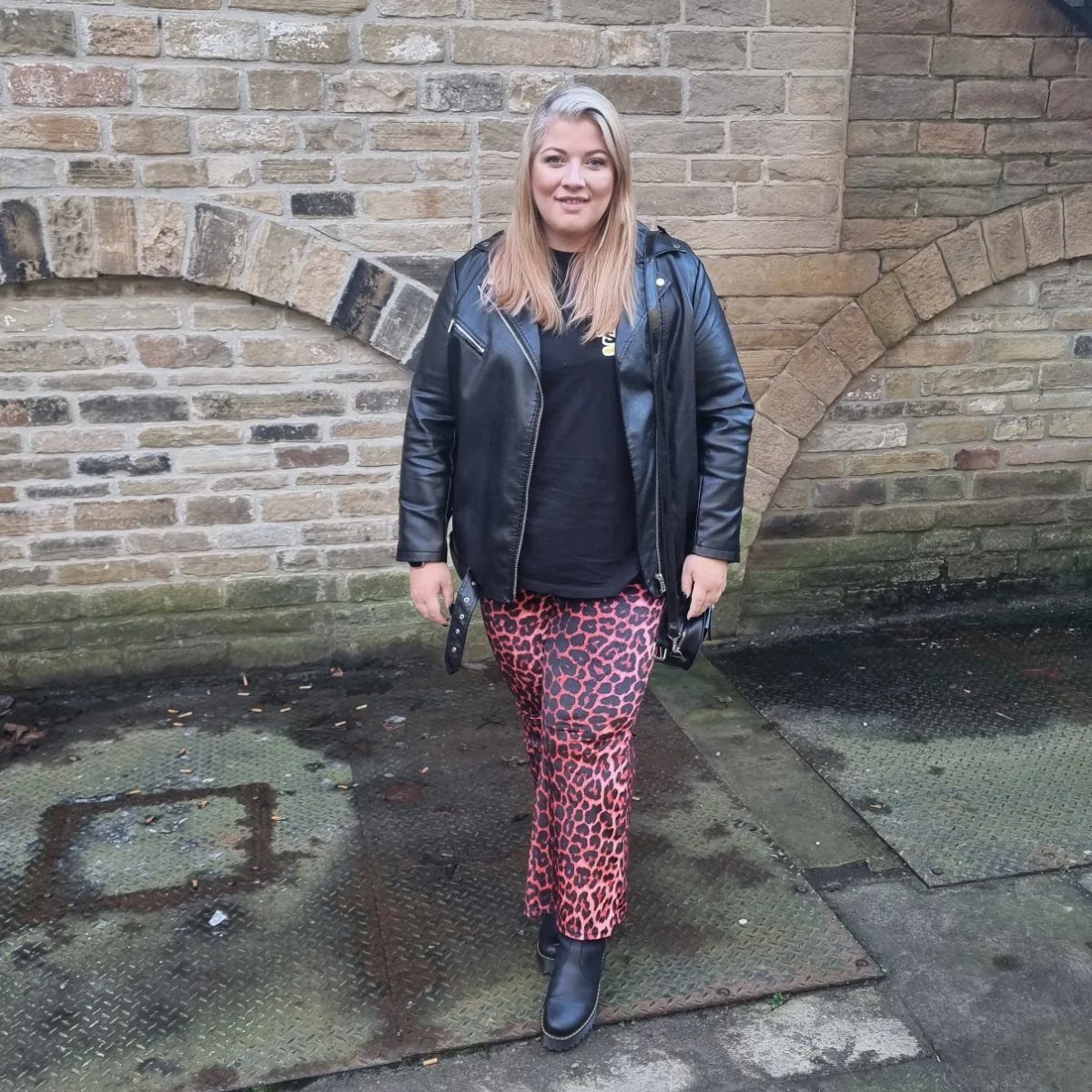
A black leather jacket over leopard pants is how you wear print below without the print wearing you. The black top and boots ground the look so the leopard reads as one deliberate piece rather than chaos.
Tight on top, wide on bottom is the proportion that makes this work; a loose jacket over loose pants and you lose your shape entirely.
The graphic tee here adds a third element, but a plain black fitted top is the safer call if you are not sure about layering statements. I would probably skip the graphic and let the pants do the talking.
A shirt jacket gives the same structure if leather feels too harsh for your day.
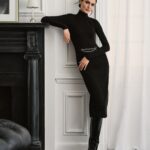
16. Patterned Knee-Length Dress with Tights
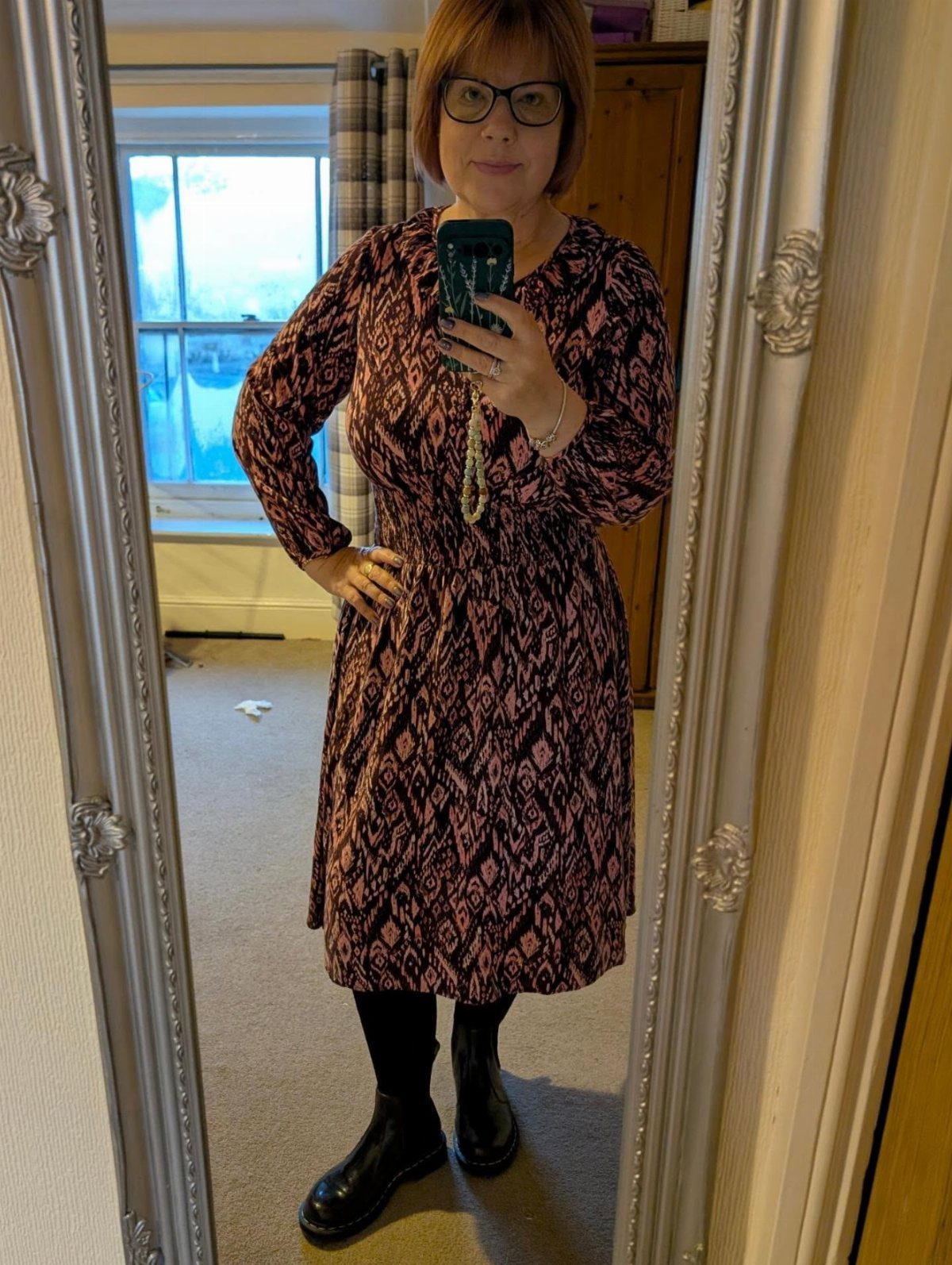
A knee-length dress with black tights is the combination that got me through every October office job I ever had.
The dress length matters: at the knee, the tights read as layering; much shorter and they read as coverage, which is a different message entirely.
Ankle boots that meet the tights, as here, keep the leg line continuous; a gap between boot and hem chops you visually.
The pattern on this dress is doing the interest work, so the tights stay plain; textured or patterned tights with a patterned dress is a combination I have tried once and retired immediately.
For curvier figures, a dress with some waist definition prevents the tights from creating a tube effect; a straight sack shape and black tights from neck to toe is not the goal.
Layering Tips for Fall
Lightweight base layers are where autumn layering starts, and a thin turtleneck under a wrap dress is the proof.
The same rule applies to tunics over leggings: a thinner knit keeps the silhouette flat where you are already layering.
Tailored outerwear is what finishes the equation. Look for a belt or a nipped waist; without it, the shape swallows you.
A cropped denim jacket or moto jacket stops at your waist or upper hip, fine for running errands but not much help when you want real coverage.
Shawls and wraps are the piece I forget to use and always mean to. They add warmth without the commitment of a full coat, and they drape where you place them rather than where the seams dictate.
Flattering Fits for Curves
A piece that skims rather than clings is the goal, but "skim" is a narrow target.
Too loose and the fabric tents; too tight and every line shows. The test is whether the garment moves separately from your body when you shift your weight.
Structured jackets work because the construction does the shaping for you. A blazer with a structured shoulder and a waist that draws inward creates the hourglass where the fabric alone would hang straight.
Tailored pants balance what sits above them. Wide-leg pants need the volume to start high, at the natural waist; a lower rise drops the fabric from the widest point and shortens the leg line.
A slouchy boot collapses and adds width where you do not want it.
Color Trends for Autumn
Earthy neutrals are the base layer of an autumn palette. Camel, taupe, and olive green function as your black alternative; they layer with each other without the harshness that black can bring.
The brown suede jacket against a black turtleneck is the example: warm mid-tone meeting dark, neither fighting the other.
Jewel tones add the depth that reads as seasonal. Deep burgundy, sapphire blue, and emerald green flatter most skin tones because they carry enough saturation to reflect light rather than absorb it.
Plaid and checks return every autumn because the grid does visual work without demanding attention. A dark plaid skirt with tights is the application: pattern below, solid above, the eye moves but does not get stuck.
Frequently Asked Questions
What are the trendy fall looks for 2026?
Earthy neutrals like camel, taupe, and olive green are the base layer for autumn, working as softer alternatives to black.
Plaid and checks return every year, and dark florals on a black or dark ground keep prints feeling autumnal rather than stuck in summer.
What clothes look flattering on people with big bellies?
A piece that skims rather than clings is the goal, but the fit has to be precise. Oversized turns into a tent; snug traces every contour you might rather not advertise.
Structured jackets with a waist that draws inward create shape where fabric alone would hang straight, and high-waisted wide-leg pants start the volume at the natural waist rather than dropping from the widest point.
How to not look frumpy when overweight?
A blazer that actually follows your waistline is the quickest way to pull a look together from pieces that would otherwise read as loungewear.
Balance is the word: one generous layer needs something cleaner underneath, and you can test the result by walking; the clothes should shift on their own, not ride your body like a second skin.
A boot that slouches at the ankle pools and spreads; a shaft that holds its line keeps the leg looking longer.
What types of outfits should plus size women wear in autumn?
Layer smartly with structured pieces and comfortable fabrics.
A trench cinched at the waist, a leather jacket that hits at the hip, or a wool coat that runs past the knee all do the same double job: they finish the outfit and give your shape a frame.
Lightweight sweaters and longer tunics work well with straight-leg jeans or ponte leggings, and shawls add warmth without the bulk of a full coat. Balance looser layers against fitted ones so the outfit reads as styled.
What are the best fall dresses for curvy figures?
Wrap dresses are genuinely flattering for curves because you control where the waist tie sits and how tight.
Midi dresses in knit or jersey with a defined waist or self-belt prevent the silhouette from reading as a tent. Sweater dresses over black ponte leggings hold their shape and stay polished from morning to evening.
For fall prints, I reach for dark-based florals in midi lengths with long sleeves; the mood fits the season without looking like you are fighting it.
How do I layer without looking bulky?
Start with lightweight base layers, like a thin turtleneck under a wrap dress or a thinner knit over leggings where you are already layering.
A cropped denim jacket handles a grocery run, but for anything more, I look for length that skims past the hip and a waist that keeps me from looking like I am wearing a cardboard box.