These 13 pieces range from a cream sweater you can wear three ways to a camel or brown wool coat you’ll grab every morning, and the right mix for you depends on whether your fall days lean office, errands, or somewhere between.
Every top here is chosen to work with every bottom without thought, which is the only rule that keeps a capsule from becoming a closet full of almost-works.
1. Dresses
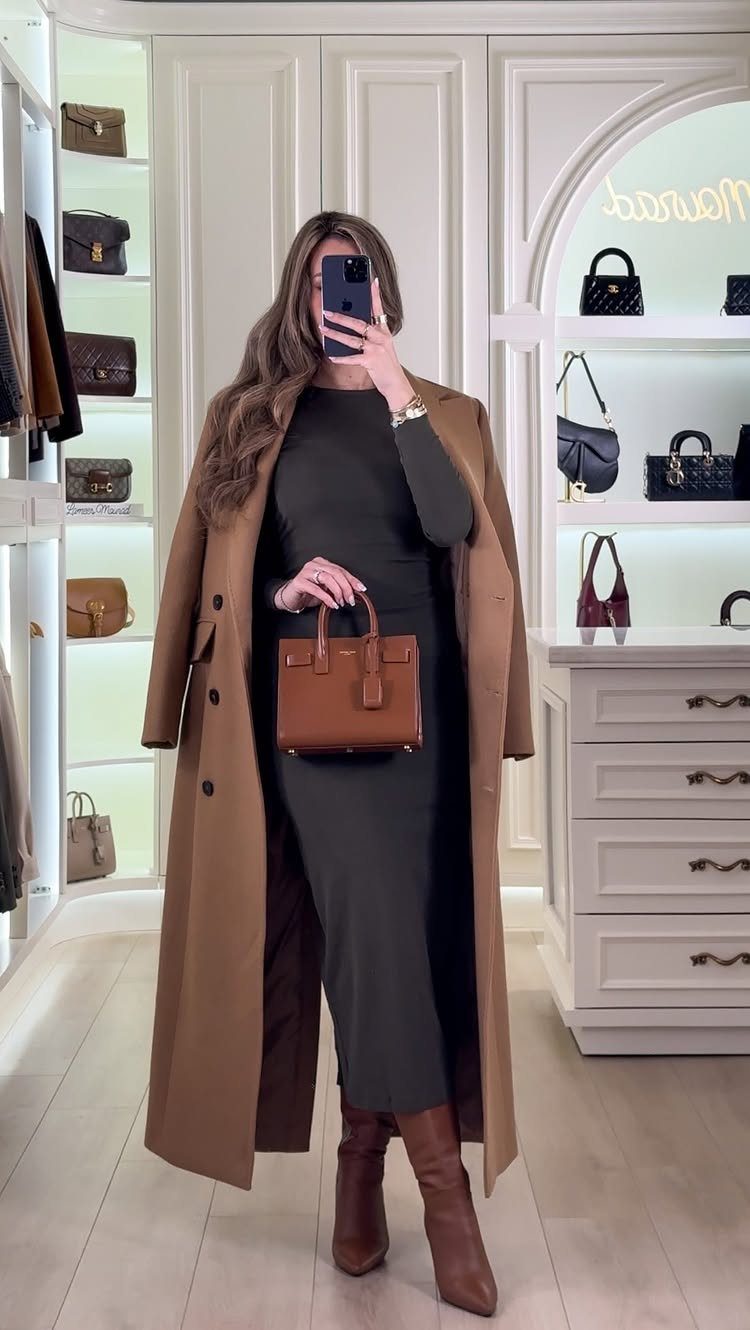
A sweater dress or midi dress in olive or dark green handles most fall occasions without demanding extra layers. Texture matters more than print here: ribbed knits, brushed fabrics, or subtle quilting read as intentional rather than lazy.
If you own one dress that works with boots and a coat draped over your shoulders, you already have the shape this season favors.
Add a long-sleeve tee underneath when temperatures drop, or layer a blazer over a midi cut for office days. Check that the hem clears your tallest boots by at least an inch; anything shorter fights the line.
“An important consideration when building an autumn capsule wardrobe is how to layer for keeping warm when the temperature drops,” advises Chantelle Znideric, an award-winning personal stylist.
2. Camel Sweater
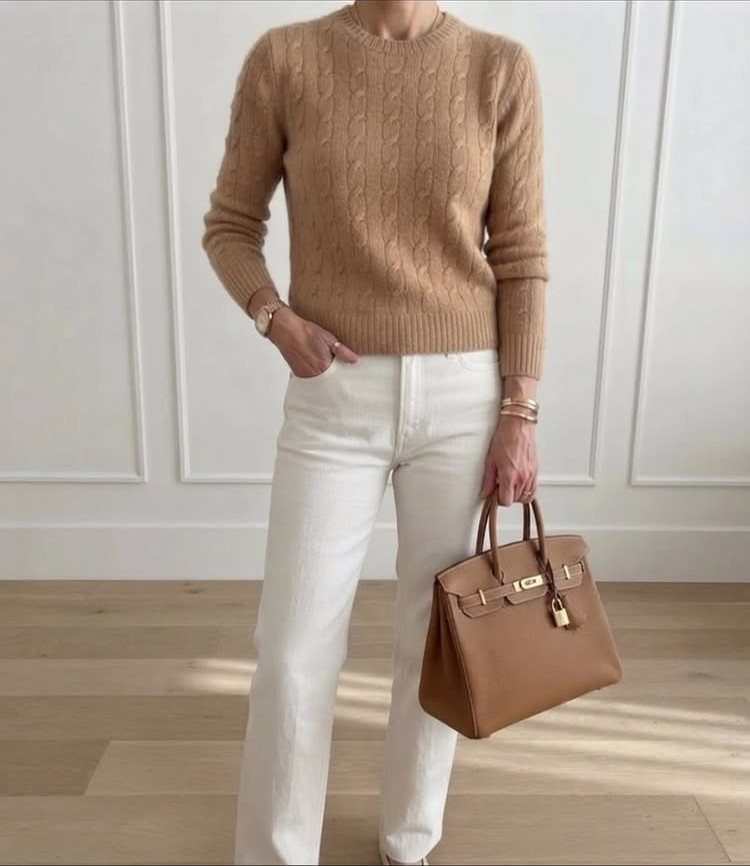
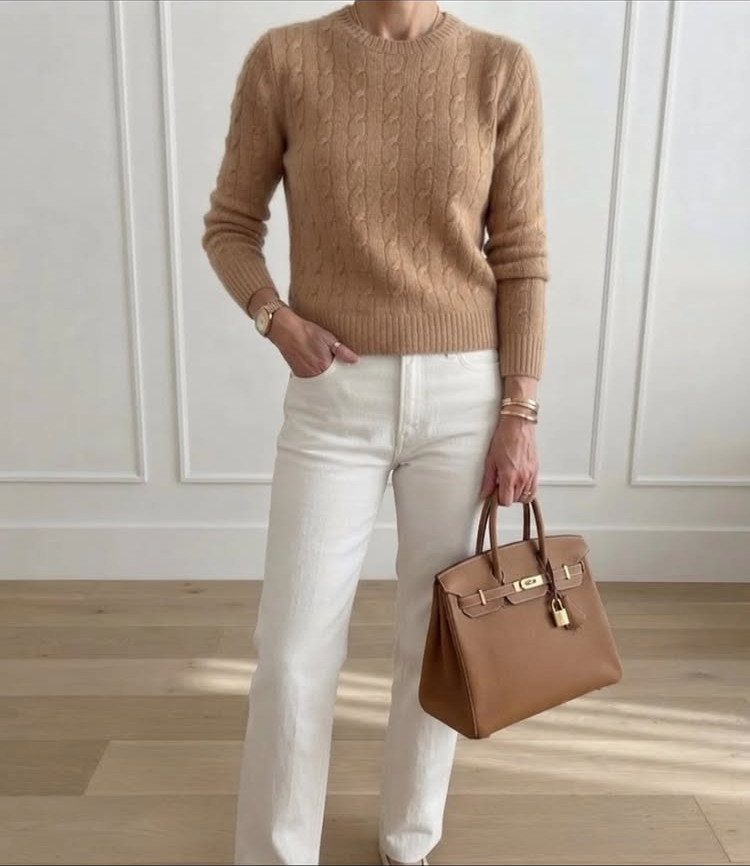
Cable knit in camel reads as texture without pattern, which is why it layers under everything from trenches to blazers without competing.
The visible sweater is a crewneck, and that shape is the practical choice: high enough to sit neat under outerwear, open enough to wear solo through October.
I would look for wool or cashmere if the budget allows, since natural fibers hold their shape through a season of rotation.
At $50, the Quince crewneck mentioned in my research is unusually uncomplicated for cashmere; if that price is real, it is worth verifying the weight before ordering, since thin cashmere pills faster and shows wear.
A heathered grey or camel mid-weight knit handles five-minute mornings and dressed-up afternoons equally.
3. Cream Sweater
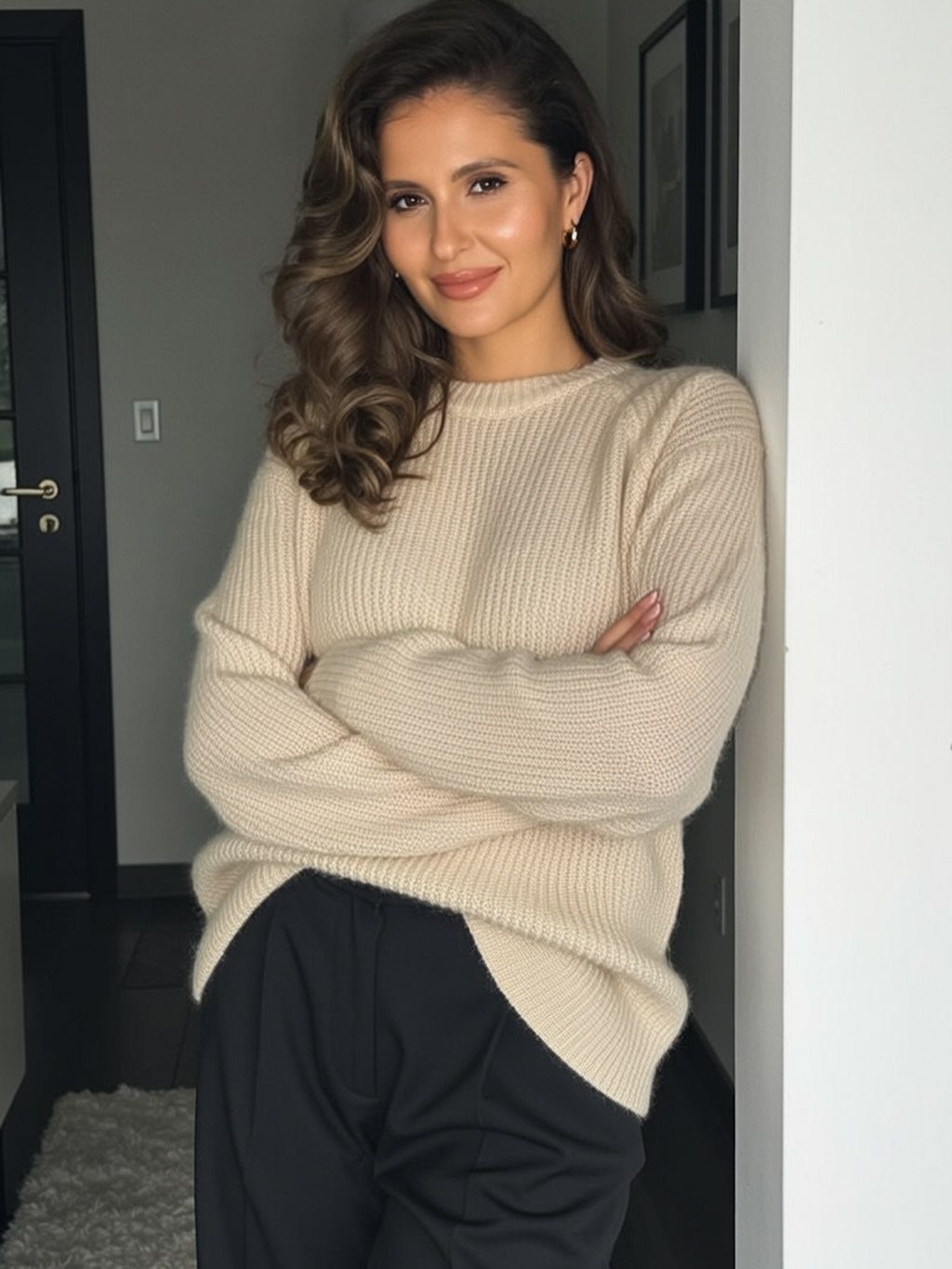
Oversized ribbed knit in cream is the sweater you reach for when black feels too heavy and color feels too decided. The visible version sits loose over tailored trousers, which is the proportion that keeps it from looking like loungewear.
I prefer natural fibers here because they age better and itch less against bare arms.
A ribbed texture adds interest without demanding accessories; an oversized cut needs a slimmer bottom to balance it. This is the piece that works for years if you avoid the dryer.
4. Color Palette
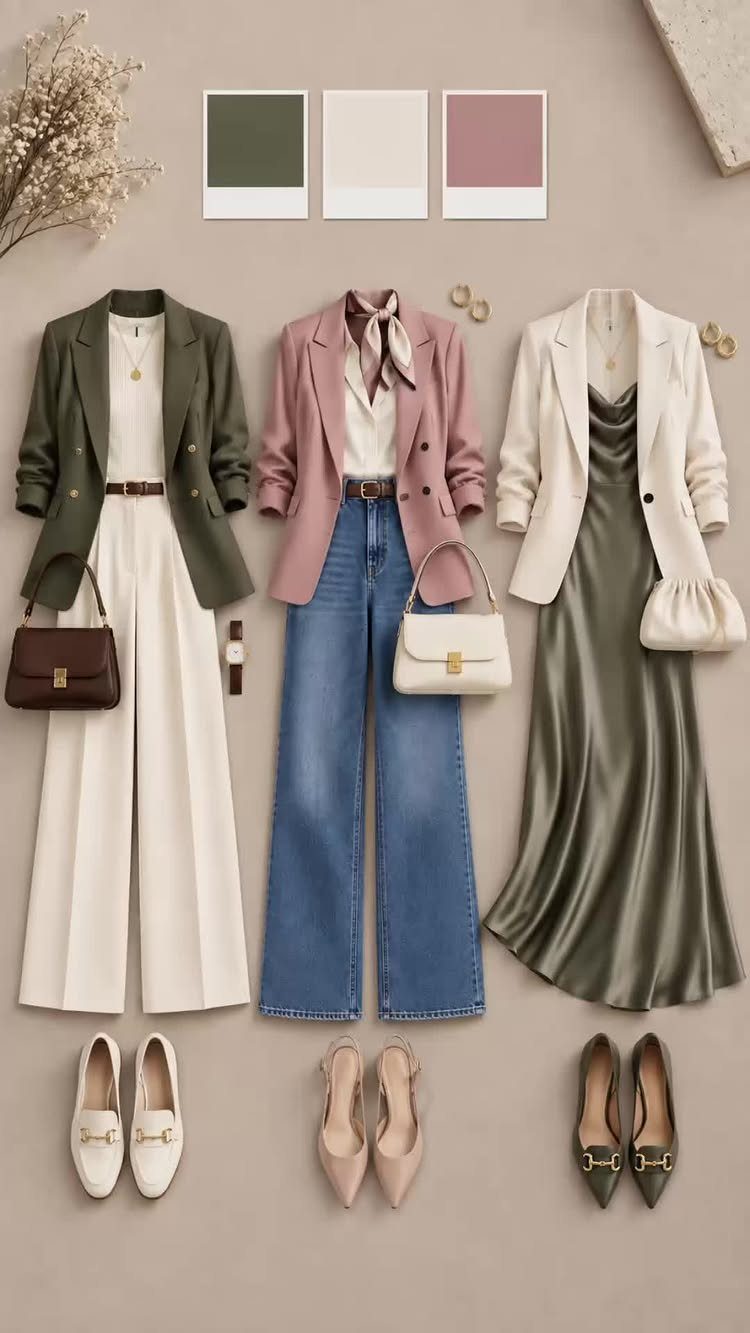
Start with two neutrals that already live in your closet, then add two fall accents that play well with both.
Olive works as a bridge color between cream, which keeps things light, and dusty rose, which softens the whole palette so it doesn’t turn utilitarian.
Burgundy, rust, or camel work the same way if pink is not your tone.
The rule is that every top must work with every bottom without thought. One optional pop color is enough; two creates outfits you will wear twice and abandon.
5. White Turtleneck
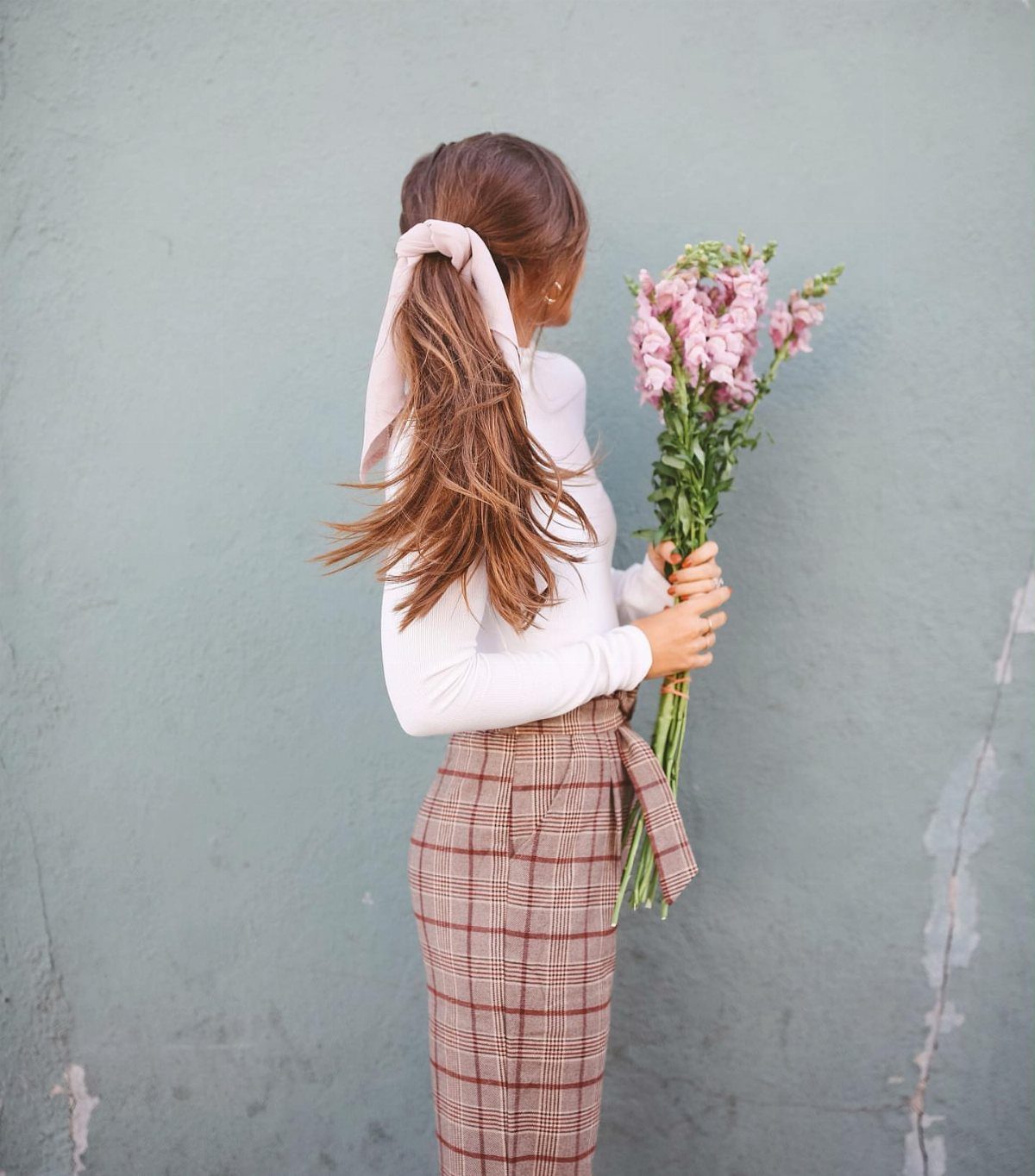
A white turtleneck is the layer that turns summer trousers into fall outfits without requiring new pants.
A ribbed slim turtleneck tucks cleanly into plaid and still looks balanced with a scarf at the neck; the base is doing more work than you’d expect.
I wear mine under blazers when the jacket alone leaves a gap at the throat, or with jeans and ballet flats on milder days.
The fit should be close enough to disappear under outerwear; a bulky knit turtleneck serves a different purpose and belongs in a different entry. Cream or ivory reads softer than optic white against autumn skin.
6. Black Sleeveless Bodysuit
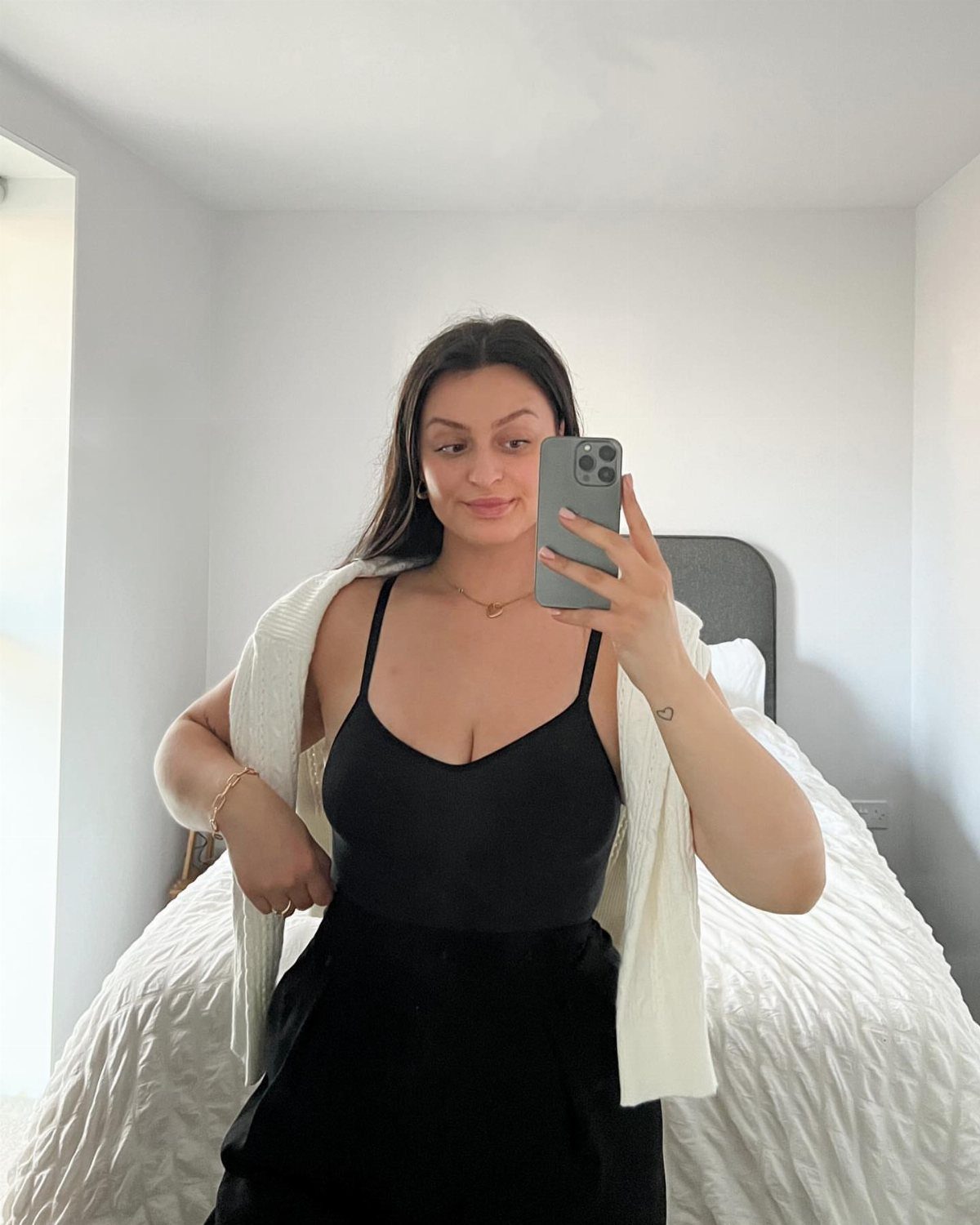
A black sleeveless bodysuit solves the tucked-in problem: no bunching, no riding up, no midday adjustment in a bathroom mirror.
The visible version sits under a cream sweater draped at the shoulders, which is how I would wear it through transitional weather when full sleeves feel premature.
The practical case for this piece is warmth at the torso without bulk at the arms; it layers under knits, blazers, or lighter coats without adding circumference.
Check that the snap closure is secure and comfortable before committing; a bodysuit that gaps or pinches becomes unwearable fast.
For the price of two cheap tanks, one well-made version in a compression fabric that holds its shape is the better buy.
7. Straight Leg Jeans
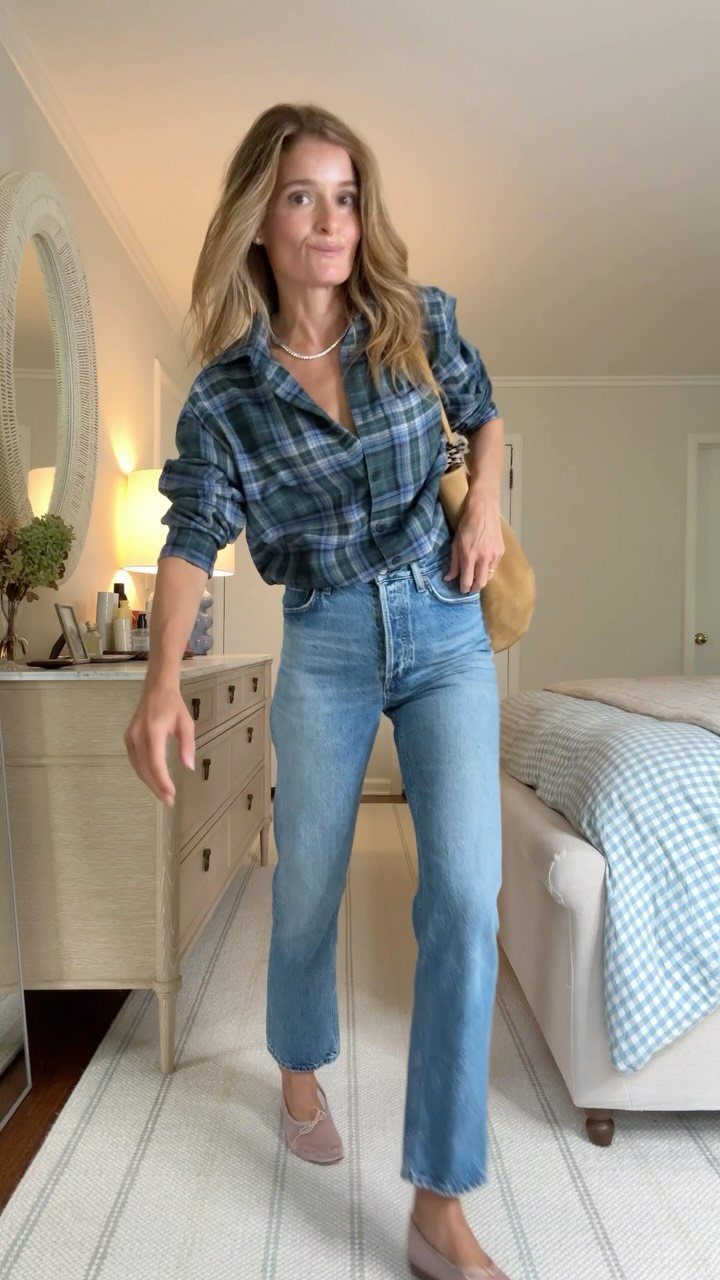
Straight leg jeans in a light wash sit right in the middle of the denim spectrum, narrower than the wide cuts dominating editorial pages but easier to wear than the skinnies I finally gave up on.
The leg stays narrow enough to tuck into boots without bunching, straight enough to balance oversized knits on top.
I would check the rise first: mid-rise sits at the natural waist and keeps shirts tucked through a full day.
Inseam matters too; a half inch too long and the hem pools, too short and the line breaks above the shoe.
Light wash denim needs more care than dark, since fading shows faster, so I wash mine cold, skip the dryer, and let them air dry to keep the color as long as possible.
8. Blue Stripe Shirt
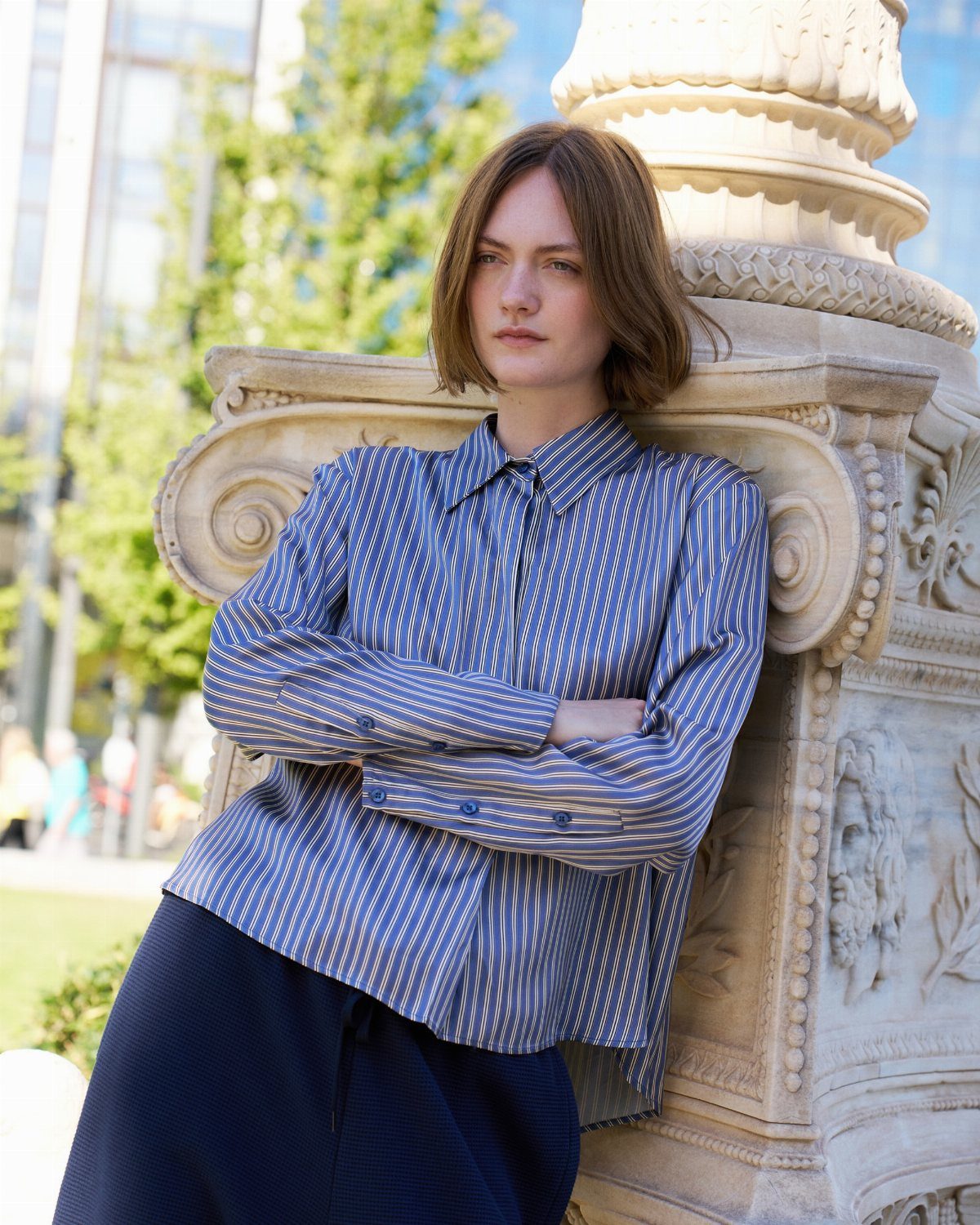
A blue stripe shirt does the work of a solid plus the work of a pattern without either demanding attention.
The vertical rhythm lengthens the torso, and the color reads as neutral in fall palettes where cream, camel, and navy already live.
I wear mine under crewnecks with the collar out, or open over a white tee like a light jacket before true coat weather arrives. The stripe scale matters: pencil-thin lines read formal, spaced bands read casual.
For a capsule, medium width in a single colorway mixes with more of what you own. Check that the shoulder seam hits your actual shoulder; a dropped shoulder on a stripe shirt looks accidental, not designed.
9. Camel or Brown Wool Coat
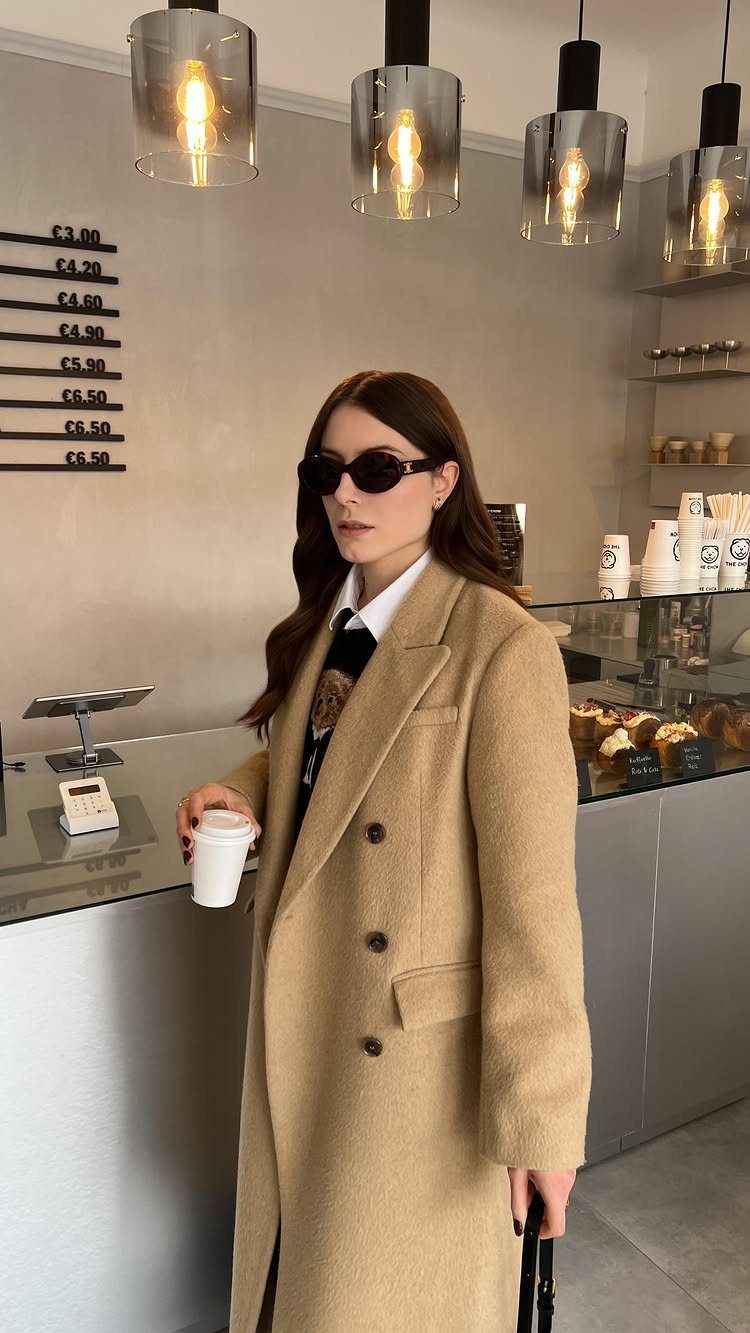
A camel or brown wool coat is the piece that makes grocery errands look like someone has somewhere worth going. The length should hit mid-thigh or lower; anything shorter fights the proportion of fall layers beneath it.
I would choose single-breasted over double if you wear thick sweaters regularly, since the overlap has to close comfortably over bulk.
The shoulders need room for a blazer or chunky knit but not so much that the coat looks borrowed. Lining in a contrasting print is a detail only you see, and it matters more than you’d expect on grey mornings.
Check the wool content on the label before you buy. Higher percentages handle real cold; lower blends work better as transitional outerwear with a warm layer underneath.
10. Burgundy Crewneck Sweater
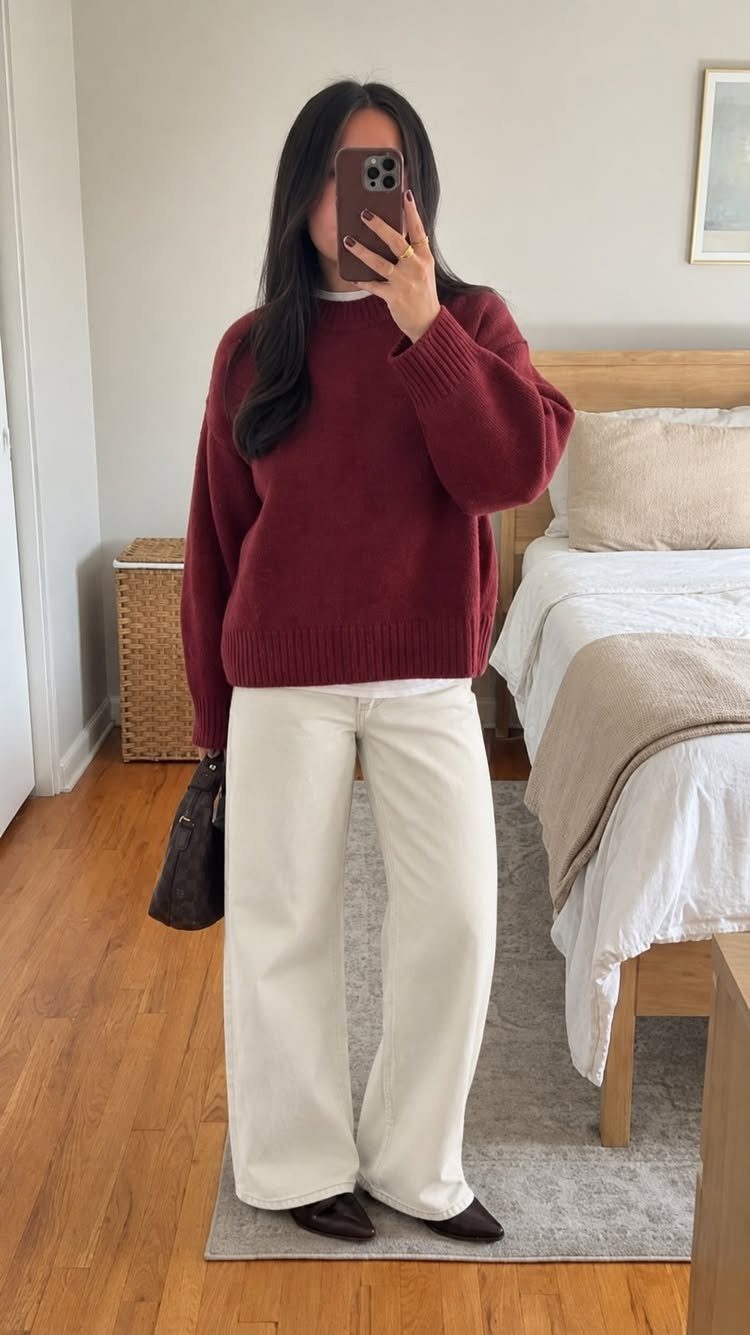
Burgundy is the fall color that flatters without the rust-orange commitment that terrifies neutral wardrobes. A crewneck in this shade sits between casual and dressed-up, which is exactly where most fall days live.
I would layer it over a white collared shirt with the cuffs and hem showing, or wear it alone with dark denim and loafers.
The texture matters more than the exact shade: a brushed or heathered surface reads richer than flat knit.
Natural fibers hold the color through washes; acrylic burgundy turns muddy fast. Fit should be relaxed enough for a thin layer underneath but not so oversized that the neckline gapes when you bend forward.
11. Striped Knit Sweater
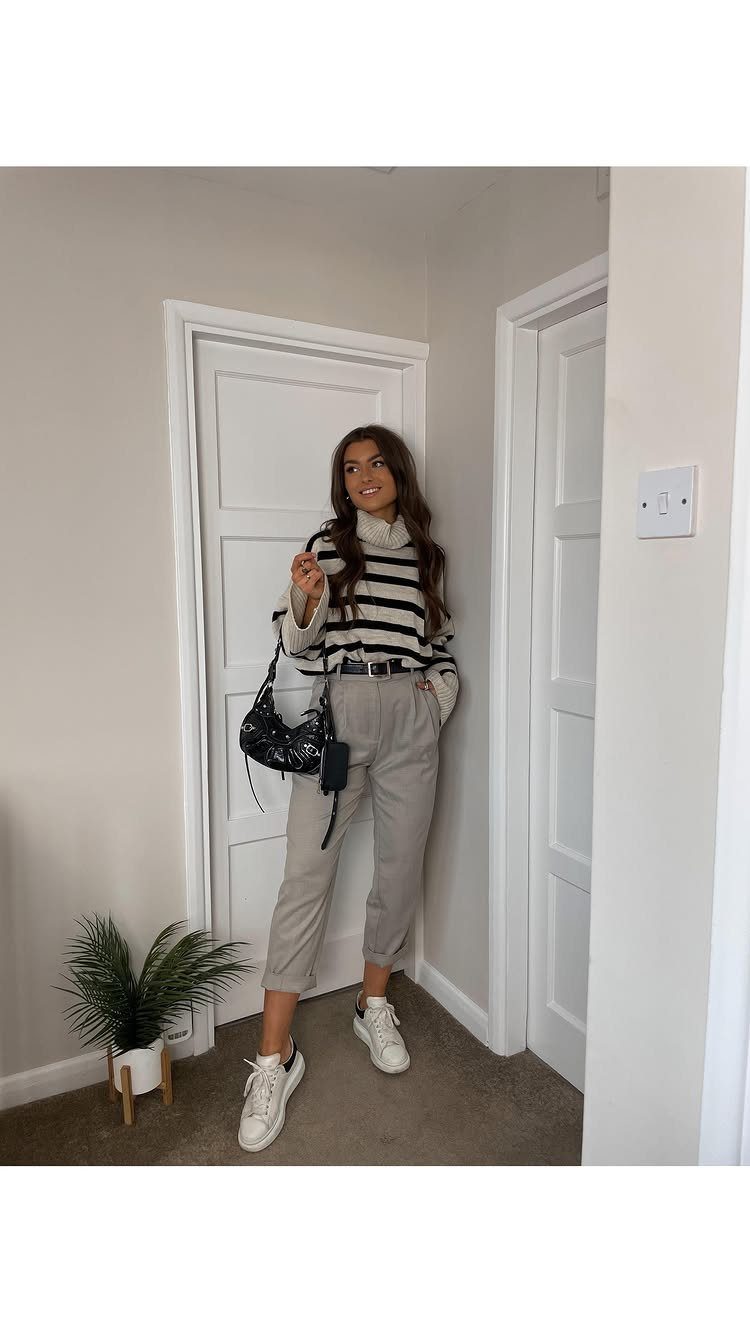
A striped knit sweater is the pattern piece for people who do not do pattern. The horizontal banding adds structure to a soft silhouette, and the limited palette keeps it from becoming a statement you tire of.
A black-and-cream striped knit works with grey trousers for the office, or switch to dark denim and white sneakers to look cleaner on the weekend.
The stripe width changes the effect: narrow bands read nautical, wide bands read graphic. For versatility, medium bands in 2 colors maximum.
Check that the stripes align at the seams; misaligned stripes signal cheap construction faster than any other detail. A turtleneck version adds warmth at the neck without requiring a separate scarf.
12. Classic Tan Trench Coat
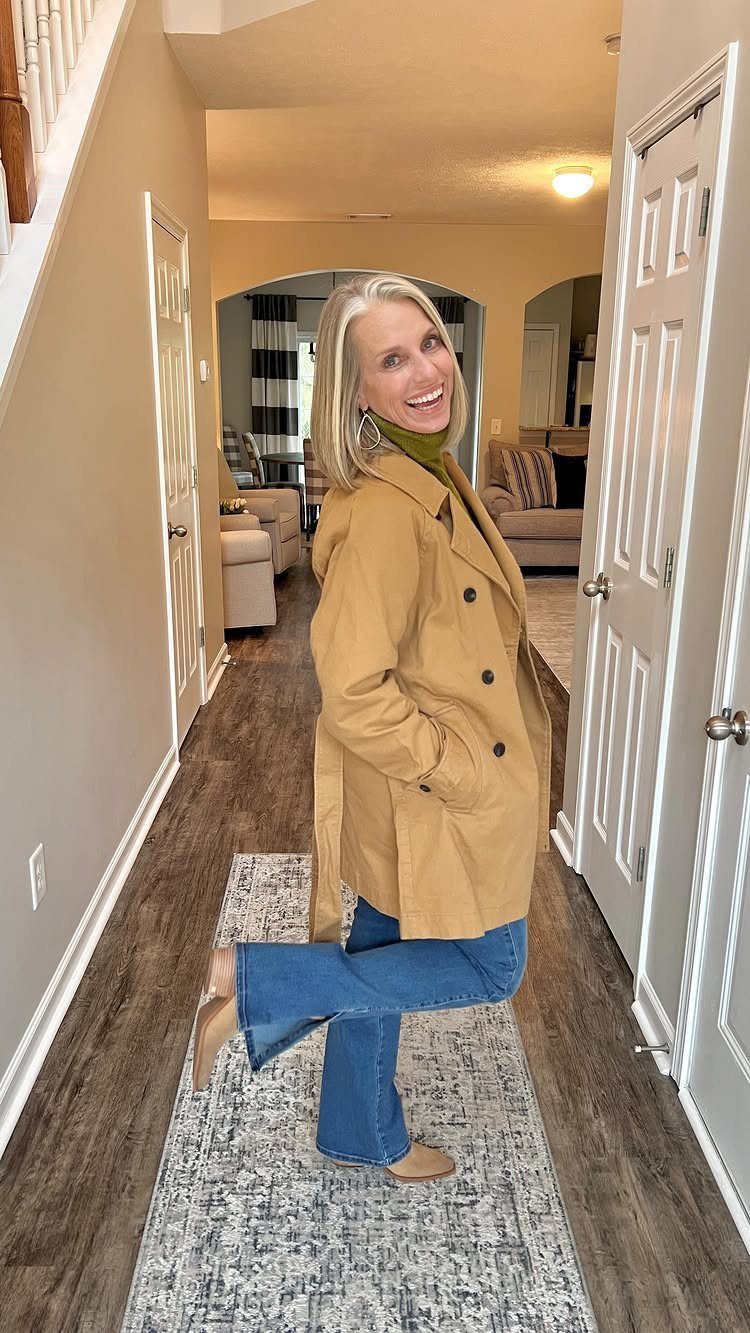
A tan trench coat is the layer that handles rain, wind, and the psychological shift from summer to fall without changing anything else you are wearing.
The belt is not decorative; cinched, it gives shape to boxy layers underneath, and left open, it moves like a cape in photographs.
I would verify the length against your tallest boots: the hem should clear them by several inches or stop above the knee entirely, anything in between cuts the leg awkwardly.
The collar should stand up against drizzle; a floppy collar is a spring detail, not a functional one.
A back vent lets you walk in the thing; test it on stairs before committing. Cotton gabardine is traditional and breathes; coated versions shed water better but sound like a tent in motion.
13. White Long-Sleeved Bodysuit
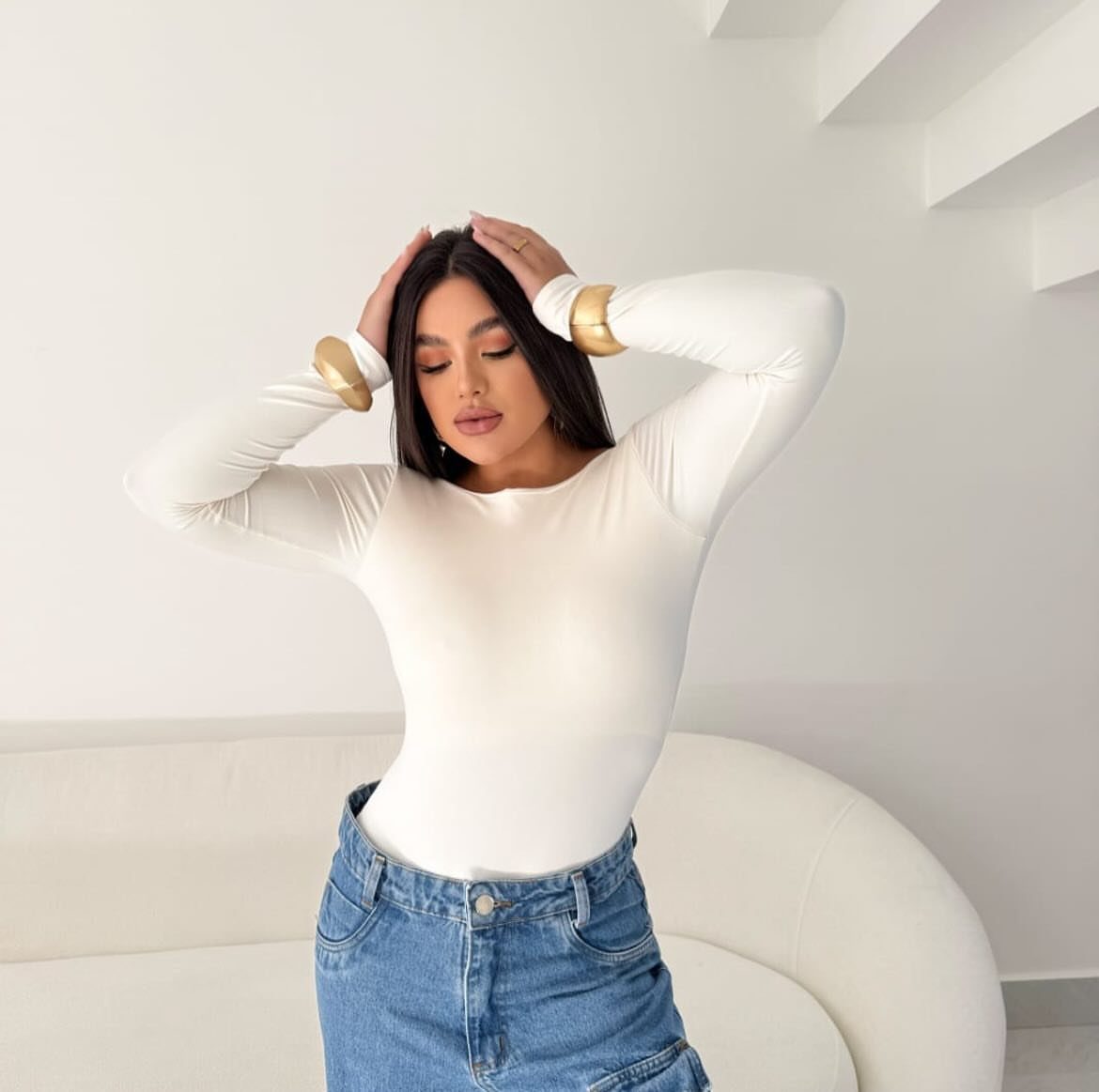
A white long-sleeved bodysuit is the clean base layer that disappears under sweaters and jackets without the bulk of a tucked-in tee.
The visible version is fitted through the torso with a high neckline, paired with classic blue denim and chunky gold cuffs that prove minimal can still read intentional.
Check the closure before buying: snaps should sit flat and hold through a day of sitting, standing, and reaching.
A bodysuit that rides or gaps at the crotch will stay in your drawer. Cotton with a touch of stretch breathes better than synthetic blends and keeps its white through more washes.
This is the piece for mornings when you want to look pulled together without thinking about what is bunching where.
Color Choices
Start with the neutrals already in your drawer: white, black, cream, navy. These four handle the bulk of any fall week without drawing attention to themselves.
Add camel or chocolate brown next, then one fall accent that bridges the two groups.
Two sounds generous in the store and turns into clutter by November, when you realize half your pieces only work with one other item.
Before I pull the trigger on anything new, I make myself prove it works with 3 pieces already hanging in my closet.
If it fails, it stays on the rack. This is how a capsule earns its name: every top talks to every bottom, no exceptions.
Quality Over Quantity
Wool, poplin cotton, and cashmere are the fibers worth spending on first. They hold shape through a season of rotation and look intentional even when thrown on in 5 minutes.
Thin cashmere pills inside a month and loses the structure that justifies the price. Check the gram weight before ordering, or save the money for a heavier wool knit that lasts 2 seasons.
Natural fibers keep the depth that makes the color worth wearing.
The math only works if you replace the tanks twice. Most people do.
The goal is not restriction for its own sake. It is owning fewer pieces that each do more, so that getting dressed takes less than 2 minutes and still looks considered.
Frequently Asked Questions
How do you build a fall capsule wardrobe?
Start with the neutrals already in your drawer, then add one or two fall accent colors that bridge them.
Every top must work with every bottom without thought. A piece only comes home with me if I can picture it with at least 3 things already in my closet.
What should I invest in versus save on for fall?
Spend first on wool, poplin cotton, and cashmere, since they hold shape through a season of rotation and look intentional even when thrown on in 5 minutes.
Save on thin cashmere that pills inside a month, and on trend pieces you will abandon by November. Cheap tanks usually get replaced twice, so the math never works out.
What colors work best in a fall capsule wardrobe?
White, cream, black, and navy are the backbone colors I build around every year. Camel or chocolate brown comes next, then one richer tone like olive or burgundy that can bridge them all.
A second bright turns into something you wear twice and forget. Every single piece needs to work with every other single piece.
How do you build an autumn wardrobe?
I think of mine as blocks that carry from one autumn to the next, not as outfits already locked in.
Classic shapes in good fabric are the foundation; I might add one or two trend pieces mid-season if I want something fresher. Your own taste still matters; these pieces are a starting place, not a script.