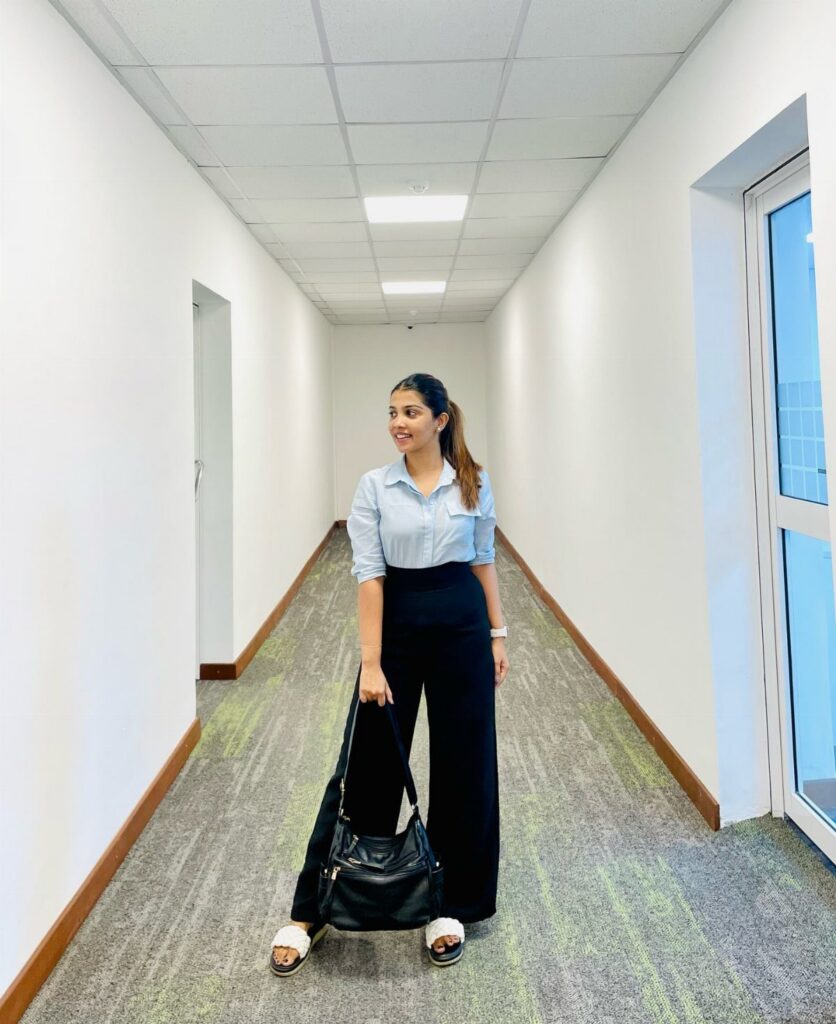
These 10 professional office outfits range from a $20 hem fix to full corporate suiting, and the right one depends on what your actual calendar looks like, not what the dress code memo says.
1. Wrap Dresses
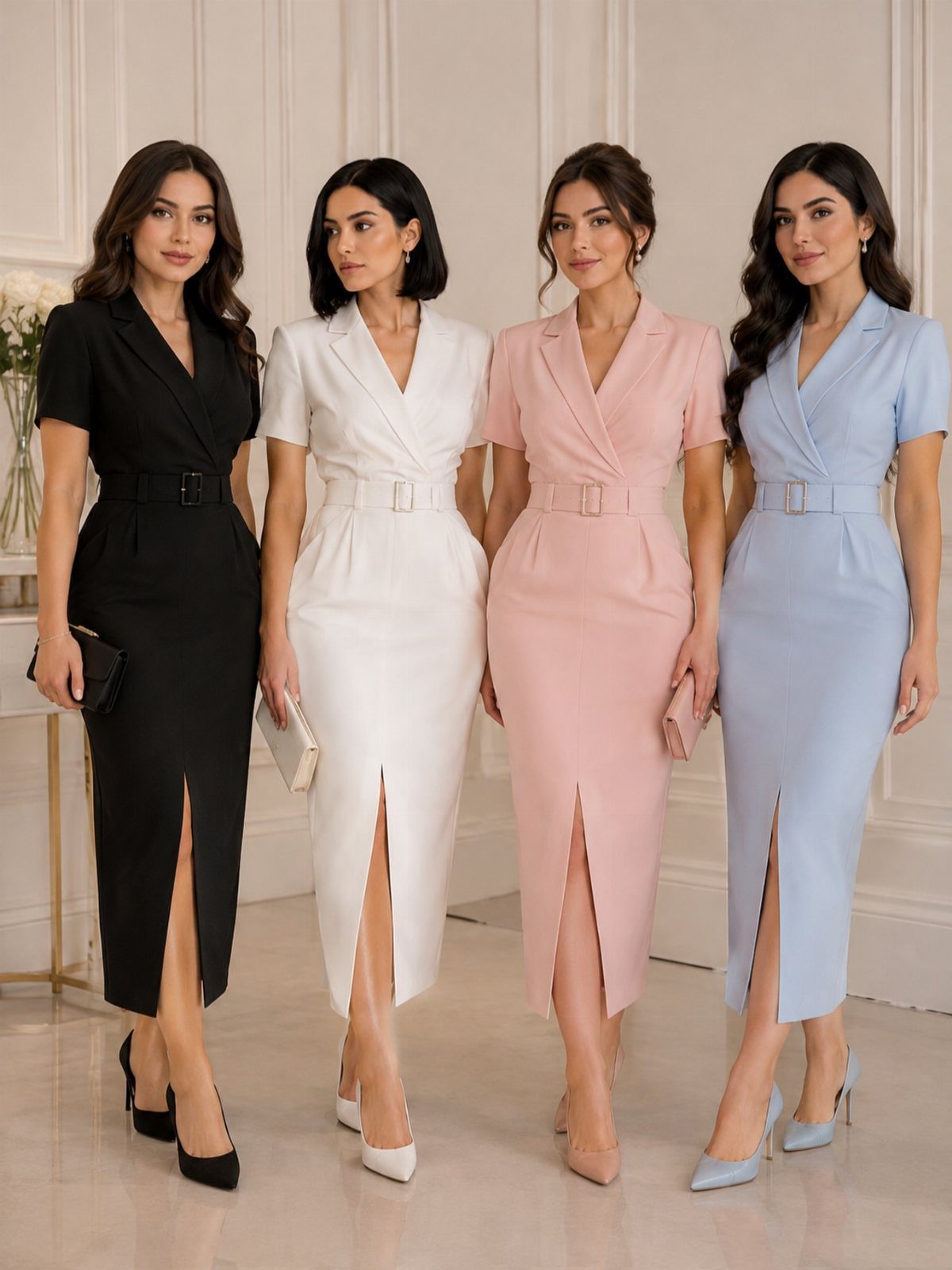
A wrap dress solves the morning problem of matching separates when you are already running late. The belted waist adjusts through the day, which matters if you sit for hours then stand for a presentation.
A collared wrap dress in mid-weight fabric that does not cling reads professional without trying too hard; short sleeves and a front slit at midi length keep it practical for real desk-to-meeting days.
Pair it with matching heels for client days, or swap in flats when your calendar is all internal meetings. One dress, two modes, no extra thought required.
2. Tailored Trousers and Blazers
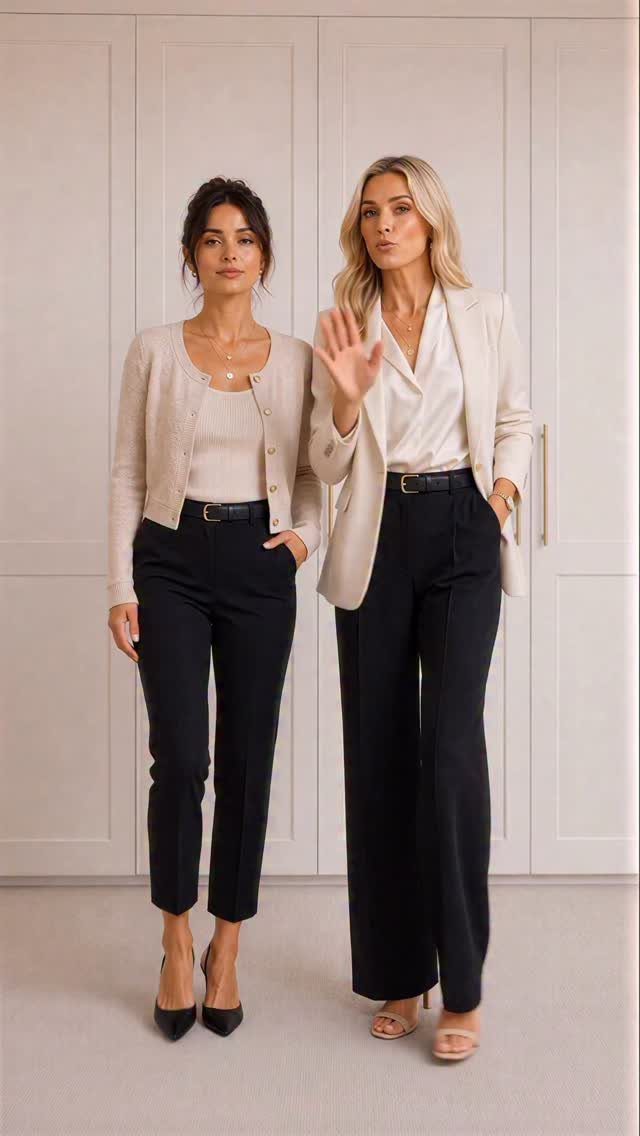
This pairing is the backbone of most office wardrobes I have seen work over time.
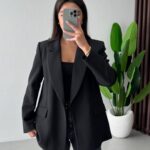
Tailored trousers hold their shape through repeated wear better than cheaper cuts, and a blazer pulls together whatever is underneath when you are called into a room unexpectedly.
A cream blazer softens black trousers for an office that leans business casual; a cardigan does the same job with less structure when the day calls for it.
I would invest first in the trousers, since fit there is harder to fake, and add the blazer once you know which color you reach for weekly. Loafers or low heels finish either version without another purchase.
3. Blouses with Cardigans
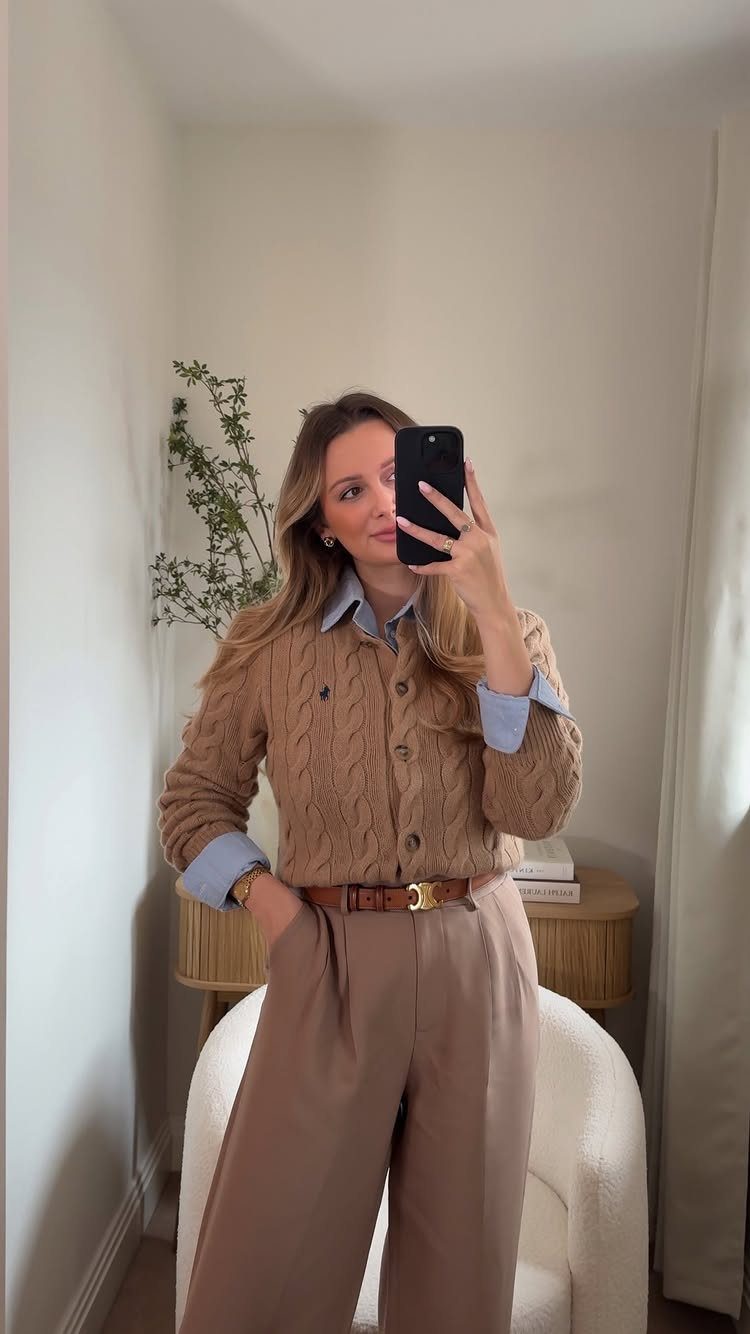
Layering a blouse under a cardigan gives you temperature control that a blazer does not; offices run cold, and removing a layer beats shivering through a meeting.
Cable-knit reads thicker than I would choose for a formal environment, but camel tone keeps it polished against a blue shirt and taupe trousers.
I prefer a finer-gauge cardigan in a similar neutral, which slides under a blazer if needed and does not bulk at the waist. The belt here is doing useful work, defining shape where the layers could otherwise go boxy.
4. Button Bow Blouse
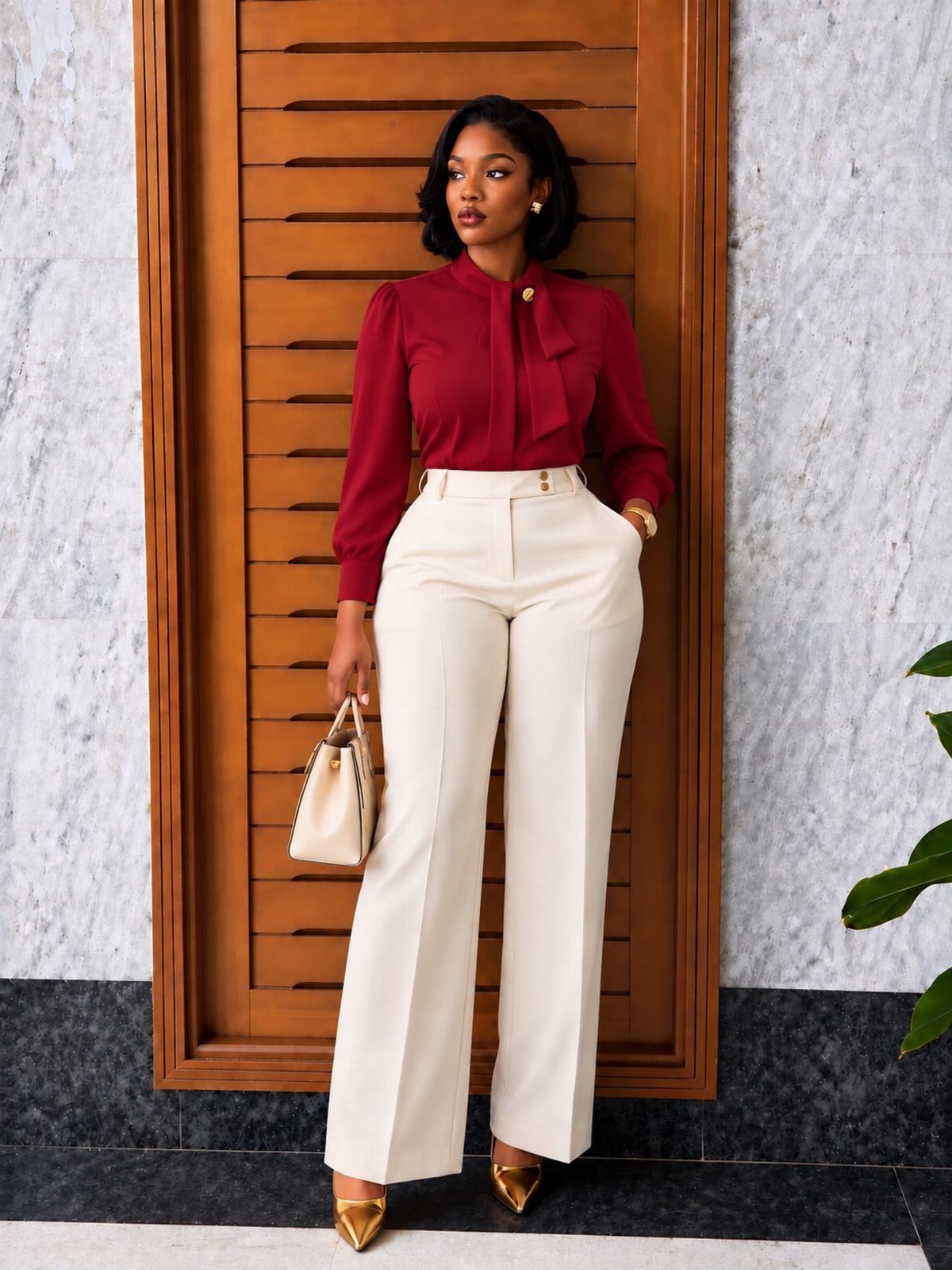
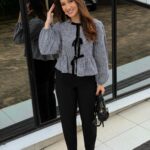
A bow blouse adds one deliberate detail to an otherwise simple outfit, which is how business casual often signals intention without breaking formality.
Burgundy is richer than standard office navy but still reads grounded against cream trousers; I would check my own closet for what bottoms could carry that contrast.
The bow itself is the decision point: tied neat for external meetings, slightly loosened for days at your desk. Fabric matters more here than with plainer blouses, since the bow draws the eye and cheap material shows.
5. Formal Corporate
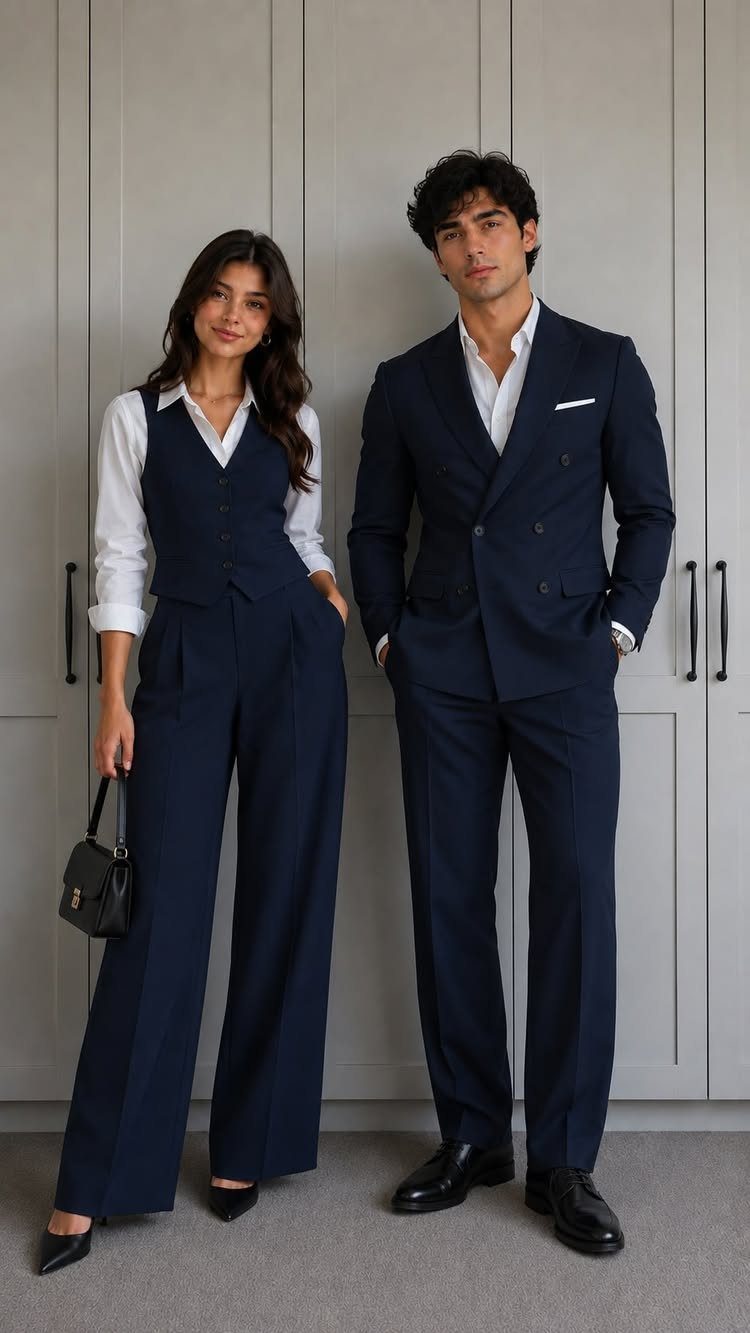
Corporate formal is the narrowest dress code and the most expensive to get wrong.
Matching navy suits are not a style choice in law, finance, or federal settings; they are the baseline expectation. Women can wear a pantsuit or a knee-length dress, but the shoes stay closed-toe and the bag stays structured.
I have watched colleagues learn that fabric quality signals here as much as cut: a wool-blend that holds shape through a 10-hour day reads differently than something that bags by lunch.
If your office is not one of the listed environments, this level of formality is overinvestment; borrow or buy only when the invitation specifies.
6. Accessorizing Office Outfits
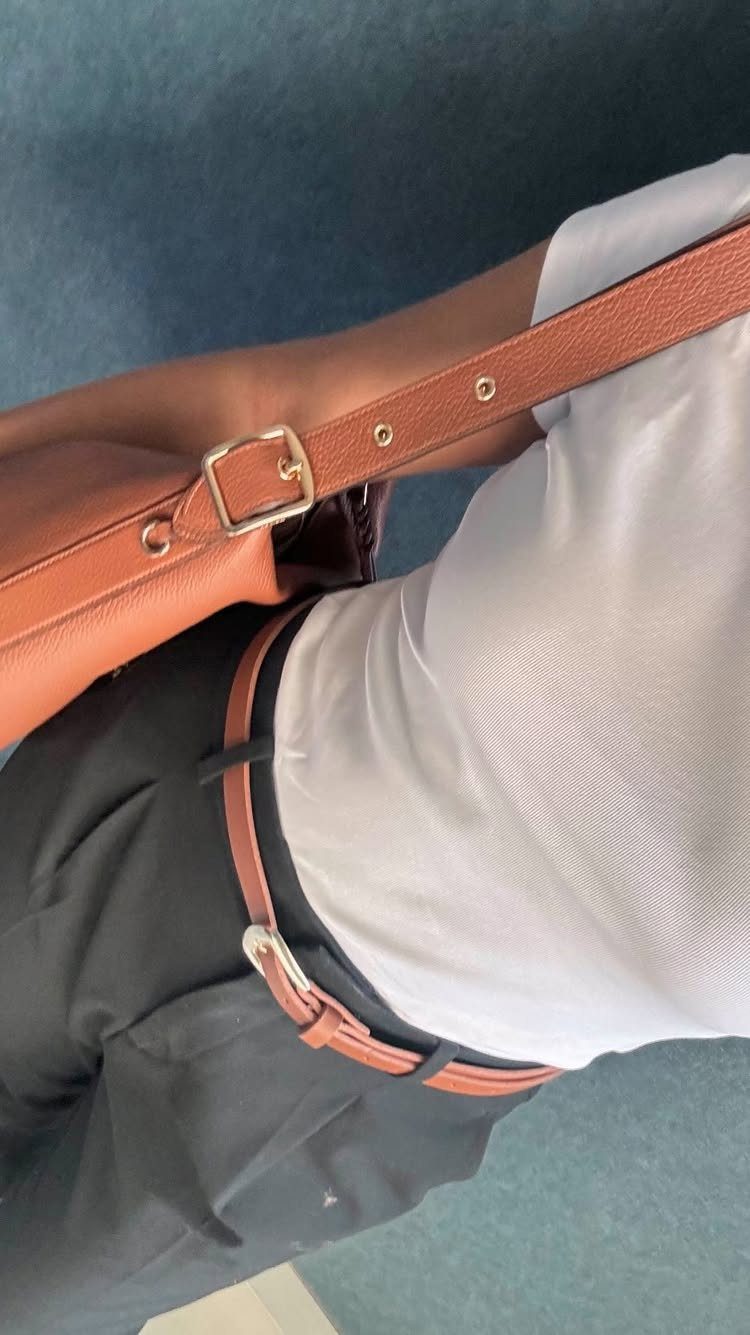
Accessories carry personality when clothing must stay neutral, but restraint is what makes them work. A cognac belt and matching bag repeat a single tone rather than competing, which is the move I would copy first.
A silk scarf is a low-cost way to add color if your capsule is heavy on black and navy, and a structured tote reads more professional than the crossbody you might prefer on weekends.
I would decide on one accent color and let every accessory reference it.
7. Block-Heeled Loafers
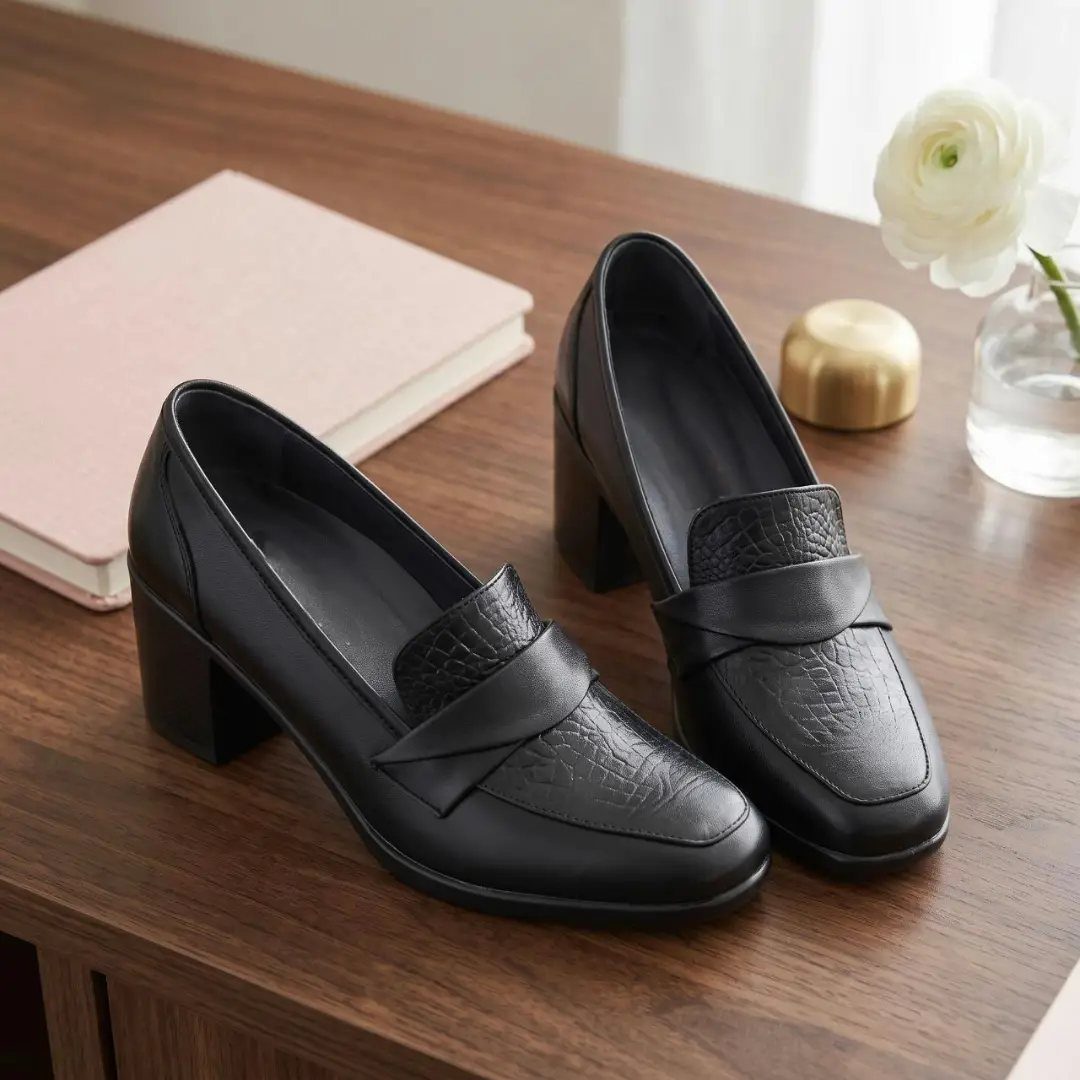
Block-heeled loafers give you height without the fatigue of a stiletto, which matters when your day runs long.
A leather pair in black or cognac matches most office palettes and the block heel keeps you stable on carpet, tile, or the sidewalk between buildings.
I would rotate two pairs to let each rest and keep the shape longer; pointed-toe flats with cushioned insoles are the swap when one pair needs a day off.
Skip tall heels for daily wear; comfort drops fast once you are up on a block that high.
8. Button-Down Shirt and Pencil Skirt
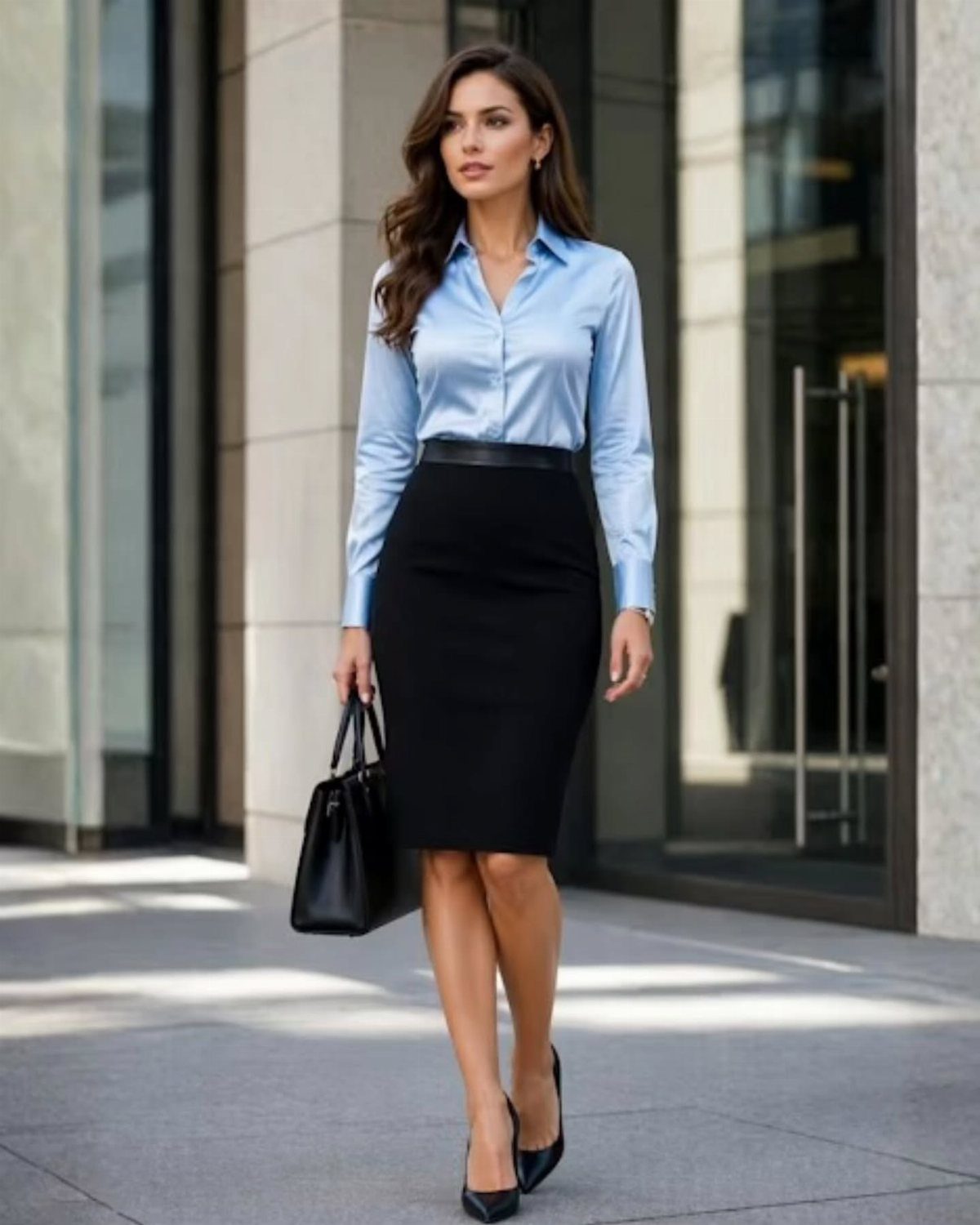
A light blue button-down tucked into a high-waisted black pencil skirt is the formal office pairing I see work most reliably across industries.
The shirt should have stretch or an oversize cut that still tucks clean; a front pocket is useful if you carry a badge or need somewhere to clip reading glasses.
Pointed-toe heels extend the line of the skirt and read sharper than rounded toes in client-facing roles.
For cooler months, add tights and swap the button-down for a fitted knit with a blazer layered over; the skirt stays the same and the outfit shifts with the season.
9. Turtleneck and Long Coat
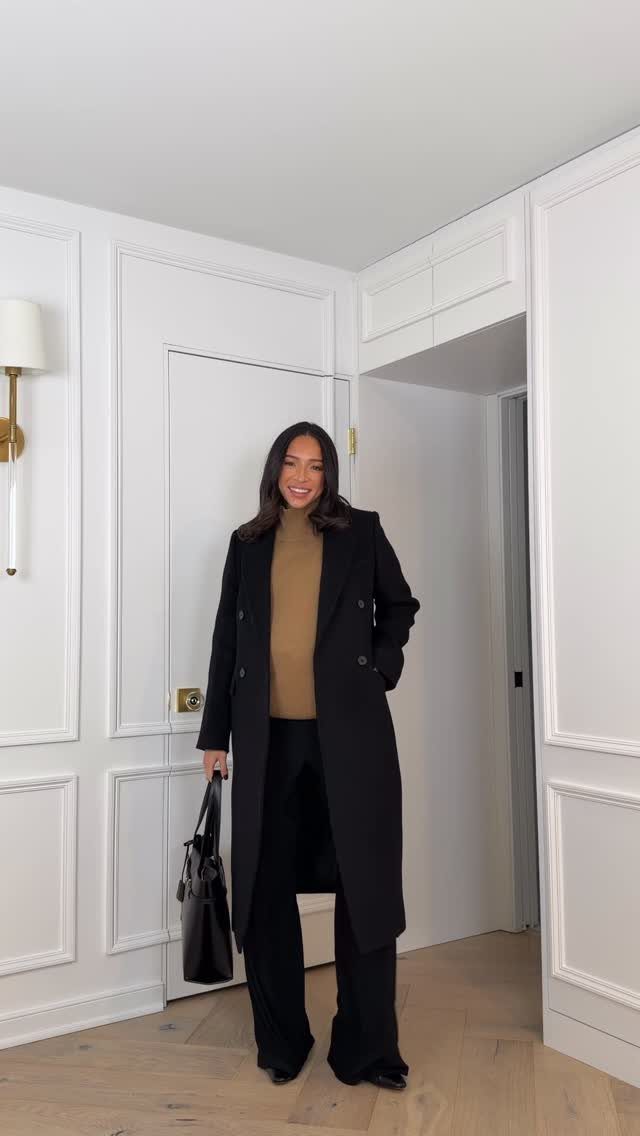
A turtleneck under a tailored long coat gives you warmth without the bulk of a puffer in a professional setting.
The tan tone here reads softer against black trousers than a stark white would, and the wide-leg cut balances the coat’s length so you do not look swamped.
Check that the turtleneck sits smooth at the neck; any wrinkling shows under the coat’s open front and undoes the polish.
This pairing suits offices where outerwear stays on through meetings or where the walk from transit is long enough to need real coverage.
10. Neutral Blouse and Midi Skirt
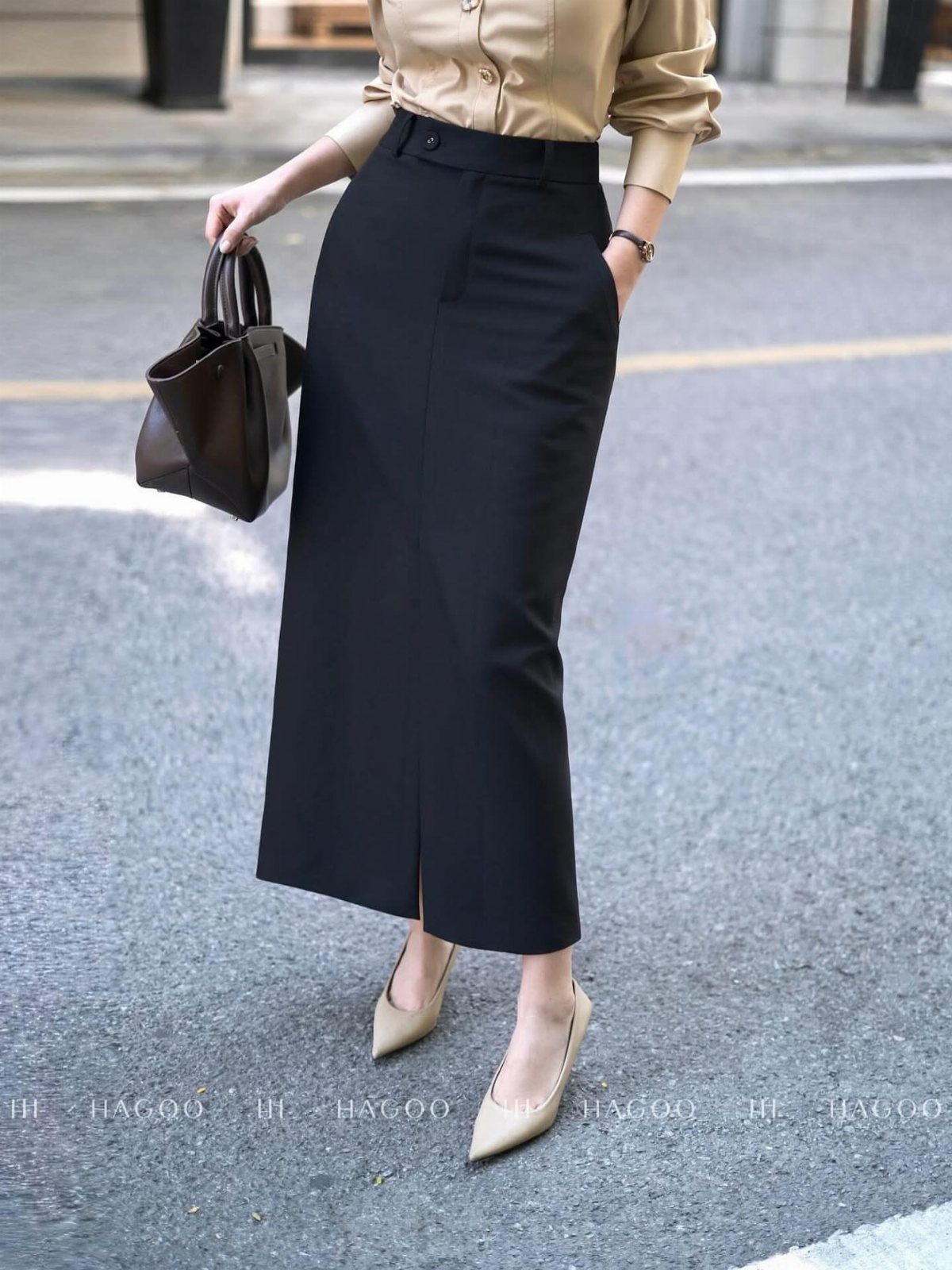
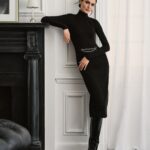
A beige blouse with a black midi skirt and matching neutral heels is the kind of outfit that works for a first interview or a fifth year in the same role.
The midi length keeps you covered in seated meetings; a slit, if there is one, can work at the side, back, or front depending on the piece and how you plan to move that day.
Pointed pumps in a tone that matches the blouse lengthen the leg without the cost of a new shoe for every skirt.
I would add a structured bag in the same family of neutrals and stop there; 3 tones is enough, and this pairing looks intentional because it is restrained.
Understanding Office Dress Codes
Neither helps your career.
Formal corporate means structured suiting, tailored trousers, blazers, and closed-toe shoes.
Business casual is the broadest category. Tailored trousers or skirts pair with blouses or knitwear, blazers are optional but useful, and loafers or low heels replace mandatory pumps.
The casual piece is allowed; the structure is not negotiable.
Business casual can feel a bit ambiguous, but generally it means something that looks sharp but is a little more relaxed than traditional office attire.
Importance of Fit
Cross your arms in the fitting room: if the back of the jacket hikes up or the front pulls open, size up or try a different cut.
Deep horizontal creases across the thigh when you sit mean the fabric is fighting your body; look for a touch more room or a fabric with stretch.
Too loose is its own problem. If you look like a rectangle from every angle, the garment is wearing you; an office outfit should still suggest there is a person inside it.
Wrong length is one of the easiest fixes. A skirt that inches up to mid-thigh the moment you sit down means you spend the whole meeting tugging it back into place instead of listening.
Shirt sleeves should end at the wrist bone or just past it; anything longer and your hands disappear, which makes you look like a kid playing dress-up. Most tailors adjust hems for under $20.
Size the blazer to fit over the layer.
Wrinkle-resistant blends matter for long commutes or busy days.
Frequently Asked Questions
What is the 3-3-3 rule for clothing?
The 3-3-3 rule means three tops, three bottoms, and three pairs of shoes as a compact, mixable wardrobe.
I have not used this exact framing myself, but the principle matches how I think about office dressing: fewer pieces that all work together, so mornings require less decision-making.
A wrap dress or a blazer with tailored trousers covers multiple scenarios without expanding the closet.
What are the levels of business attire?
The levels run from corporate formal down through business casual, smart casual, startup casual, and casual.
Corporate formal leaves the least room for interpretation: a matched suit in navy or charcoal, closed-toe pumps, a structured bag, and quiet jewelry. You will see this in law firms, banks, and federal agencies where deviation reads as disregard.
Business casual loosens the grip: tailored pants or skirts with blouses, fine-gauge knits, a blazer you can take or leave, and loafers or a low heel instead of required pumps.
What makes a woman look elegant?
Fit matters more than price. Fit is what separates expensive-looking from actually expensive.
A blazer that rides up when you reach for your coffee, creases that stripe your thighs when you sit down, or sleeves that hide your hands entirely all undo the polish you paid for.
Restraint in color and accessory choice reads as intention: three tones in an outfit, one accent color carried through belt, bag, and shoes, and no competing focal points.
Does business formal require a blazer?
Yes, corporate formal expects structured suiting, and the blazer is part of that structure.
In the places that still demand business formal, the full suit is expected. The message is competence and institutional trust, not personal flair.
For business casual, a blazer is no longer required but it earns its keep. I have been glad to have one hanging on my chair when a last-minute meeting pulled me from my desk to the conference room.